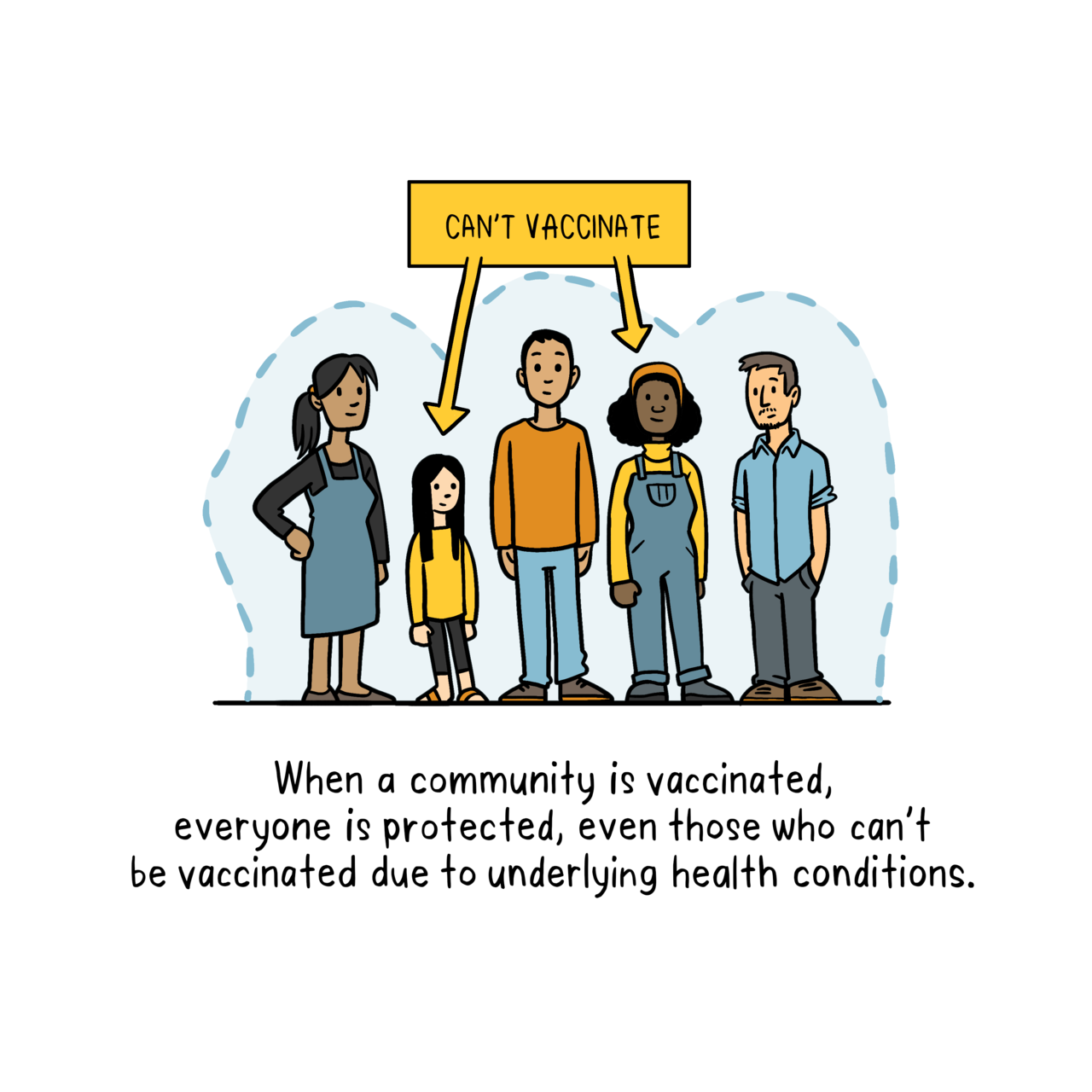
Herd immunity is the protection an unvaccinated person receives when enough of the people around them are immune that a chain of transmission cannot be sustained. It is why vaccination programmes protect infants too young to be vaccinated and people whose immune systems cannot respond, and it is frequently misunderstood in ways that matter.
Each infection produces on average some number of new infections, written R. If R falls below one, each case leads to fewer than one further case and the outbreak dies out. Immunity in the population reduces R by removing susceptible contacts.
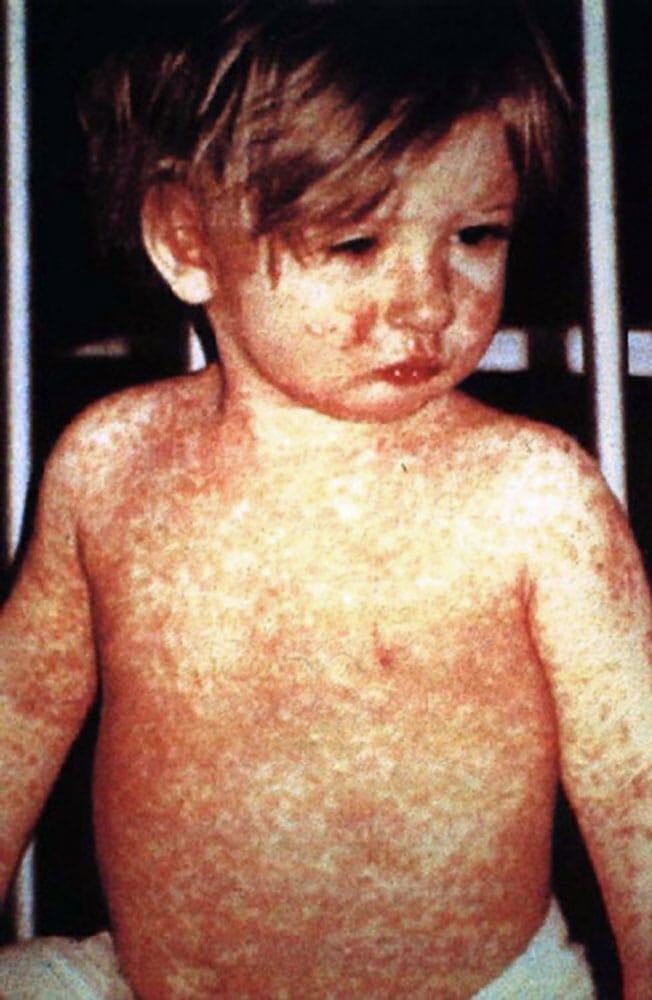
The threshold is therefore a function of how transmissible the disease is. For a basic reproduction number of R0, the proportion needing immunity is roughly one minus one over R0. Measles, among the most transmissible diseases known with an R0 commonly given as 12 to 18, needs something in the region of 92 to 95 per cent. Influenza, far less transmissible, needs much less.
Three conditions have to hold, and each is a place where the concept is misapplied.
The immunity must block transmission, not merely disease. A vaccine that prevents someone becoming seriously ill but not from carrying and passing on the pathogen protects the individual without contributing much to the herd effect, and this distinction became central to public argument during the COVID-19 pandemic.
The immunity must last. Where it wanes, the threshold has to be maintained rather than reached once.
And mixing must be reasonably even. This is the condition most often forgotten: national coverage figures conceal local clusters, and a community with low uptake sustains outbreaks regardless of the national average. Measles outbreaks in countries with high overall coverage are almost always a clustering phenomenon rather than a national one.

During the COVID-19 pandemic the phrase was used in two quite different senses that were routinely conflated: herd immunity as the goal of a vaccination programme, and herd immunity through infection as a strategy of allowing spread. The second is not a novel idea but the pre-vaccine default, and it carries the mortality that vaccination exists to avoid. Public health bodies pushed back on the conflation, with the World Health Organization stating that herd immunity should be achieved by protecting people, not by exposing them.
The episode also exposed a genuine limitation. For a pathogen that mutates to escape immunity and whose vaccines reduce transmission only partially and temporarily, a stable herd immunity threshold may not exist at all. That is a real scientific point rather than a rhetorical one, and it applies to influenza as much as to coronaviruses.