The proposal that gut microbes influence mood, behaviour and neurological disease, and that altering them could treat psychiatric and neurodegenerative conditions. The communication between gut and brain is real and well documented. The claim that the microbes in it shape human minds is supported far more weakly than its prominence suggests.
Bidirectional communication between gut and brain is not in question, and it has several known routes.
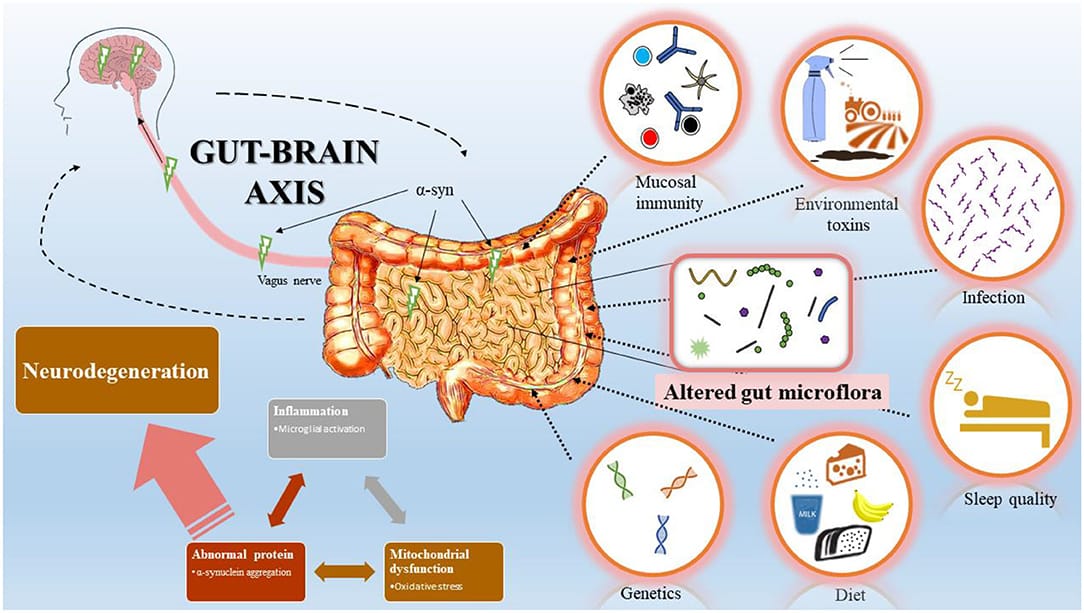
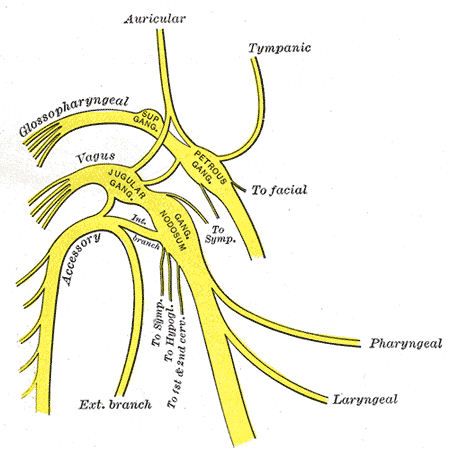
The vagus nerve carries signals in both directions, with far more fibres running from gut to brain than the reverse. The enteric nervous system contains hundreds of millions of neurons and operates with substantial independence, which is why it is sometimes called a second brain, a phrase that overstates it.
The gut produces a large share of the body's serotonin, though this acts locally and does not cross into the brain. Immune signalling and hormones including cortisol carry information both ways. And gut bacteria produce metabolites, principally short-chain fatty acids from fibre fermentation, that reach the circulation and have measurable systemic effects.
Stress alters gut function and gut inflammation alters mood. These are ordinary clinical observations.
The strong claim is narrower and much more consequential: that the composition of the gut microbiota causally influences psychiatric and neurological conditions in humans, and that changing it treats them.
The supporting evidence is largely from animals and it is striking. Germ-free mice, raised without any microbes, show altered stress responses, altered anxiety-like behaviour and altered brain development. Transferring microbiota between mouse strains transfers behavioural traits with it. Transferring microbiota from depressed humans into rodents has been reported to produce depression-like behaviour.
Human observational studies find differences in microbiota composition associated with depression, anxiety, autism, Parkinson's disease and Alzheimer's disease.
The animal findings do not transfer straightforwardly. A germ-free mouse is a severely abnormal animal with an underdeveloped immune system, and behaviour in an animal raised that way says little about a human with an ordinary microbiome.
The human studies are almost entirely correlational, and the confounders are severe. Depression alters appetite, diet, sleep, activity and medication use, all of which change the microbiome. Antidepressants themselves have antimicrobial properties. Establishing direction from a cross-sectional comparison is not possible.
The autism literature has attracted a specific and sharp critique. A 2025 analysis in Neuron argued that conceptual and methodological flaws undermine the claimed link, noting among other things that the most cited human intervention study was open-label, single-arm, and had eighteen participants. That is a study design that cannot distinguish a treatment effect from expectation, natural variation or regression to the mean, and it has been cited thousands of times.
Reproducibility across studies is poor. Different groups report different bacteria associated with the same condition, and few associations replicate. Sequencing methods, sample handling and analysis choices all affect results substantially.
Randomised trials are the test, and they exist in growing numbers with mixed results.
A 2025 meta-analysis of twelve randomised trials of faecal microbiota transplantation reported a significant reduction in depressive symptoms. Systematic reviews of probiotics for behavioural outcomes report moderate improvements in some measures.
Against that, the trials are generally small, short, heterogeneous in intervention and outcome, and conducted in populations selected in different ways. Probiotic products differ entirely from one another, so pooling them assumes a class effect that has not been demonstrated. Blinding is difficult for faecal transplantation. And publication bias in a field with strong commercial interest is a reasonable concern.
The infrastructure is real: the nerves, the immune signalling, the metabolites all exist and carry information.
What is not established is that the specific composition of a person's gut bacteria meaningfully shapes their mental state, or that changing it is a treatment. That claim is currently supported by strong animal work, weak human observational data, and a small number of promising but limited trials.
The gap between that evidence base and the confidence of public discussion is unusually wide, and a large consumer market exists on the strength of it. This is a case where classifying honestly matters: the field may well be right, and it has not yet shown that it is.