A technique in which an assistant supports the hand or arm of a non-speaking person while they type, said to reveal unsuspected literacy. Controlled tests consistently show that the messages originate with the assistant rather than the person being supported. The effect is unconscious, and the consequences have included false accusations of crime.
Two things must be separated at the outset, because the criticism is frequently misdescribed.
Non-speaking people, including many autistic people, can and do communicate, and their capacity to do so is not in dispute. Augmentative and alternative communication is a well-established professional field with a substantial evidence base, and it is not what this capsule concerns.
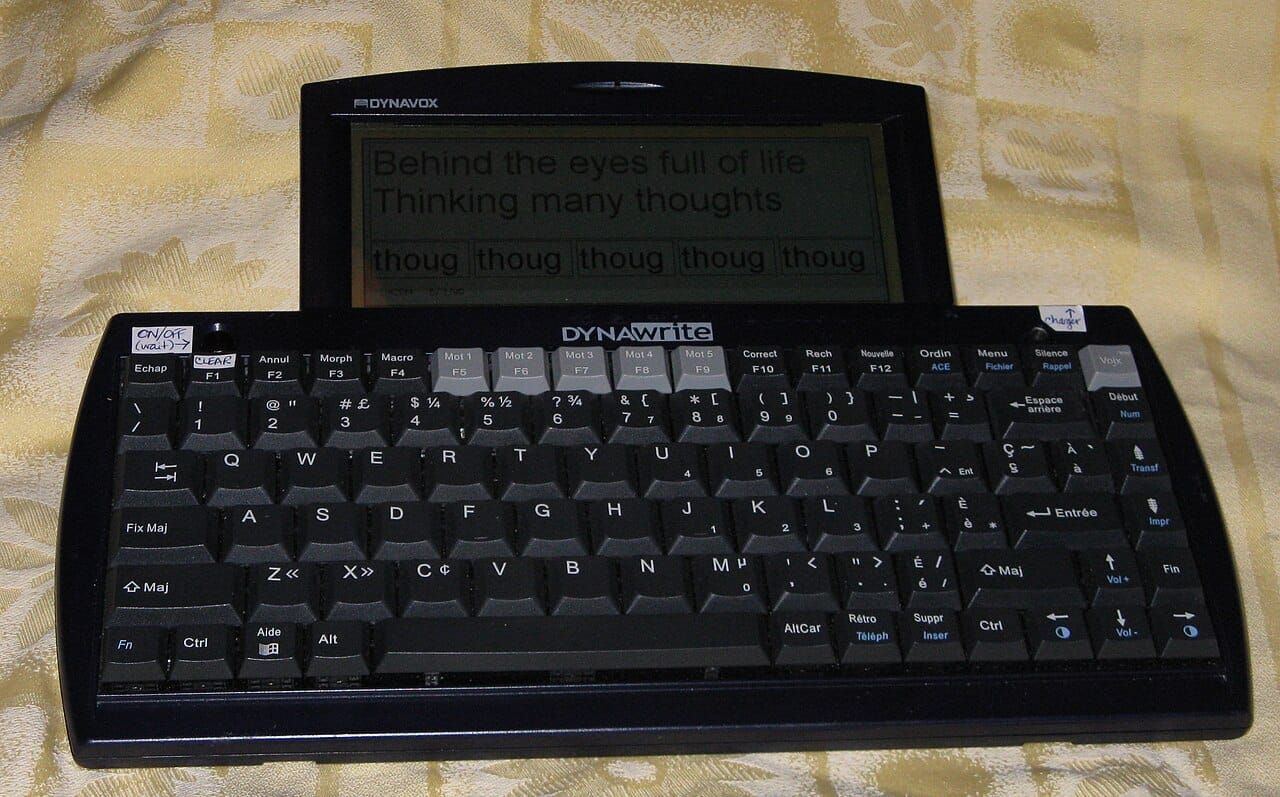
What is at issue is authorship. Facilitated communication involves physical contact, with a facilitator holding the person's hand, wrist or arm at a keyboard or letter board. The claim is that this support is purely physical, stabilising a body that cannot reliably execute intended movements, and that the words produced are the person's own.
The technique was developed by Rosemary Crossley in Australia in the 1970s and introduced widely in the United States by Douglas Biklen from 1990. Messages produced were often fluent and sophisticated, frequently from people with no prior evidence of literacy, and were taken as proof that severe disability had concealed intact intelligence.
The authorship question has an exact experimental answer, and the design is simple.
In a message-passing test, the person and the facilitator are each shown information, sometimes the same and sometimes different, without either knowing what the other has seen. A picture is presented to the person while the facilitator is prevented from seeing it, and the typed answer is compared.
The results have been consistent across dozens of controlled studies since the early 1990s. When both see the same picture, correct answers appear. When they see different pictures, the typed answer matches what the facilitator saw. When only the person sees the picture, correct responses fall to chance.
This is not a marginal or contested finding. It has been replicated by many independent groups, and systematic reviews and the position statements of major professional bodies, including speech and language, paediatric, psychological and behaviour analysis organisations, describe the technique as unsupported and advise against its use.
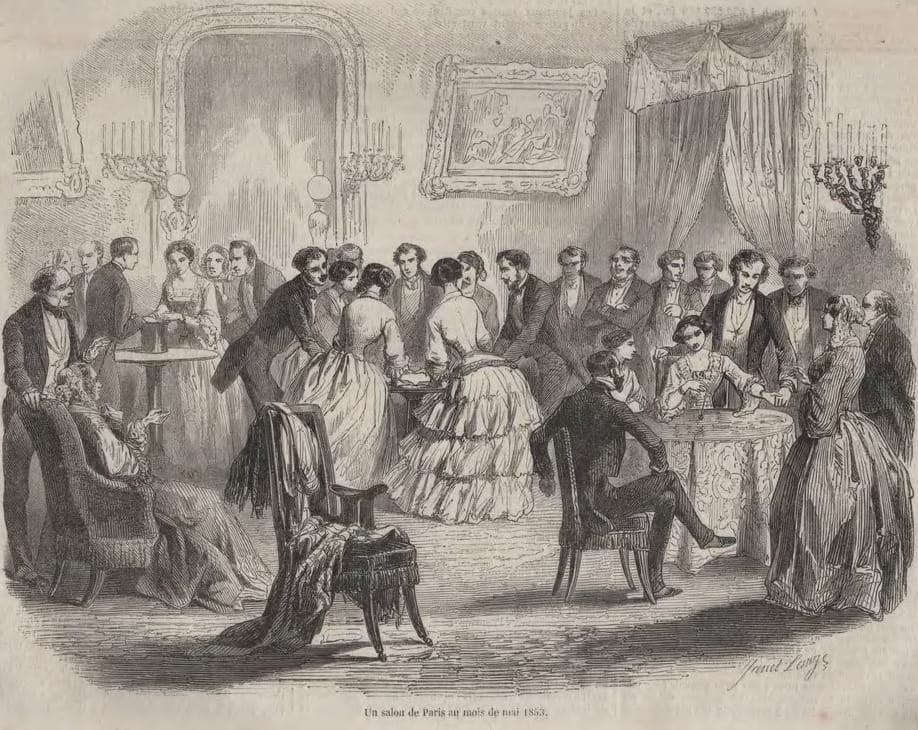
The mechanism is the ideomotor effect: unconscious, unfelt muscular activity that produces movement the person performing it experiences as coming from elsewhere. It is the same effect that moves a Ouija planchette, turns a table at a seance and swings a dowsing rod. Facilitators are not, in the ordinary case, deceiving anyone. They report sincerely that they are not guiding, and the effect is undetectable from the inside, which is exactly why the controlled test is necessary and why the facilitator's certainty is not evidence.
The consequences were not confined to a mistaken belief about literacy.
During the 1990s a series of allegations of sexual abuse were produced through facilitated communication, naming parents and carers. Prosecutions followed, families were separated, and children were removed from homes.
Several of these cases collapsed when courts applied message-passing tests, which showed that the accusations did not originate with the person supposedly making them. The pattern is documented in the legal and psychological literature and is the reason that courts in a number of jurisdictions will not admit facilitated messages.
A further harm is less visible. A technique that appears to give someone a voice and does not, occupies the place of methods that might, and it substitutes the facilitator's account of the person for the person.
The technique continues under other names, and the evidentiary situation is unchanged.
Rapid Prompting Method and Spelling to Communicate present themselves as distinct on the grounds that the facilitator holds a letter board rather than touching the person. The authorship problem is not removed by this, because a facilitator who moves the board can influence which letter is struck just as directly as one who moves the hand, and the necessary control is the same message-passing test.
Proponents of these methods have generally declined to submit them to that test, arguing that it is distressing or that anxiety suppresses performance. The objection is not unreasonable on its face, and it has an answer: the test can be arranged in familiar surroundings with as many practice trials as required, and a method that cannot demonstrate authorship under any condition has not demonstrated it.
Professional bodies have issued statements on these successors matching those on the original technique.
Facilitated communication is the strongest available demonstration that sincerity is not evidence. Facilitators believed themselves to be transmitting another person's words, and a simple test showed otherwise, and no amount of conviction or experience substituted for it.
It also illustrates why a low-cost control should be run early rather than late. The message-passing test is inexpensive, quick and decisive, and the interval between the technique's widespread adoption and its systematic testing is the interval in which the serious harms occurred.