The proposal that the human brain could only grow large because the gut shrank, since both are metabolically costly and the body's energy budget is fixed. It is an elegant argument, it explained a real coincidence, and the evidence has moved against it.
Human brains are roughly three times the size expected for a primate of our body mass, and brain tissue costs about sixteen times as much energy per gram as muscle at rest.
Human resting metabolic rate, however, is unremarkable for a mammal of our size. The extra brain is not paid for by burning more energy overall, so something else must be spending less.
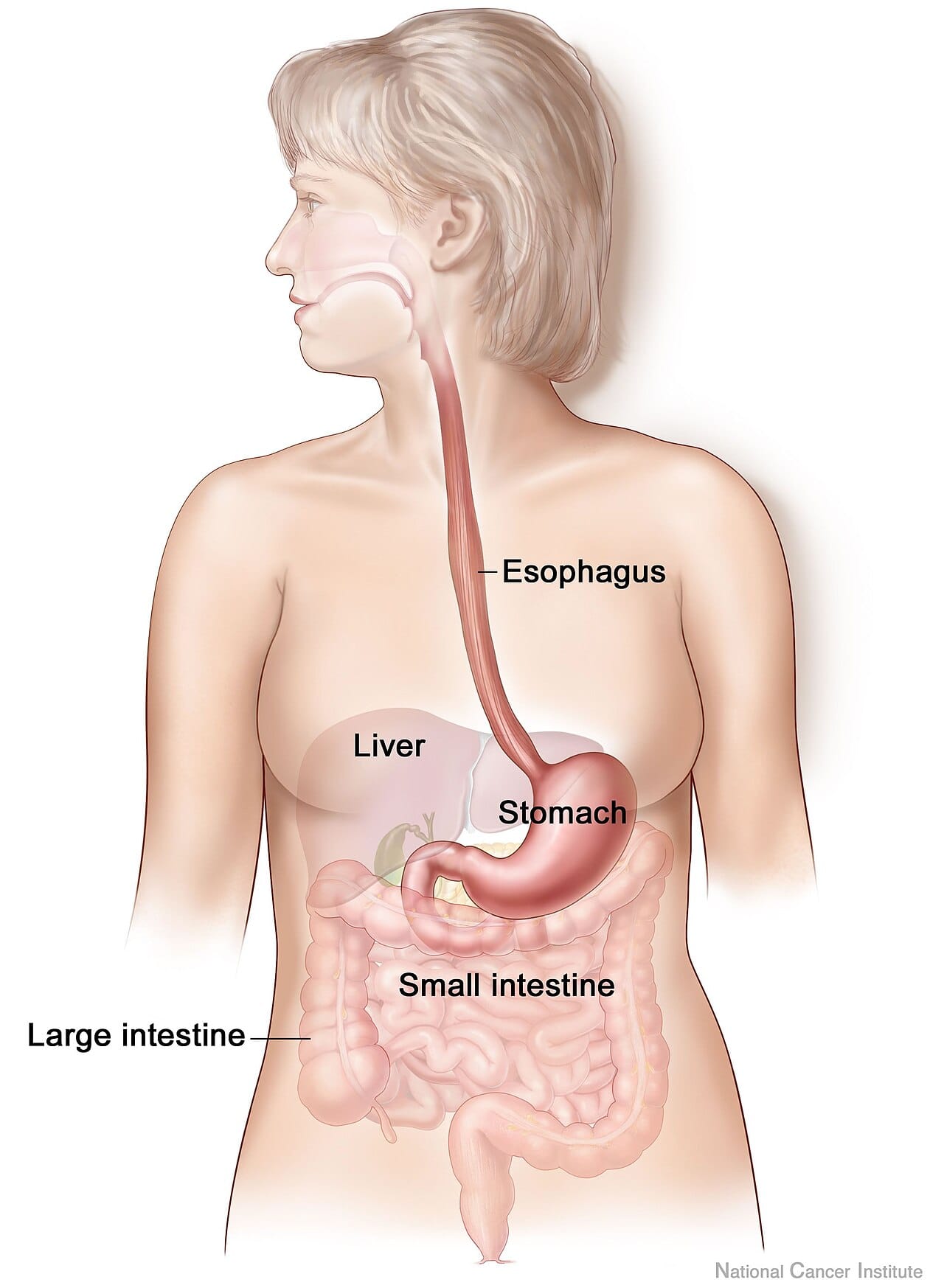
Human guts are unusually small. The digestive tract is around sixty percent of the size expected for a primate of our mass, and the reduction falls particularly on the colon, which in apes is large and supports the fermentation of fibrous plant material.
Leslie Aiello and Peter Wheeler published the hypothesis in 1995. Their argument was a budget: if total metabolic rate is constrained, an expansion in one expensive tissue must be offset by a reduction in another, and the gut is the available candidate.
The mechanism they proposed for the gut reduction was dietary. A shift toward higher quality food, more meat, more fat, and later cooking, permits a smaller digestive system because less bulk requires less processing. Richard Wrangham's separate argument that cooking was the decisive change fits neatly, since cooking externalises part of digestion and raises the energy actually extracted from food.
The account is attractive because it links three things that plainly happened, brain expansion, gut reduction and dietary change, into one causal chain with a clear constraint.
The comparative prediction is that across species, brain size should trade off against gut size. It does not hold up.
Ana Navarrete, Carel van Schaik and Karin Isler tested it in 2011 across around a hundred mammal species with measured organ masses, and found no negative correlation between brain size and gut size once body composition was controlled. Brain size correlated instead with fat reserves, negatively, which suggests a different trade: species with large brains store less fat, possibly because brains and fat are alternative strategies for surviving food shortage.
Studies in birds and fish have similarly failed to find the predicted gut trade-off in most cases.
The constraint on total metabolic rate has also weakened as an assumption. Herman Pontzer's comparative work found that human total energy expenditure is substantially higher than that of other apes when measured directly rather than inferred, which suggests humans did not merely reallocate a fixed budget but expanded it.
Several elements are not in dispute. Human guts are small, human brains are large, diet quality rose, and cooking matters. The chain linking them by a strict metabolic trade-off is the part that has not held.
Current accounts favour energy availability over reallocation. Raising total energy throughput, through higher quality food, cooking, hunting, and crucially through cooperative provisioning and food sharing, made a large brain affordable without requiring another organ to be cut back. Reduced gut size is then a consequence of the better diet rather than the price paid for the brain.
Isler and van Schaik's expensive brain framework generalises the idea: brain expansion requires either increased energy intake or reduced expenditure elsewhere, and the reduction need not be another organ. Slower growth, reduced reproductive rate, reduced activity and reliance on allomothers are all available, and several appear in the human record.
The hypothesis is a good example of a proposal that was productive despite being probably wrong. It made a clear quantitative prediction, the prediction was testable across species, and testing it produced the fat correlation that nobody was looking for.
It is classified here as a hypothesis rather than as debunked because the underlying claim, that brain expansion required an energetic solution, is correct and remains central. What has failed is the specific solution proposed, and the field has moved to alternatives rather than abandoning the question.