Epigenetics is the study of changes in how genes are used that do not involve changes to the DNA sequence itself. Every cell in a body carries the same genome, yet a neuron and a liver cell behave nothing alike, and the mechanisms that produce that difference are what the field is about.
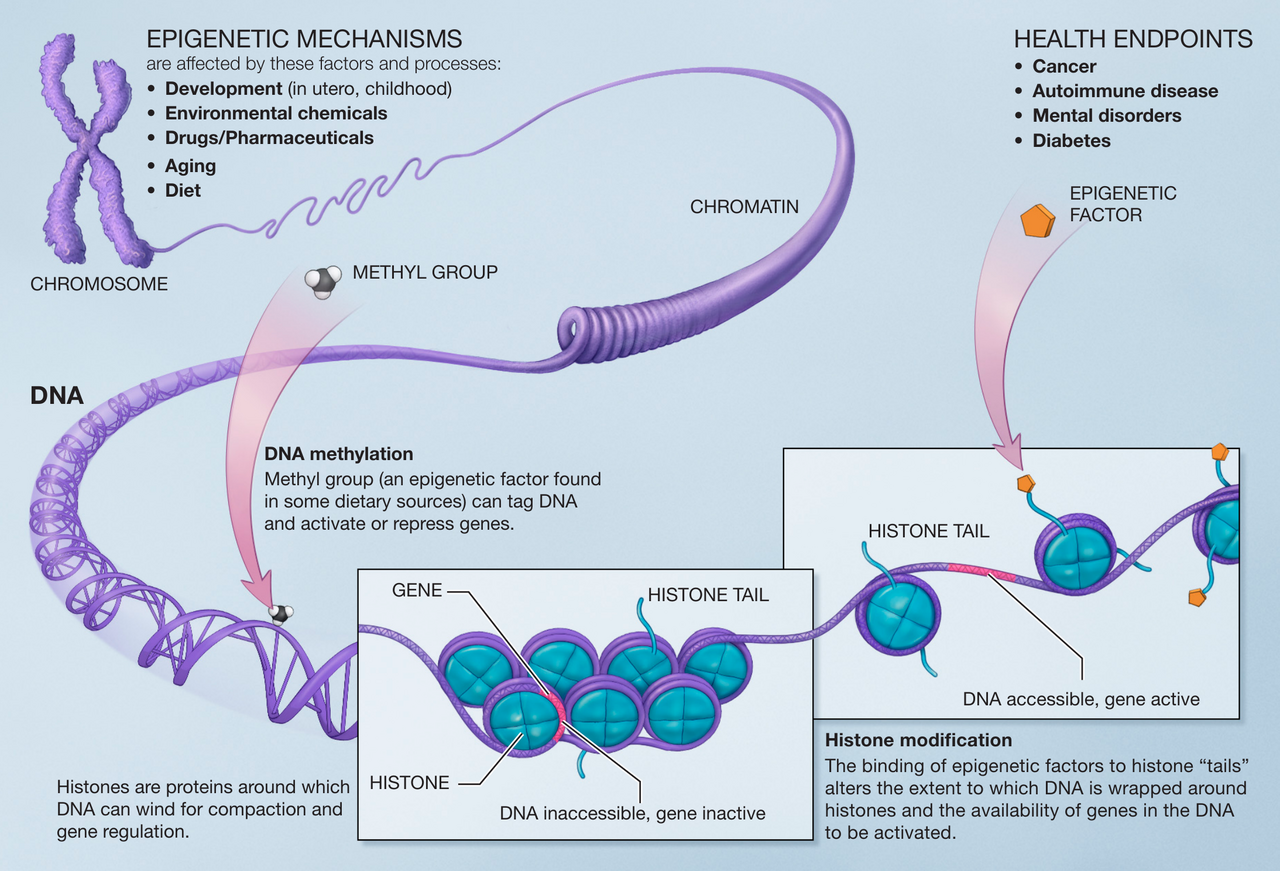
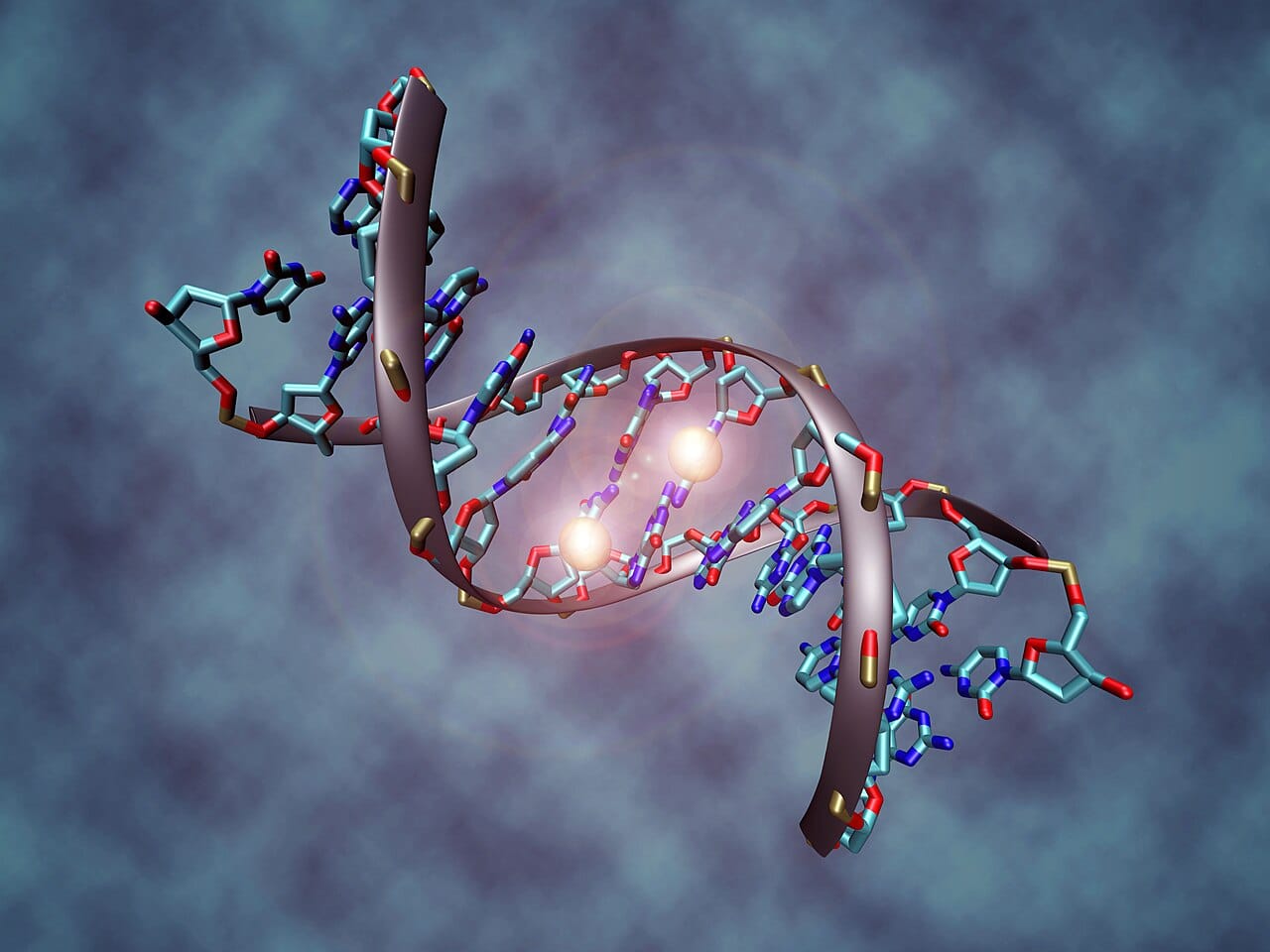
Several are well characterised. DNA methylation attaches methyl groups to cytosine bases, typically silencing a gene. Histone modification chemically alters the proteins DNA is wound around, loosening or tightening the packing and so making regions available or inaccessible. Non-coding RNAs regulate expression in several further ways. Together these constitute a layer of control sitting above the sequence, which is what the prefix means.
The term was coined by Conrad Waddington in the 1940s for the processes by which genes produce a body, and his image of a ball rolling down a landscape of branching valleys remains the standard metaphor for how a cell becomes committed to a fate.
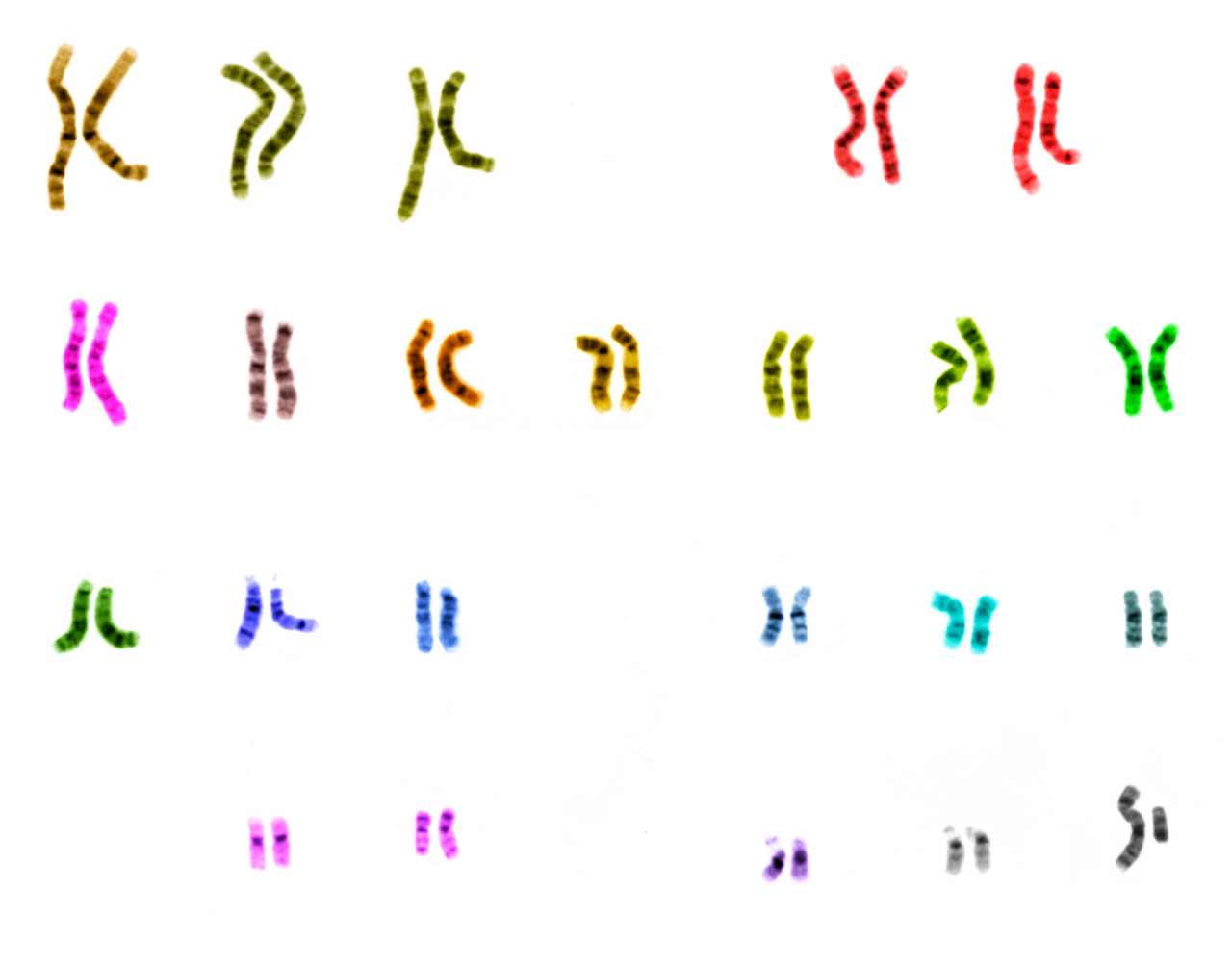
Cell differentiation is epigenetic: identical genomes producing different cell types is the phenomenon the field exists to explain. Genomic imprinting, where a gene is expressed differently depending on which parent it came from, is well documented. X-chromosome inactivation in mammals is an epigenetic process. Many cancers involve disrupted methylation patterns, and drugs targeting these mechanisms are in clinical use. None of this is disputed.
The contested claim, and the one that reaches the public, is that environmental experience can leave epigenetic marks that pass to children and grandchildren, so that famine or trauma in one generation shapes the biology of the next.
The case for it rests on animal work, where the effect is reasonably well demonstrated in plants, nematodes, and some rodent studies, and on human cohort studies, principally the Dutch Hunger Winter of 1944 and 1945 and the Overkalix records from northern Sweden, which report associations between a grandparent's food supply and a descendant's health.
The case against is mechanistic and methodological. Mammalian embryos undergo two rounds of near-complete epigenetic reprogramming, which erases most marks between generations, so a route for the information to survive has to be demonstrated rather than assumed. Human cohorts cannot easily separate epigenetic inheritance from the alternatives: shared environment, socioeconomic continuity, effects on the developing foetus and on its already-formed germ cells, and ordinary genetic variation. Sample sizes are small and replication is limited.
The field's own assessment is more cautious than the popular one. Transgenerational epigenetic inheritance is established in some organisms, plausible in humans, and not demonstrated. Claims that it overturns genetics, or revives Lamarck, considerably outrun the evidence.