The proposal that psychosis results from excess dopamine signalling. It has organised psychiatry for sixty years, it was inferred backwards from drugs that worked, and in 2024 a drug was approved that treats schizophrenia with no dopaminergic action at all.
The reasoning was pharmacological and, as with the serotonin account of depression, ran from treatment to cause.
Chlorpromazine was developed as an antihistamine and found in 1952 to calm psychotic agitation. It transformed psychiatric care and emptied asylums. Its mechanism was worked out later: it blocks dopamine D2 receptors.
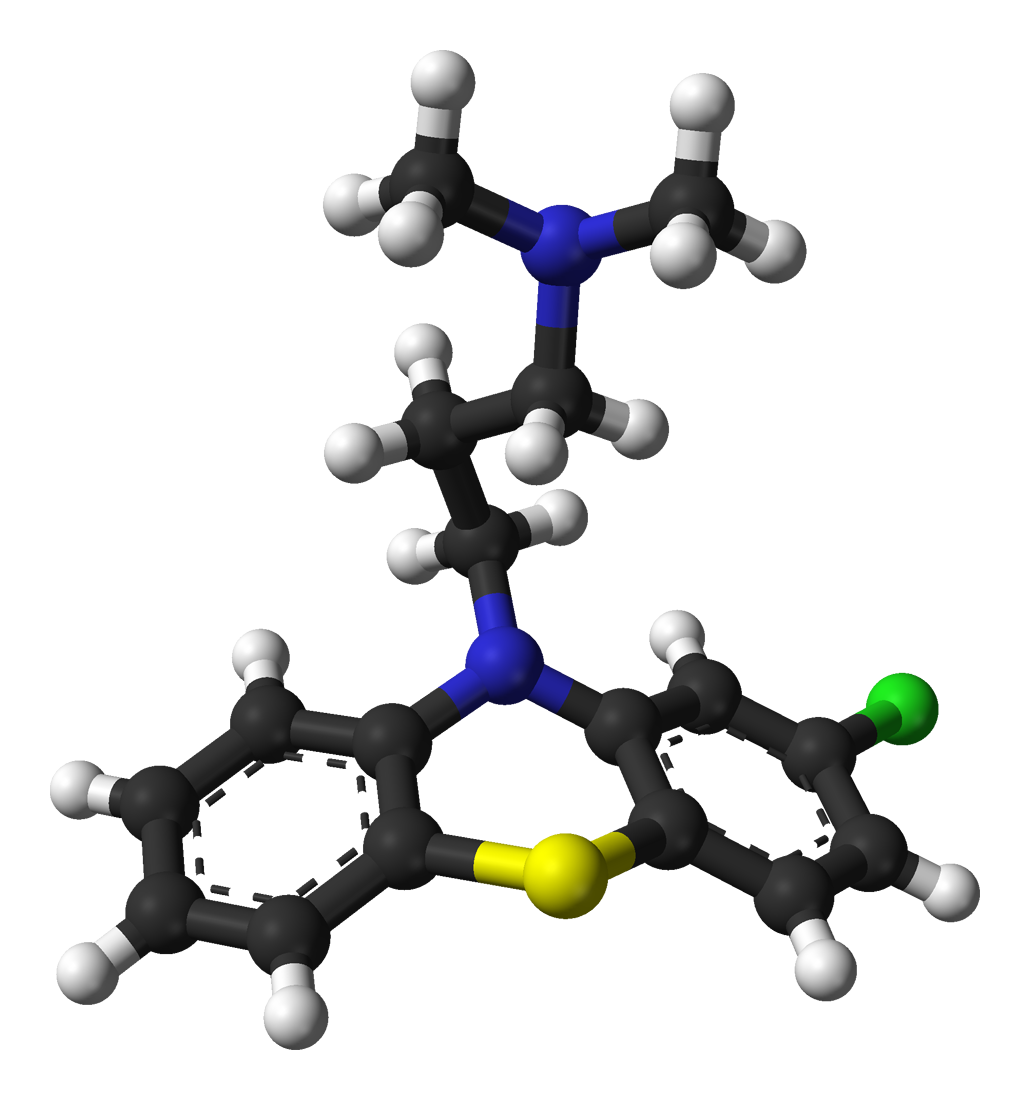
Arvid Carlsson established dopamine as a neurotransmitter and showed that antipsychotics act on it, work recognised with the 2000 Nobel Prize. Philip Seeman then demonstrated that the clinical potency of antipsychotic drugs correlates almost perfectly with their affinity for the D2 receptor, across compounds of very different chemistry.
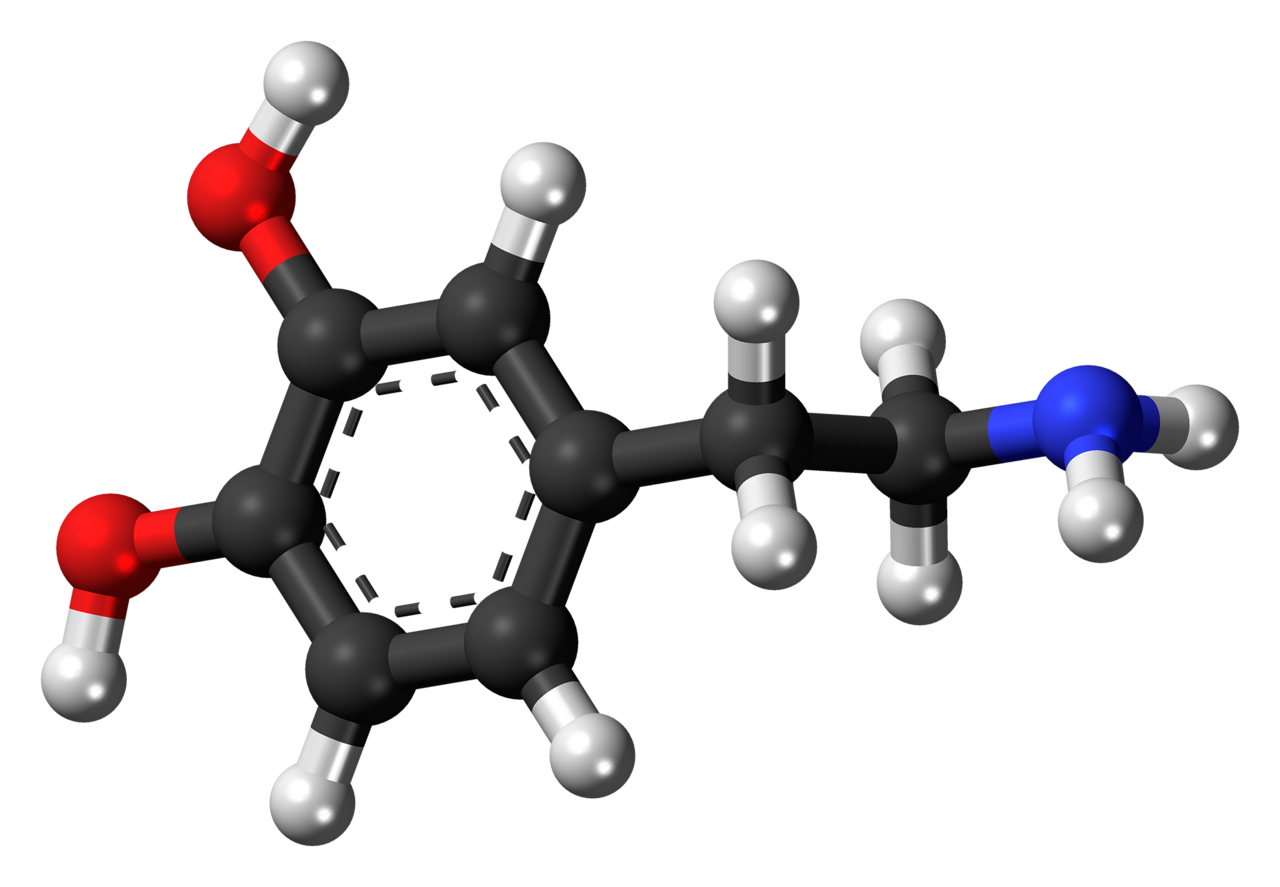
Amphetamine, which increases dopamine release, produces a psychosis clinically difficult to distinguish from schizophrenia. Levodopa for Parkinson's disease can do the same.
That is a strong package: a dose-response relationship across many drugs, and two ways of inducing the symptoms by raising dopamine.
Three problems have been recognised for decades.
Timing. D2 blockade occurs within hours; clinical improvement takes weeks. Whatever produces the benefit is downstream.
Coverage. Antipsychotics treat positive symptoms, hallucinations and delusions, reasonably well. They do little for negative symptoms, the flattening of motivation and affect, and little for cognitive impairment, and those are what most determine long-term functioning.
Non-response. Roughly a third of patients do not respond adequately to D2 blockade at any dose. Clozapine works in many of these and has a relatively weak affinity for D2, which does not fit.
The hypothesis was revised rather than abandoned. Version three, set out by Oliver Howes and Shitij Kapur in 2009, locates the abnormality upstream at dopamine synthesis and release in the striatum rather than at the receptor, and treats it as a final common pathway that many causes, genetic and environmental, converge on. Imaging supports elevated presynaptic dopamine synthesis capacity in psychosis, and this remains the most defensible version.
Kapur's aberrant salience account gives it psychological content: dopamine signals that something is significant, so dysregulated dopamine attaches significance to things that do not warrant it, and delusions are the mind's attempt to explain why an ordinary event felt momentous.
The strongest evidence against dopamine being the whole story is a drug that works without touching it.
Xanomeline was developed in the 1990s as a muscarinic agonist for Alzheimer's disease and abandoned for peripheral side effects. Combined with trospium, which blocks muscarinic receptors outside the brain and does not cross into it, the peripheral effects are suppressed while the central action remains.
The combination was approved in the United States in 2024 for schizophrenia, on the EMERGENT trials, which showed improvement in both positive and negative symptoms. It is the first antipsychotic with an entirely non-dopaminergic mechanism, acting on M1 and M4 muscarinic receptors.
This does not refute the dopamine hypothesis. Muscarinic receptors modulate dopamine release, so the effect may still run through dopamine indirectly, and that is the most common reading.
What it does establish is that D2 blockade is not the only route to treating psychosis, which sixty years of pharmacology had implied. It also matters clinically, because the metabolic and movement side effects of D2 blockade are severe, contribute to the shortened life expectancy associated with schizophrenia, and are a major reason patients stop treatment.

Elevated presynaptic dopamine in psychosis is measured and real. Dopamine blockade treats positive symptoms and the dose-response relationship is close to exact.
What has never been shown is that dopamine dysregulation is the cause rather than a downstream consequence, and the accumulating evidence suggests schizophrenia is not one condition with one mechanism. Glutamate, particularly NMDA receptor function, has substantial supporting evidence, since ketamine and phencyclidine produce a psychosis including negative and cognitive symptoms that amphetamine does not. Inflammation and immune involvement are implicated in a subset. Genetic studies find hundreds of variants of small effect spread across many systems rather than concentrated in dopamine pathways.
The likeliest position is that dopamine dysregulation is a common final pathway for positive symptoms arising from several different causes, which is close to the current formulation and is considerably weaker than the chemical imbalance account patients were given for decades.