The proposal that conditions in the womb and in early infancy set a person's risk of heart disease, diabetes and other conditions decades later. It began with an unlikely observation in old English birth records, it has an exceptionally clean natural experiment behind it, and its mechanism remains partly obscure.
David Barker, an epidemiologist at Southampton, noticed in the 1980s that the geographical distribution of coronary heart disease deaths in England and Wales matched the distribution of infant mortality sixty years earlier.
That is a strange correlation. Poor areas in the 1900s were producing heart disease in the 1980s, in a generation that had grown up afterwards.
He tracked down detailed birth records kept by midwives in Hertfordshire from 1911, containing birth weights and weights at one year for thousands of individuals, and linked them to subsequent death records.

Lower birth weight was associated with higher rates of death from coronary heart disease decades later. The relationship was graded rather than a threshold effect.
The finding was initially dismissed and then replicated across many cohorts in different countries. It is now robust.
Barker's interpretation, the thrifty phenotype hypothesis developed with Nicholas Hales, is that a fetus experiencing poor nutrition adjusts its development.
Growth is prioritised toward the brain at the expense of other organs, metabolic settings are adjusted toward storing rather than expending energy, and the number of nephrons in the kidney and beta cells in the pancreas is reduced permanently, since those are laid down before birth and not added to later.
Those adjustments are appropriate for a scarce environment. In an environment of abundance they become liabilities, producing insulin resistance, hypertension and cardiovascular disease.
The framework is called predictive adaptive response: the fetus forecasts its future environment from cues available in the womb and configures itself accordingly. Mismatch between forecast and reality causes disease.

The strongest evidence comes from a natural experiment with unusually clean structure.
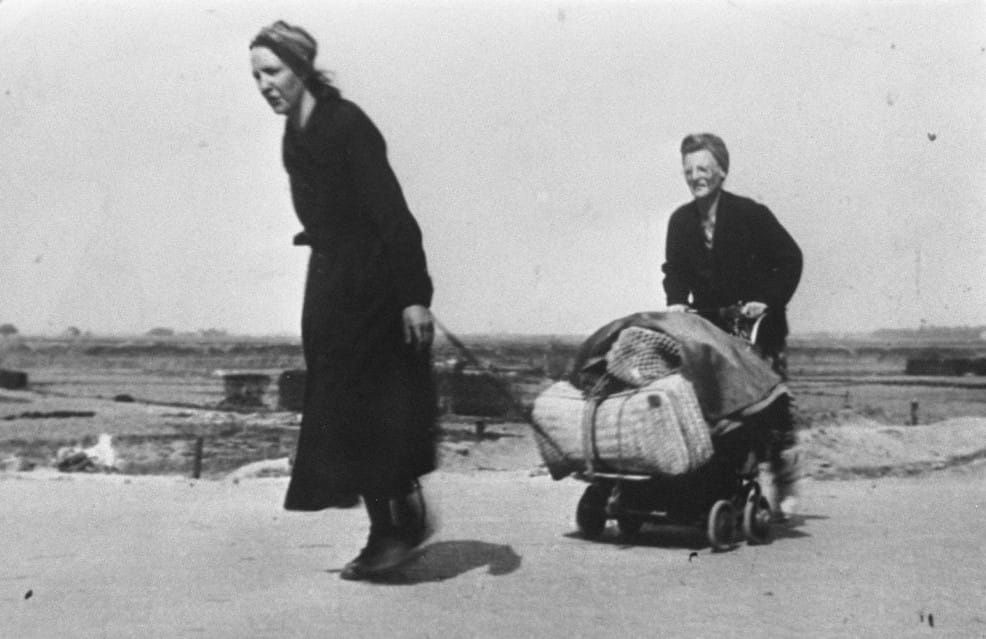
In the winter of 1944 to 1945 the western Netherlands suffered a severe famine under German blockade, with rations falling to a few hundred calories per day. It began and ended abruptly, affected a well-documented population with good medical records, and lasted around six months.
That structure permits comparison of people exposed at different stages of gestation against siblings and against the population before and after.
The findings are specific and depend on timing. Exposure in early gestation was associated with higher rates of obesity, coronary heart disease, altered lipid profiles and, in some analyses, schizophrenia. Exposure in late gestation was associated with lower birth weight and impaired glucose tolerance, without the same increase in cardiovascular disease.
Different windows produce different outcomes, which is what a developmental programming account predicts and which confounding does not readily explain.
Follow-up studies found altered DNA methylation at specific genes in exposed individuals six decades later, particularly at the imprinted IGF2 locus, which provides a molecular trace of the exposure.
The association is established. The interpretation is argued.
Genetic confounding is the main alternative. Genes affecting fetal growth may also affect adult metabolism, producing the correlation without any programming. Studies within families and Mendelian randomisation analyses have found the association survives partial adjustment, and it is not fully eliminated.
The predictive adaptive response framing has been criticised as teleological. A fetus does not forecast anything; what happens is that development proceeds differently under constraint, and calling the result a prediction may attribute purpose to what is simply damage or an unavoidable consequence.
The mechanism is incompletely specified. Epigenetic marks are the leading candidate and the evidence in humans is largely correlational, with effect sizes at individual sites that are small relative to the health outcomes they are supposed to explain.
And birth weight is a crude proxy. It combines gestational length, nutrition, placental function and genetics, and the relevant exposure may be something birth weight only partly reflects.
The implications are unusually direct for a hypothesis of this kind.
Maternal nutrition becomes a public health intervention with effects measurable in the next generation's chronic disease rates, which changes how the return on antenatal care should be calculated.
It also shifts responsibility. Chronic disease framed as a consequence of adult lifestyle choices looks different if a substantial component was set before birth, and that has consequences for how prevention is targeted and for how patients are treated.
The hypothesis is filed here because the epidemiological association is strong, the natural experiments support a causal contribution, and the mechanism connecting an intrauterine exposure to a disease sixty years later has not been established.