Almost every organism runs an internal clock with a period of about a day, generated by a molecular feedback loop inside individual cells. It runs without any external cue, it is set by light, and disrupting it has measurable consequences for health.
The decisive observation is old. Jean-Jacques d'Ortous de Mairan reported in 1729 that a mimosa plant, whose leaves open by day and close at night, continued the cycle when kept in constant darkness.
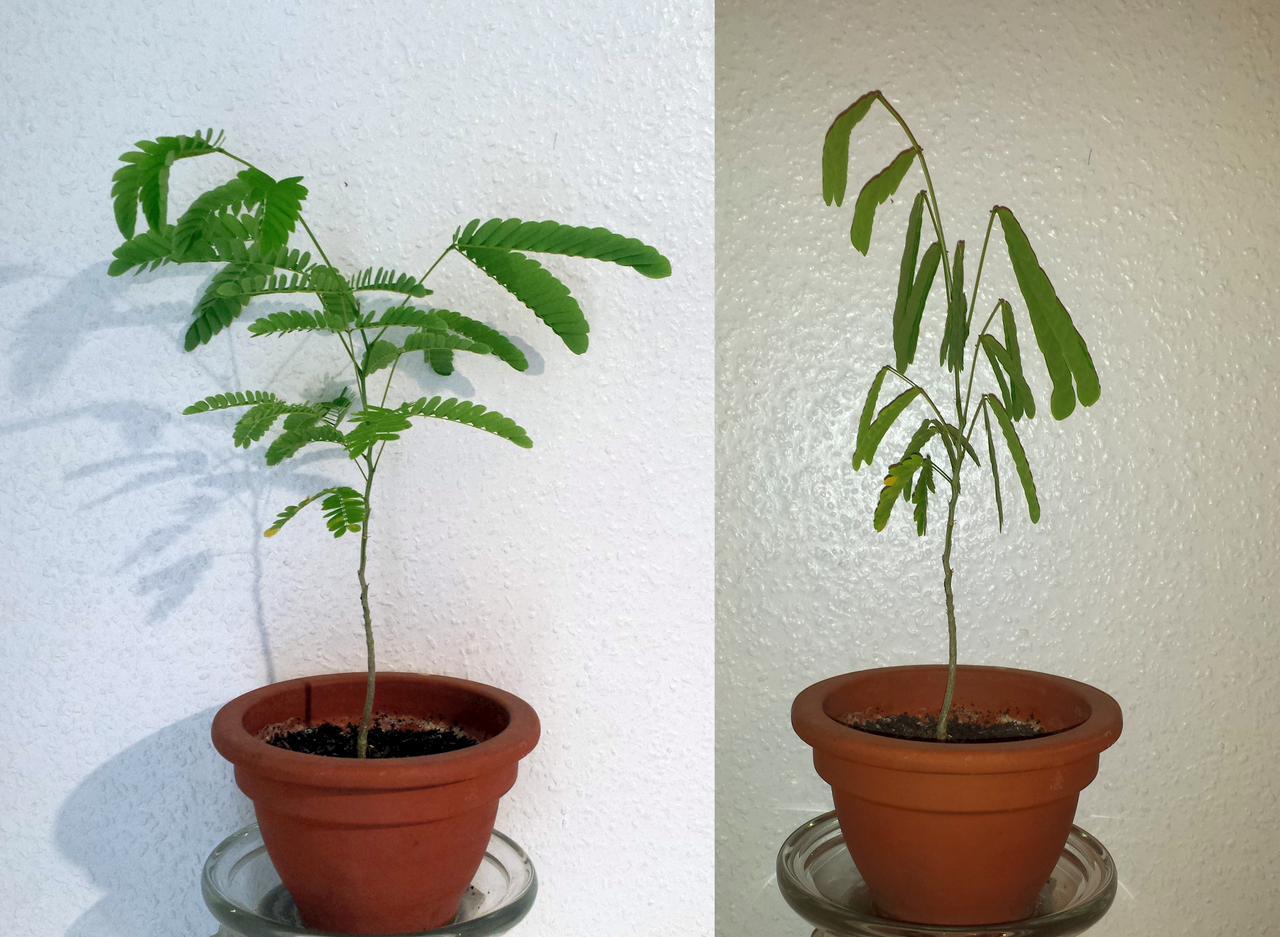
The rhythm persists without any cue, which means it is generated rather than responsive. The same is true of humans: in isolation experiments without clocks or daylight, people continue a sleep-wake cycle, running slightly longer than 24 hours, which is why the rhythm is called circadian, meaning about a day.
Running slightly long matters. A clock that is not exactly 24 hours must be reset daily, and being slightly slow makes it easier to advance with morning light than a fast clock would be to delay.
The clock is a transcription-translation feedback loop, and it operates inside single cells.
Certain genes are transcribed and their protein products accumulate. Those proteins then inhibit their own transcription. Levels fall, inhibition lifts, transcription resumes. The delays involved in transcription, translation, protein modification and transport set the period at roughly 24 hours.
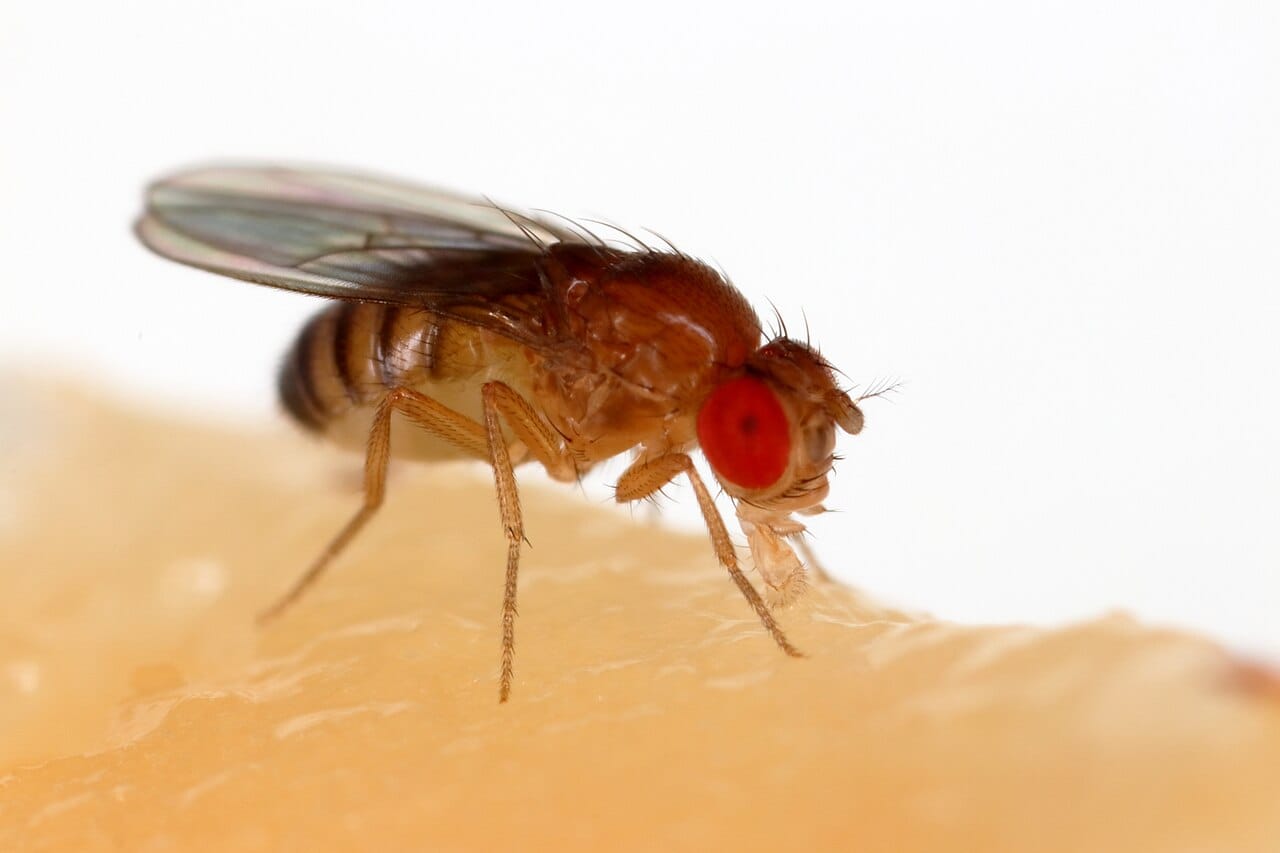
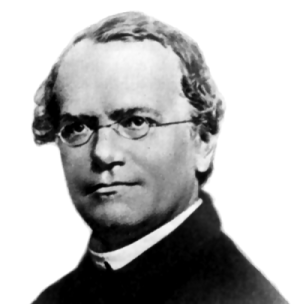
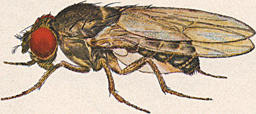
Seymour Benzer and Ronald Konopka found the first clock mutants in fruit flies in 1971, identifying the period gene. Jeffrey Hall, Michael Rosbash and Michael Young worked out the mechanism, isolating the gene in 1984 and identifying the feedback loop and its components over the following years. They shared the 2017 Nobel Prize in Physiology or Medicine.
The mammalian version uses different genes performing the same architecture, which indicates the loop evolved more than once or diverged early.
Light is the dominant cue. In mammals it acts through a specific pathway that is not the one used for vision.
A small population of retinal ganglion cells contains melanopsin and responds directly to light, particularly in the blue part of the spectrum, independently of rods and cones. Some people who are blind through photoreceptor loss retain normal entrainment through this pathway, which is how it was identified.
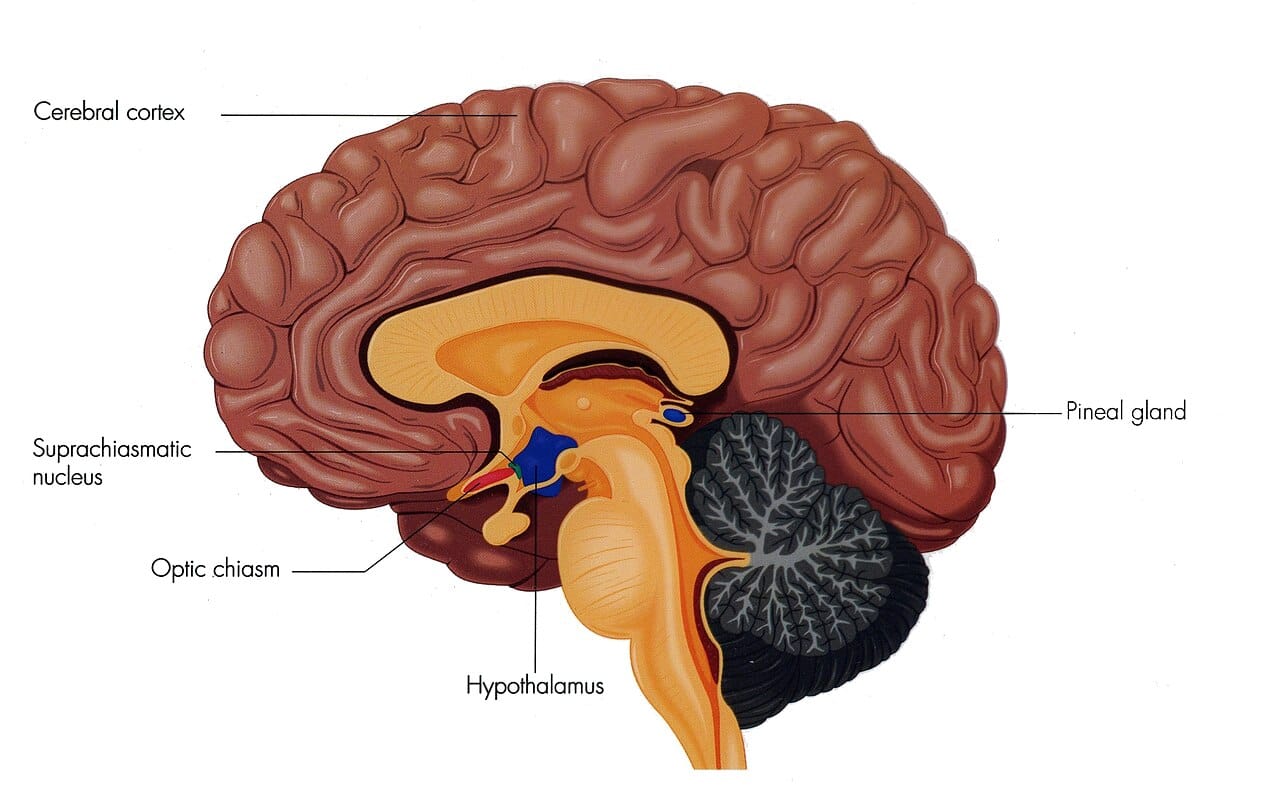
These cells project to the suprachiasmatic nucleus in the hypothalamus, a structure of about twenty thousand neurons that acts as the master clock. Destroying it abolishes coordinated rhythms; transplanting one from a donor with a different period transfers that period to the recipient, which is about as direct a demonstration as physiology offers.
Peripheral clocks exist in liver, kidney, heart, lung and most other tissues, each running the same molecular loop. The suprachiasmatic nucleus coordinates them, partly through melatonin from the pineal gland and partly through body temperature and feeding cycles.
Feeding time is a strong cue for peripheral clocks and a weak one for the master clock, which is why eating at unusual hours can desynchronise the liver from the brain.
Roughly forty percent of protein-coding genes show circadian expression in at least one tissue. Body temperature, cortisol, blood pressure, alertness, digestive enzyme output and immune activity all vary predictably across the day.
Drug effects vary with timing, sometimes substantially, and chronotherapy attempts to exploit this. The timing of chemotherapy has been shown to affect both toxicity and efficacy in some regimens.
Heart attacks cluster in the morning hours, when blood pressure rises and platelets are more prone to aggregate.
That shift work is associated with worse health outcomes is well established. Rotating night work correlates with cardiovascular disease, metabolic syndrome, and some cancers, and the International Agency for Research on Cancer classified shift work involving circadian disruption as probably carcinogenic in 2007.
How much of that is causal is harder. Shift workers differ in sleep quantity, diet, socioeconomic status and light exposure, and separating circadian misalignment from those is difficult in observational data. Controlled laboratory studies imposing misalignment on healthy volunteers do produce measurable metabolic changes within days, which supports a causal contribution.
Chronotype, whether a person naturally runs early or late, is substantially heritable and shifts with age, running late in adolescence and early in later life. The argument for later school start times rests on this and has reasonable supporting evidence.
Blue light from screens suppresses melatonin, which is well demonstrated in laboratory conditions at high intensity. Whether ordinary evening device use meaningfully disrupts sleep is less clear, and studies find effects smaller than the public discussion implies.