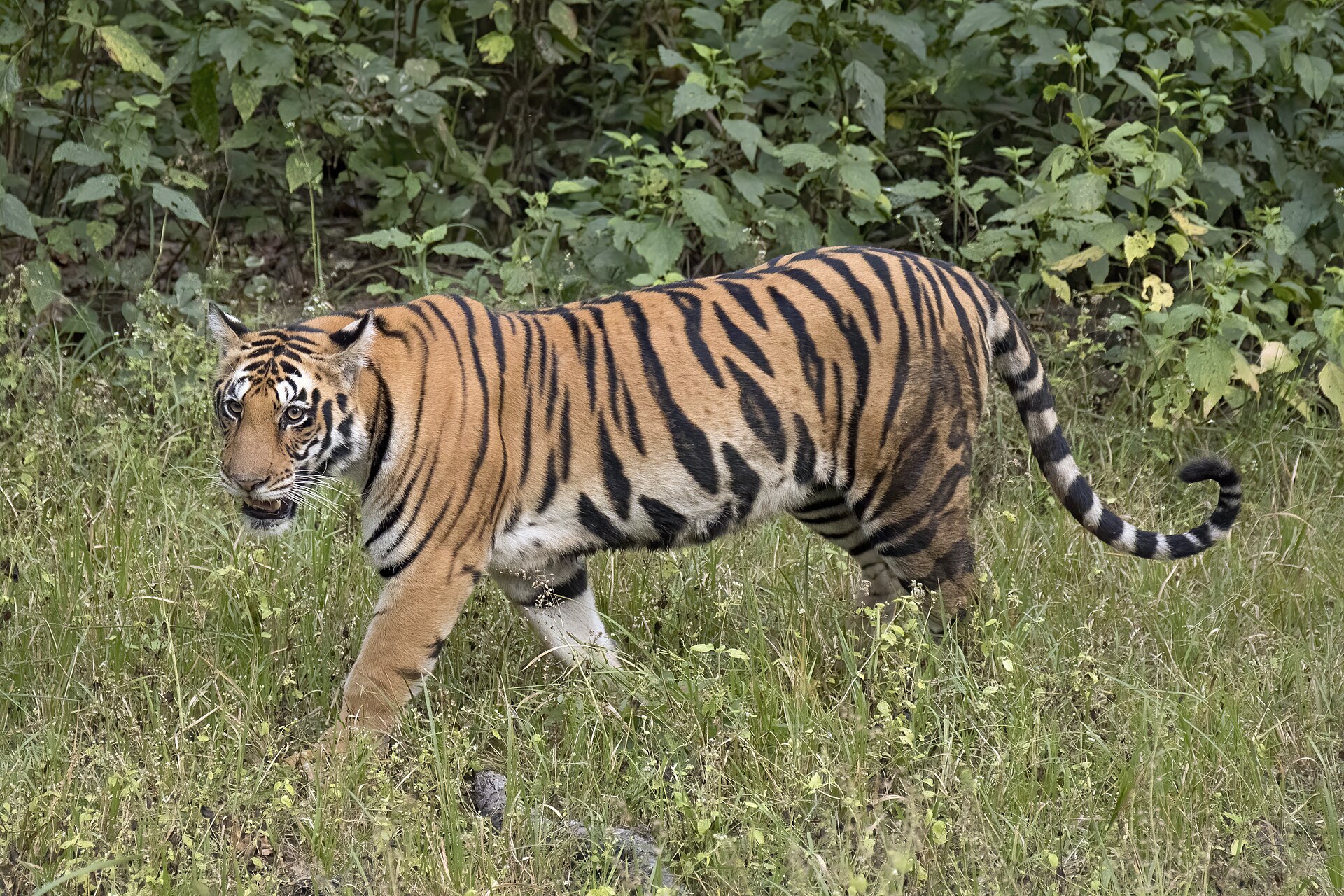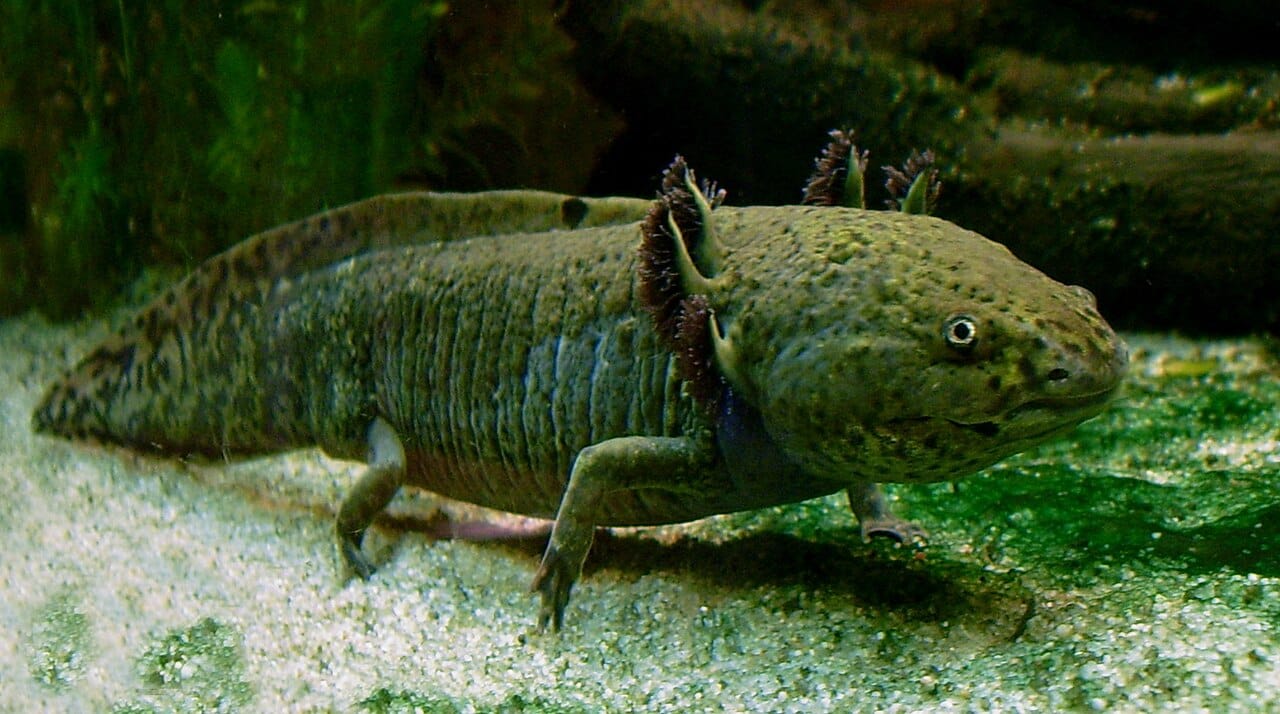
The axolotl, Ambystoma mexicanum, is a salamander that never leaves the larval form. It reaches sexual maturity while keeping its gills and its aquatic body, it regrows amputated limbs and portions of its brain and heart, and it is one of the most heavily studied animals in laboratories worldwide while being critically endangered in the only lake system it comes from.
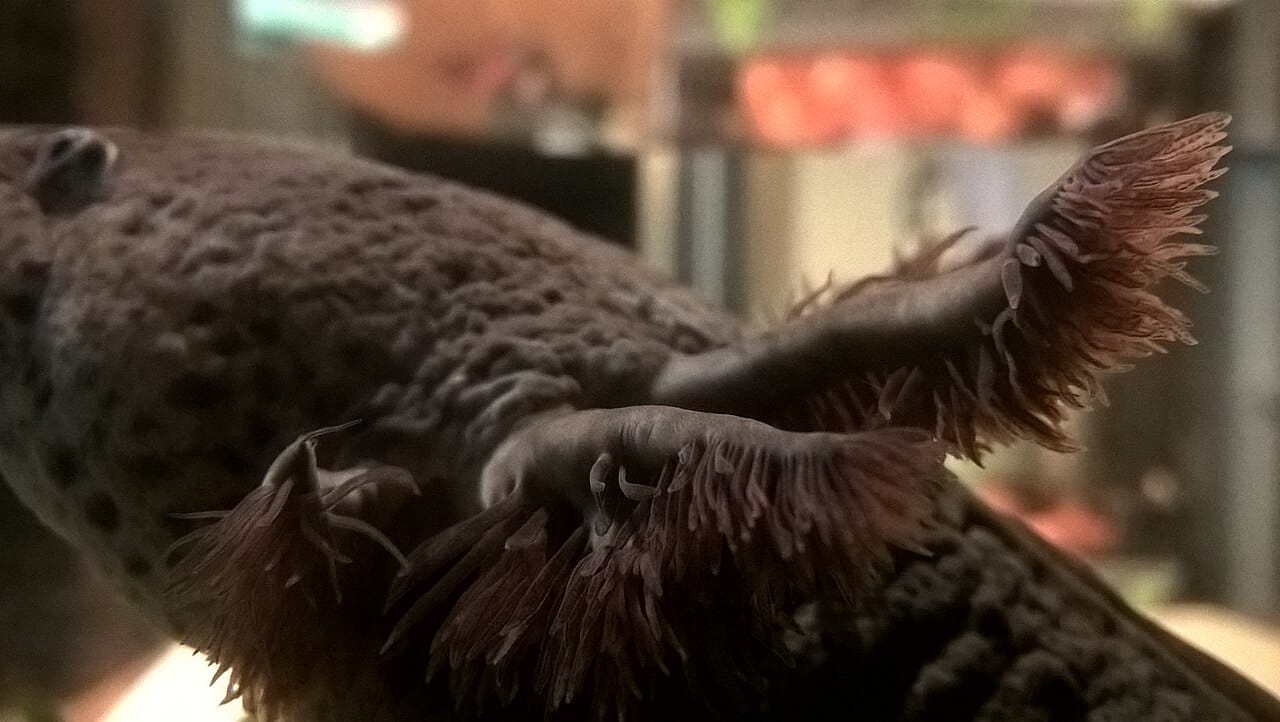
Most salamanders hatch as aquatic larvae with feathery external gills and a finned tail, then metamorphose into terrestrial adults with lungs. The axolotl does not. It becomes sexually mature in the larval body, a condition called neoteny or paedomorphosis.
The mechanism is endocrine rather than structural. Metamorphosis in amphibians is driven by thyroid hormone, and the axolotl's thyroid produces very little of it. The tissues remain capable of responding: an axolotl injected with thyroxine will metamorphose into a terrestrial salamander it never otherwise becomes, losing its gills and changing its skin and eyes. Such animals tend to be less healthy and shorter-lived, and the induction is no longer routinely done.
Neoteny in this lineage is generally read as an adaptation to a stable, permanent, deep lake where there was no advantage in leaving the water and considerable risk in the surrounding dry basin.
The axolotl regrows amputated limbs completely, with bone, muscle, nerve, vasculature and skin correctly patterned, and does so repeatedly without scarring. It also regenerates parts of the spinal cord, heart, jaw, tail, and portions of the brain, and accepts transplanted tissue readily.
The process runs through a blastema, a mass of dedifferentiated cells at the wound surface that proliferates and then re-forms the missing structure. Crucially the cells retain positional memory: a blastema formed at the wrist makes a hand, not a whole arm, so the cells know where along the limb they are.
Why axolotls can do this and mammals cannot is not fully answered. Contributing factors identified include a wound epidermis that forms without fibrotic scarring, an immune response dominated by macrophages in a way that is required for regeneration, and retention of developmental signalling capacity into adulthood.
The genome, sequenced in 2018, is about ten times the size of the human genome at roughly 32 billion base pairs, one of the largest ever assembled at the time and a substantial technical obstacle to this work for years.
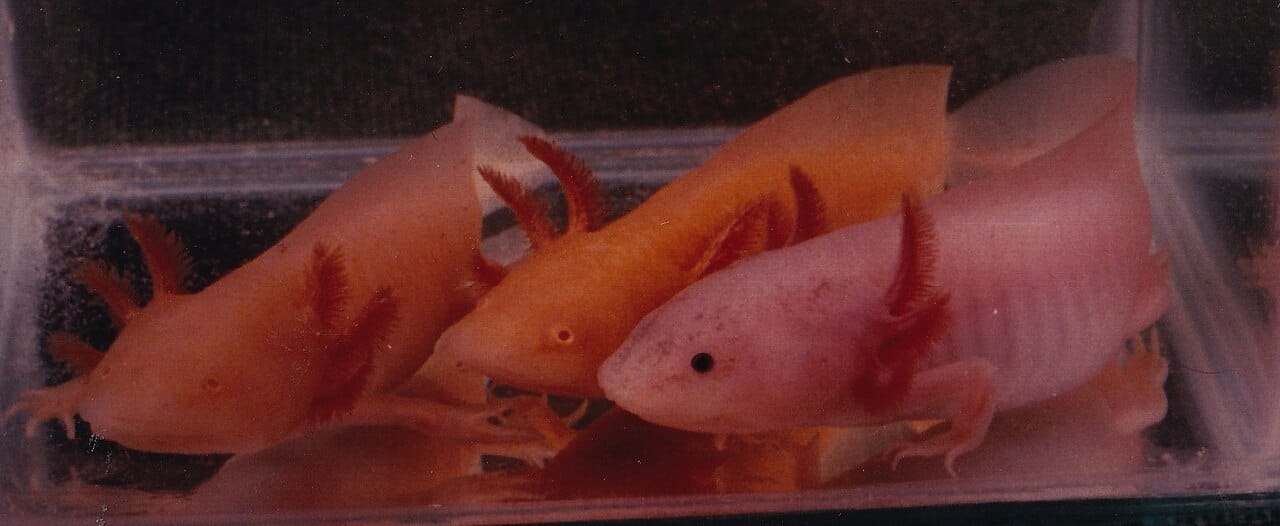
The axolotl is native to the lake system of the Valley of Mexico, principally Lake Xochimilco and formerly Lake Chalco. The pale pink animal recognised worldwide is a leucistic laboratory and pet variant. Wild axolotls are dark brown or black with mottling, and would be difficult to see in a canal.
It was significant in Aztec culture and the name comes from Nahuatl, associated with the god Xolotl, who according to one account transformed into an axolotl to escape sacrifice. It was also eaten, and was still sold in Mexico City markets into the twentieth century.
Its scientific career began with specimens sent to Paris in 1863, where they bred readily and where Auguste Duméril's induced metamorphosis in 1865 made them famous. Essentially all laboratory axolotls descend from a small founding stock from that period, with some subsequent introgression from tiger salamanders, which is a real complication for their use as a model organism.
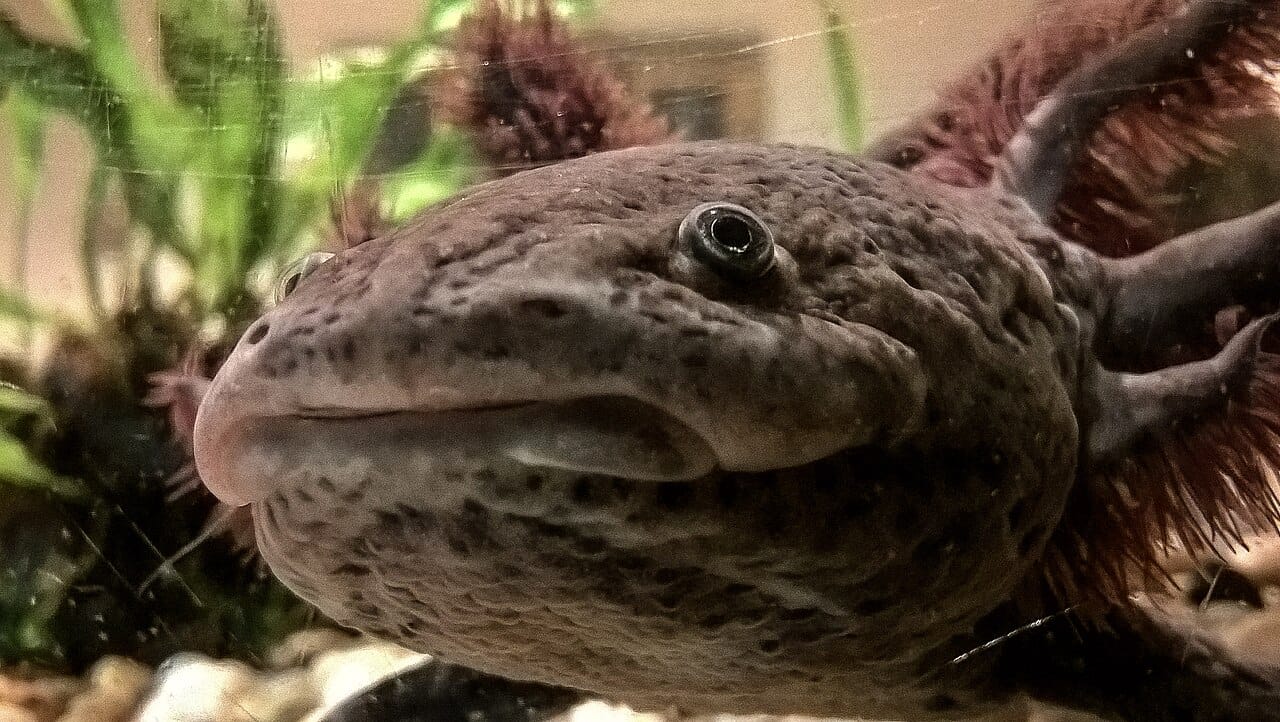
Adults reach roughly 20 to 30 centimetres. They feed by suction, snapping the mouth open to draw in worms, insect larvae, small fish and crustaceans, and they have small teeth used for gripping rather than chewing.
They breathe three ways: through the external gills, through rudimentary lungs by gulping at the surface, and through the skin. Lifespans of ten to fifteen years are normal in captivity.
Fertilisation is external in the sense that the male deposits a spermatophore which the female takes up with her cloaca. Females lay several hundred eggs.
The axolotl has been listed as Critically Endangered since 2006, and the wild population has collapsed on a timescale that is difficult to overstate.
Survey density in Xochimilco fell from around 6,000 individuals per square kilometre in 1998 to about 100 in 2008 and 36 in 2014. A 2014 search initially failed to find a single animal before locating two. Current IUCN estimates of the remaining wild population run between 50 and 1,000, and a UNAM analysis has projected functional disappearance from the canals.
The causes are the standard ones for a small endemic in an urban wetland: water quality decline as Mexico City's wastewater enters the canals, loss of habitat as the chinampa agricultural system is converted, and introduced carp and tilapia that eat eggs and larvae and compete for food.
Restoration work centred on UNAM's Ecological Restoration Laboratory has focused on chinampa refuges filtered against introduced fish, and a 2025 study reported that captive-bred axolotls released into restored and artificial wetlands survived a monitoring period and foraged successfully, which is the first solid evidence that reintroduction is viable at all.
There are more axolotls in laboratories and aquariums than there could ever be in Xochimilco, and this is not a rescue. Captive stock is inbred, partly hybridised, and selected for traits that suit a tank. The animal that regenerates limbs is abundant; the population that produced it is nearly gone, and those are not the same thing.