Cells kill themselves on instruction, following a controlled programme that dismantles them tidily. It builds bodies by removing what is not needed, it disposes of damaged cells before they become dangerous, and its failure is one of the defining features of cancer.
Necrosis is death by injury. The cell swells, its membrane ruptures, and its contents spill into the surrounding tissue, which provokes inflammation. It is uncontrolled and it damages neighbours.
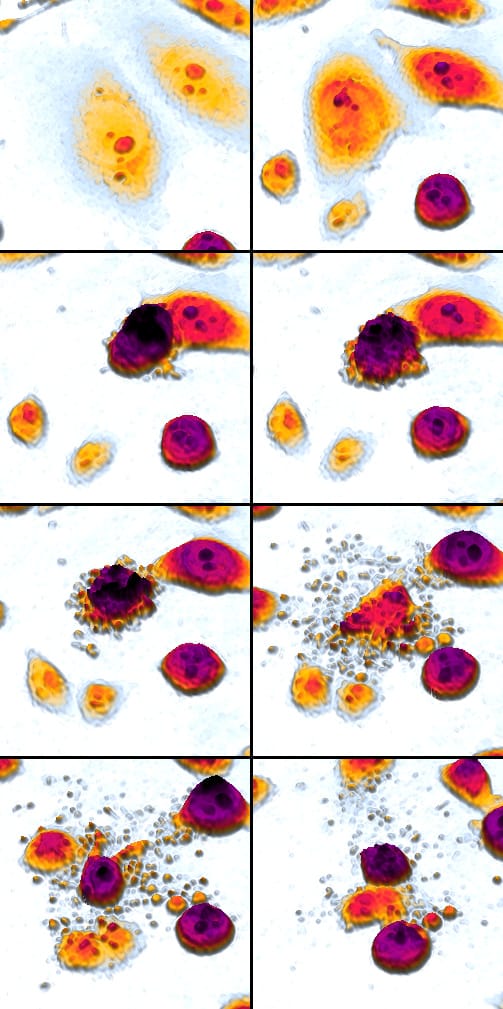
Apoptosis is different in every respect. The cell shrinks, the chromatin condenses, the DNA is cut into regular fragments, and the cell breaks into membrane-bound packages that neighbouring cells engulf and recycle. Nothing leaks. No inflammation follows.
The name was proposed in 1972 by John Kerr, Andrew Wyllie and Alastair Currie, from a Greek word for the falling of leaves. The paper argued that this was not injury but a regulated programme, which was a substantial claim at the time.
The decisive evidence came from Caenorhabditis elegans, a nematode about a millimetre long.
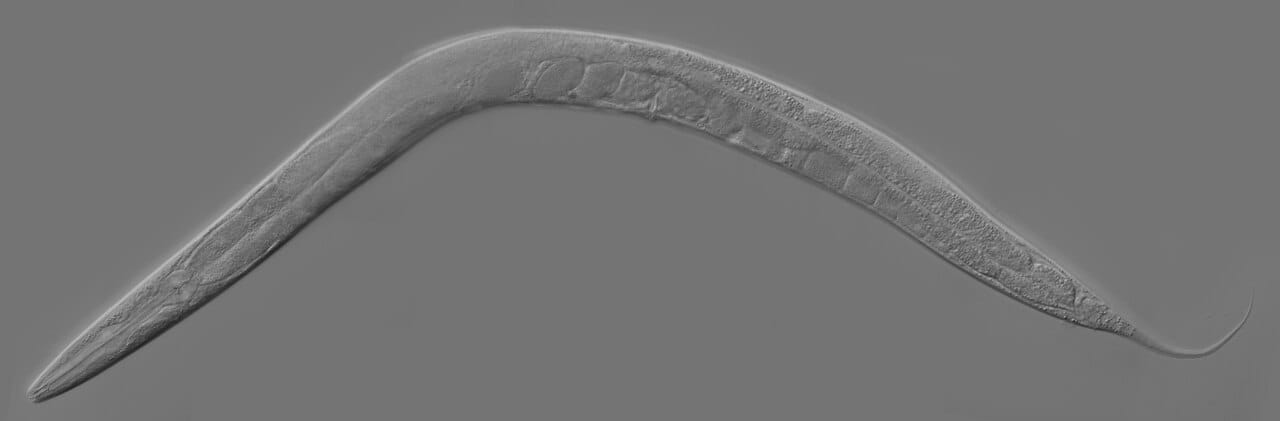
Sydney Brenner established it as a model organism, and John Sulston mapped its complete cell lineage: every division from egg to adult, traced under a microscope. The adult hermaphrodite has 959 somatic cells, and the developmental programme generates 1,090.
The missing 131 die. The same 131, at the same times, in every animal. That is not damage; it is schedule.
Robert Horvitz identified the genes controlling it, showing that mutations in specific genes prevented the deaths and that the cells then survived. He found the pathway had counterparts in humans. Brenner, Sulston and Horvitz shared the 2002 Nobel Prize in Physiology or Medicine.
The executioners are caspases, proteases that exist as inactive precursors and are activated by cleavage, which allows an irreversible cascade to run quickly once triggered.
Two routes converge on them.
The intrinsic pathway responds to internal damage: DNA breaks, oxidative stress, loss of survival signals. It runs through the mitochondrion, which releases cytochrome c into the cytoplasm. Cytochrome c normally works in energy production, and its appearance outside the mitochondrion is the signal. Whether it is released is controlled by the Bcl-2 family, which contains both proteins promoting release and proteins preventing it, and the balance between them decides.
The extrinsic pathway responds to external instruction, through death receptors on the cell surface engaged by signals from other cells, principally immune cells.
Development. Fingers and toes are separated by the death of the tissue between them, and failure produces webbing. The tadpole tail is removed this way. Excess neurons are produced and roughly half die, with survival depending on obtaining growth factors from their targets, which is how the nervous system matches neuron numbers to what needs innervating.
Immune development. Lymphocytes are generated with randomly assembled receptors, and those recognising the body's own tissue are induced to die. This is how self-tolerance is established, and its failure contributes to autoimmune disease.
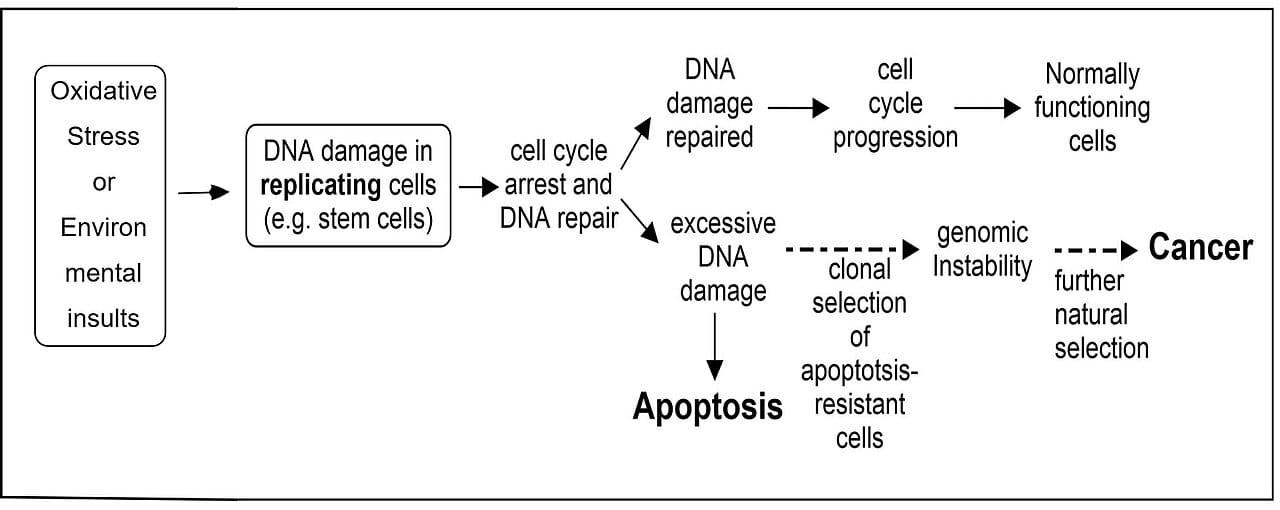
Quality control. A cell with irreparable DNA damage is a cancer risk, and destroying it is safer than repairing it badly. Roughly fifty to seventy billion cells die by apoptosis daily in an adult human, and the mass is comparable to body weight over a year.
Evading apoptosis is one of the recognised hallmarks of cancer, and the connection is direct.
p53 is the most frequently mutated gene in human cancer, altered in around half of all tumours. Its function is to halt the cell cycle on DNA damage and, if repair fails, to trigger apoptosis. Losing it removes the mechanism that would otherwise destroy a damaged cell.
Bcl-2 was discovered in follicular lymphoma, where a chromosomal translocation drives its overexpression. It was the first oncogene found to work by preventing death rather than by promoting division, which was a conceptual shift: a cancer can grow by failing to die.
Most chemotherapy and radiotherapy work by inducing apoptosis, which is why tumours with defective apoptotic machinery resist both. Venetoclax, approved for several leukaemias, inhibits Bcl-2 directly and restores the cell's ability to kill itself.
Apoptosis is no longer the only regulated death known. Necroptosis is a programmed form that does rupture the cell and provoke inflammation, which is useful against pathogens that block apoptosis. Pyroptosis is an inflammatory death used in immune defence. Ferroptosis depends on iron and lipid oxidation and is of considerable interest in cancer therapy.
The picture that emerged is that cells have several ways of dying deliberately, chosen according to circumstance, and that death is as regulated as division.