The systematic recording and reporting of financial activity. Double-entry bookkeeping is among the more consequential inventions in the history of commerce, and the reason is that it makes errors visible rather than that it records more.
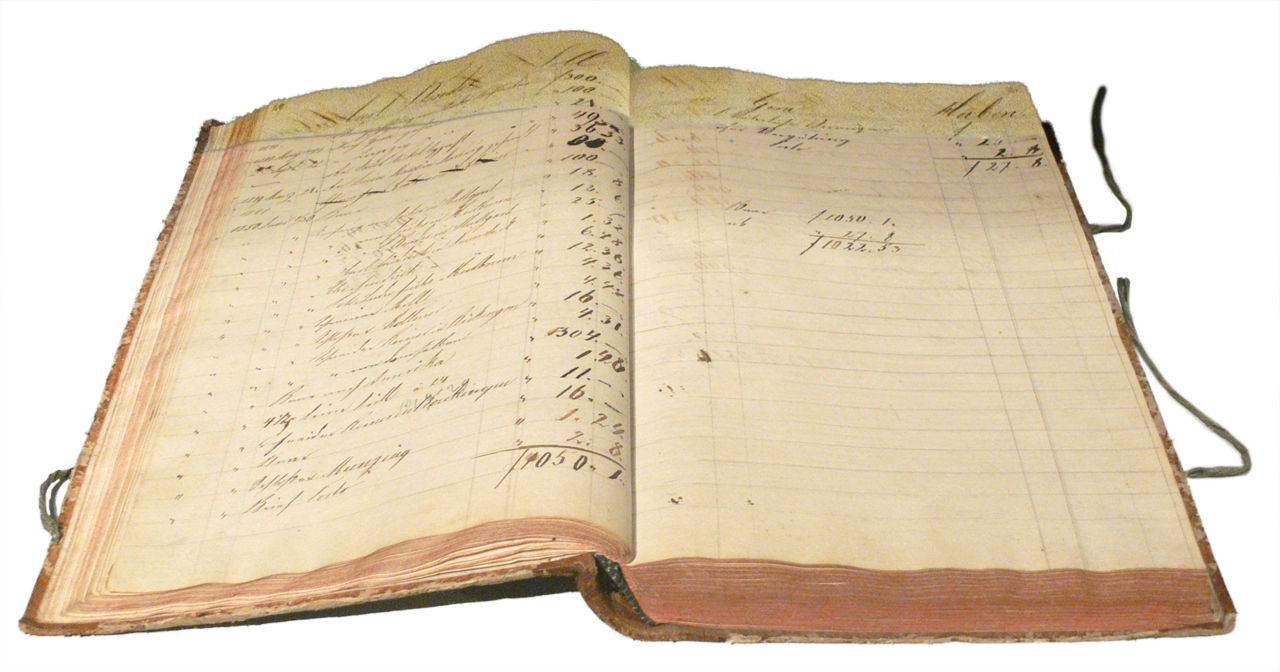
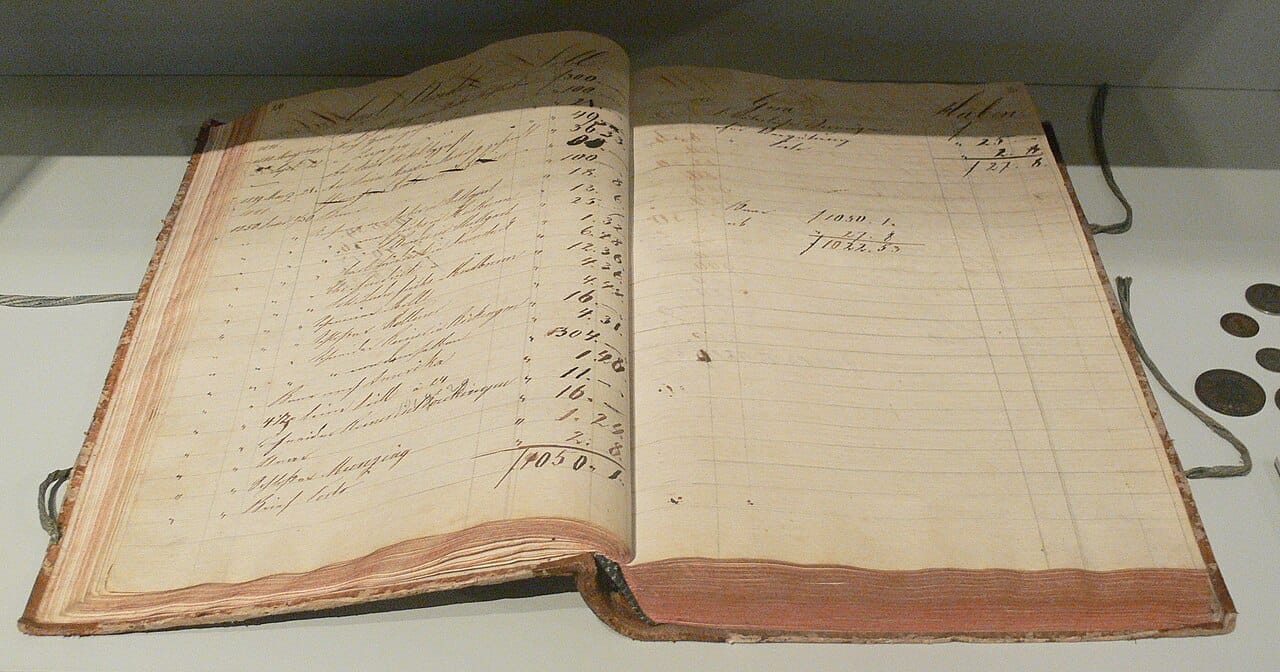
Every transaction is recorded twice, as a debit in one account and an equal credit in another.
The reason is that every transaction has two aspects. Buying stock for cash reduces cash and increases inventory. Borrowing increases cash and increases a liability. Recording only one side loses half the information.
The consequence is that total debits must equal total credits, always. If they do not, something is wrong, and the system announces its own errors rather than requiring them to be found.
This produces the accounting equation: assets equal liabilities plus equity. It holds by construction, not by observation, and it is why a balance sheet balances.
Single entry recording, which simply lists receipts and payments, has no such check and gives no picture of what is owned and owed.
The system does not catch every error. A transaction omitted entirely, recorded twice, or posted to the wrong account of the right type will still balance, which is why audit and reconciliation exist alongside it.

Double entry was in use among Italian merchants by the fourteenth century, with surviving Genoese and Florentine records demonstrating it.
Luca Pacioli published the first printed description in 1494, in a mathematics treatise, and he was explicit that he was recording the method used by merchants in Venice rather than proposing something new. He is nonetheless called the father of accounting, which is roughly the credit Cai Lun receives for paper.
The invention travelled with the printing press, and the method spread across Europe over the following century.
Werner Sombart and Max Weber both argued that double entry was a precondition of modern capitalism, on the grounds that it makes profit calculable as a distinct quantity separate from the merchant's own household. The strong version of that claim is contested, since large-scale commerce existed without it, and the weaker version, that it made enterprises measurable and comparable, is widely accepted.
The balance sheet is a position at a moment: what is owned, what is owed, and the difference.
The income statement is a period: revenue earned less expenses incurred, giving profit.
The cash flow statement is a period in cash terms, and it exists because profit and cash are different. A profitable business can run out of money, and this is a common way for growing companies to fail.
The difference comes from accrual accounting, which records revenue when earned and expenses when incurred rather than when cash moves. It gives a truer picture of performance and it also introduces judgement, because deciding when something is earned is not always obvious.
That judgement is where accounting stops being arithmetic. Depreciation schedules, provisions for bad debts, revenue recognition timing and the valuation of assets without a market price all require estimates, and reasonable people produce different numbers.
Financial accounting reports to outsiders, including investors, lenders and tax authorities, and is governed by standards to make companies comparable.
Management accounting reports internally to support decisions, is not standardised, and answers questions financial accounts do not, including what a product actually costs to make.
Auditing is independent examination of whether financial statements fairly represent the position. Auditors are paid by the companies they audit, which is a structural conflict that regulation manages rather than resolves.
Tax accounting follows tax law, which differs from accounting standards deliberately, so a company's taxable profit and its reported profit are routinely different for legitimate reasons.
Accounting measures what can be measured in money, and treats what cannot as absent.
Intangible assets are the clearest gap. Money spent building a brand, training staff or conducting research is generally expensed rather than capitalised, so a firm whose value is mostly intangible has a balance sheet that describes very little of it. This is why the book value of many modern companies bears almost no relation to their market value.
Externalities are absent by construction. Costs imposed on others, including pollution, appear in no account unless a law or a price makes them appear, which is the reasoning behind carbon pricing and behind sustainability reporting requirements.
Accounting fraud is persistent because the judgement is real. Enron, Worldcom and Wirecard each involved statements that were audited and wrong, and each produced regulatory change, with Sarbanes-Oxley in 2002 following the first two.
The standards themselves are contested. International standards and United States standards differ, convergence has been attempted for decades and remains incomplete, and the choice between rules-based and principles-based approaches trades gameability against inconsistency.
Accounting is the instrument through which economic activity is observed. Investment, taxation, credit and management decisions all rest on numbers it produces, and if the numbers are wrong every decision downstream is made in the dark.
Double entry also deserves its reputation for a specific reason. It is a self-checking system, arrived at by merchants and unchanged in principle for six centuries, and the idea that a record should be structured so that errors reveal themselves is a good one well beyond bookkeeping.