Western Sahara is a disputed territory in northwestern Africa, lying on the Atlantic coast between Morocco, Algeria, and Mauritania. A vast, sparsely populated expanse of desert, it is the subject of one of the world's longest-running territorial disputes: most of it is controlled and claimed by the Kingdom of Morocco, while a self-proclaimed state, the Sahrawi Arab Democratic Republic, backed by the Polisario Front, claims the whole territory and controls a thinner eastern strip. The United Nations lists it as a non-self-governing territory whose final status has never been settled.
This capsule concerns a sovereignty dispute in which both parties reject the other's account of the basic facts. It sets out the documented sequence, attributes contested claims to those who make them, and presents both positions on their own terms rather than adjudicating between them.
The territory was inhabited by Sahrawi tribes of mixed Arab and Amazigh descent, speaking Hassaniya Arabic, who moved with camels and goats across a desert whose scarce wells and pasture they knew intimately and whose political organisation was tribal and confederal rather than territorial. The Sahrawi did not form a state in the European sense, a fact both sides of the modern dispute invoke: Morocco argues that the tribes owed allegiance to the sultans, while Sahrawi nationalists argue that they were self-governing and never subject to any outside sovereign.
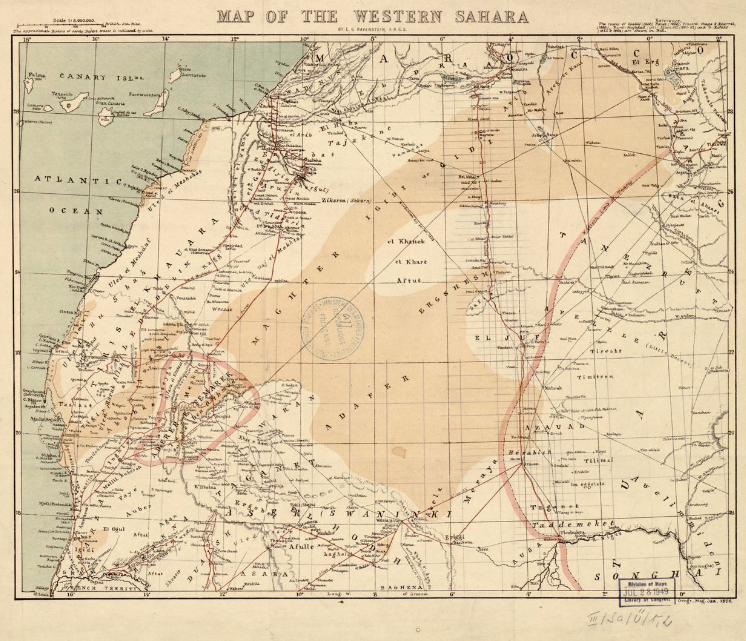
Spain claimed the coast at the Berlin Conference of 1884 and gradually extended control inland, meeting sustained resistance, and administered the territory as Spanish Sahara. Phosphate was discovered at Bou Craa in the 1960s, and it proved to be among the richest deposits in the world. In 1965 the United Nations called on Spain to decolonise, and in 1966 it called specifically for a referendum on self-determination, which Spain accepted in principle and prepared for, conducting a census of the population in 1974 that would later become the basis for every attempt to define who was entitled to vote.
Two things happened in 1975. In October the International Court of Justice, asked for an advisory opinion, found that some tribes had shown legal ties of allegiance to the Sultan of Morocco and some to the Mauritanian entity, but that these did not amount to ties of territorial sovereignty and did not affect the application of self-determination through the free expression of the population's will. Both sides claimed the opinion supported them, Morocco citing the finding of allegiance, the Polisario citing the finding on sovereignty and self-determination.
Within days King Hassan the Second launched the Green March, sending some 350,000 unarmed Moroccan civilians across the border to assert the claim. In November, Spain, with Franco dying, signed the Madrid Accords transferring administration to Morocco and Mauritania. Spain has never formally completed the decolonisation, and the United Nations still lists Western Sahara as a non-self-governing territory with no administering power recorded.
The Polisario Front, founded in 1973 to fight Spain, declared the Sahrawi Arab Democratic Republic in February 1976 and fought both Morocco and Mauritania. Tens of thousands of Sahrawi civilians fled east to camps around Tindouf in Algeria, which backed the Polisario and has hosted the camps ever since. Mauritania gave up its claim in 1979; Morocco occupied the portion it had held.
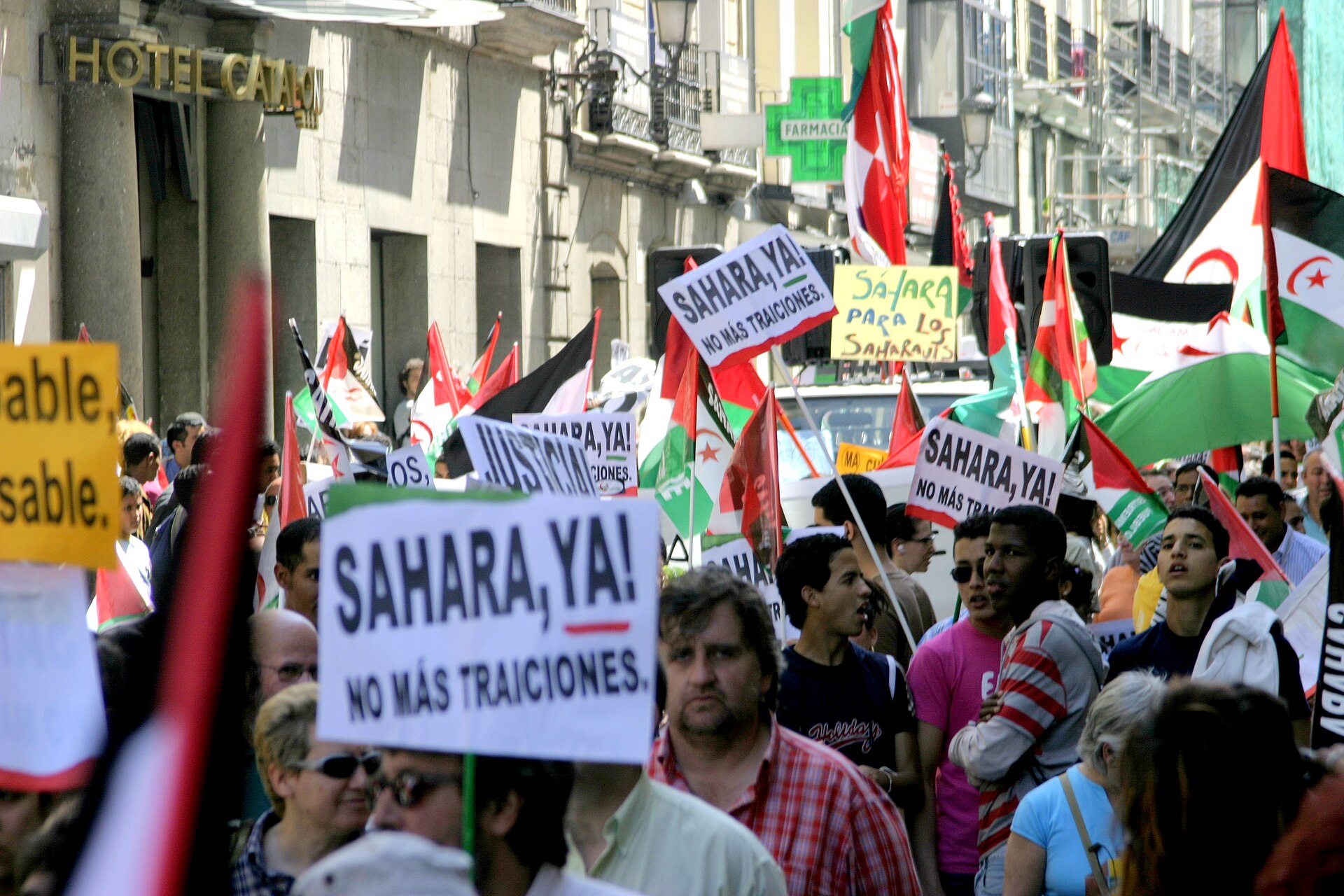
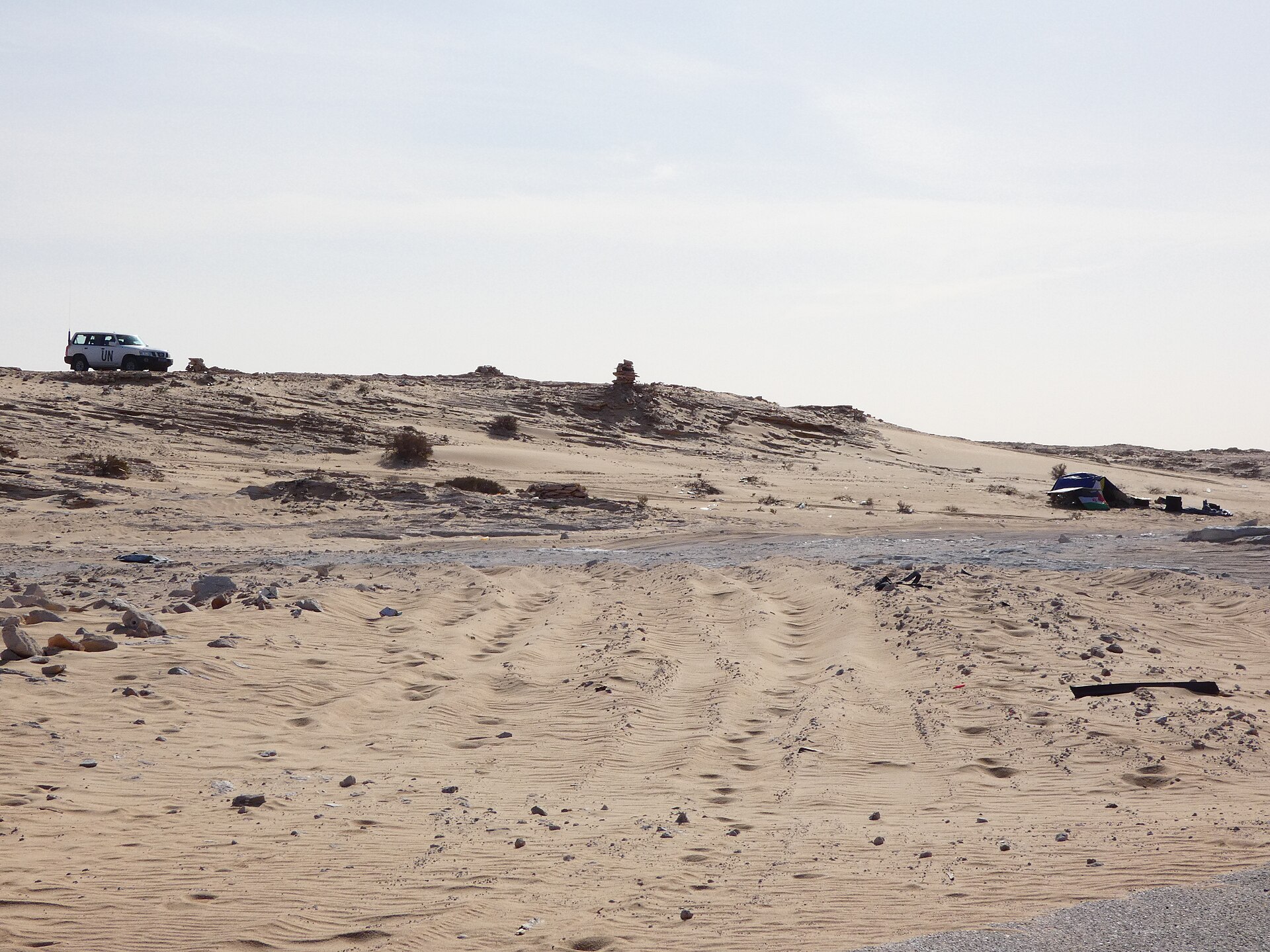
Through the 1980s Morocco built the berm, a sand-and-stone wall running some 2,700 kilometres from the Moroccan border to the Mauritanian, fortified with bunkers, radar, and one of the densest minefields in the world. It sealed off roughly the western four fifths of the territory, containing the coast, the towns, and the phosphate, leaving the Polisario a thinly populated eastern strip.
A United Nations-brokered ceasefire took effect in 1991, accompanied by the creation of MINURSO, the Mission for the Referendum in Western Sahara, whose explicit purpose was to organise a vote on independence or integration. The vote has never been held. The obstacle throughout has been the electorate: Morocco has argued for including Moroccans who settled in the territory after 1975 and Sahrawi tribes outside it, the Polisario for confining it to those covered by the 1974 Spanish census and their descendants. Identification exercises through the 1990s produced lists both sides rejected in part. In 2007 Morocco proposed autonomy under Moroccan sovereignty instead, which the Polisario rejects as excluding the independence option.
The ceasefire broke down in November 2020 after a confrontation at the Guerguerat crossing, and the Polisario has declared itself no longer bound by it, with low-level exchanges along the berm since. In December 2020 the United States recognised Moroccan sovereignty over the territory as part of an agreement under which Morocco normalised relations with Israel, the first major power to do so; France followed with recognition of Moroccan sovereignty as the basis for a settlement in 2024, and Spain and others have endorsed the autonomy plan as the most realistic basis.
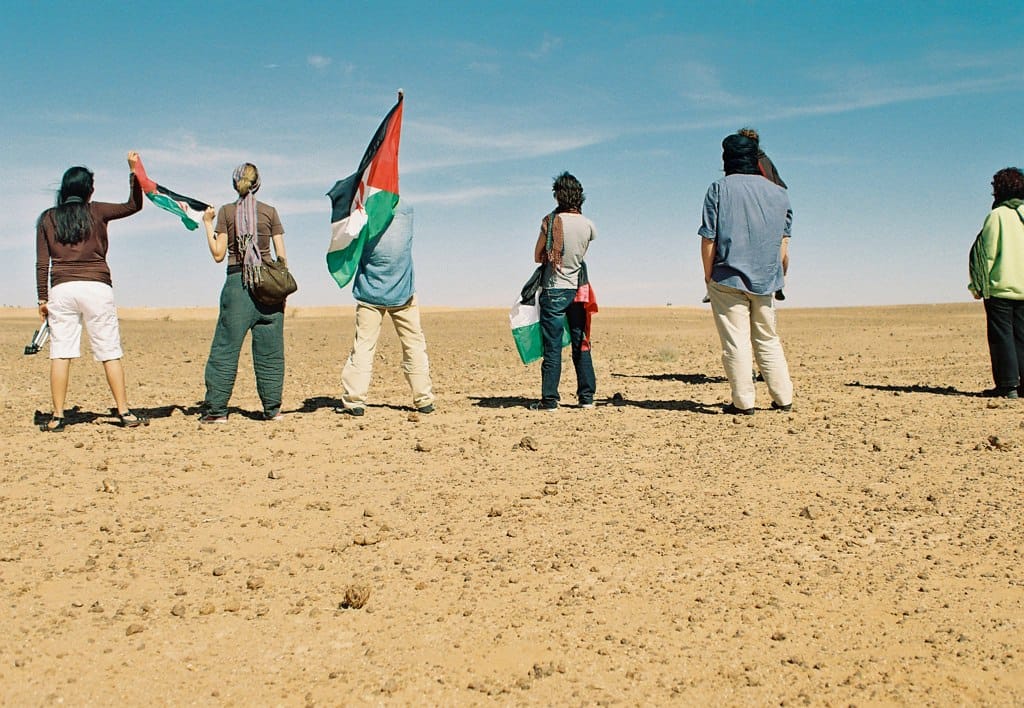
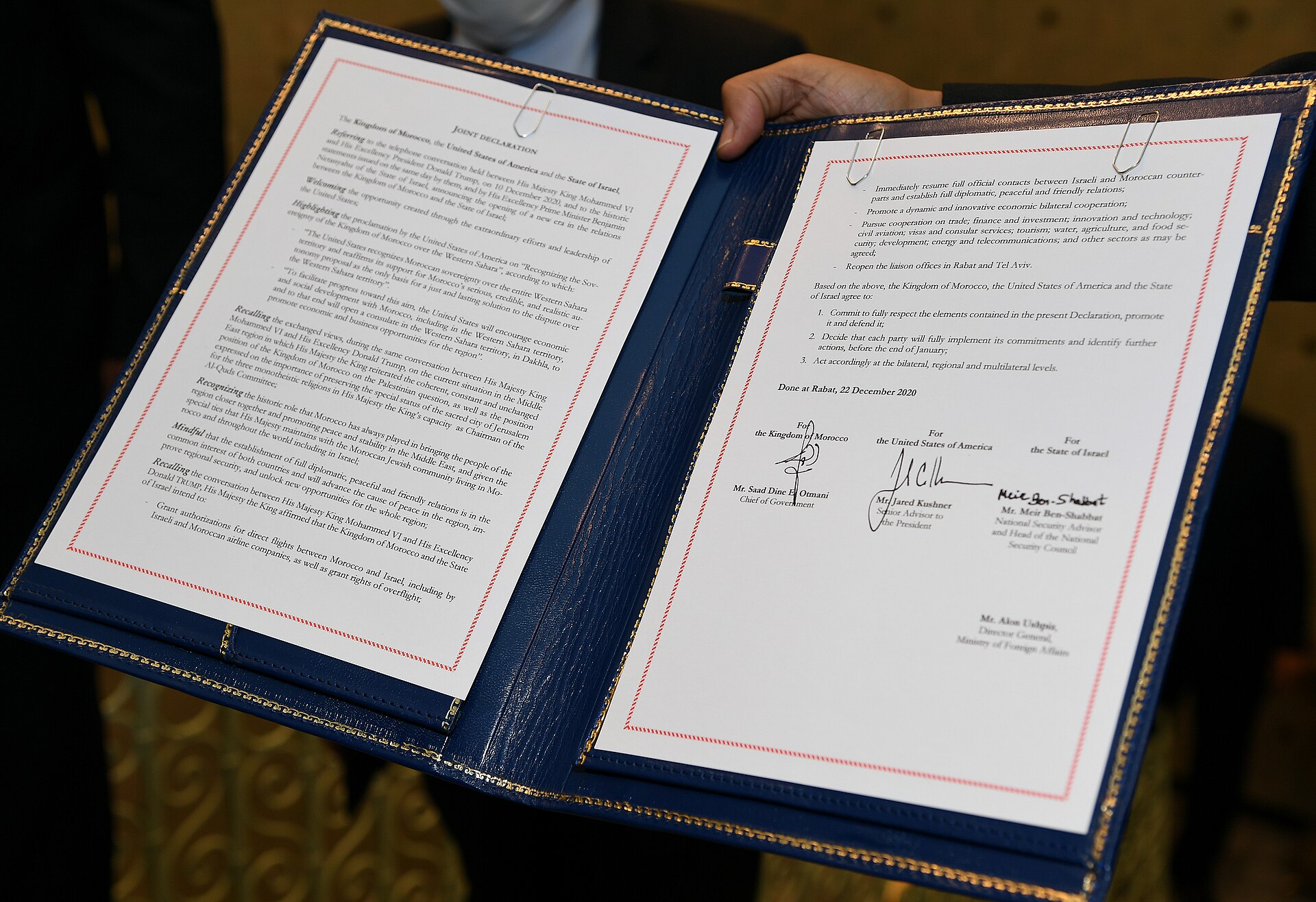
This is one of the world's longest-running unresolved sovereignty disputes, and it is genuinely unresolved: no outcome has been settled, and the parties disagree about the applicable law as much as about the facts.
Morocco's position. The territory is the Moroccan Sahara, historically part of the kingdom through the allegiance its tribes owed the sultans, severed by colonialism and recovered in 1975. Morocco has invested very heavily in the territory, building ports, roads, desalination, and housing at Laayoune and Dakhla, and argues that most residents now participate in Moroccan institutions and elections. Its 2007 autonomy plan offers the region its own parliament, government, and courts under Moroccan sovereignty, which it presents as the only realistic settlement, and it maintains that the Polisario represents a minority sustained by Algeria for its own strategic reasons.
The Polisario and SADR position. Western Sahara is Africa's last colony, a non-self-governing territory under international law whose people have never been allowed the act of self-determination the United Nations promised and Spain accepted. The 1975 ICJ opinion found no tie of territorial sovereignty. The Sahrawi Arab Democratic Republic is recognised by a number of states and is a full member of the African Union, which Morocco quit in 1984 over its admission and rejoined only in 2017. Autonomy, on this view, is not a settlement but the removal of the very option, independence, that a referendum exists to test.
The 2025 turn. On 31 October 2025 the Security Council adopted Resolution 2797, drafted by the United States, by eleven votes with China, Russia, and Pakistan abstaining and Algeria not participating. For the first time the Council explicitly described Morocco's autonomy plan as a serious and credible basis for a solution, and it renewed MINURSO's mandate to October 2026 without referring to an independence referendum. Morocco treated this as decisive and declared a public holiday. The Polisario and its supporters reject that reading, holding that the resolution does not confer sovereignty, that self-determination remains the legal framework, and that the omission of the referendum changes the Council's emphasis rather than the underlying law. Commentators differ sharply on whether the resolution marks a pragmatic acceptance of reality or the erosion of a principle.
What is not disputed. Around 170,000 or more Sahrawi have lived in camps near Tindouf for nearly fifty years, largely dependent on international aid, with families divided across the berm. Human rights organisations have documented restrictions on pro-independence expression, assembly, and protest in the Moroccan-administered territory, which Morocco disputes, and have raised concerns about conditions and freedom of movement in the Polisario-run camps, which the Polisario disputes. MINURSO remains one of the very few UN peacekeeping missions without a human rights monitoring mandate, a gap the Security Council has declined to close.
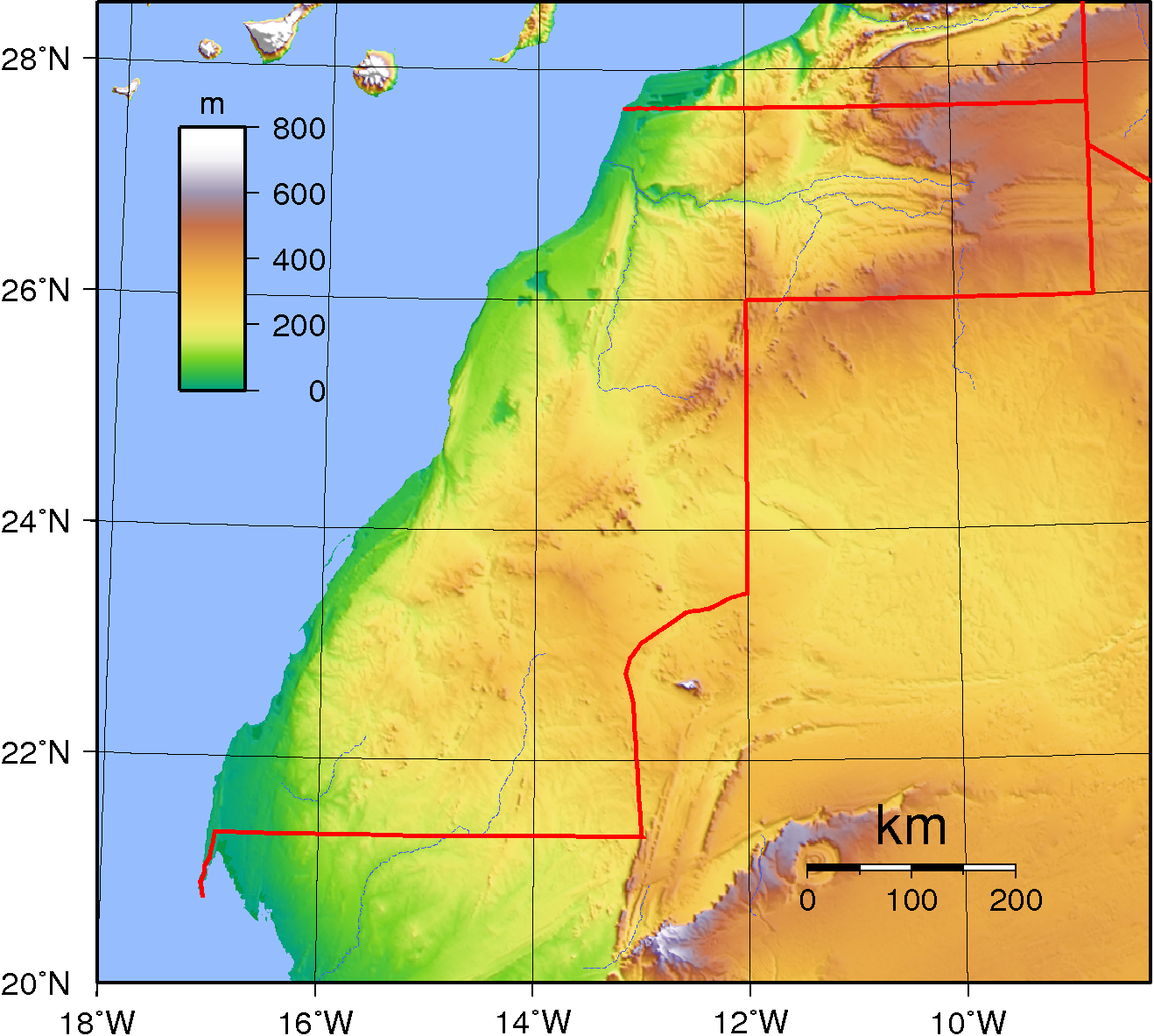
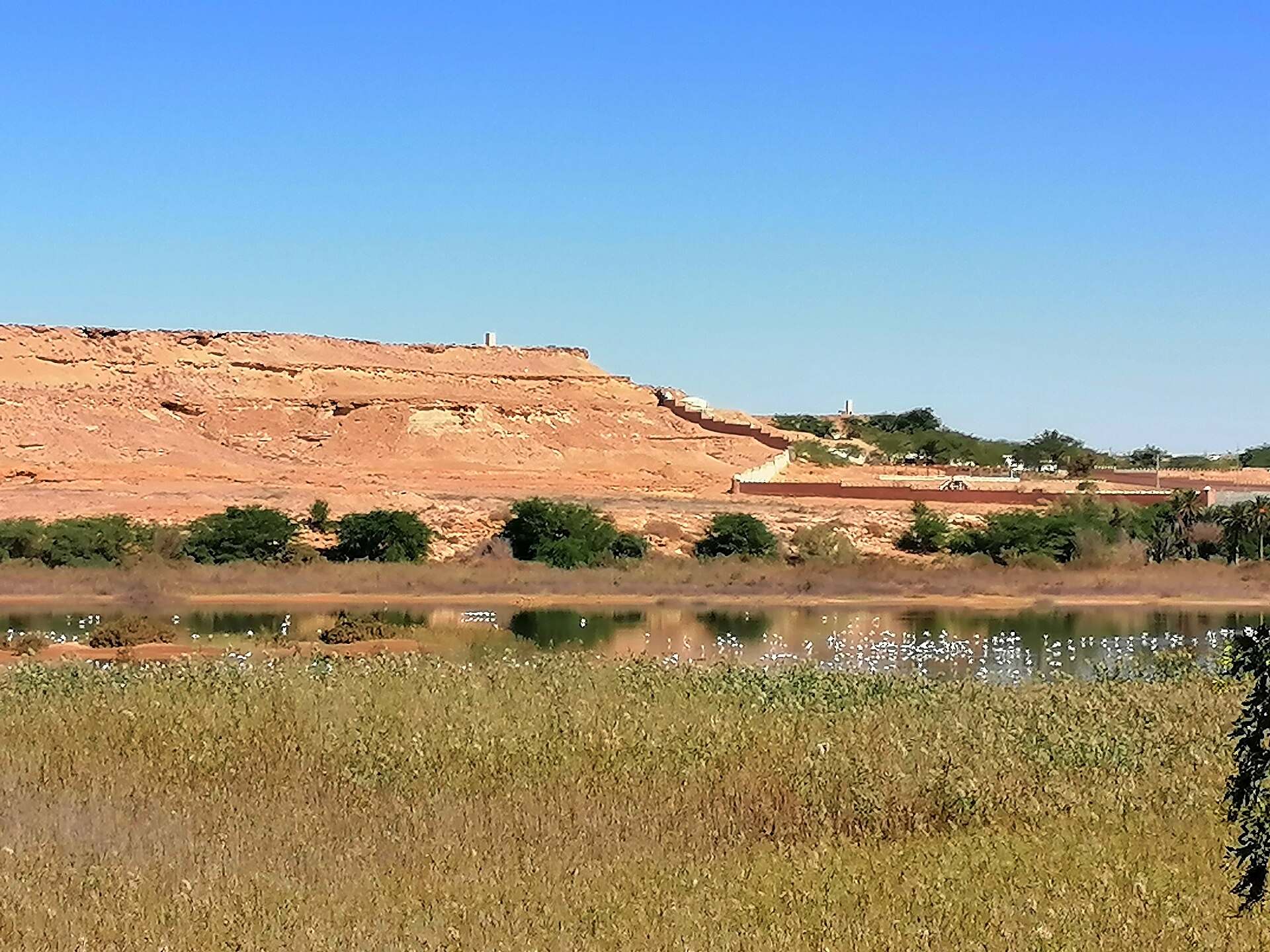
Western Sahara is almost entirely desert, some 266,000 square kilometres of flat hammada, stony plain, and dune field, with sparse and irregular rainfall and no permanent river. What relief exists is low, and dry watercourses run only after rare storms. The Atlantic coast, more than a thousand kilometres of it, is the territory's most valuable feature: the cold Canary Current makes these among the richest fishing grounds in the world, which is why fisheries agreements covering the waters have themselves become a point of legal dispute, with European courts ruling that agreements covering the territory require the consent of its people.
The other resource is phosphate. The Bou Craa deposit, connected to the coast by a conveyor belt over 100 kilometres long that is among the longest in the world, is one of the largest and purest known, and its export is likewise contested by those who hold that resources of a non-self-governing territory may not be exploited without the population's consent. The territory holds no meaningful agriculture beyond herding and a little irrigated cultivation, and depends on desalination and imported food.
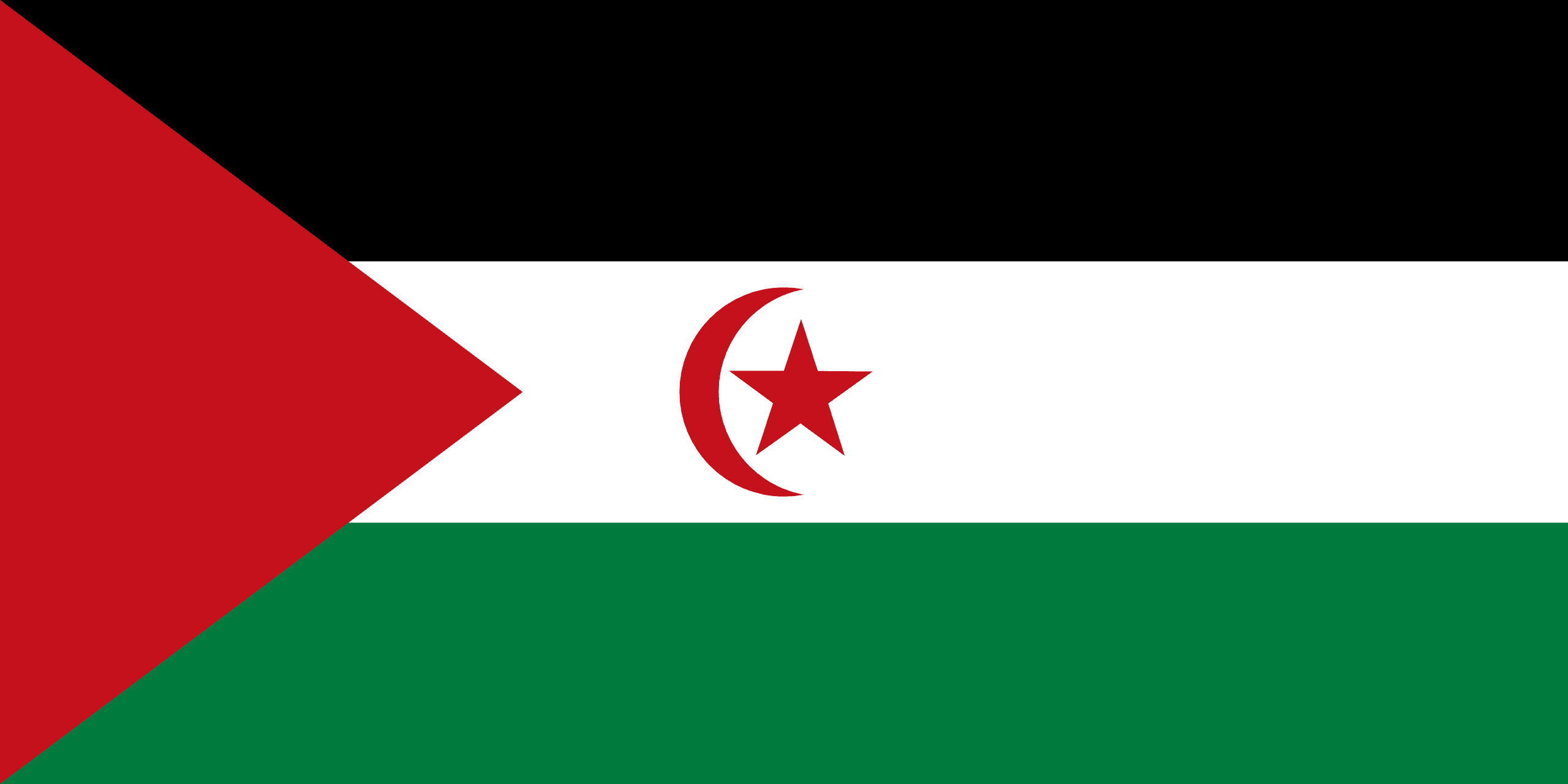
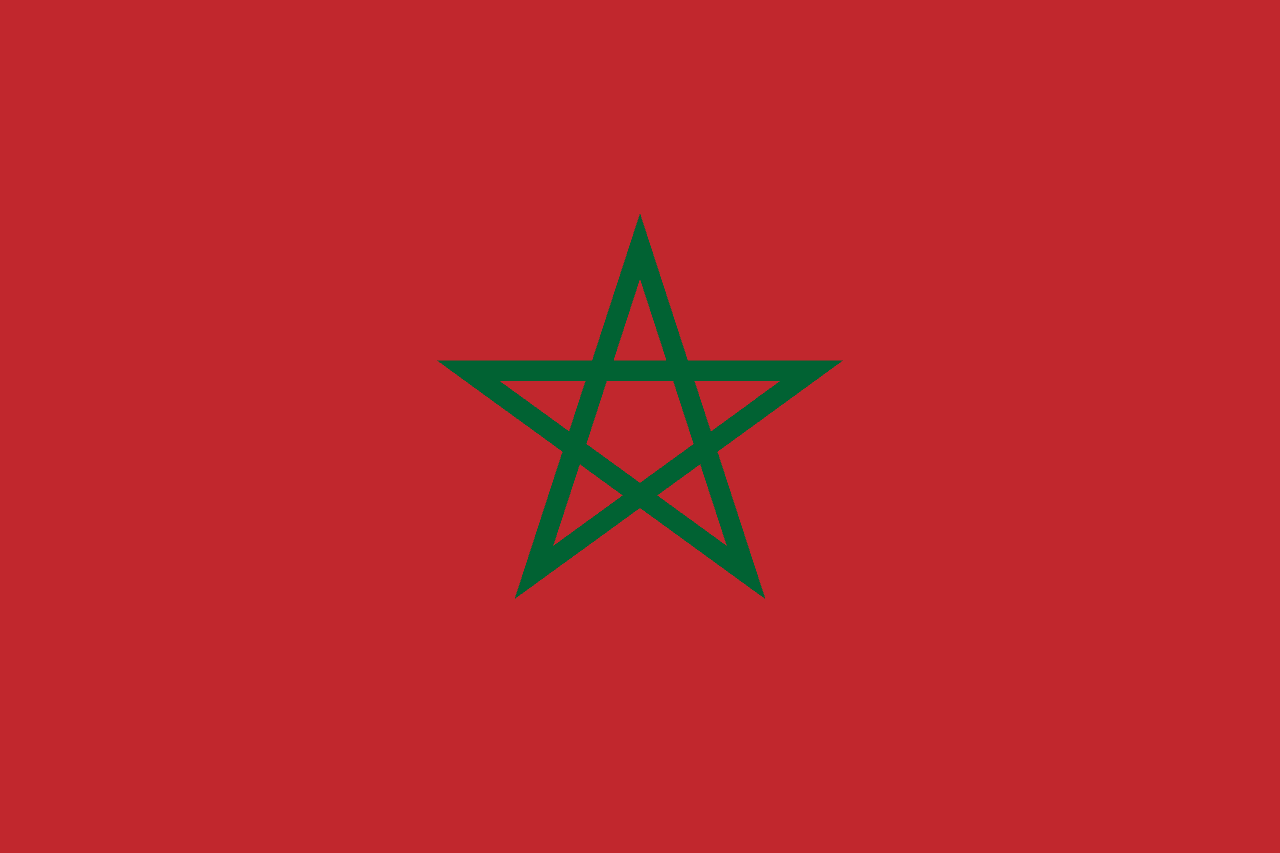
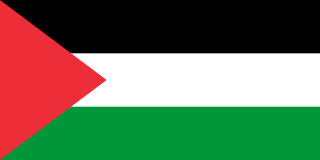
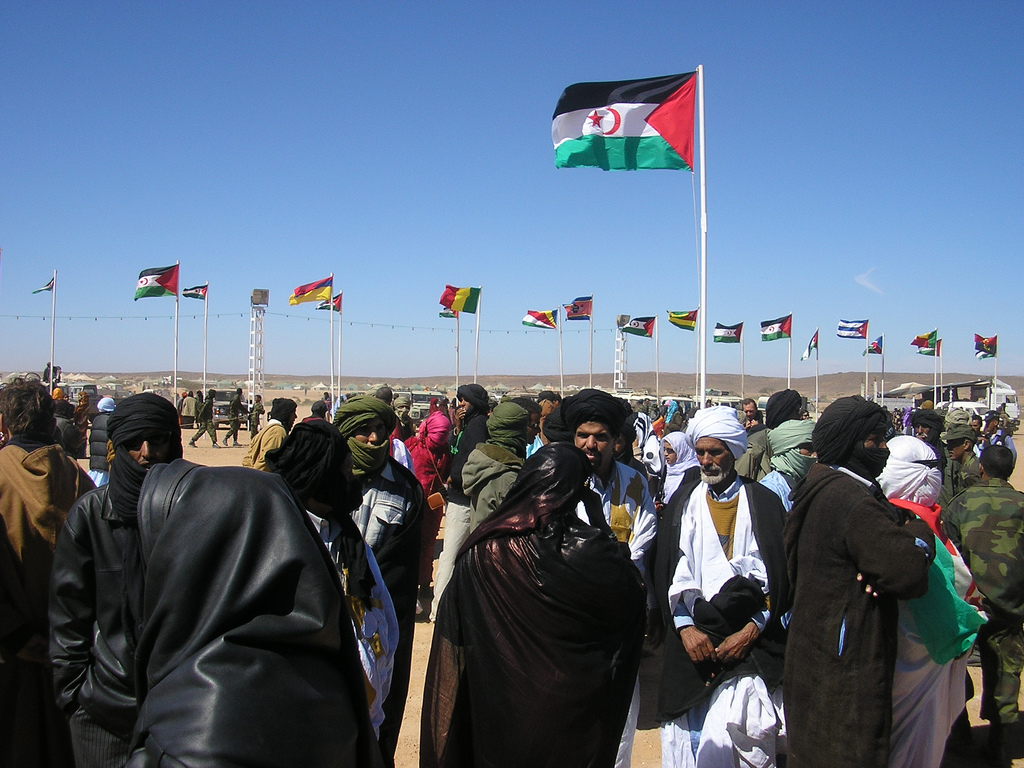
The flag shown is that of the Sahrawi Arab Democratic Republic, used by the Polisario Front and the independence movement, with horizontal bands of black, white, and green, a red triangle at the hoist, and a red star and crescent on the central white band. These are the pan-Arab colours, and the star and crescent reflect Islam. In the areas under Moroccan control, the flag of Morocco is flown instead. The two competing flags over the same territory are themselves a vivid symbol of the unresolved dispute over Western Sahara's status.
The people of Western Sahara, the Sahrawis, are overwhelmingly Muslim, following Sunni Islam, which is woven into the culture and daily life of this desert society as it is across the wider region of North Africa and the Sahara. Religious practice among the traditionally nomadic Sahrawi tribes blends mainstream Islam with local customs and the influence of Sufi traditions long present in the region. Islam provides a shared framework of faith and identity for the Sahrawi people, whether living under Moroccan control, in the Polisario-held areas, or in the refugee camps across the border in Algeria.
The cuisine of Western Sahara reflects the nomadic Sahrawi way of life and the wider food traditions of North Africa and the desert. Central to it are camel and goat meat, dates, and grains, often prepared simply for life on the move, and the elaborate ritual of preparing and serving sweet mint tea, poured in three rounds, is a cherished social custom of Sahrawi hospitality. Couscous and dishes shared with neighbouring Morocco and Mauritania feature as well. The food, like the culture, is shaped by the scarcity and mobility of life in one of the world's great deserts.
Agriculture is almost impossible across most of Western Sahara because of the extreme aridity of the desert, and the territory produces very little food, relying on imports and, for the refugee population, on international aid. Traditional livelihoods centred on the nomadic herding of camels, goats, and sheep across the sparse desert pastures. The territory's real economic value lies elsewhere: in the rich fishing grounds off its Atlantic coast, and in significant deposits of phosphate rock, both of which are part of what makes control of the land a matter of dispute.
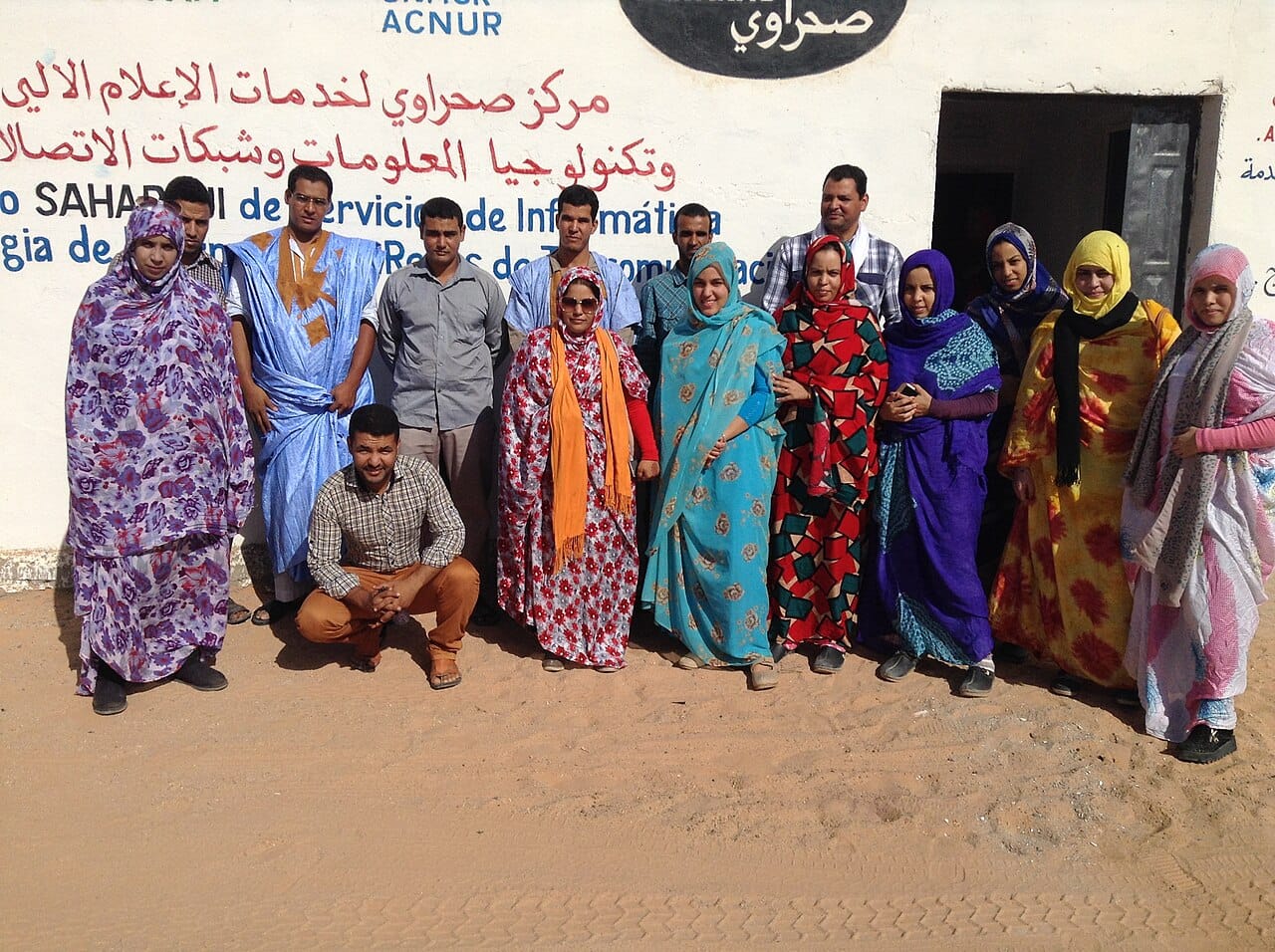
Sahrawi culture is Hassani, shared with Mauritania and southern Morocco and quite distinct from that of the Moroccan north. Its language, Hassaniya, is an Arabic dialect carrying substantial Amazigh vocabulary. Its most visible markers are dress, the men's blue or white boubou-like darraa and the women's melhfa, a long wrapped cloth in bright colours, and the tea ceremony of three glasses poured from a height, each stronger than the last and each with its own proverbial meaning. Poetry, sung and recited, is the central art, and the tent remains a cultural reference even for those long settled in towns or camps.
Sahrawi society has traditionally accorded women a notably prominent role by regional standards, in property, in the running of the camps, and in political organisation, which both sides cite in their own arguments. Spanish is spoken by many older Sahrawi and is taught in the camps, an unusual legacy that has produced literary and film work in Spanish and close cultural ties with Spain, Cuba, and Latin America. Bou Craa's phosphate, the fishing fleets, and the camps have all pulled a formerly nomadic society into a settled and largely urban one within two generations.
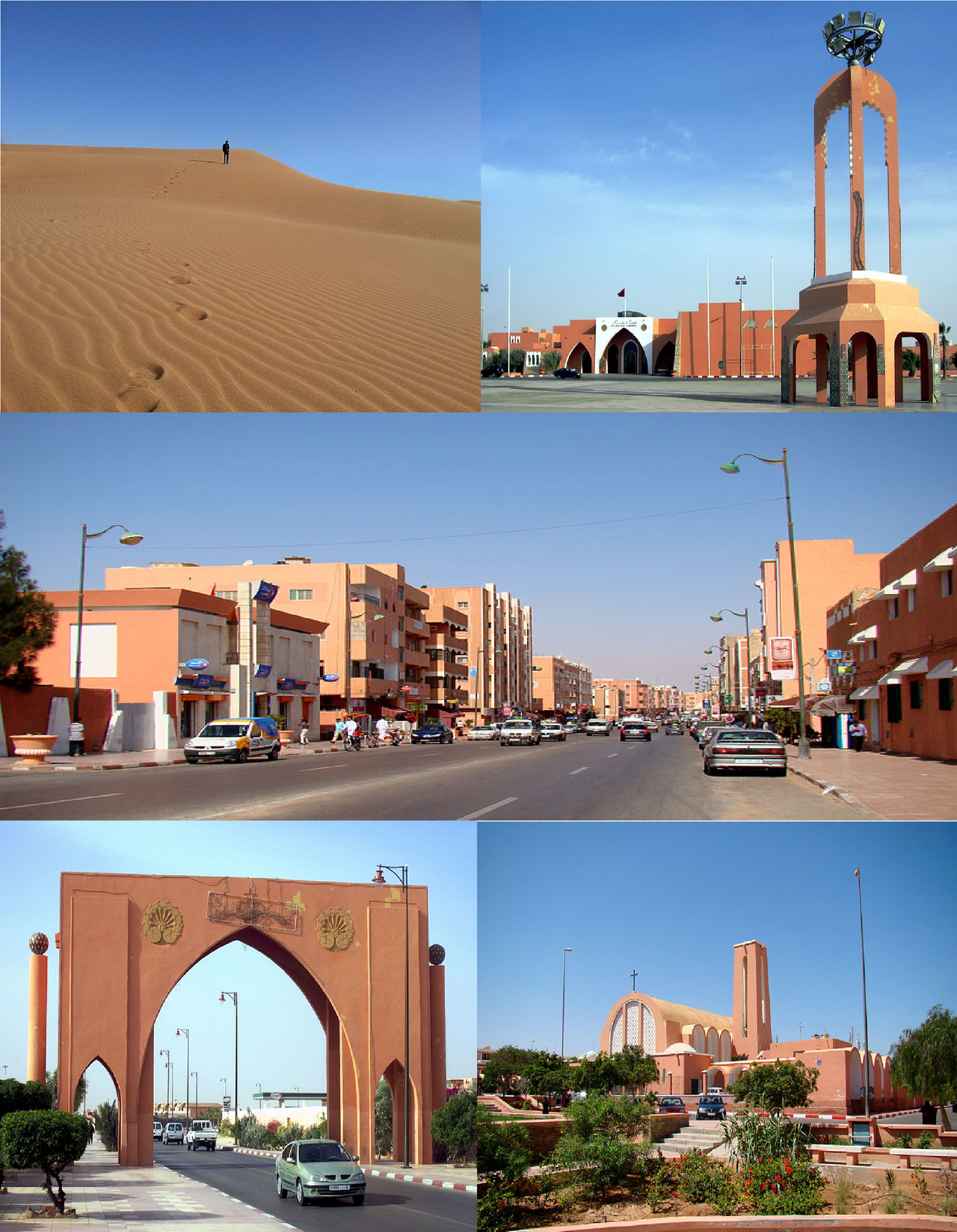
Population figures here are themselves part of the dispute, since who counts as a resident bears directly on any referendum. Something in the order of half a million people live in the Moroccan-administered area, most of them in Laayoune, Dakhla, and Smara. How many are Sahrawi native to the territory and how many are Moroccans who settled after 1975 is contested: Morocco holds that settlement is normal internal migration to a developing region, while the Polisario holds that it was a deliberate demographic policy intended to determine the outcome of any vote in advance.
Beyond the berm, the Polisario administers a thinly populated eastern strip and, from Algeria, the camps near Tindouf, where in the order of 170,000 Sahrawi have lived since 1975 across five wilaya named after towns inside the territory. Two further generations have been born there. The camps run their own schools, clinics, and administration, are heavily dependent on international food aid, and are the base of the SADR's institutions. Family visits across the berm have been organised intermittently by the United Nations and suspended repeatedly. Hassaniya Arabic is the common language throughout, with Moroccan Arabic and French current in the administered area and Spanish still widely spoken in the camps.