Togo is a small, narrow country in West Africa, a thin strip of land running inland from a short Atlantic coastline to the dry savanna of the north. One of the smallest countries on the continent, it is a land of beaches, palm-fringed lagoons, hills, and varied peoples. Once a German colony and then divided between Britain and France, it has been ruled since shortly after independence by a single family, making for one of the longest-running political dynasties in Africa.
Togo is a small country whose modern history has been shaped twice over by things decided elsewhere: the borders drawn by three European powers in succession, and a single family's hold on power that has now lasted longer than most Togolese have been alive.
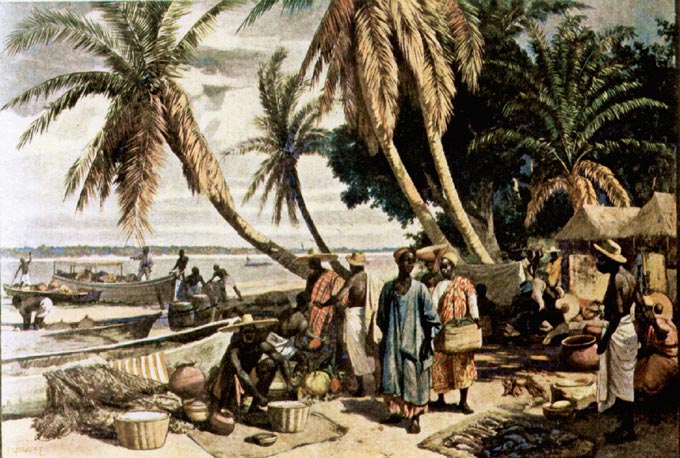
The land was never a single kingdom. The Ewe moved into the south from what is now Nigeria and Benin over several centuries, organising themselves into many small chiefdoms rather than one state, while the north was home to the Kabye, the Tem, the Gurma, and others, and the Tammari of the northwest built the fortified tower-houses that still stand. The coast formed part of the stretch Europeans called the Slave Coast, and Aneho became a significant trading town, though Togo's short shoreline and heavy surf made it a lesser embarkation point than Ouidah or Elmina.
Germany declared a protectorate in 1884 and built the colony of Togoland, laying railways and a wireless station and running a plantation economy on forced labour; German administrators called it their model colony, a description that referred to its accounts rather than its treatment of its people. British and French forces took it in the first weeks of the First World War, and the territory was partitioned between them under League of Nations mandates. That division cut the Ewe homeland in two, and when the British portion voted in a 1956 plebiscite to join what became Ghana, the split was made permanent. Ewe reunification has been a live grievance ever since.
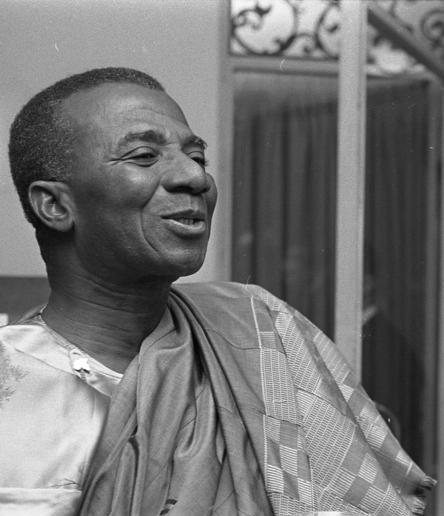
French Togoland became independent in 1960 under Sylvanus Olympio, a businessman and nationalist. In January 1963 he was shot dead outside the American embassy in Lome by a group of soldiers demobilised from the French army, in what is generally described as the first coup in post-independence sub-Saharan Africa. Among those involved was a sergeant named Etienne Gnassingbe Eyadema, who seized power outright in a second coup in 1967 and held it for thirty-eight years, running a one-party state with a personality cult until multiparty politics was formally conceded under pressure in the early 1990s, after which he continued to win elections that opponents and international observers disputed.
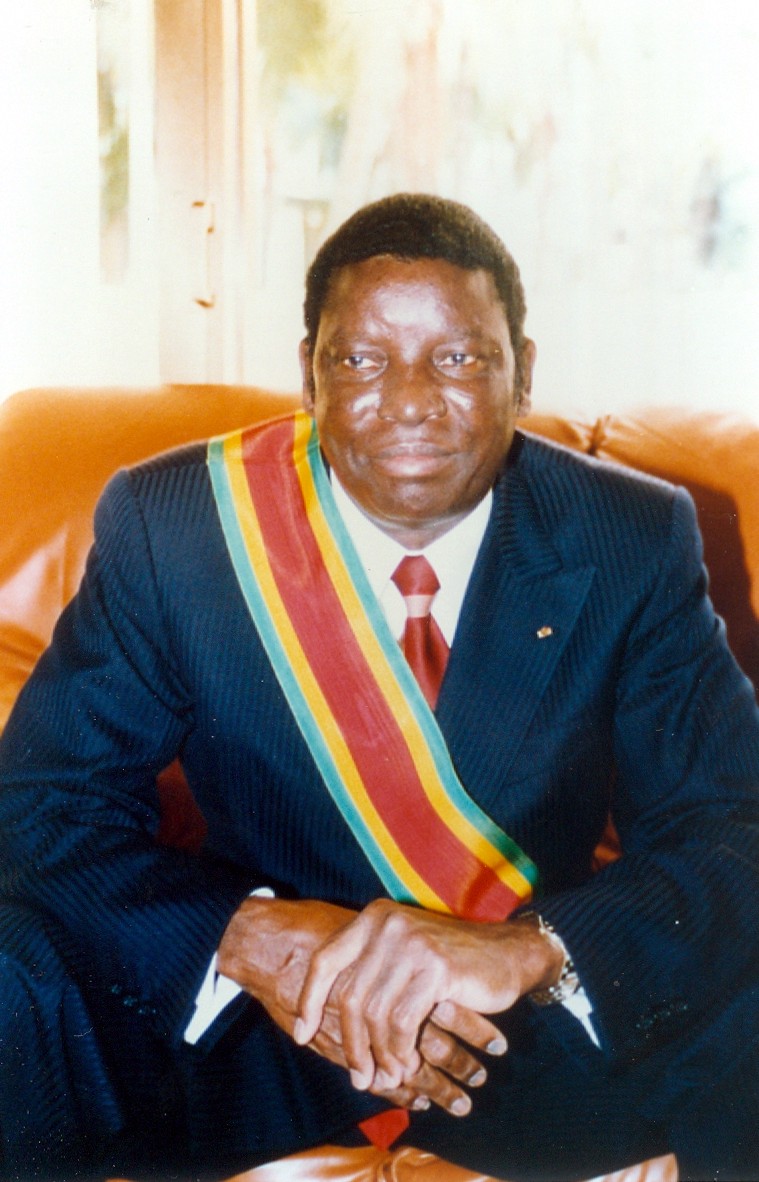
Eyadema died in 2005, and the army immediately installed his son Faure Gnassingbe in breach of the constitution. International pressure forced an election within weeks, which Faure won amid violence that the United Nations estimated killed several hundred people and drove tens of thousands into neighbouring countries. He has governed ever since, winning further elections in 2010, 2015, and 2020; a two-term limit was reinstated in 2019 in a form that did not count his previous terms.
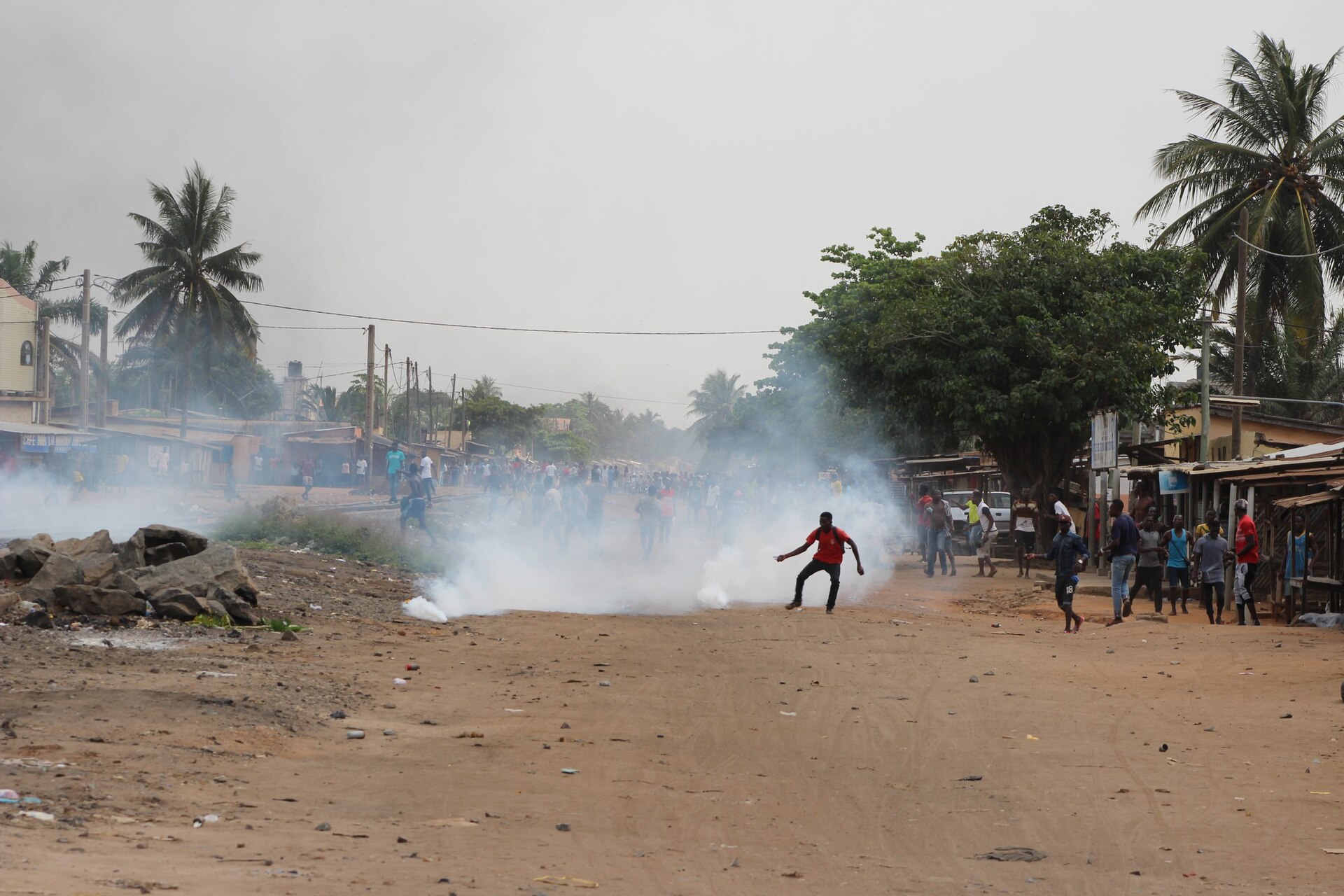
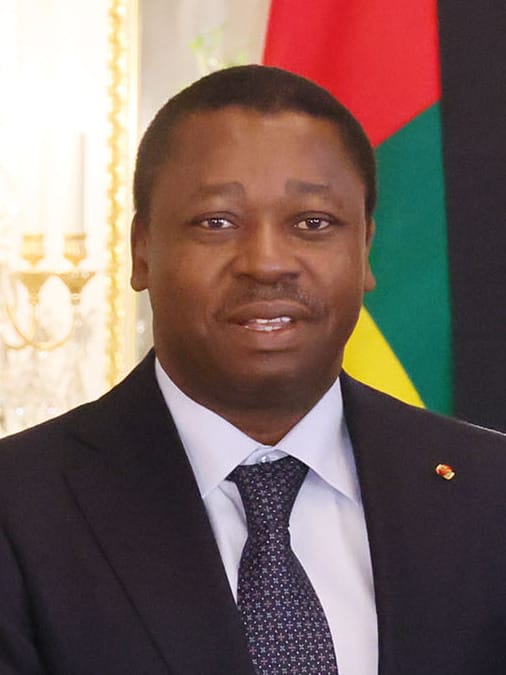
In 2024 Togo changed its system of government fundamentally, and it did so without asking anyone. Parliament, dominated by the ruling party, adopted a new constitution converting the country from a presidential to a parliamentary republic, with no referendum. Under it the presidency becomes a largely ceremonial office chosen by parliament, and real executive power passes to a new post, President of the Council of Ministers, which is filled by the leader of the majority party, carries no term limit, and can be renewed by parliament indefinitely. Faure Gnassingbe was sworn into that office in May 2025.
The government presents the change as a move toward parliamentary democracy of a kind common in Europe. The opposition, church leaders, and civil society groups describe it as a constitutional coup that removes the one mechanism, a term-limited direct election, by which the family's rule might have ended. Protests in Lome in June and July 2025 were met with force, and at least seven people were reported killed; demonstrations have been banned in the country since 2022, which makes protest itself an offence before anything else happens. The Gnassingbe family has now held power for fifty-nine years, one of the longest runs of any family anywhere.
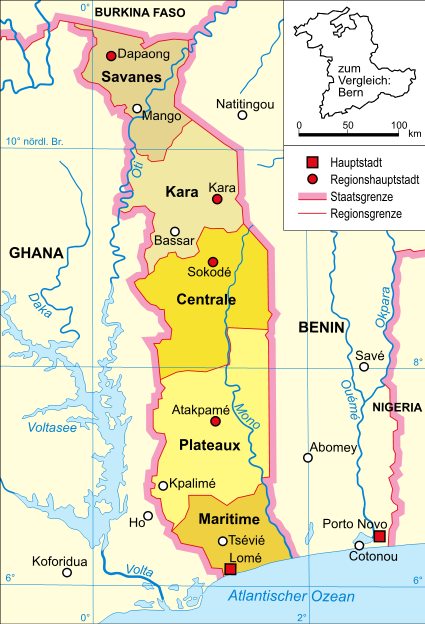
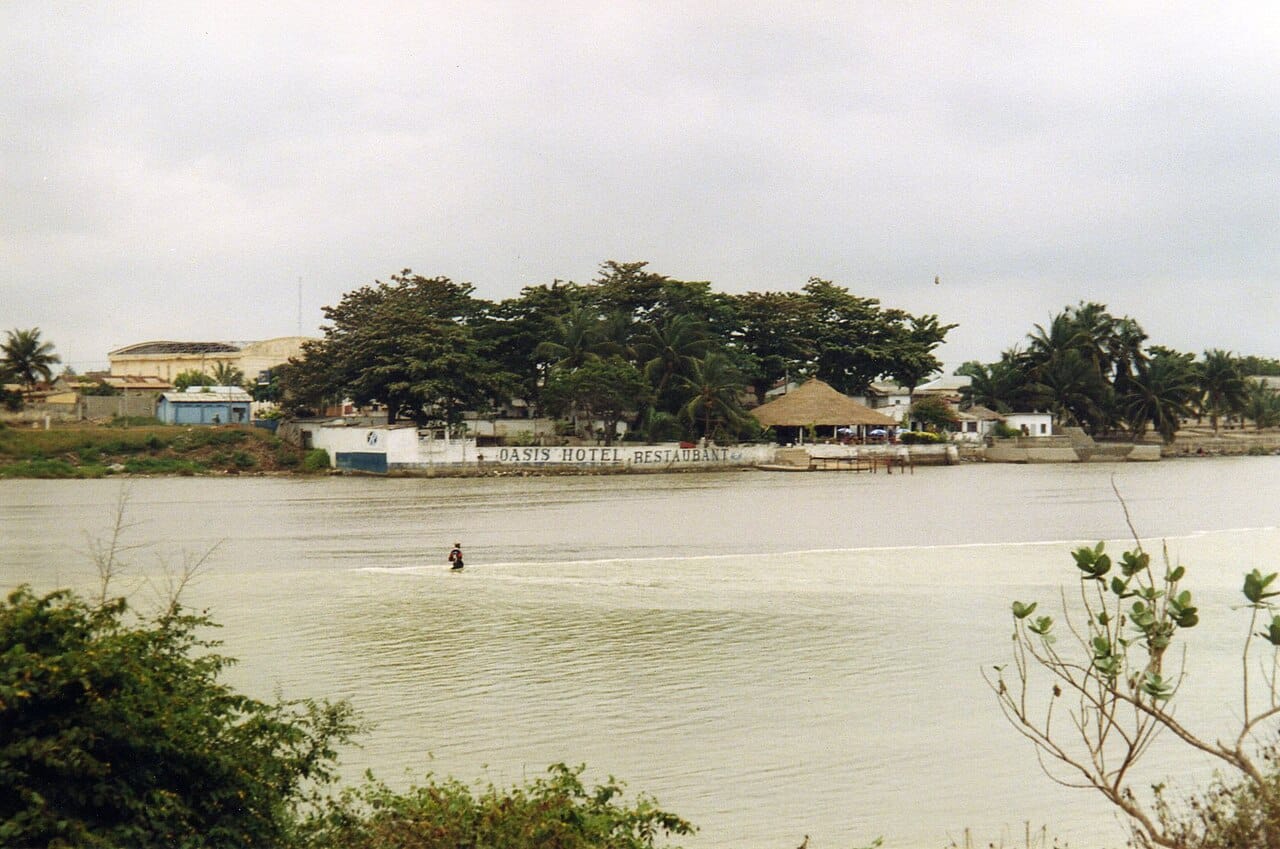
Togo is long and narrow, stretching about 550 kilometres inland from a coastline of only some 56 kilometres on the Gulf of Guinea, the shortest of any country in the region. Behind the sandy shore and its lagoons lies a fertile plateau of the Terre de Barre, rising to the Atakora hills that cross the centre diagonally and reach the country's highest point at Mount Agou. Beyond them the land opens into the Oti plain and the drier savanna of the north. The south has two rainy seasons and the north one, so the small country carries a full gradient from humid tropical coast to Sahelian interior.
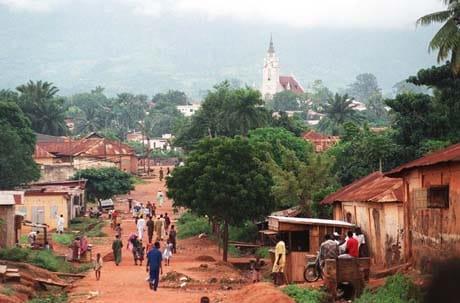
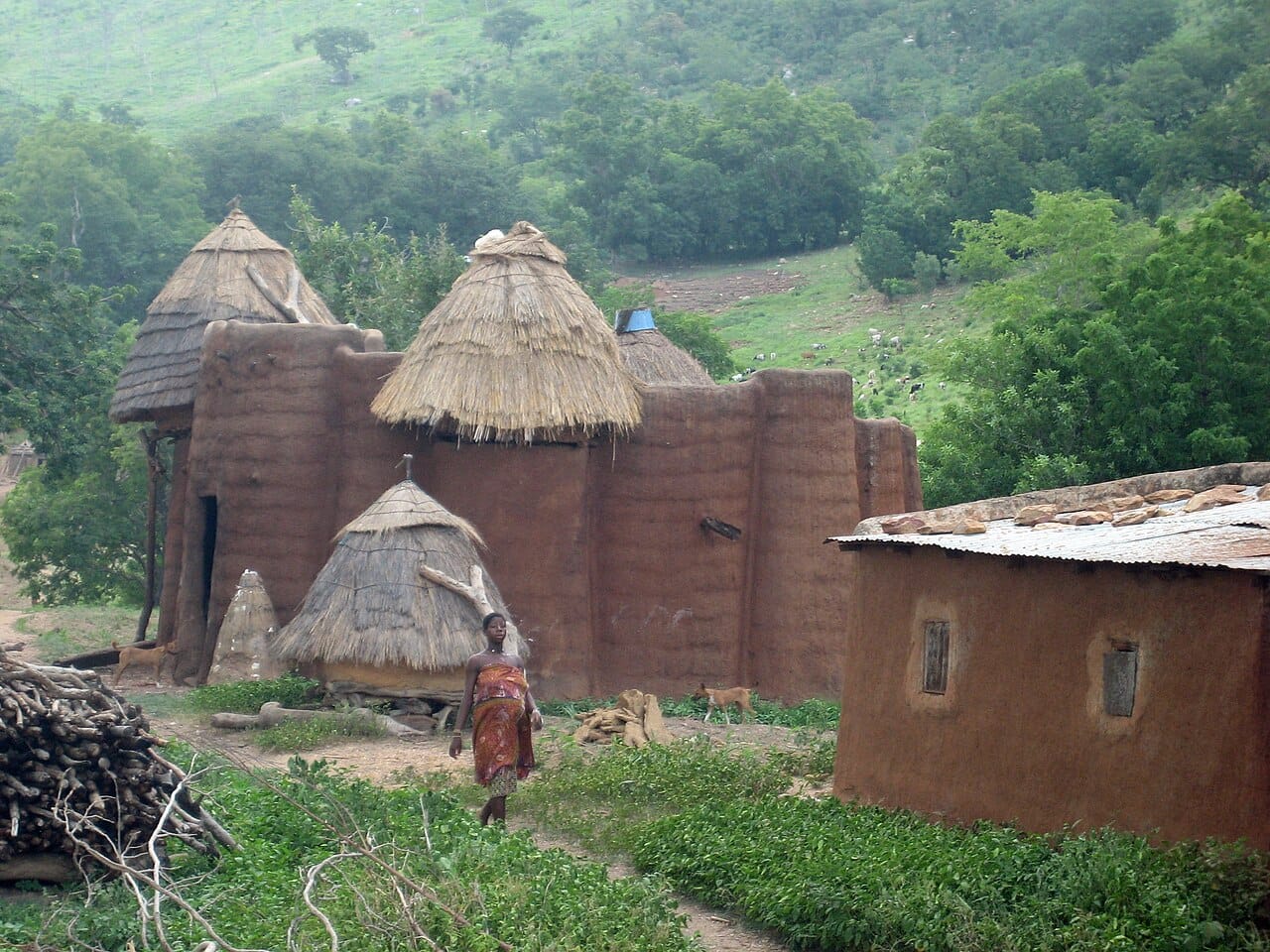
The southwest around Kpalime is the green, hilly, waterfall country and the centre of Togo's small tourist trade. In the northwest, Koutammakou, the Land of the Batammariba, is a UNESCO World Heritage site for its takienta, the fortified two-storey tower-houses of mud built as home, granary, and defence in one, which have become an emblem of the country.
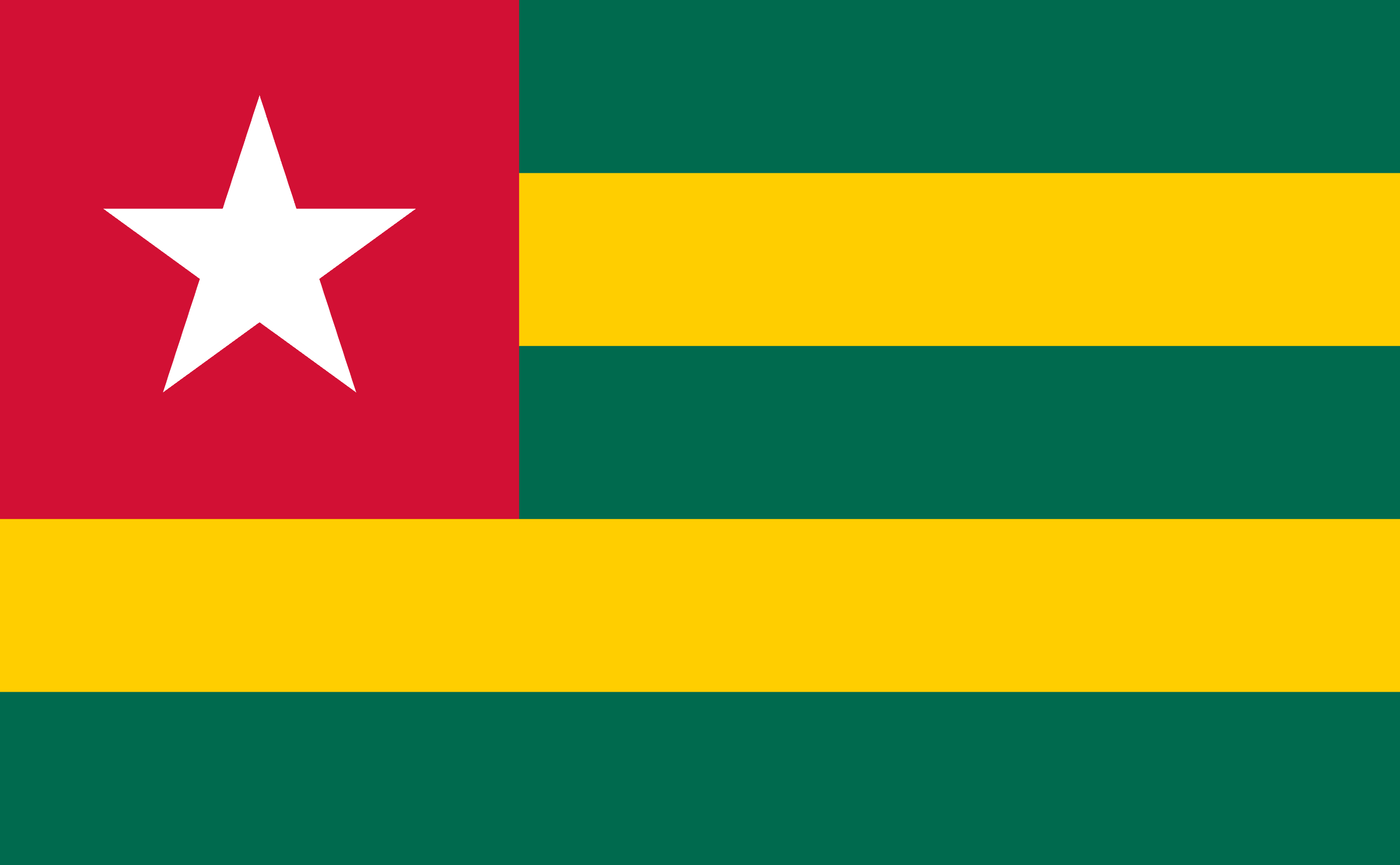
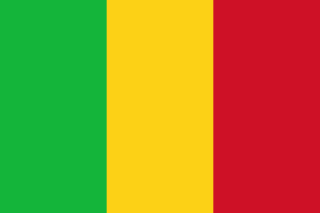
The flag of Togo has five horizontal stripes alternating green and yellow, with a red square in the upper hoist bearing a white five-pointed star. These are the pan-African colours: the green is said to represent agriculture and hope, the yellow the country's mineral wealth, and the red the blood shed for independence, while the white star stands for purity and the nation. The five stripes are sometimes linked to the country's regions, giving the flag a distinctive striped design.
Togo is religiously diverse, with a large share of the population following traditional African religions, including the Vodun beliefs shared with neighbouring Benin, alongside significant Christian and Muslim communities. Christianity, both Catholic and Protestant, is strong in the south, the result of missionary activity, while Islam is more common in the north. These faiths often coexist, and traditional practices, with their shrines, festivals, and reverence for ancestors and spirits, remain a vital part of the culture.
Togolese cuisine is West African in character, built on starchy staples and flavourful sauces. In the south, a dough of maize or cassava is eaten with sauces, while in the north pounded yam, or fufu, is a staple, served with rich soups made from vegetables, leaves, peanuts, or okra and accompanied by meat or fish. Grilled and fried fish from the coast and lagoons, beans, rice, and generous use of chili and palm oil characterise the everyday food of the country.
Agriculture is the mainstay of Togo's economy and the livelihood of most of its people. Cotton is the main export crop, alongside coffee and cocoa from the southwestern hills, while maize, cassava, yams, sorghum, and millet feed the population, grown largely on smallholdings. Togo holds substantial deposits of phosphate rock, used to make fertiliser, which has long been among its leading exports, and limestone for cement. Fishing works the short coast and the lagoons.
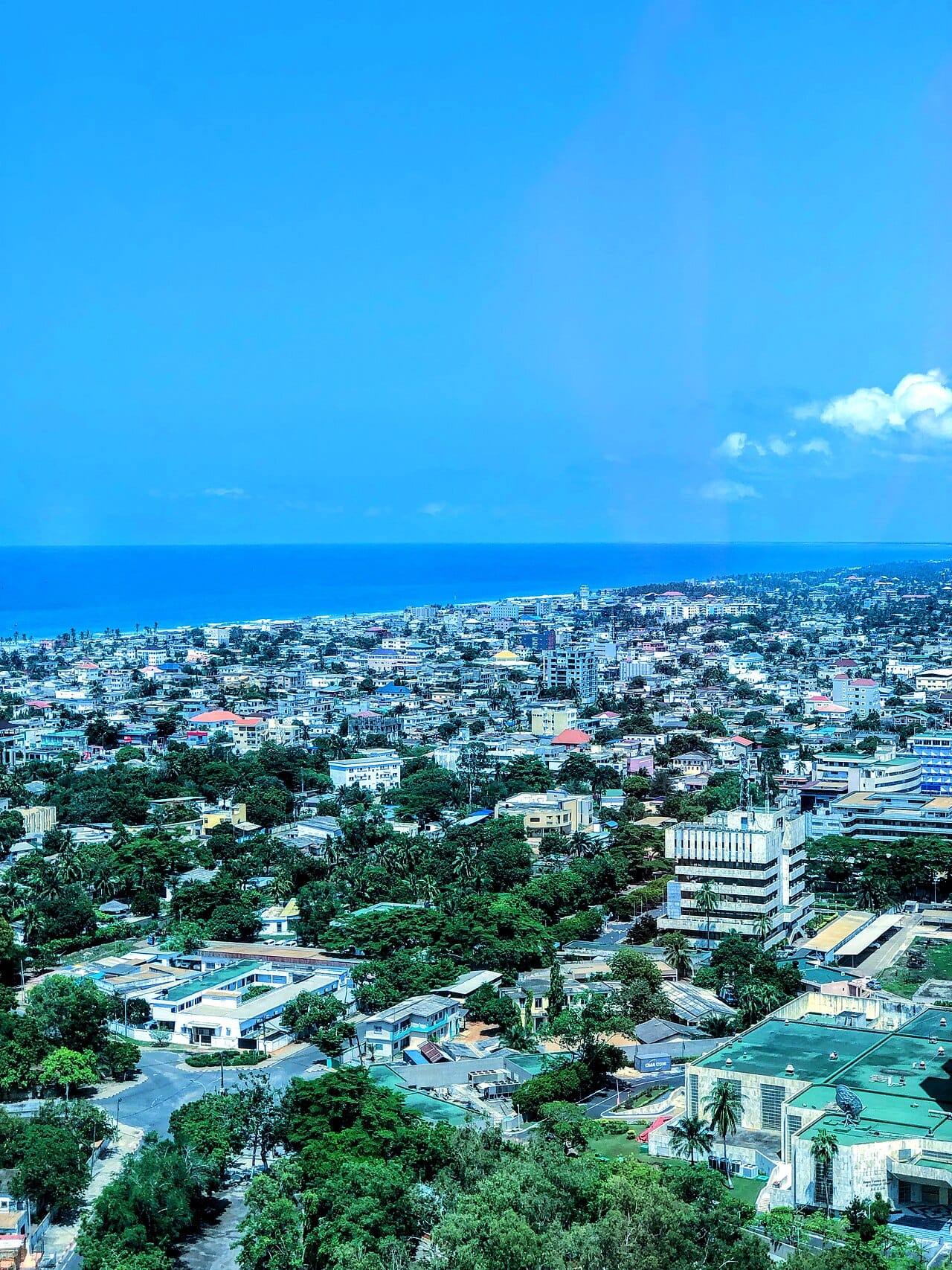
For a country with so little of anything, Togo has built its economy on being a place things pass through. The deep-water Port of Lome is the only natural deep harbour on this stretch of the West African coast and can take the largest container vessels, which has made it a transhipment hub for the whole region and the maritime outlet for landlocked Burkina Faso, Niger, and Mali. Trade, logistics, and the informal re-export business built around them account for a large share of activity, alongside phosphates, cement, and cotton.
The persistent problems are poverty, which remains widespread particularly in the rural north, a heavy debt burden, and an economy vulnerable to the insecurity spreading south from the Sahel; jihadist attacks have reached Togo's northern Savanes region since 2021, displacing tens of thousands and prompting a state of emergency there. Togo's diplomatic position has been notably pragmatic, maintaining working relations with the Sahel juntas that other West African states have shunned, partly because their trade uses its port.
Togolese culture reflects the country's shape, with distinct traditions layered from coast to savanna. In the south, Ewe drumming and dance, the agbadza above all, and the strip-woven kente cloth shared with the Ewe of Ghana are the strongest traditions, alongside Vodun, which originated in this region and remains widely practised. In the north, the Batammariba tower-houses, the Kabye initiation wrestling of evala, and the fire dance of the Tem are equally distinctive. Markets are central to social and economic life, and the great figures of Lome's textile trade, the traders known as the Nana Benz for the Mercedes their wealth bought them, controlled the West African market in printed wax cloth for decades and remain a source of local pride.
Football is the national passion, and the Sparrowhawks reached the World Cup for the first and so far only time in 2006. The team's name is also attached to one of the darkest moments in African sport: in 2010 the Togolese squad's bus was attacked by separatist gunmen on the way to the Africa Cup of Nations in Angola, killing three of the delegation.
Togo has a population of around 9.5 million, young and growing, made up of some forty ethnic groups. The largest are the Ewe and related peoples of the south, who make up a substantial share of the population, and the Kabye of the north, from whom the Gnassingbe family comes and who have long been heavily represented in the army, a north-south imbalance that has shaped politics since independence. French is the official language, with Ewe and Kabye recognised as national languages and widely used.
The population is concentrated in the south, above all in Lome, which sits in the extreme southwestern corner of the country, hard against the Ghanaian border, and holds well over a million people. The north is poorer, more rural, and more Muslim, and the development gap between the two ends of the country is one of Togo's standing problems.