Singapore is a city-state at the southern tip of the Malay Peninsula in Southeast Asia, an island nation of remarkable prosperity built on what was, within living memory, a poor and crowded port. One of the world's great financial, trading, and shipping hubs, it has transformed itself in a single generation into one of the richest and most developed nations on Earth, a gleaming, orderly metropolis famed for its efficiency, its strict laws, and its cleanliness. A diverse society of Chinese, Malay, Indian, and other peoples, Singapore is a rare example of a thriving modern city-state.
Singapore's history is unusually compressed. Almost everything that made the modern country happened in two hundred years, and the transformation that defines it happened in about thirty.
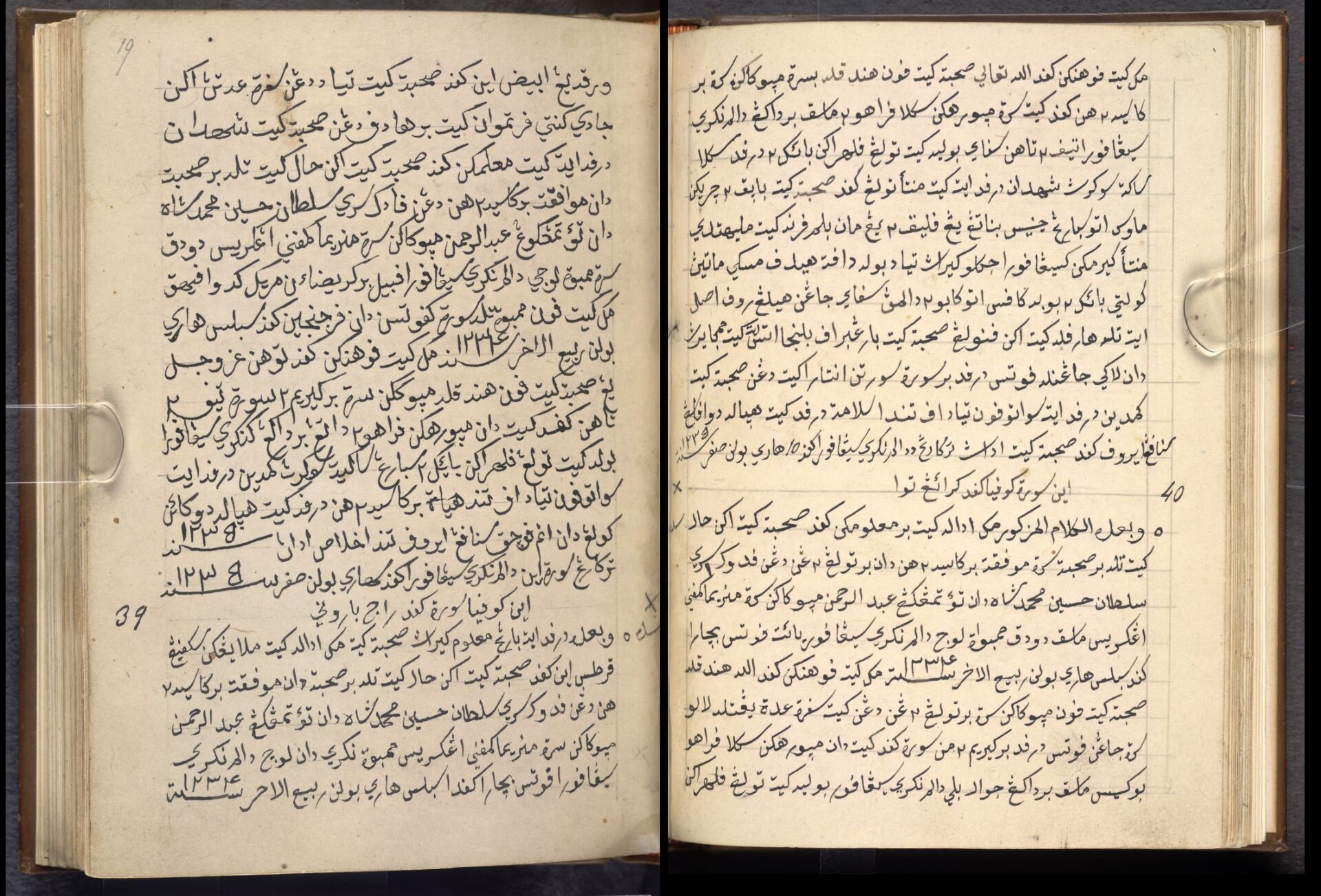
The island was not empty before the British arrived. A settlement called Temasek, and later Singapura, stood here in the fourteenth century, a minor trading port on the edge of the Malay world that was raided and abandoned, leaving the island a quiet fishing and pirate haunt under the Sultanate of Johor. In 1819 Stamford Raffles, an official of the British East India Company looking for a base to break Dutch dominance of the region's trade, landed and negotiated a treaty permitting a trading post. The arrangement rested on a contested succession within the Johor royal house, and the British recognised one claimant as sultan in order to obtain the agreement they wanted. William Farquhar was installed as the settlement's first Resident, and within a few years Britain had acquired the island outright.
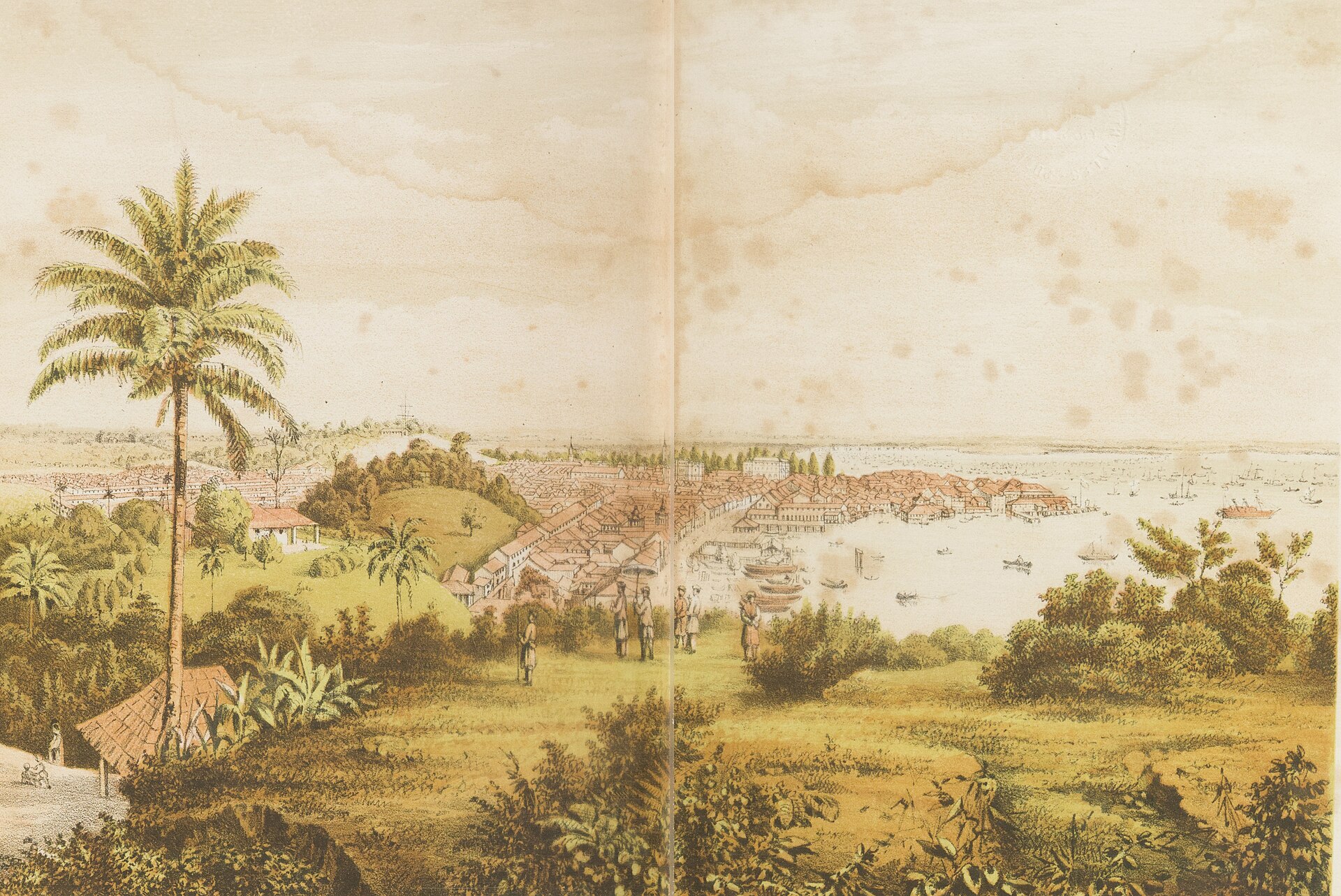
Raffles declared Singapore a free port, charging no duty on goods passing through, and that single decision made it. Positioned at the narrowest point of the sea route between India and China, it drew trade away from its rivals with extraordinary speed. Migrants came in enormous numbers, above all from southern China, but also from India, the Malay archipelago, and the Arab world, and within a few decades they had made the island a crowded, polyglot commercial town where the Chinese were the majority. Singapore became part of the Straits Settlements, and with the opening of the Suez Canal in 1869 and the rise of Malayan rubber and tin, it grew into one of the busiest ports on Earth.
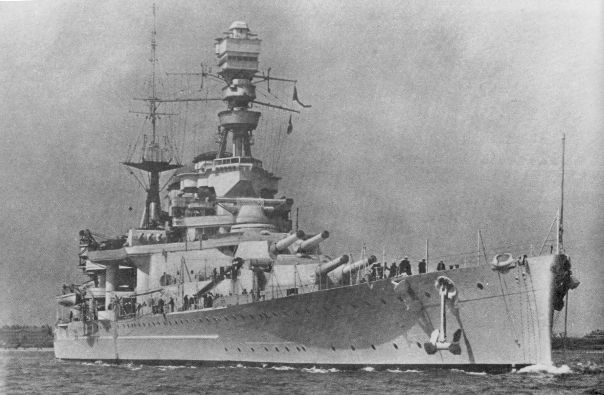
Britain fortified Singapore between the wars as the anchor of its position in the Far East, a naval base thought to be impregnable. In December 1941 Japanese forces landed in northern Malaya and advanced down the peninsula on bicycles and on foot, faster than the defenders believed possible. Two capital ships sent to stop the landings were sunk from the air within days, an event that shocked the Royal Navy and demonstrated that battleships without air cover could not survive. On 15 February 1942 the garrison surrendered, the largest capitulation in British military history, and Churchill called it the worst disaster in it. Three and a half years of Japanese occupation followed, a period of severe hardship marked by the Sook Ching killings, in which large numbers of Chinese men were rounded up and executed. The occupation destroyed the assumption that British protection was permanent, and the road to independence effectively began there.
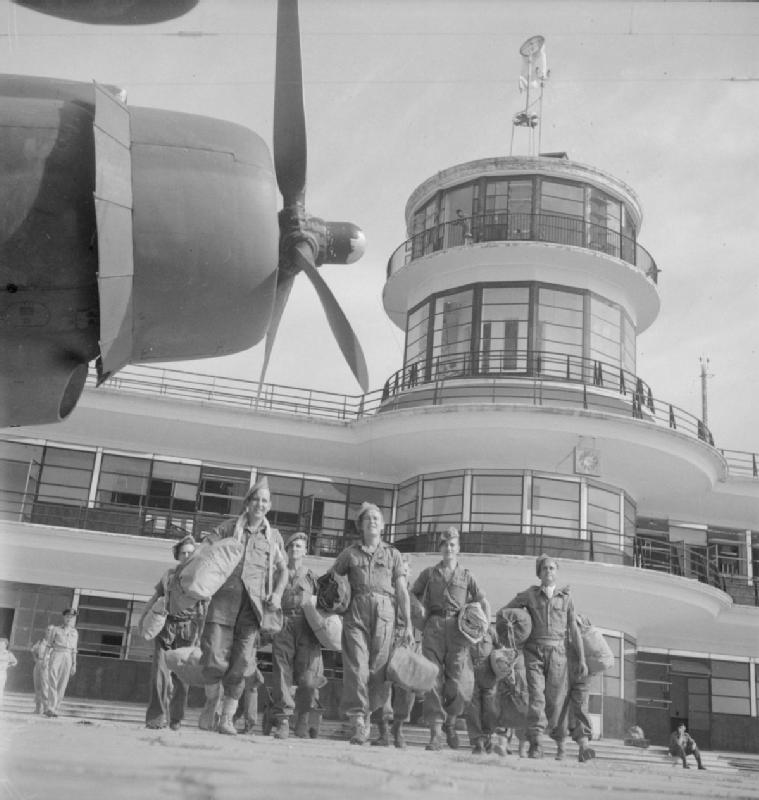
After the war Singapore moved gradually toward self-government, achieved in 1959 with Lee Kuan Yew of the People's Action Party as prime minister. Because the island had no hinterland, no resources, and no obvious means of supporting itself, its leaders regarded union with the Malay Peninsula as essential, and in 1963 Singapore joined the new Federation of Malaysia. The marriage lasted two years. Disputes over the terms of the union, over economic policy, and above all over whether the new country should give special standing to Malays or treat all races equally became irreconcilable, and there were serious communal riots. On 9 August 1965 Singapore was expelled from the federation and became independent against its own wishes, a moment Lee announced in tears on television. The city it inherited was crowded, poor, and short of housing, water, and work.
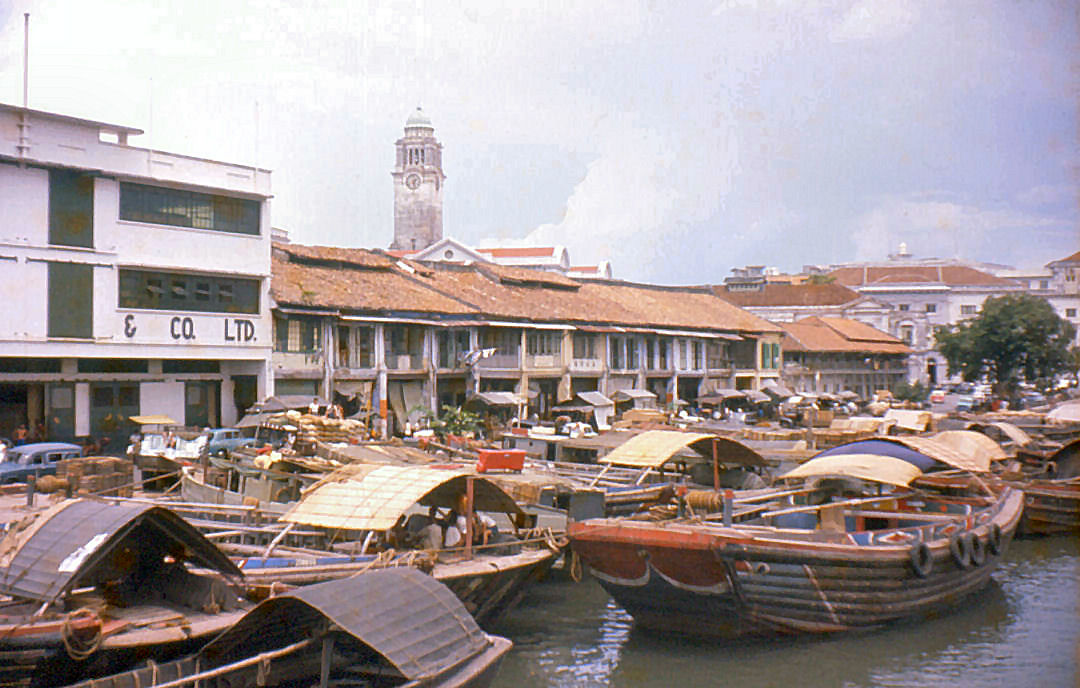
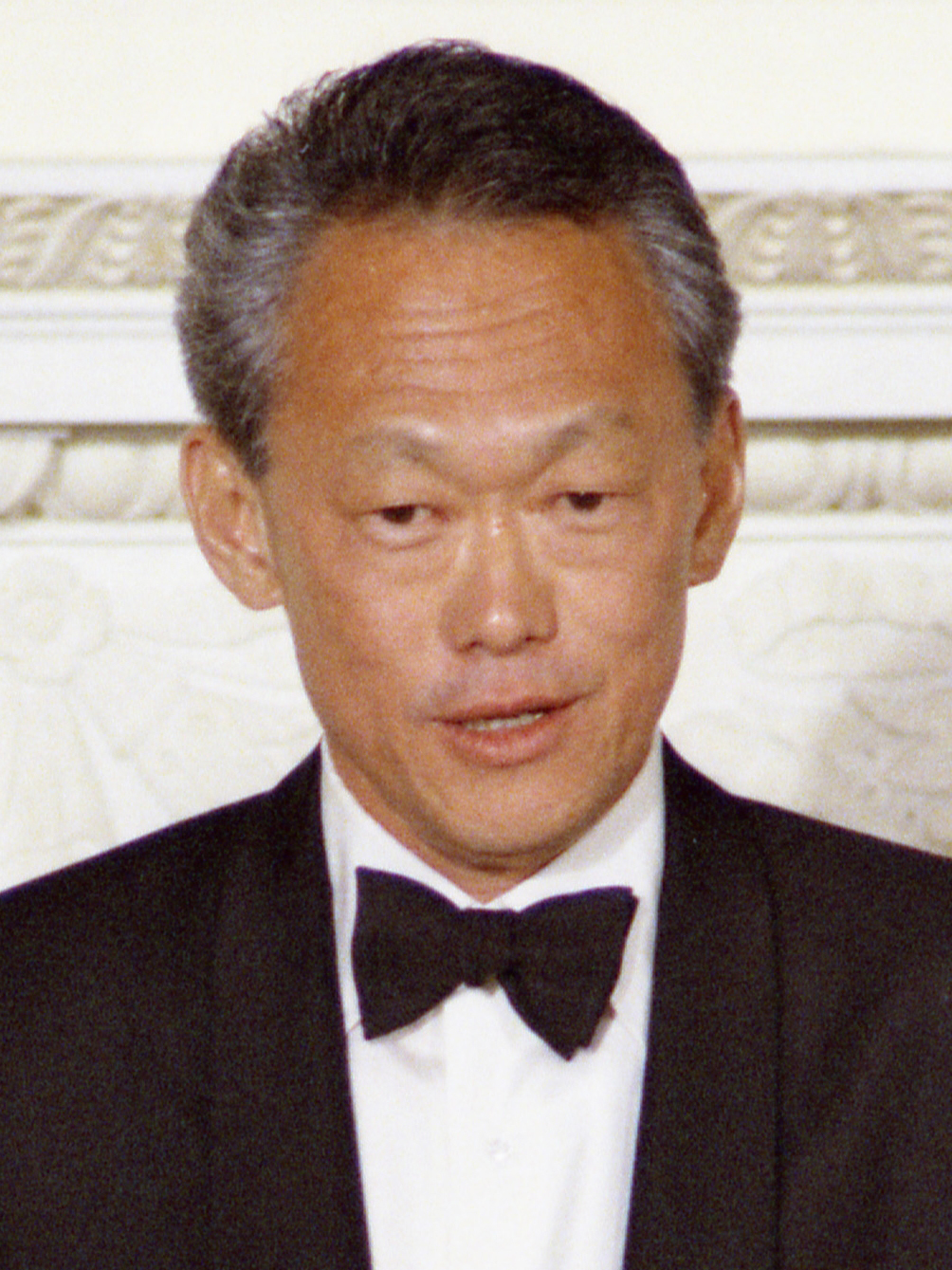
What followed is one of the most studied economic transformations of the twentieth century. The government pursued foreign investment and export manufacturing at a time when much of the developing world was doing the opposite, built public housing on a scale that eventually accommodated the great majority of the population, made English the common working language while retaining the mother tongues, and invested heavily in education, the port, and later in finance and high technology. It was accompanied by tight political control: opposition was hemmed in by defamation suits and detention without trial, the press was constrained, and the People's Action Party has governed without interruption since 1959. Lee Kuan Yew served as prime minister until 1990 and remained influential until his death in 2015, and Singapore moved from the income level of a poor country to among the highest in the world within a single lifetime.
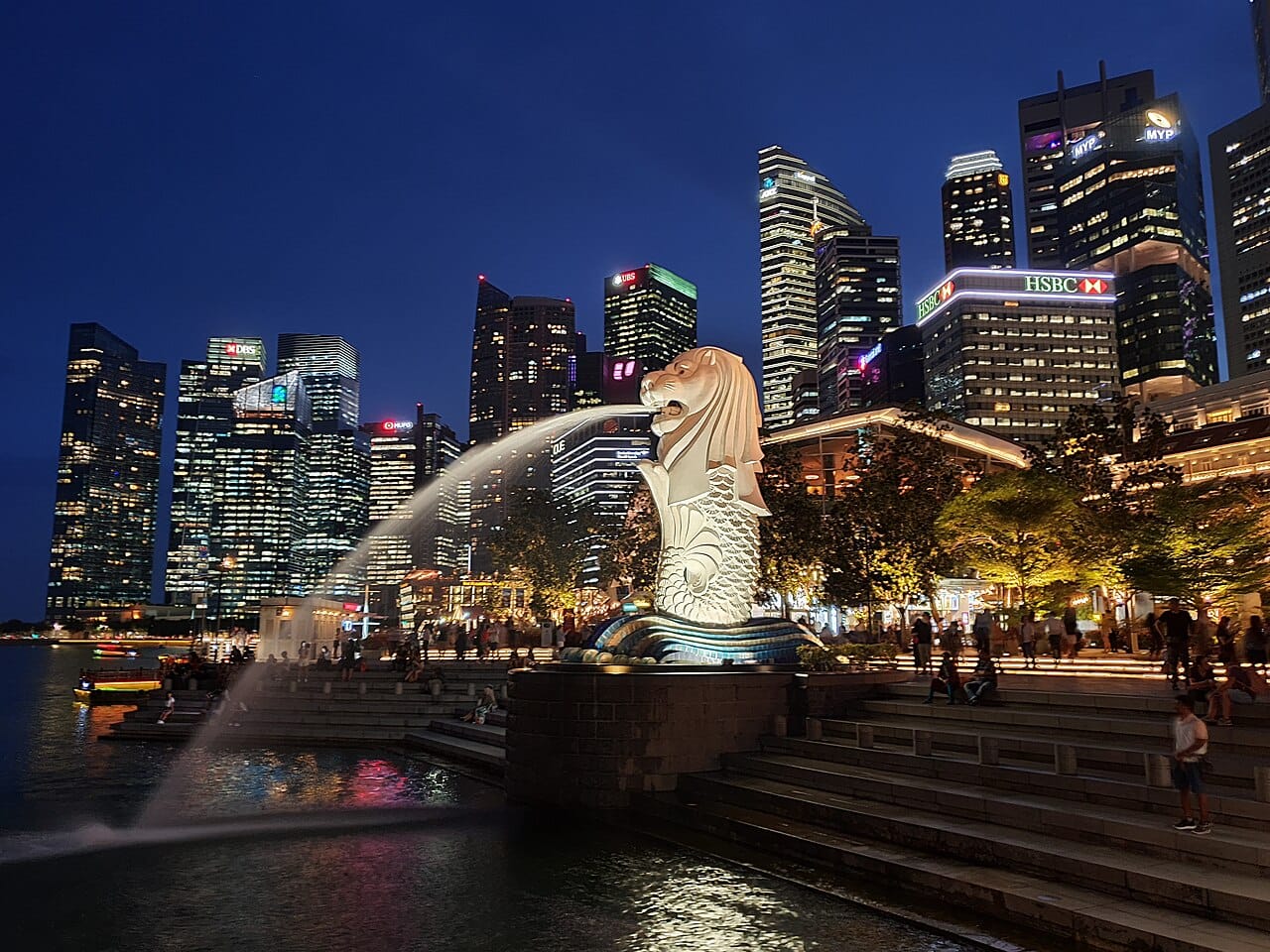
The name Singapore comes from Sanskrit words meaning Lion City, and tradition tells that a Sumatran prince, Sang Nila Utama, landed on the island centuries ago and saw a magnificent beast he took to be a lion, naming the place in its honour. The story is cherished as the origin of the city's name and its lion symbolism. Yet lions have never lived on Singapore or anywhere nearby, so the creature, if the prince saw anything at all, was more likely a tiger, and the tale is treated by historians as legend rather than established fact.
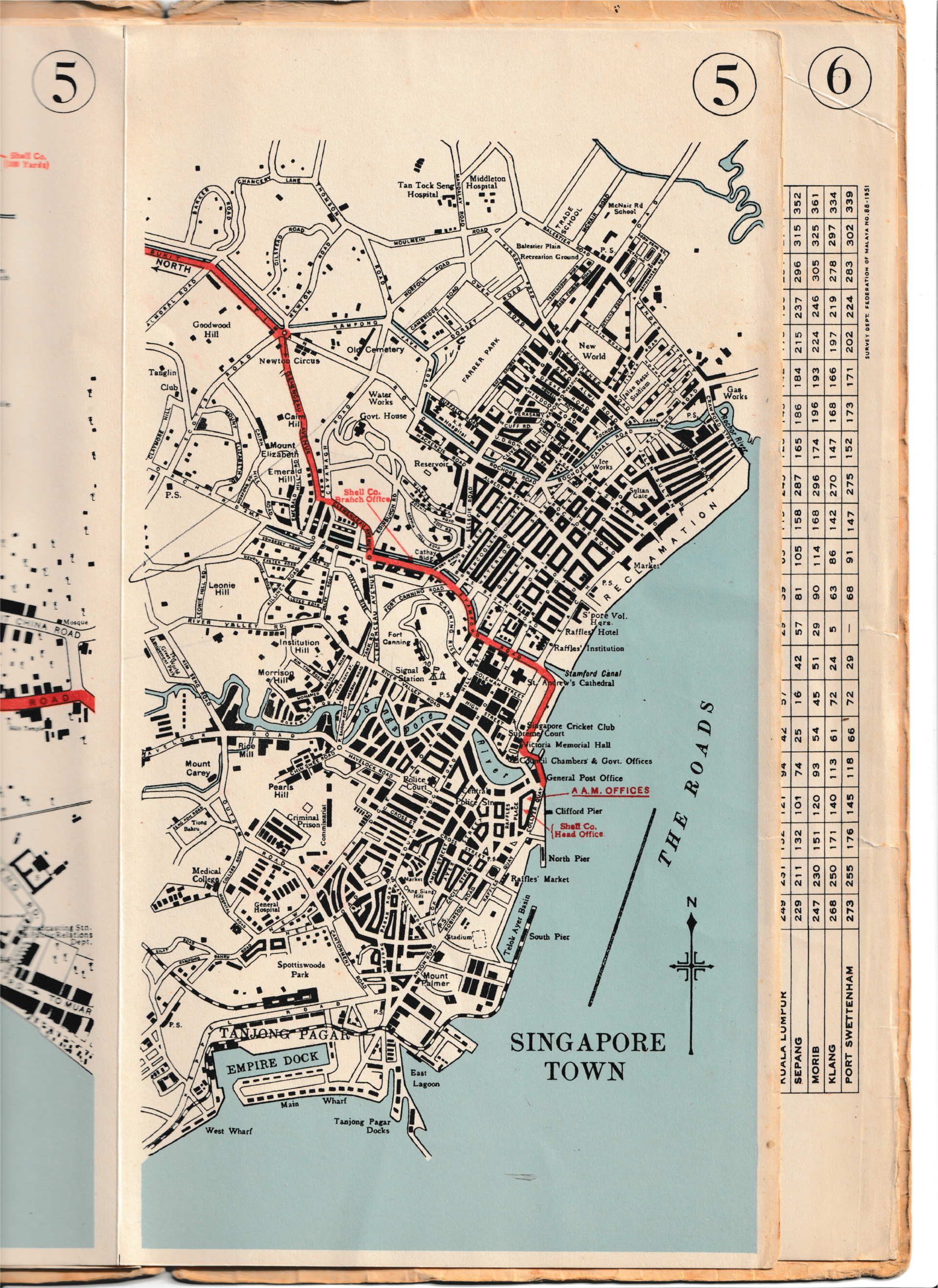
Singapore consists of one main island and dozens of smaller islets, lying just north of the equator at the tip of the Malay Peninsula, separated from Malaysia by the narrow Johor Strait and from Indonesia by the wider Singapore Strait. The land is low, its highest point a hill of only about 164 metres, and it was once covered in rainforest, mangrove, and swamp, most of which the city has replaced. What remains is carefully protected in nature reserves such as Bukit Timah and the mangroves at Sungei Buloh, and the island supports a surprising quantity of wildlife for so built-up a place, including long-tailed macaques, hornbills, otters that have famously recolonised the urban waterways, and the reticulated python.
Two features of the geography have shaped the country more than any other. The first is the deep, sheltered natural harbour on the strait, which is the entire reason the port exists. The second is a shortage of everything else: the island has almost no fresh water of its own, and for decades depended on a treaty supply piped from Malaysia, a dependence it has spent enormous effort reducing through reservoirs, desalination, and the recycling of wastewater into the drinking supply marketed as NEWater. Land itself has been treated the same way. By dredging sand and filling the shallows, Singapore has enlarged its territory by roughly a quarter since independence, pushing the shoreline outward so far that districts such as Marina Bay stand where there was open sea within living memory.
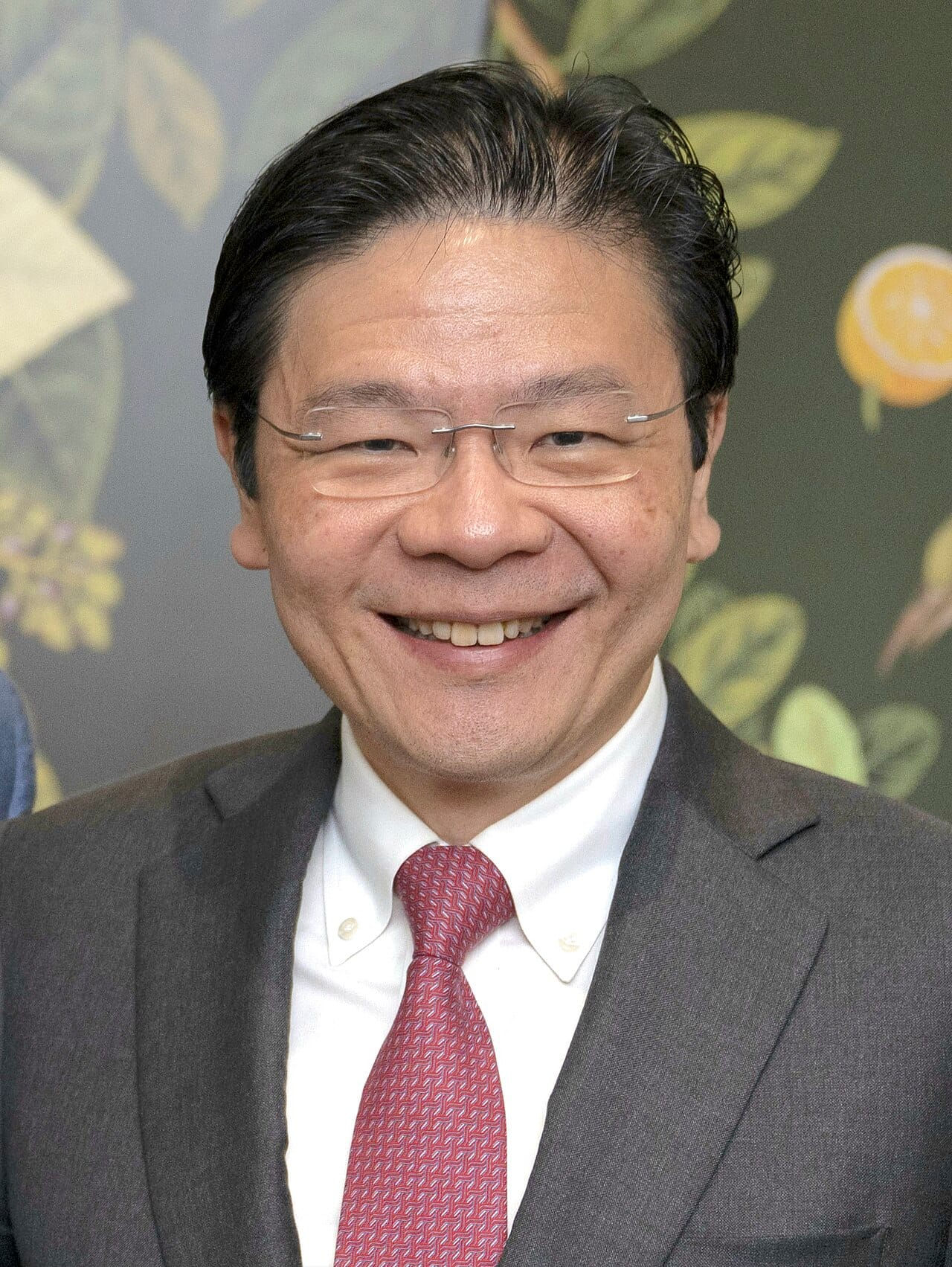
Singapore is a parliamentary republic with a Westminster-derived structure and a political life unlike any other in that family. The head of government is the prime minister, since May 2024 Lawrence Wong, who succeeded Lee Hsien Loong and led the People's Action Party to another decisive majority at the general election of 2025. The head of state is the president, an office directly elected since 1991 and largely ceremonial, but holding a genuine custodial veto over the spending of past financial reserves and over senior public appointments, a safeguard designed to protect the national savings from a future government. The president since 2023 is Tharman Shanmugaratnam, a former senior minister who won by a very wide margin.
The defining fact of Singaporean politics is the continuous rule of the People's Action Party since 1959, one of the longest unbroken runs of any elected governing party in the world. Elections are held on schedule, are not seriously alleged to be miscounted, and the opposition has slowly increased its parliamentary presence, particularly the Workers' Party. But the field on which they are contested is heavily tilted: constituency boundaries are redrawn by a body under the prime minister's office, most seats are multi-member blocs contested as party slates, public housing upgrading has been linked to voting outcomes, and defamation actions have historically been used against opposition figures. Government is meanwhile widely acknowledged as efficient, technocratic, and among the least corrupt in the world, with senior officials paid salaries benchmarked to the private sector precisely to make bribery pointless.
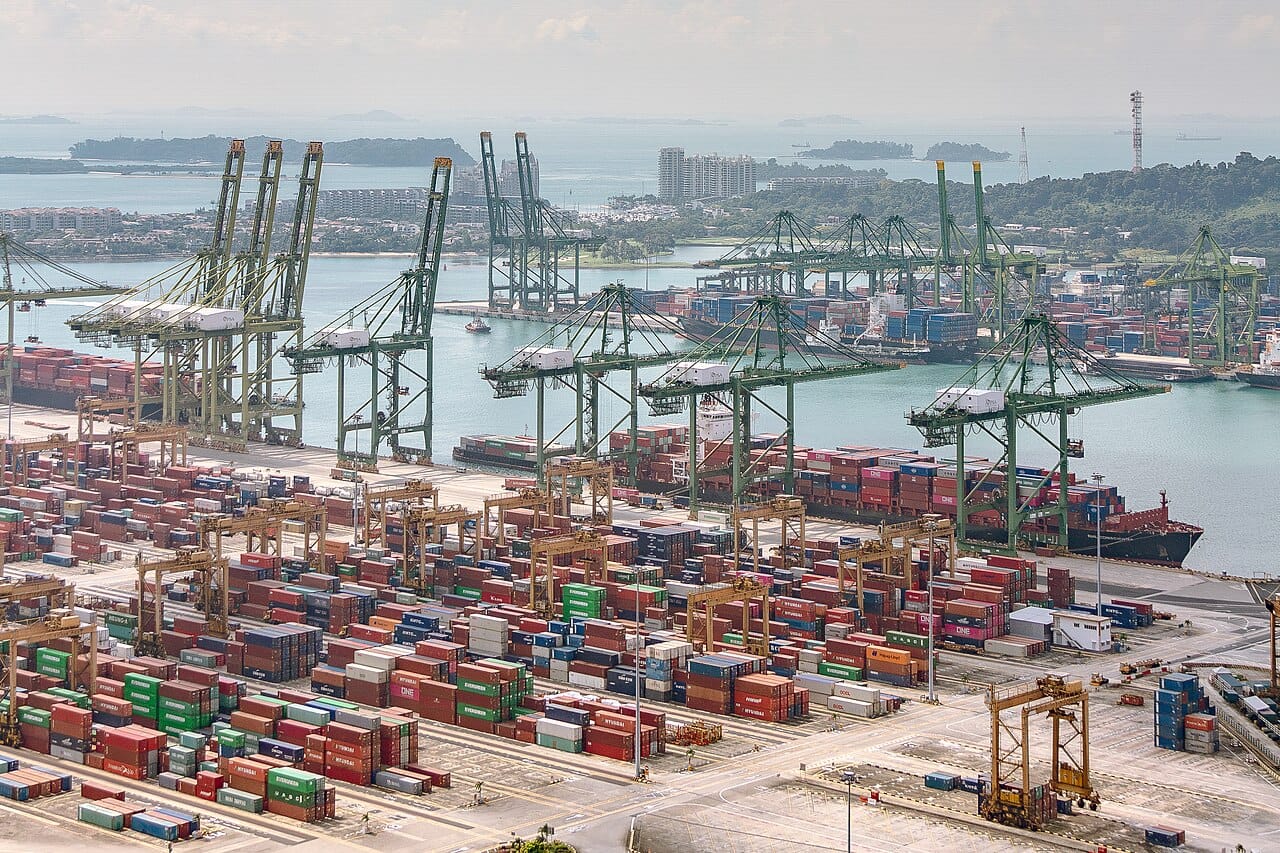
Singapore has one of the highest incomes per head in the world, achieved with essentially no natural resources, and its economy is best understood as a set of deliberate bets that came off. The port is the foundation: it is consistently among the busiest container ports on Earth and the largest bunkering hub for ships' fuel, handling goods that mostly never enter the country but are transhipped between vessels. On top of that sits a major financial centre, with asset management, foreign exchange trading, and private banking of a scale far out of proportion to the population, and a manufacturing sector concentrated deliberately at the high-value end, above all semiconductors, pharmaceuticals, and precision engineering. Singapore Airlines and Changi Airport perform the same hub role in the air that the harbour does at sea.
The state is unusually present in this economy without being socialist in character. Two sovereign funds, GIC and Temasek, manage the national reserves and hold stakes in many of the country's largest firms, the Central Provident Fund compels high savings from every worker, and the Housing and Development Board built and sold on long leases the flats in which the overwhelming majority of Singaporeans live. The trade-offs are equally distinctive: the economy depends heavily on foreign labour at both ends of the wage scale, income inequality is high by developed-country standards, and the cost of living, especially of housing and of the licence required to own a car, is among the steepest anywhere.
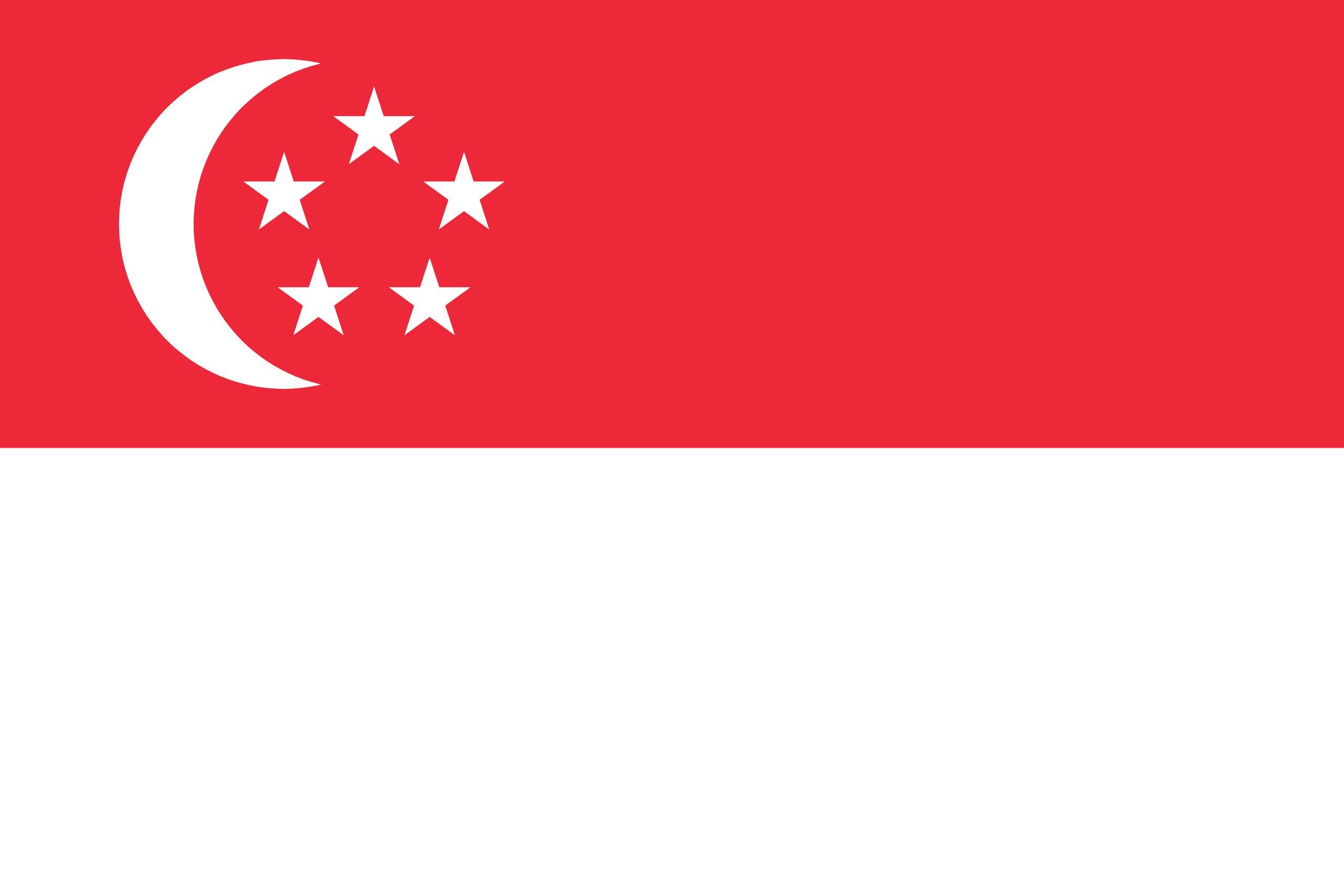
The flag of Singapore has two horizontal bands of red over white, with a white crescent moon and five white stars in the upper hoist. The red stands for universal brotherhood and the equality of all people, and the white for purity and virtue. The crescent moon represents a young nation on the rise, and the five stars stand for the country's ideals of democracy, peace, progress, justice, and equality. The flag, adopted at self-government in 1959, expresses the aspirations of the young and multicultural state.
Singapore is one of the most religiously diverse countries in the world, reflecting its multicultural population, and it is known for the generally harmonious coexistence of its many faiths, actively promoted by the state. Buddhism is the largest religion, followed especially among the Chinese majority, alongside significant numbers of Christians, Muslims, mostly among the Malay community, Taoists, and Hindus, while a notable share of the population follows no religion. Temples, churches, and mosques stand close together in the city, and religious harmony is treated as essential to national stability.
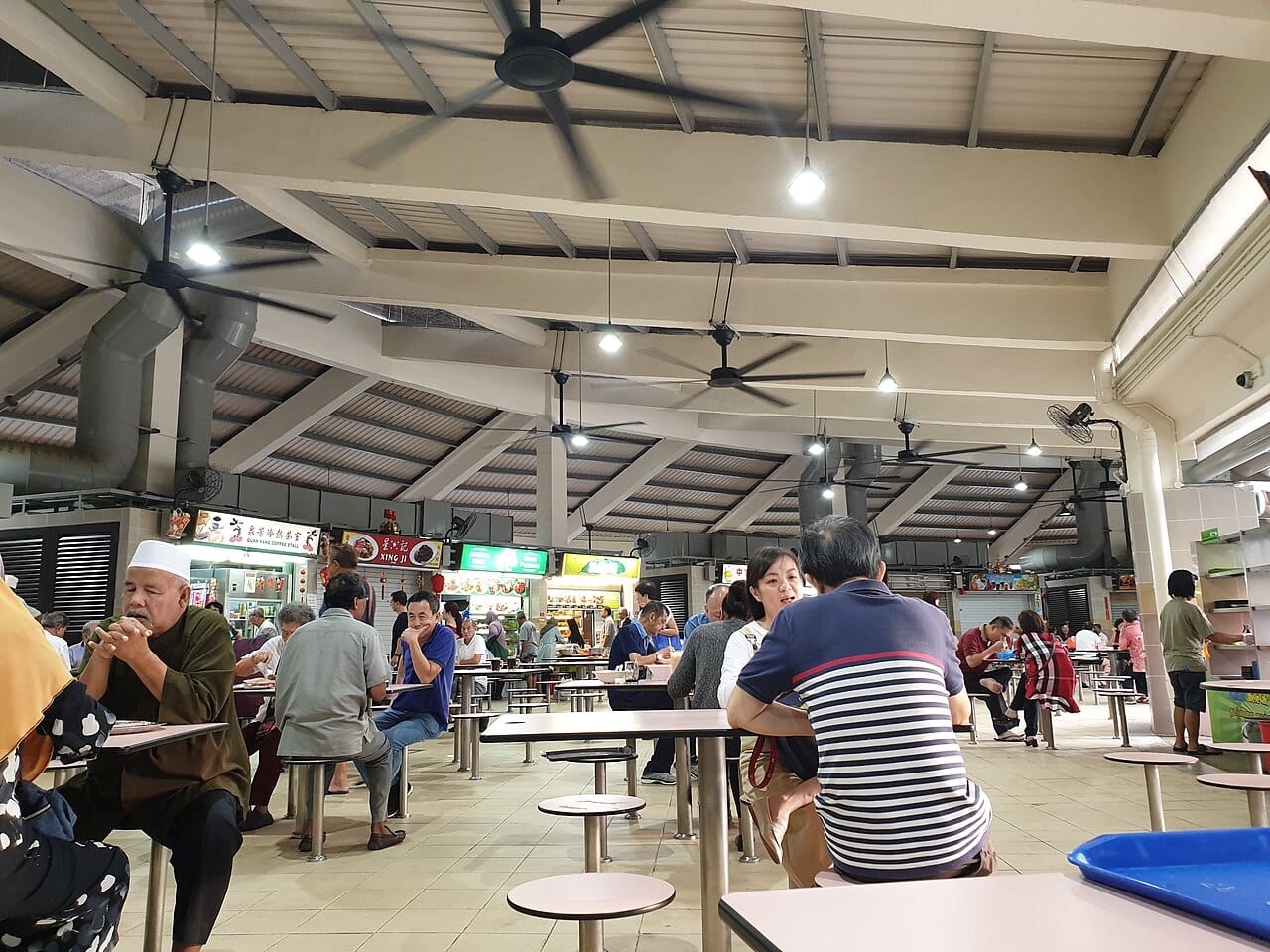
Singaporean cuisine is one of the country's great passions and the clearest everyday expression of its diversity, blending Chinese, Malay, Indian, and Peranakan traditions. Its natural home is the hawker centre, the open-air complex of small food stalls found in every neighbourhood, where a dish costs a few dollars and where the whole society eats side by side. Hawker culture was added to the UNESCO list of intangible cultural heritage in 2020, a recognition Singaporeans took very seriously. Iconic dishes include Hainanese chicken rice, the coconut-and-chilli noodle soup laksa, chilli crab, char kway teow, satay, roti prata, nasi lemak, and the breakfast of kaya toast with soft-boiled eggs and thick coffee. Peranakan or Nyonya cooking, the cuisine of the descendants of early Chinese settlers who married into Malay families, is a distinct tradition of its own. Stalls awarded Michelin recognition sit alongside stalls that have been run by the same family for fifty years, and arguments about where to find the best version of any given dish are close to a national sport.
Agriculture is close to negligible in Singapore in the ordinary sense: farmland occupies a tiny fraction of the island and the country imports the overwhelming majority of what it eats, from more than a hundred and seventy countries, deliberately spread so that no single supplier can squeeze it. That dependence is treated as a strategic vulnerability rather than a fact of life. Under a policy target announced in 2019 of producing thirty per cent of its nutritional needs domestically by 2030, Singapore has become an unlikely centre of high-intensity food technology: multi-storey vertical vegetable farms, rooftop plots on car parks and public housing blocks, recirculating and offshore fish farming, and laboratories working on cultivated meat, of which Singapore was the first country in the world to approve a commercial sale in 2020. Whether the target is reachable is openly debated, but the effort has made a city with almost no soil into a serious contributor to the science of growing food without much of it.
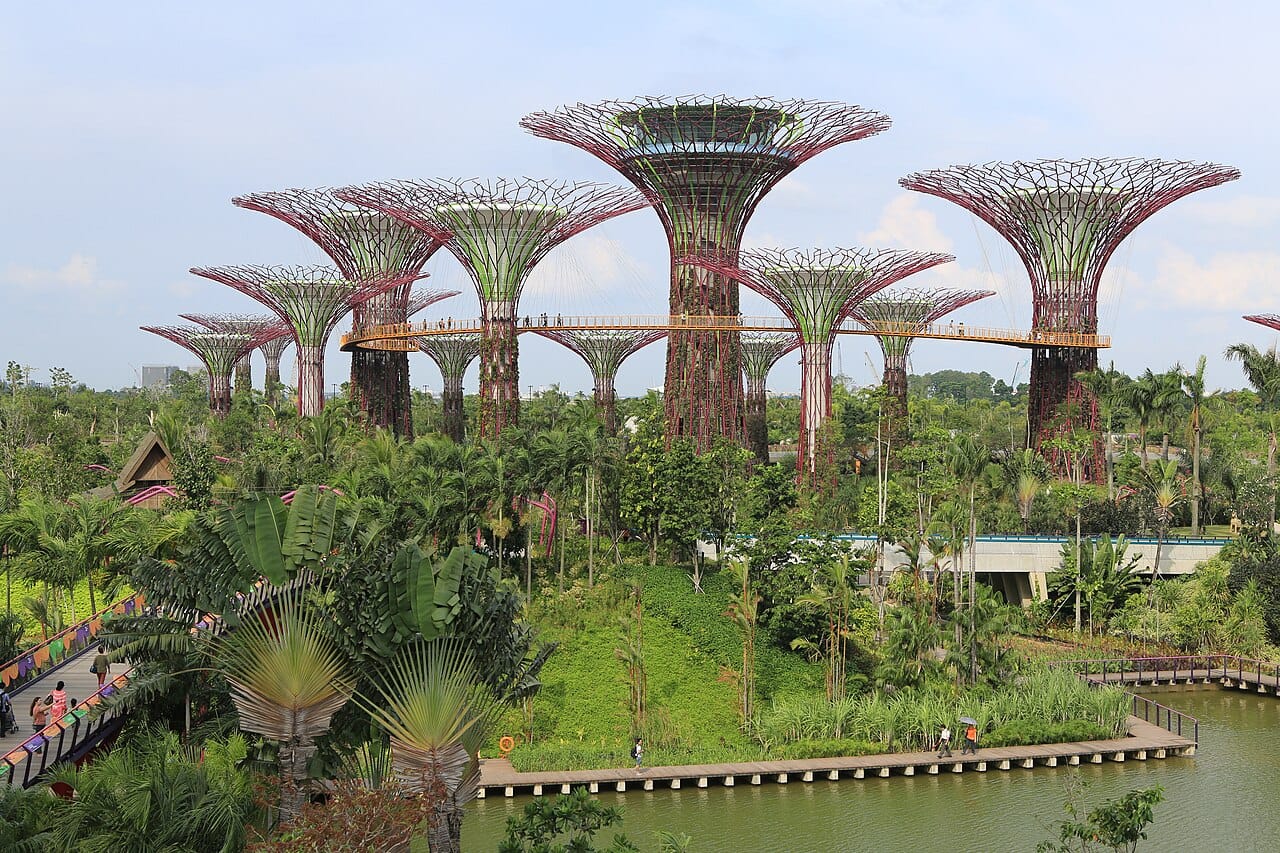
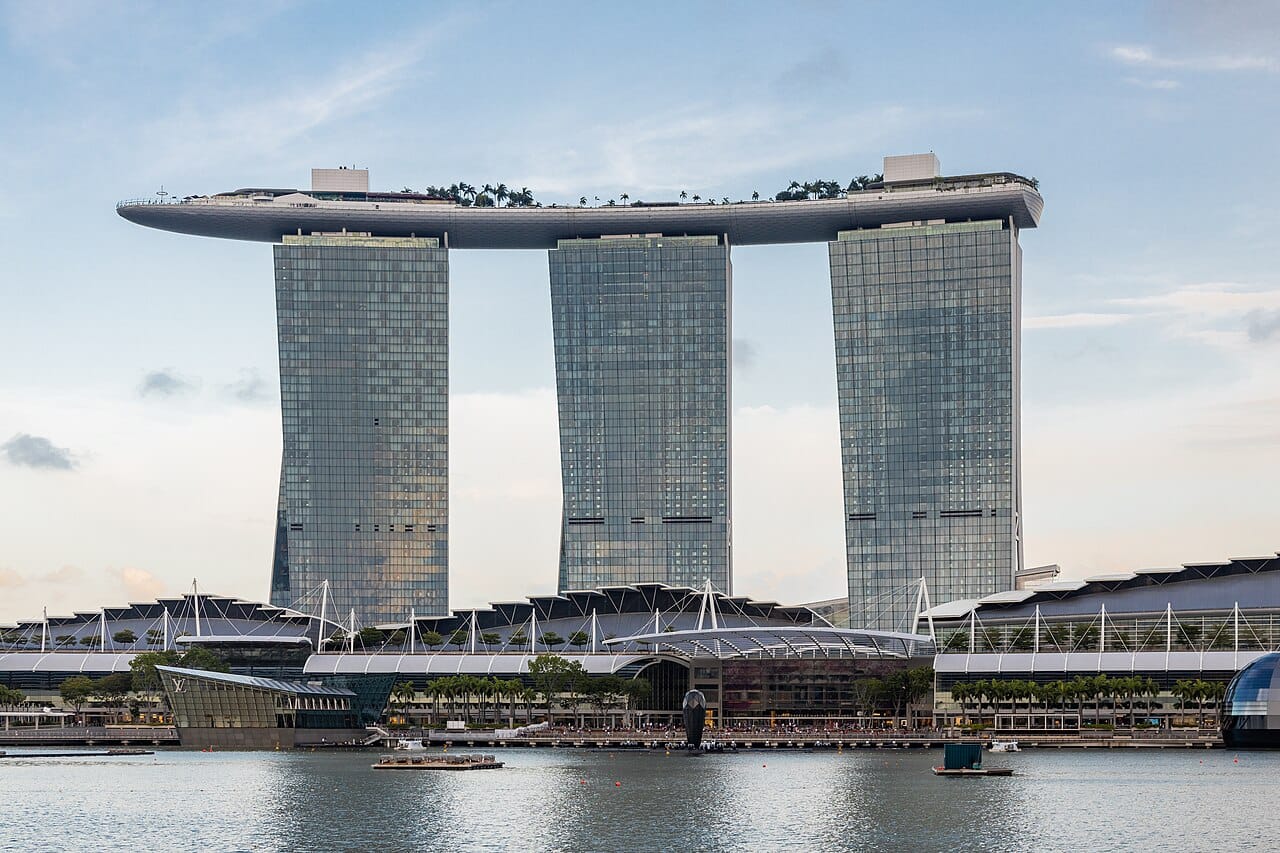
Singapore's greenery is not accidental; it is policy. From the 1960s Lee Kuan Yew pushed a "garden city" campaign that planted trees along every road and required developers to replace the greenery they removed, partly for quality of life and partly because a clean, green city was thought to attract investors. The ambition later shifted from garden city to "city in a garden", and then to "city in nature", with parks connected by a network of green corridors, vertical planting written into building rules, and nature reserves protected inside a metropolis. The showpiece is Gardens by the Bay, built on reclaimed land beside the financial district, with cooled conservatories and the artificial Supertrees that gather rainwater and generate solar power. Beside it stands Marina Bay Sands, three hotel towers carrying a boat-shaped sky park, an image so widely reproduced that it has become the visual shorthand for modern Singapore. The nation's tree cover is remarkably high for its density, and the wildlife has responded: smooth-coated otters now live in the middle of the city and are followed by the public like celebrities.
No country is argued about in quite the way Singapore is, because the argument is not really about the facts, which are largely agreed, but about what they are worth. In one telling, Singapore is the strongest evidence available that competent, honest, long-horizon government can lift a population out of poverty within a generation: near-universal home ownership, world-leading schools and healthcare outcomes, very low crime, almost no corruption, and racial peace in a region where communal violence has been common. Its defenders argue that a small, diverse, resource-poor island had no margin for the disorder that a fully open political contest might have brought, and that voters have endorsed the arrangement repeatedly at genuine elections.
The counter-case holds that the price has been high and is paid by people with little say in it. Political competition has been constrained by defamation suits, licensing rules, and constituency design; the press ranks poorly in international assessments of media freedom, and a 2019 law against online falsehoods gives ministers the power to order corrections, which critics say is used against inconvenient reporting. Public assembly is tightly restricted. Judicial caning remains in use, and Singapore is one of the few developed countries that still executes people, including for drug trafficking, a policy the government defends as the reason it does not have the drug problem its neighbours do, and which the United Nations human rights office and abolitionist campaigners have repeatedly condemned.
Two further debates are live at home rather than abroad. The first concerns the roughly one in three residents who are not citizens, among them a large workforce of low-paid migrant labourers, mostly from South and Southeast Asia, who build and clean the city and live in dormitories on the outskirts; conditions there drew intense scrutiny when they became the site of the country's largest coronavirus outbreak in 2020, and reforms followed, though advocates say the underlying dependence and the limits on these workers' rights remain. The second concerns social liberalisation. Parliament repealed section 377A, the colonial-era law criminalising sex between men, in 2022, while simultaneously amending the constitution to shield the legal definition of marriage from challenge in the courts, a compromise presented as keeping pace with a changing society without forcing the question, and read by both sides as a concession and a limit at once.
Singapore has a population of around six million, one of the highest densities of any country on Earth and entirely urban. About two thirds are citizens or permanent residents, with the remainder a large non-resident population of foreign workers, professionals, domestic helpers, and students. The society is officially organised around four communities, Chinese, Malay, Indian, and a category covering everyone else, a framework used in everything from public housing quotas designed to prevent ethnic enclaves from forming to the four official languages: English, which is the working and common tongue, Mandarin, Malay, and Tamil. Malay is the national language and supplies the words of the anthem. Most Singaporeans speak English alongside a mother tongue, and the colloquial creole known as Singlish, discouraged by the state and cherished by nearly everyone else, functions as a common badge of identity. The great demographic worry is one shared with much of East Asia: one of the lowest fertility rates in the world, which has made the population's continued growth dependent on immigration and made immigration itself a sensitive subject.