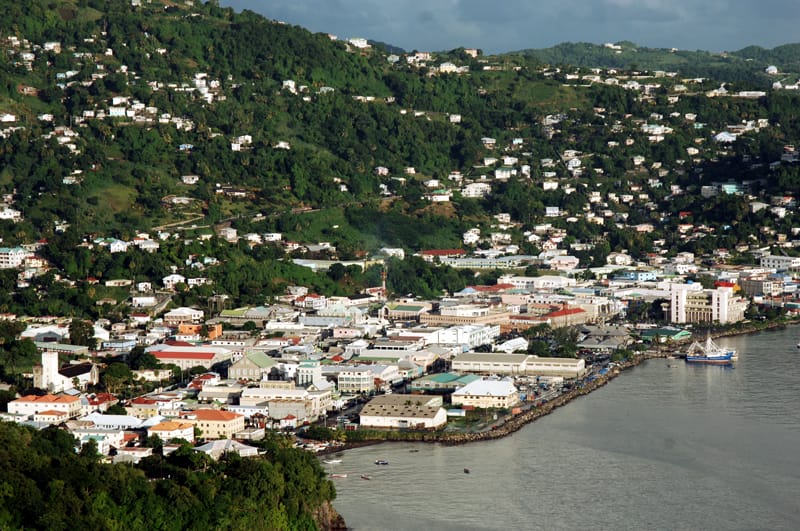
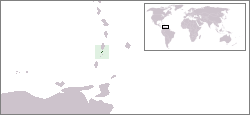
Saint Vincent and the Grenadines is an island nation in the eastern Caribbean, among the Windward Islands, made up of the main island of Saint Vincent and a chain of smaller islands, the northern Grenadines, trailing to the south. A land of a great active volcano, lush mountains, and idyllic small islands beloved of sailors and the wealthy, it has a distinctive history as a stronghold of indigenous and African resistance to European rule, the homeland of the people who became the Garifuna. A former British colony, it gained independence in 1979 and lives today on bananas, tourism, and the sea.
Saint Vincent's history is unlike its neighbours' because the Kalinago held it far longer, and because of what happened when Africans joined them. From the seventeenth century, Africans who escaped slavery on other islands or survived shipwreck settled among the Kalinago and intermarried, producing a distinct people known to the British as the Black Caribs and to themselves as the Garifuna, with an Arawakan language, African ancestry, and their own political organisation. They were numerous, armed, and militarily effective, and they made Saint Vincent one of the last islands in the Caribbean to fall.
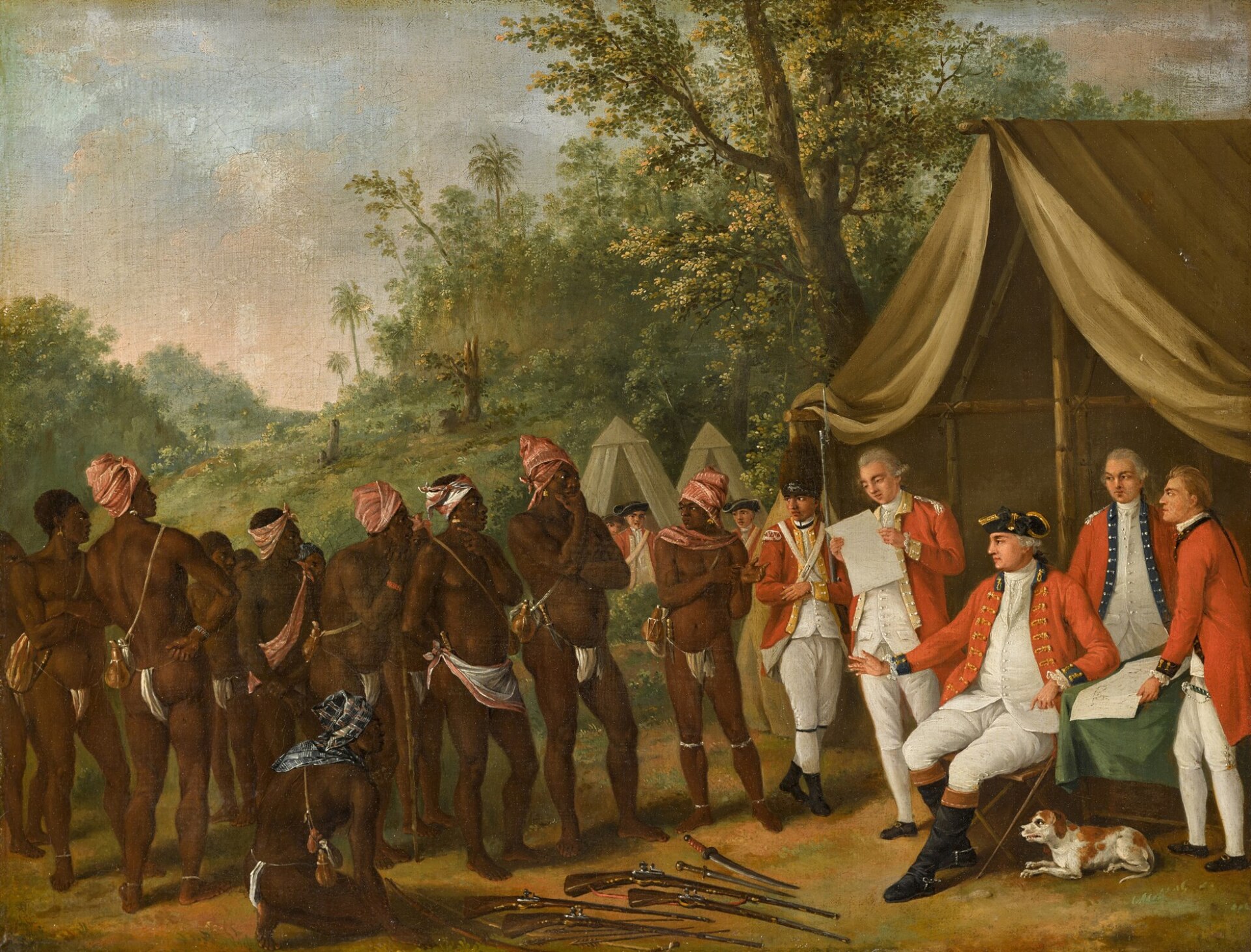
Britain and France both claimed it, and a 1748 treaty declared it neutral, as with Dominica. Britain took formal possession in 1763, and the Garifuna fought two wars against it. The second, from 1795 to 1797, was led by the paramount chief Joseph Chatoyer, who is now Saint Vincent's national hero, and was fought with French support. After Chatoyer was killed and the war lost, the British deported roughly five thousand Garifuna to the island of Roatan off Honduras. About half died on the way or shortly after. Those who survived spread along the Central American coast, and Garifuna communities in Honduras, Belize, Guatemala, and Nicaragua descend from them; UNESCO has recognised their language, music, and dance as intangible heritage. A small Kalinago-descended community remains in northern Saint Vincent.
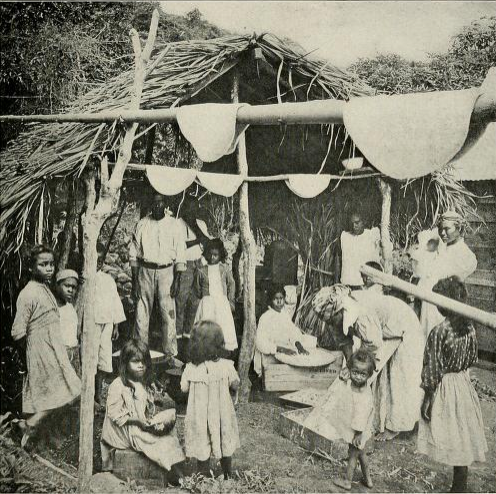
Saint Vincent became a sugar colony worked by enslaved Africans, and after emancipation in 1834 Portuguese and Indian indentured labourers were brought in. Bananas replaced sugar in the twentieth century. The country moved through associated statehood in 1969 to independence on 27 October 1979, a month in which La Soufriere also erupted.
Politics since independence was dominated first by the New Democratic Party under James Mitchell and then, from 2001, by Ralph Gonsalves and the Unity Labour Party. Gonsalves won five consecutive elections and became the longest-serving prime minister in the Caribbean, a prominent regional voice who was closely aligned with Cuba and Venezuela and outspoken on reparations for slavery. That era ended abruptly. At the general election of 27 November 2025 the New Democratic Party won 14 of the 15 seats, reducing the ULP to a single seat held by Gonsalves himself, its worst result ever, and Godwin Friday was sworn in as prime minister the following day, returning the NDP to government for the first time since 1998.
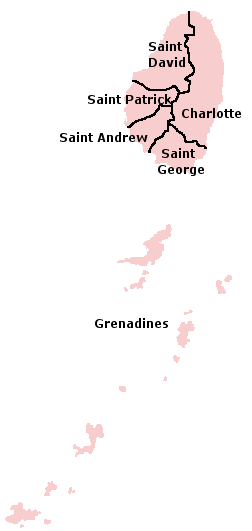
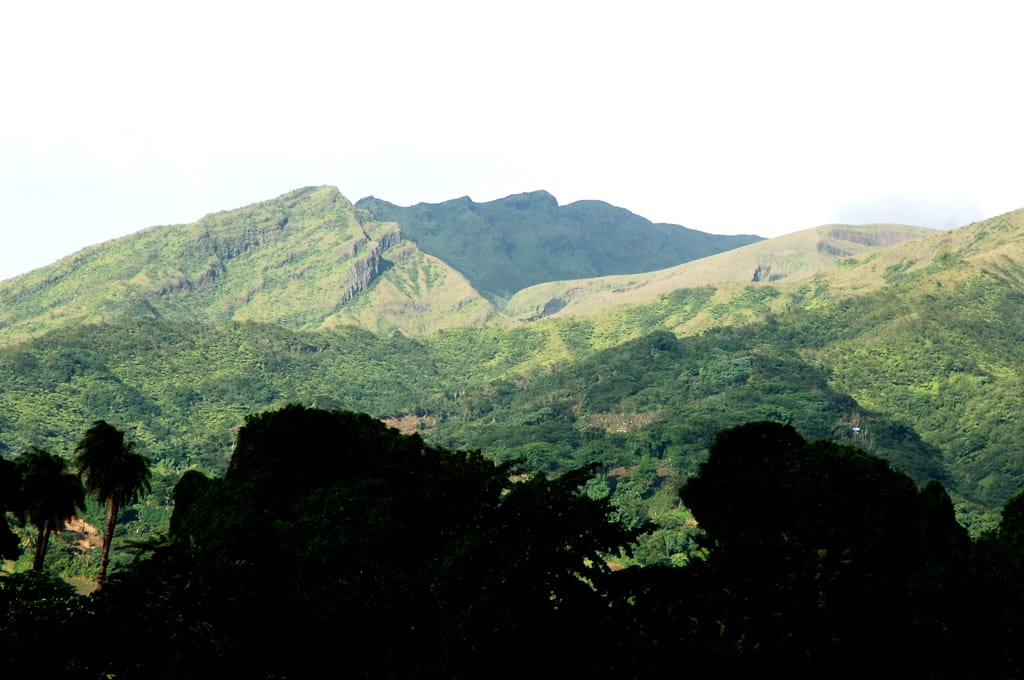
The country is one substantial volcanic island and a trailing chain of about thirty smaller ones. Saint Vincent is steep, wet, and green, its spine running north to La Soufriere, an active volcano of 1,234 metres. It is not decorative. It killed some 1,600 people in 1902 in an eruption overshadowed by Mont Pelee on Martinique the following day; it erupted in 1979, in the month of independence; and in April 2021 it erupted explosively over several days, blanketing the north in ash, destroying crops and water supplies, and forcing the evacuation of some 20,000 people from the northern third of the island, many of whom did not return for months.
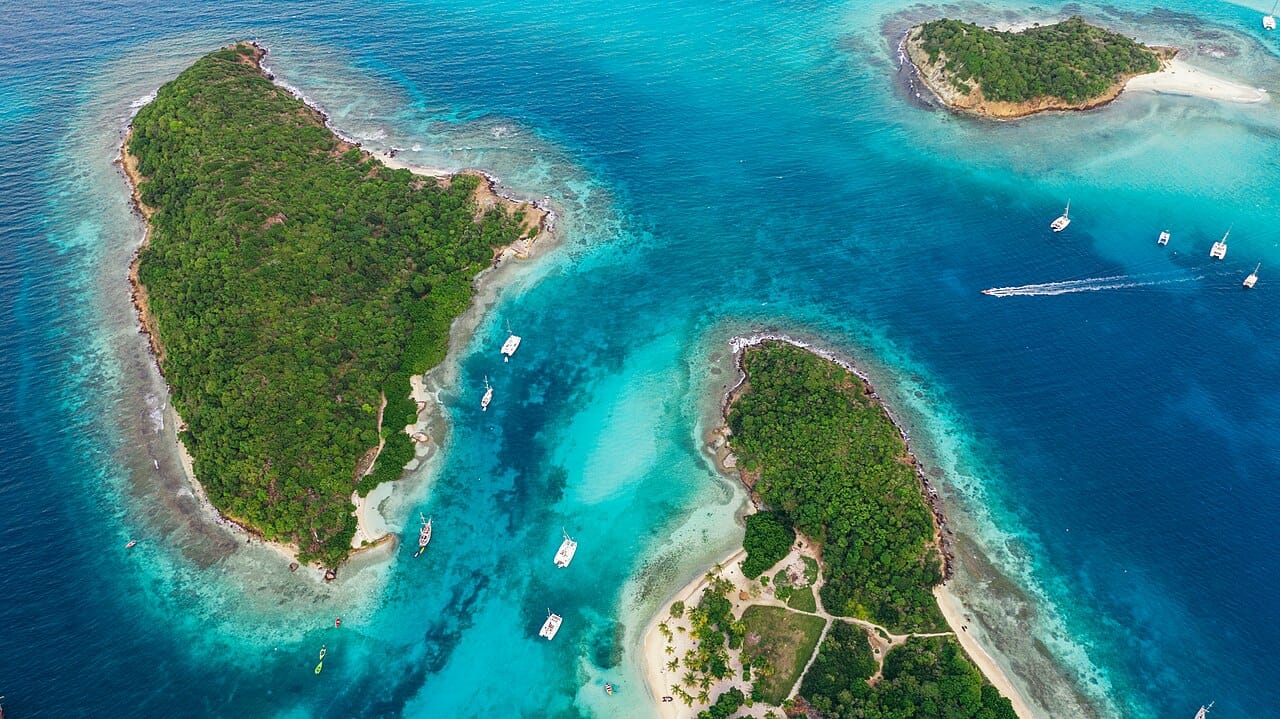
South of the main island the Grenadines are entirely different: low, dry, reef-fringed islands and cays in shallow turquoise water, of which Bequia, Mustique, Canouan, Union Island, Mayreau, and the uninhabited Tobago Cays belong to Saint Vincent, with the southern half of the chain belonging to Grenada. They are among the best-known sailing waters in the world, and Mustique in particular became a private retreat for the very wealthy. Bequia retains an old boatbuilding and whaling tradition, holding one of the few remaining aboriginal whaling quotas granted by the International Whaling Commission. Hurricane Beryl struck the southern Grenadines hard in July 2024, devastating Union Island and Mayreau.
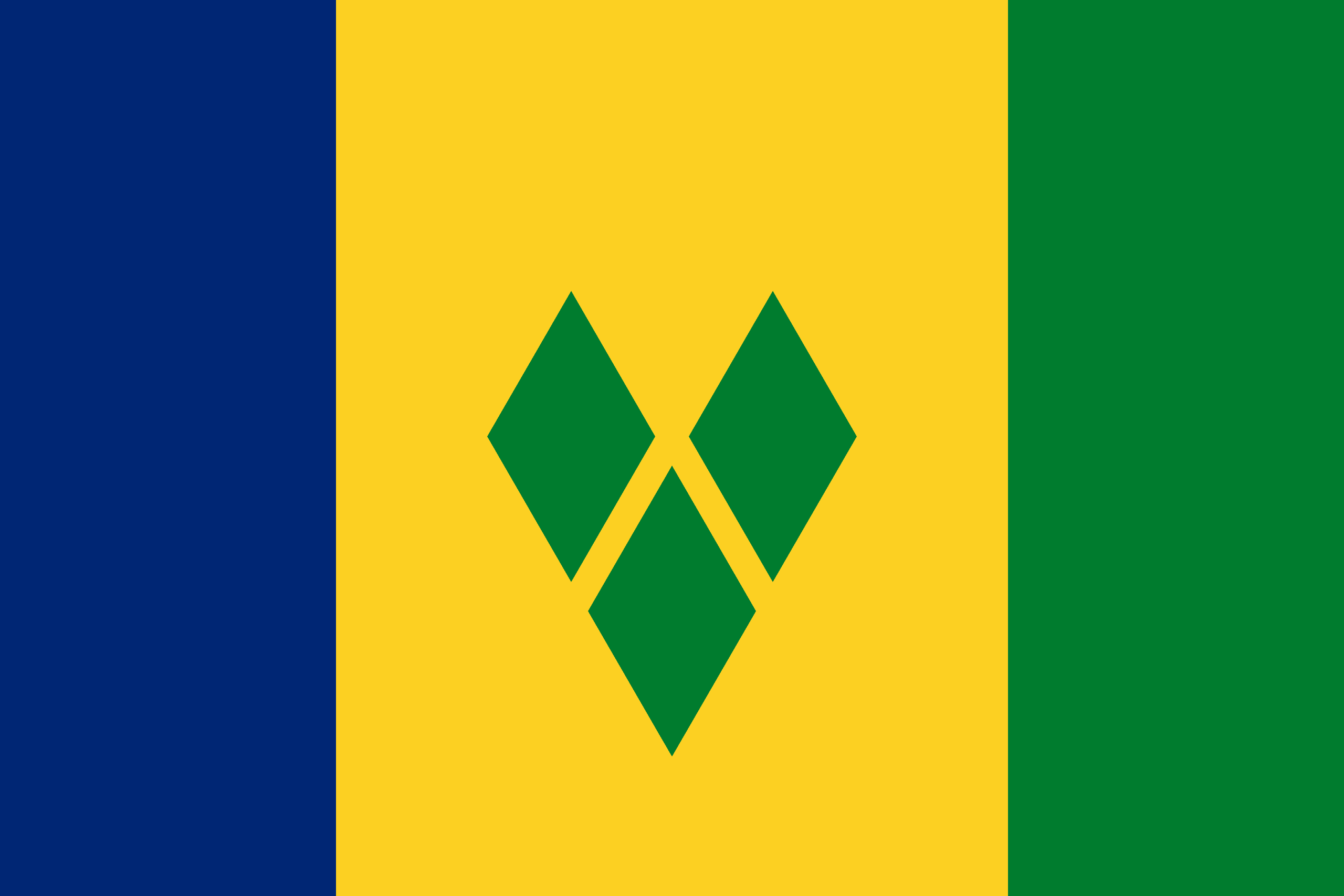
The flag of Saint Vincent and the Grenadines has three vertical bands of blue, gold, and green, with three green diamonds arranged in a V-shape on the central gold band. The blue represents the sky and the sea, the gold the warmth and the bright sands of the islands, and the green their lush vegetation. The three diamonds, set in the shape of a V for Vincent, represent the islands as gems of the Antilles, sometimes called the Gems of the Caribbean. The distinctive design has flown since shortly after independence.
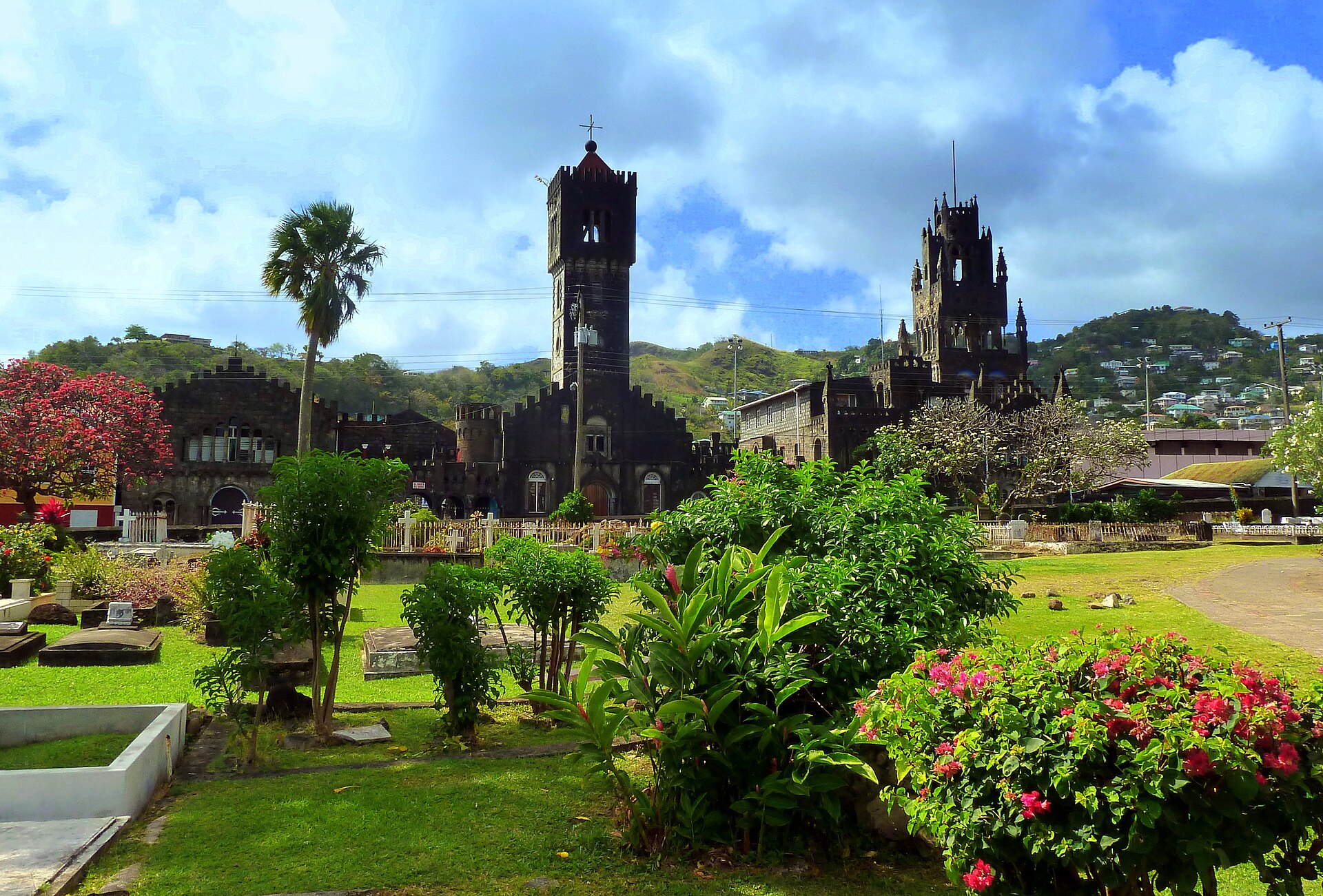
Saint Vincent and the Grenadines is a strongly Christian country, reflecting its British colonial heritage. The Anglican Church was historically prominent, and a range of other Protestant denominations, including Methodist, Pentecostal, Seventh-day Adventist, and others, are widely followed, alongside a Roman Catholic minority and a notable community of the Spiritual Baptist faith, which blends Christian worship with African-derived traditions. Churches are central to community life across the islands, and religion is woven into the culture, festivals, and social fabric of the nation.
The cuisine of Saint Vincent and the Grenadines is Caribbean, drawing on local produce, the sea, and the islands' African and British heritage. The national dish is roasted breadfruit with fried jackfish, reflecting the importance of both the breadfruit, introduced to the island in a famous episode of botanical history, and the fish of the surrounding waters. Ground provisions, callaloo, rice and peas, and tropical fruit feature throughout, along with seafood, and the islands produce their own arrowroot, once a major export, used in cooking and baking.
Agriculture is important to Saint Vincent and the Grenadines, favoured by the fertile volcanic soils of the main island. Bananas have long been the leading export crop and a mainstay of the rural economy, though vulnerable to storms and shifting trade arrangements, and the island was historically the world's leading producer of arrowroot, a starch still grown there. Root crops, vegetables, coconuts, and tropical fruit are also cultivated, much of it on small farms, and fishing is significant. Alongside agriculture, tourism, especially in the Grenadines, is a major and growing pillar of the economy.
The economy rests on agriculture, tourism, and the sea. Bananas were the mainstay under preferential access to the British market, and the loss of that preference following World Trade Organization rulings in the 1990s did lasting damage; farming has since diversified into arrowroot, of which Saint Vincent is the world's leading producer, root crops, and plantains. Tourism is concentrated in the Grenadines and the yachting trade rather than on the main island, and an international airport at Argyle, opened in 2017 after a long and costly effort, was intended to change that. Remittances from the diaspora and offshore financial services contribute, and the country was for a time a significant flag of convenience for shipping.
Culturally, Vincy Mas at the end of June is the great festival, with calypso, soca, steel pan, and the J'ouvert opening. The nation is unusually conscious of its indigenous inheritance: Joseph Chatoyer, the Garifuna paramount chief killed in 1795, is the national hero, honoured with a public holiday, and the ties to the Garifuna communities of Central America are actively maintained, with visits in both directions. Saint Vincent has also been prominent in the regional campaign for reparations for slavery and native genocide through CARICOM. Cricket is the national game, and Sir Vivian Richards aside, the islands produced Winston Davis and the great West Indies all-rounder era; the island also has an unlikely botanical claim, since the breadfruit Captain Bligh finally delivered after the mutiny on the Bounty was landed at Kingstown in 1793, and a tree said to descend from it still stands in the botanical gardens, among the oldest in the western hemisphere.
Saint Vincent and the Grenadines has a population of around 100,000, the great majority of African descent, alongside people of mixed heritage, a community descended from the indigenous Kalinago and Garifuna in the north of the main island, and minorities of Indian and Portuguese origin descended from indentured labourers brought after emancipation. English is official, and Vincentian Creole is what people speak.
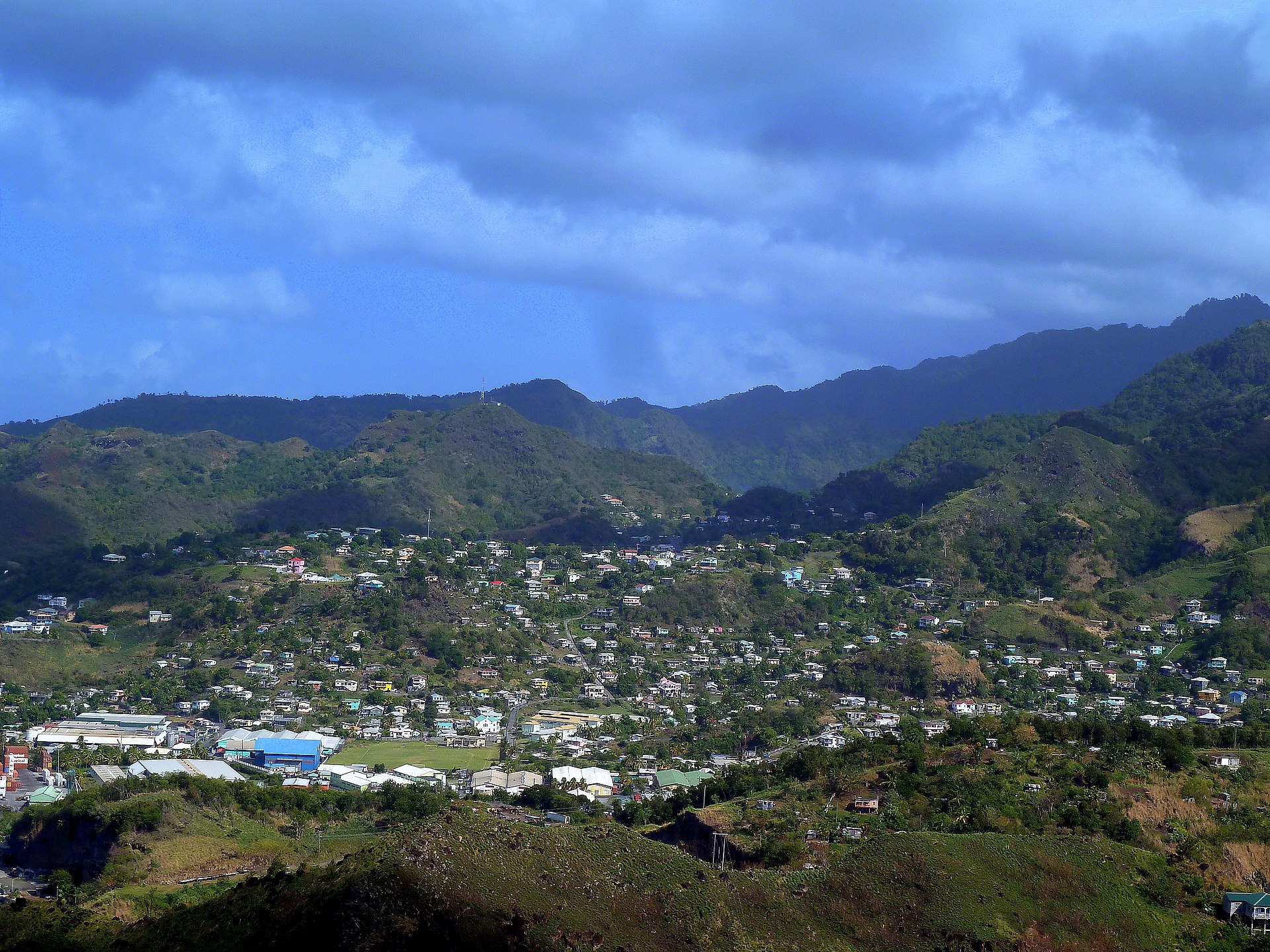
Most of the population lives on Saint Vincent, concentrated around Kingstown in the south, with several thousand more in the Grenadines, chiefly on Bequia and Union Island. Emigration has been very heavy for generations, to Britain, the United States, Canada, and Trinidad, and the Vincentian diaspora is larger than the resident population; remittances are a significant part of household income. The 2021 eruption and Hurricane Beryl in 2024 both displaced substantial numbers within the country, and recovery from each has been slow.