Papua New Guinea is a country in the southwestern Pacific, occupying the eastern half of the island of New Guinea, the world's second largest island, together with hundreds of smaller islands. One of the most culturally and linguistically diverse places on the planet, it is home to many hundreds of distinct languages and peoples, some of whom had almost no contact with the outside world until the twentieth century. A rugged land of jungle-clad mountains and remote highland valleys, it is rich in natural resources but remains largely rural and traditional.
Papua New Guinea's history reaches from some of the world's earliest farmers, through a late and divided colonial era, to a peaceful independence and the enduring diversity of its peoples.
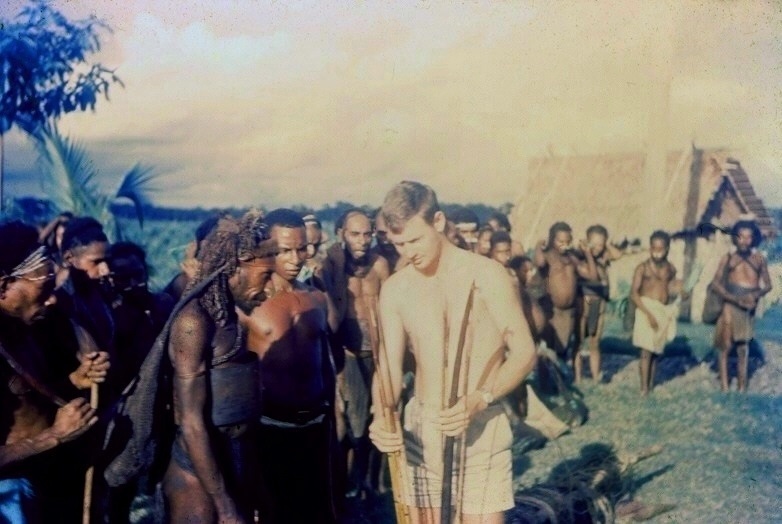
People have lived in New Guinea for tens of thousands of years, and its highland valleys saw some of the earliest agriculture anywhere on Earth. The rugged terrain split the population into a vast mosaic of small, self-contained societies, and so isolated were the interior highlands that many of their peoples had almost no contact with the outside world until well into the twentieth century.
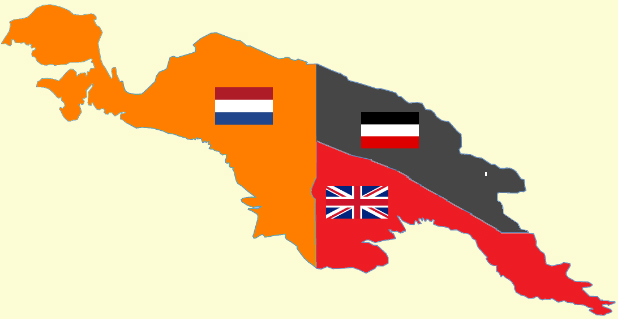
European contact came late and unevenly. In the nineteenth century the eastern half of the island was divided between Germany, which took the north, and Britain, which claimed the south. After the First World War the whole eastern territory passed to Australia, which governed it, in the north under a League of Nations mandate, until independence.
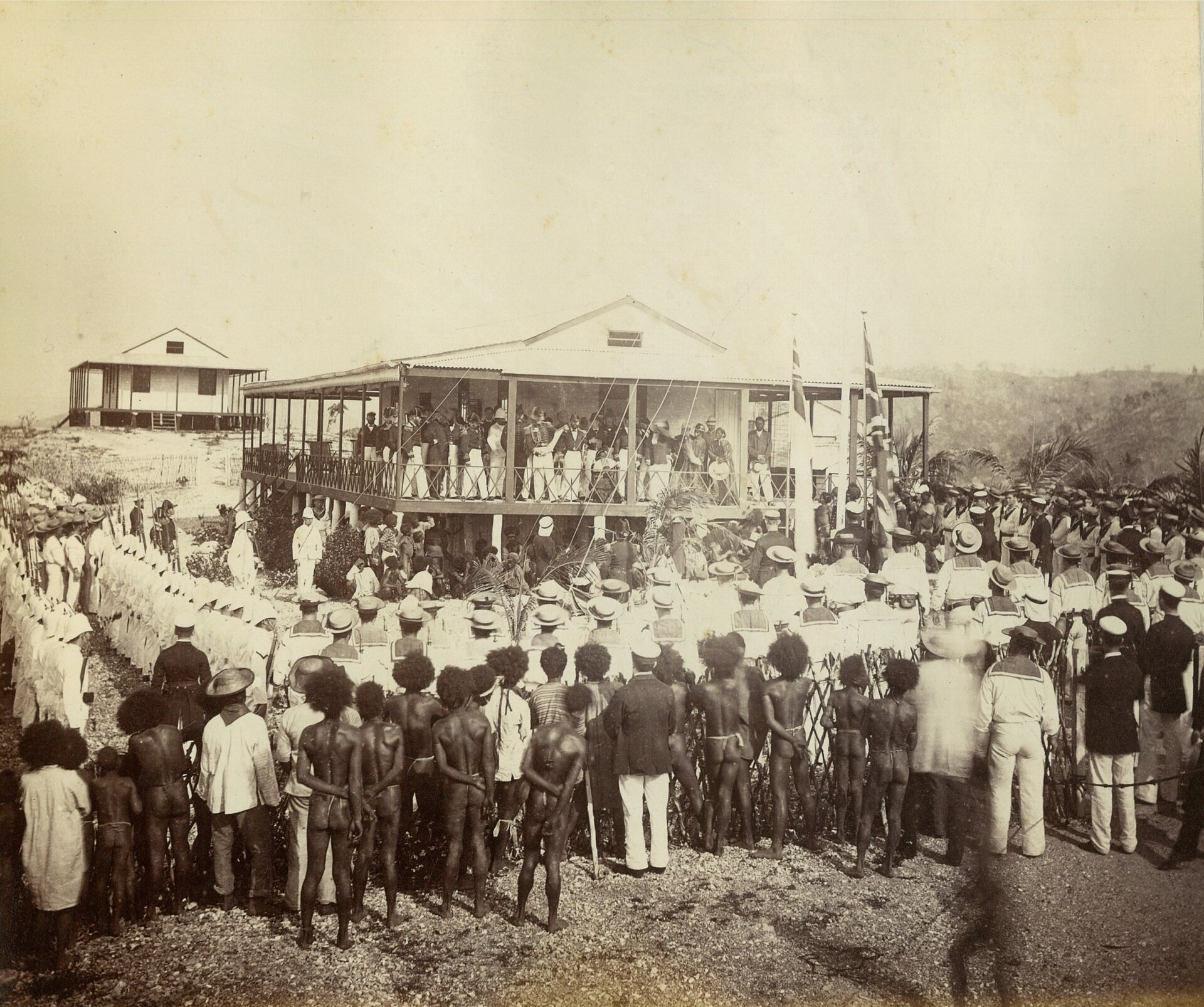
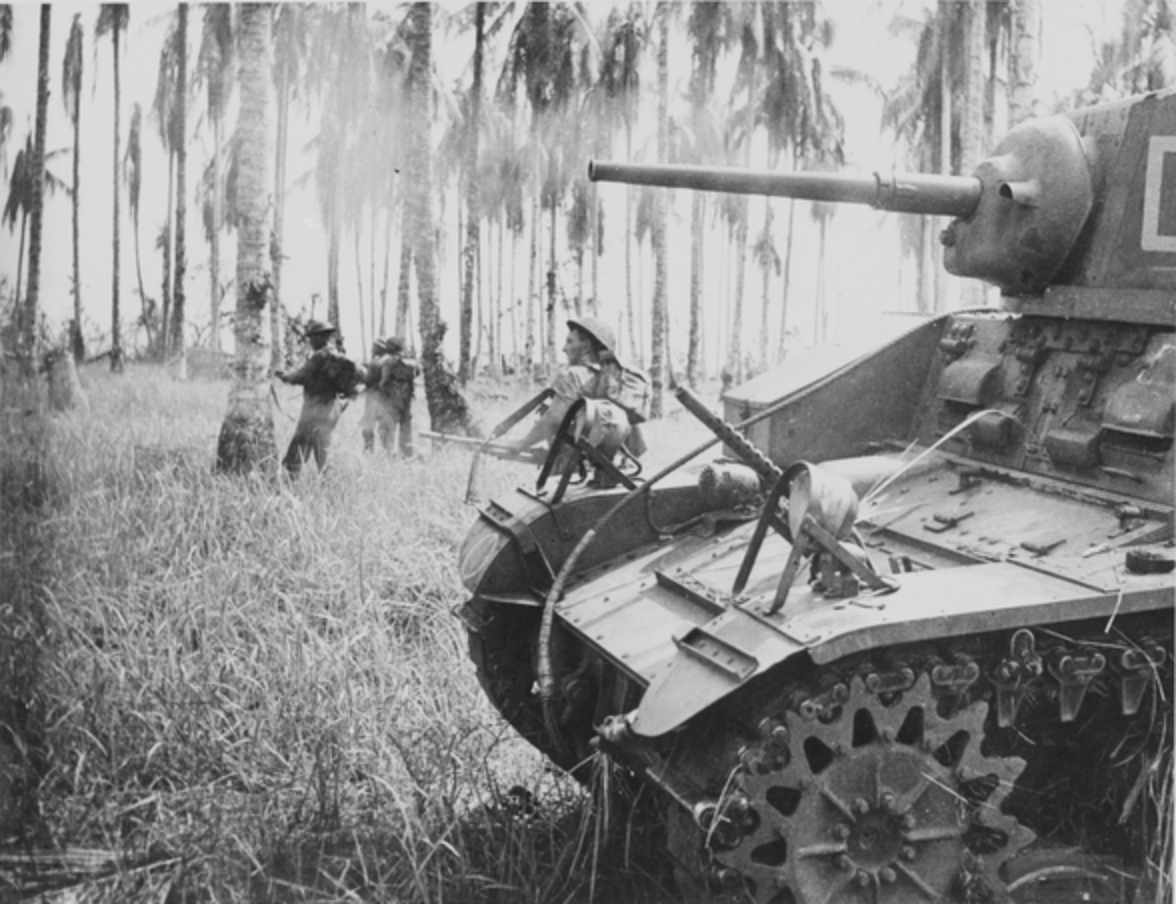
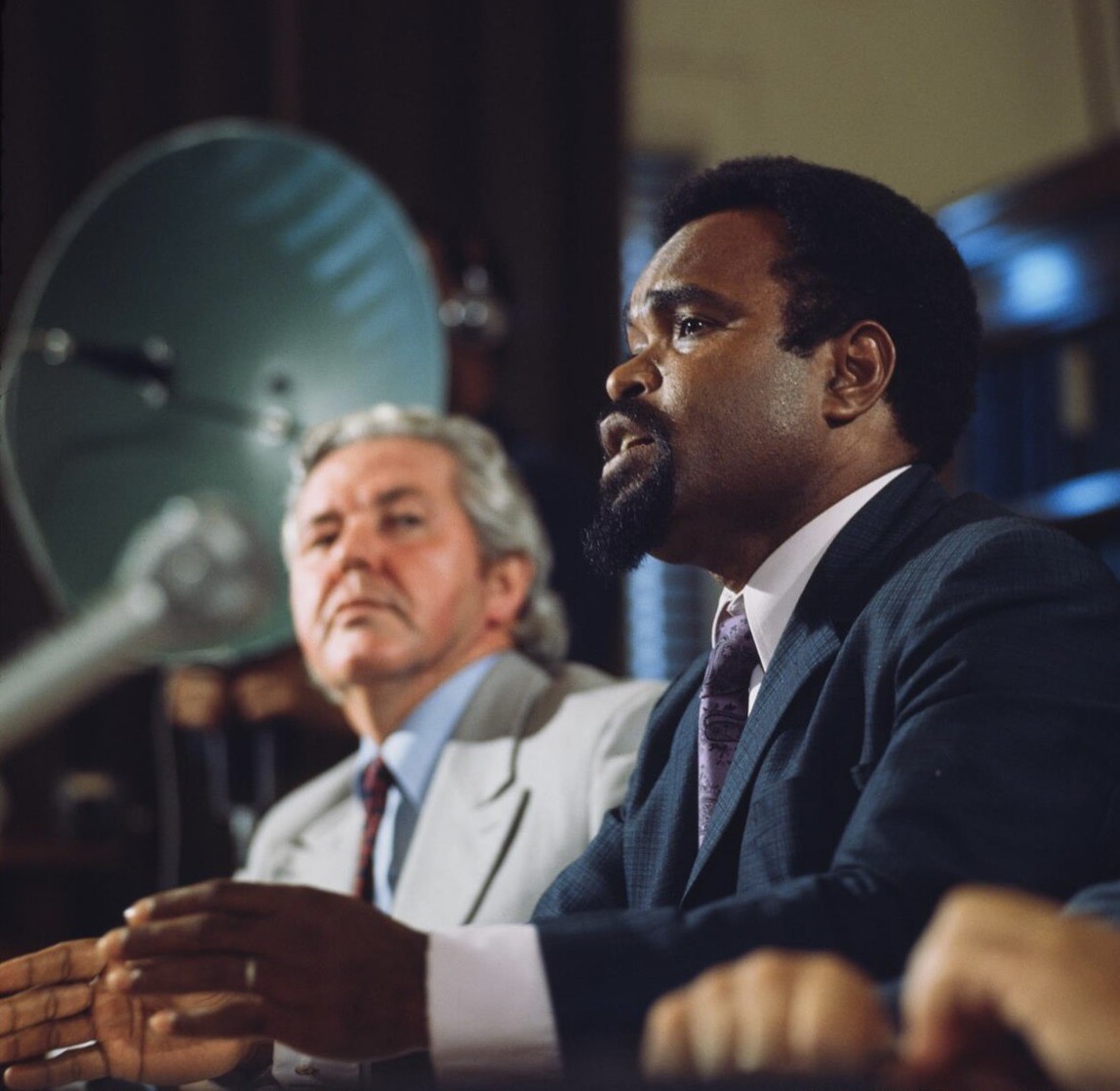
New Guinea became a terrible battleground of the Second World War, fought over by Japanese and Allied forces in gruelling jungle campaigns such as the fighting along the Kokoda Track. After the war Australia prepared the territory for self-rule, and independence came peacefully in 1975 under the founding leader Michael Somare.
Papua New Guinea is dominated by a spine of high, rugged mountains running the length of the island, cloaked in dense tropical rainforest and cut by deep valleys and powerful rivers. Beyond the main island lie volcanic islands and coral atolls, some highly active, for the country sits on the seismically violent Pacific Ring of Fire. The terrain is so difficult that many communities remain isolated, reachable only on foot or by air. This wild landscape holds extraordinary biodiversity, including birds of paradise found nowhere else.
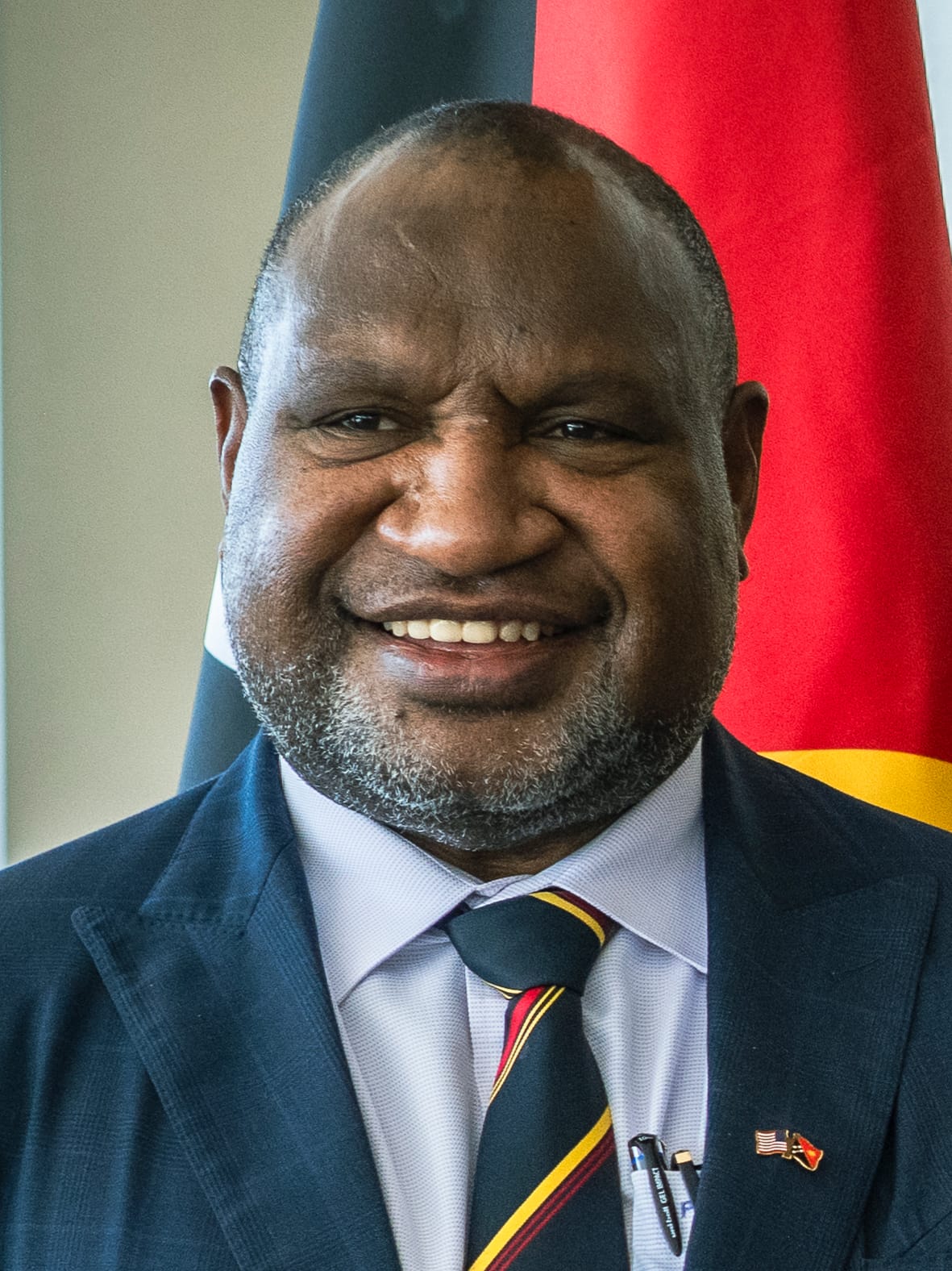
Papua New Guinea is a parliamentary democracy and a constitutional monarchy: King Charles III is the head of state, represented by a governor-general, while an elected parliament and prime minister govern in the Westminster tradition. Its politics is famously fluid, run through shifting coalitions and frequent votes of no confidence rather than stable party blocs, in a country whose sheer diversity makes national unity a constant work. The prime minister since 2019 is James Marape, who has campaigned on the slogan of taking back the country's wealth for its own people, above all from the foreign companies that work its mines and gas fields.
Papua New Guinea is a land of striking contrast: extraordinarily rich in resources, yet with most of its people living by subsistence farming and much of the country in poverty. Beneath its mountains and seas lie great deposits of gold, copper, oil, and natural gas, and huge mining and liquefied-natural-gas projects provide the bulk of export earnings. That wealth has also brought conflict, over who owns the land, who shares the profits, and the damage done to rivers and forests. Alongside the resource industry, cash crops such as coffee, cocoa, and palm oil support many rural families.
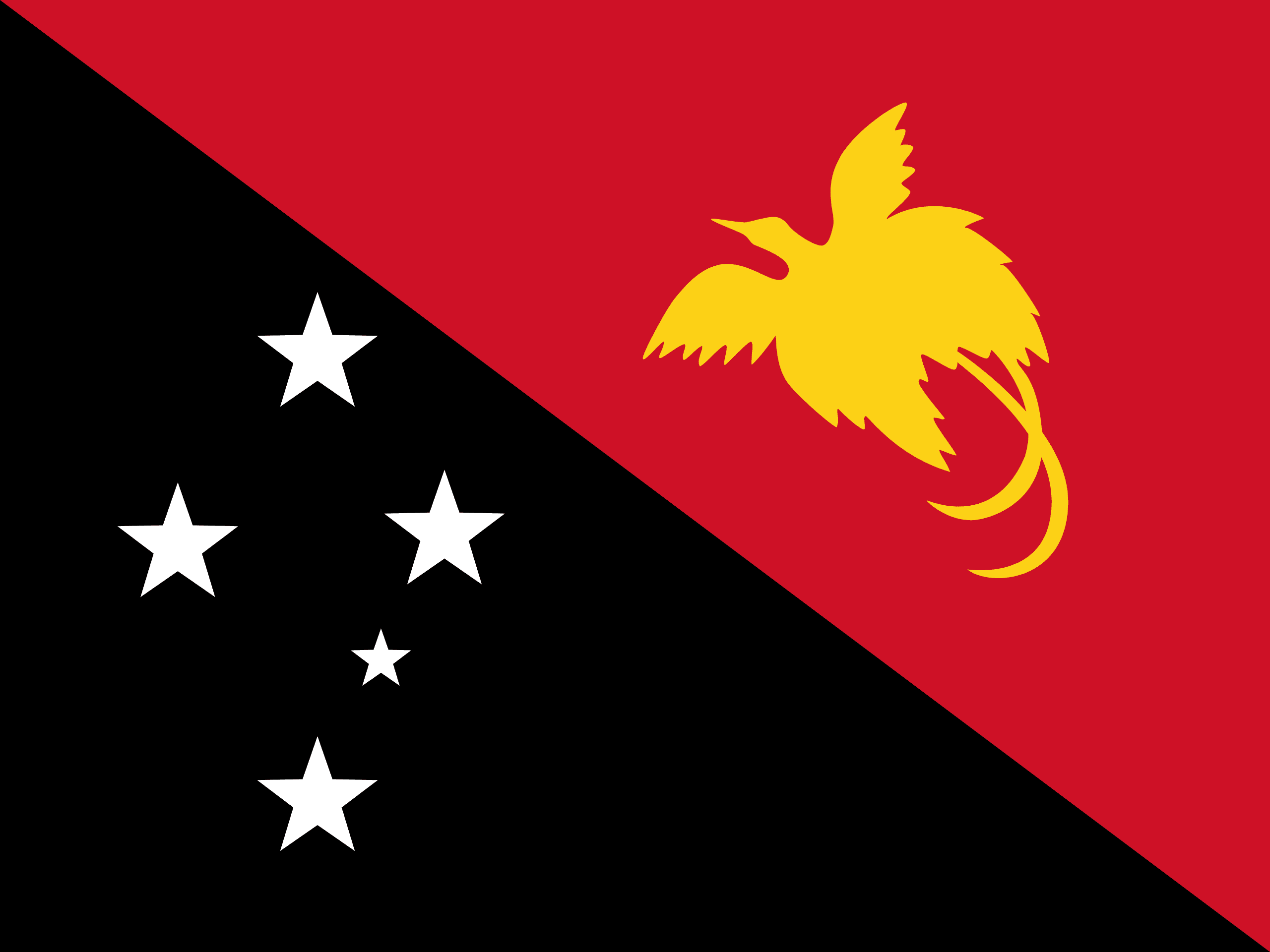
The flag of Papua New Guinea is divided diagonally, with a red upper section bearing a golden bird of paradise and a black lower section bearing the five white stars of the Southern Cross. The bird of paradise, famous for its dazzling plumage, is a national symbol and reflects the country's unique wildlife, while the Southern Cross marks its place in the southern Pacific, shared with neighbours such as Australia. The red, black, and gold are traditional colours of the region.
Papua New Guinea is overwhelmingly Christian, the result of missionary work over the past century or more, with the population divided among Roman Catholic, Lutheran, and many other Protestant and evangelical churches. Yet Christianity here very often coexists with the rich traditional beliefs of the country's many peoples, including ancestor veneration, spirits of the land and forest, and elaborate ritual. This blending of the new faith with deep-rooted custom is a defining feature of religious life across the islands and highlands.
The cuisine of Papua New Guinea is based on the root crops and produce that its peoples have grown for millennia. Staples include sweet potato, taro, yam, sago, and banana, often cooked in an earth oven called a mumu, in which food is baked with hot stones, a centrepiece of feasts and celebrations. Pork is the prized meat for special occasions, and fish and seafood are important on the coast. Coconut, greens, and tropical fruit round out a diet that varies greatly from the highlands to the islands.
Agriculture is the livelihood of the great majority of Papua New Guineans, most of whom are subsistence farmers growing food for their own families on small garden plots, a way of life reaching back thousands of years. The country also produces cash crops for export, including coffee grown in the highlands, cocoa, palm oil, and copra, which give many rural families their main source of cash in a largely traditional economy.
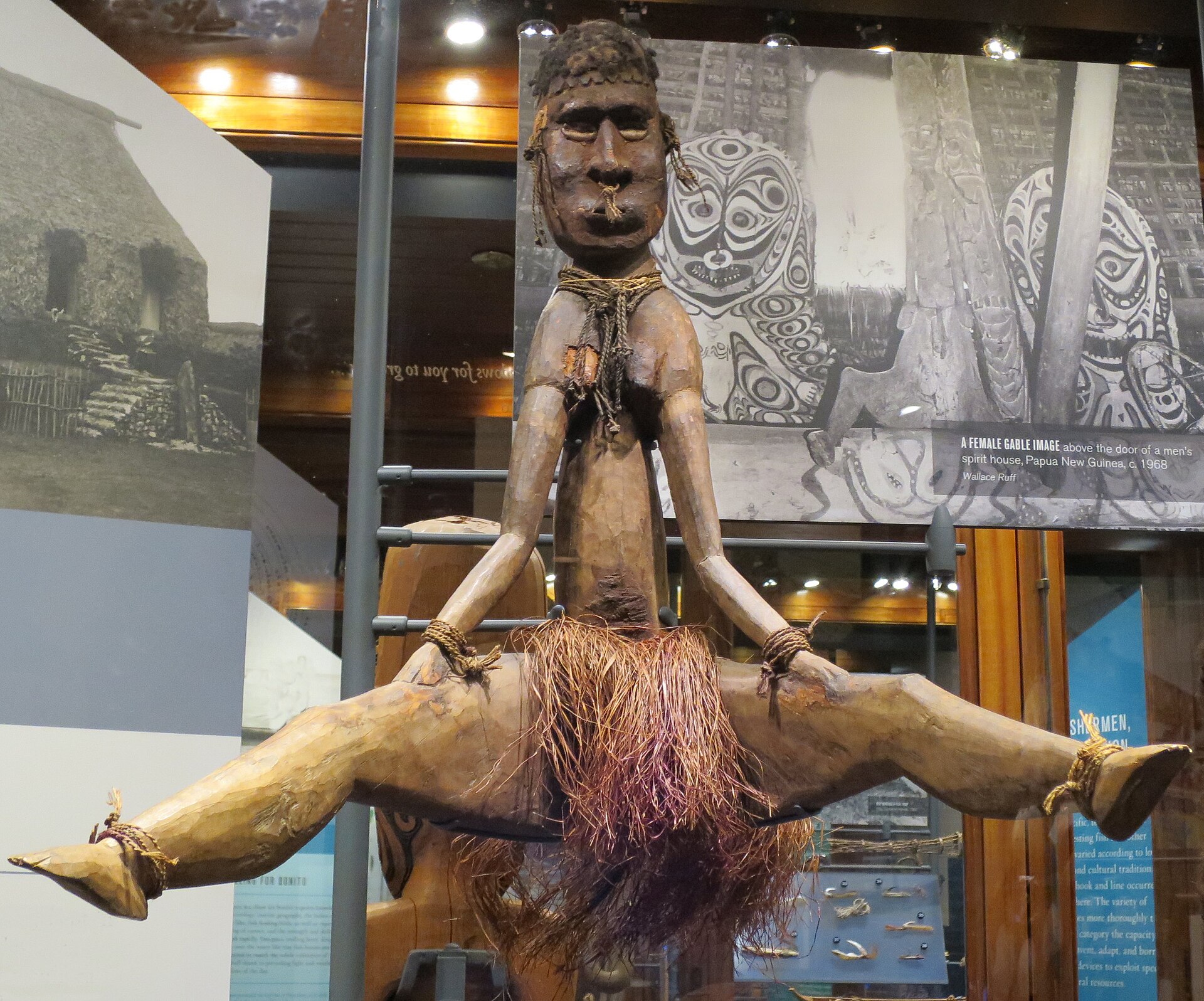
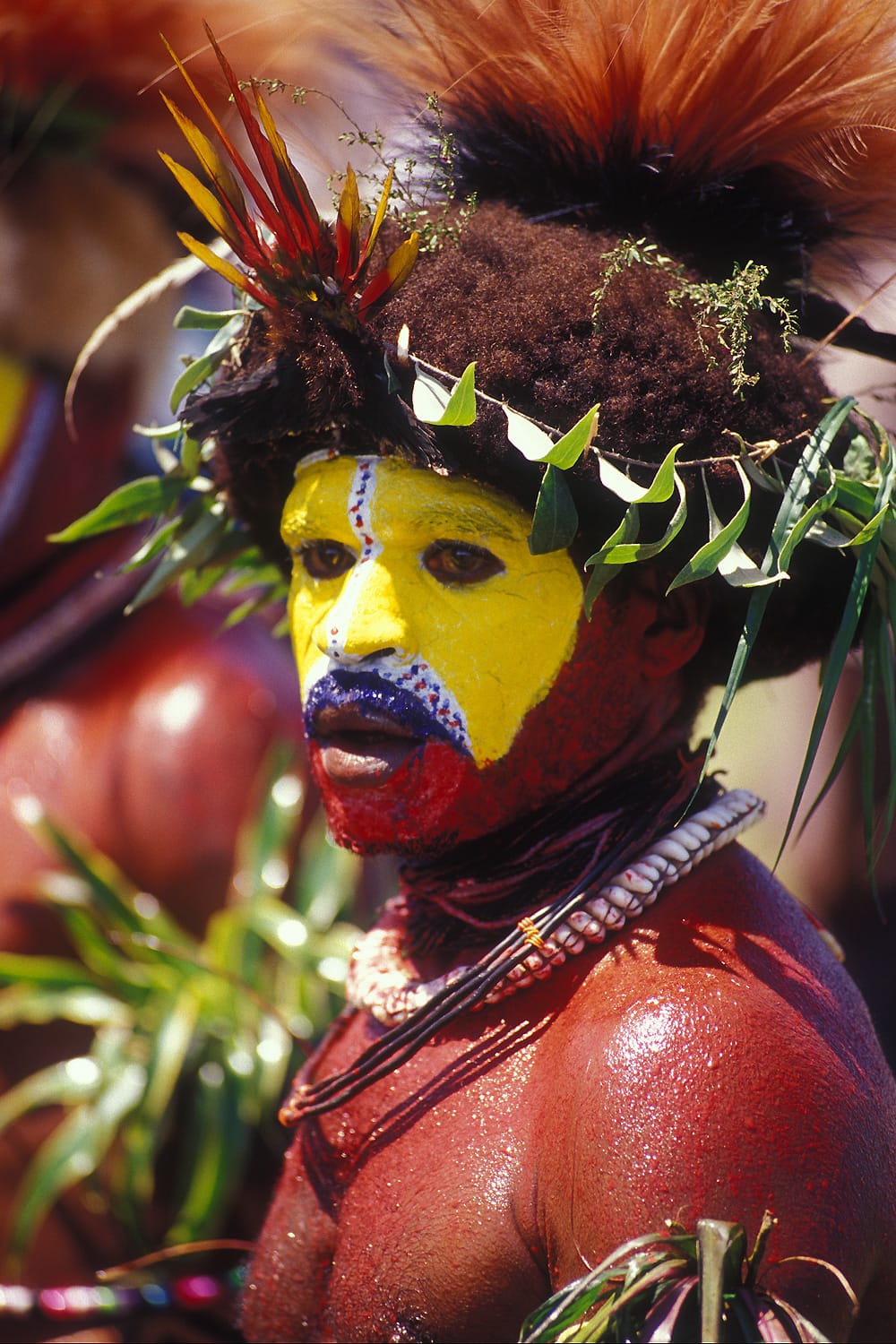
Papua New Guinea is one of the most culturally diverse places on Earth, a patchwork of peoples with their own languages, art, and custom. That richness shows in its Oceanic carving and masks, in the elaborate body paint and feathered headdresses worn at the great gatherings known as sing-sings, and in social systems built on clan, land, and the exchange of wealth, above all the pig. Modern life, Christian faith, and ancient tradition sit side by side, and holding this extraordinary diversity together as one nation is the central task of the country.
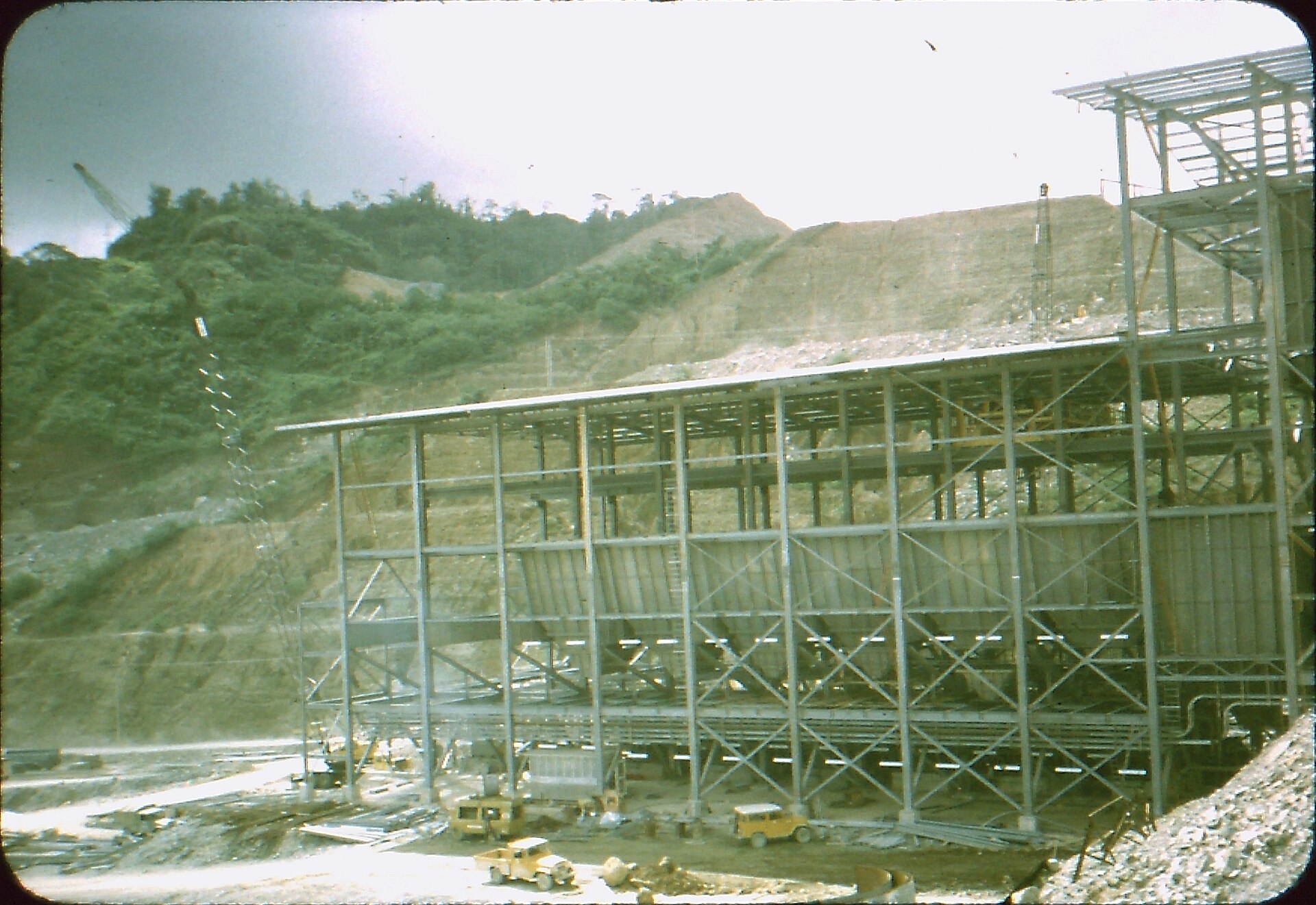
The most pressing political question in Papua New Guinea is the future of Bougainville, a group of islands in the east. In the 1980s a dispute over a giant copper mine at Panguna, and over who benefited from its wealth, erupted into a civil war that killed many thousands over a decade. A peace agreement ended the fighting and granted Bougainville autonomy and the promise of a vote on its future. In a referendum in 2019, the people of Bougainville voted overwhelmingly, by around 98 percent, for independence. That result, however, is not binding on its own: under the constitution the outcome must be worked out between the Bougainville and national governments and ratified by the Papua New Guinea parliament, a process still under way in the mid-2020s. Bougainville's leaders press for full independence, while the national government stresses the constitutional path and the final say of parliament, leaving the timing and the terms of a possible new nation still to be settled.
Papua New Guinea has a population of around 10 million people, and it is one of the most diverse nations on Earth, with more than 800 distinct languages spoken, far more than any other country. The population is overwhelmingly rural, living in scattered communities across the highlands, lowlands, and islands, with only a small share in towns such as the capital, Port Moresby. Tok Pisin, an English-based creole, serves as a common tongue alongside English, helping to bridge this remarkable patchwork of peoples and cultures.