The State of Palestine is a state in the Middle East recognised by a majority of the world's countries and holding non-member observer status at the United Nations, though its full sovereignty, borders, and final status remain unresolved and disputed. It comprises the territories of the West Bank and the Gaza Strip, with East Jerusalem claimed as its capital, lands that are also at the heart of the long and unresolved conflict between Israelis and Palestinians. Home to sites sacred to three world religions, it is the homeland of the Palestinian people, who also form a large diaspora around the world.
This capsule covers a conflict on which people hold deeply opposed views, and in which the same events carry different names depending on who is describing them. It sets out what is documented, attributes contested claims to those who make them, and gives the competing accounts on their own terms rather than adjudicating between them. Its companion capsule on Israel does the same from the other direction.
The territory between the Mediterranean and the Jordan has been continuously inhabited for many thousands of years, and Jericho is among the oldest towns anywhere. It has been governed by Canaanites, Egyptians, Israelite and Judean kingdoms, Assyrians, Babylonians, Persians, Greeks, Romans, Byzantines, the Arab caliphates from the seventh century, Crusaders, Ayyubids, Mamluks, and, from 1517 to 1917, the Ottomans. The name Palestine derives from the Roman province of Syria Palaestina, itself from an older term for the coastal Philistines. Under Ottoman rule the land was administered as districts of a larger Syrian province, and its Arabic-speaking population, overwhelmingly Muslim with substantial Christian communities in Jerusalem, Bethlehem, Nazareth, and Ramallah, lived largely by farming, olives, and trade.
Britain took the territory from the Ottomans in the First World War and governed it from 1920 as Mandatory Palestine under a League of Nations mandate. British policy had by then produced commitments that proved impossible to reconcile: the Balfour Declaration of 1917 promised support for a national home for the Jewish people in Palestine while stating that nothing should prejudice the civil and religious rights of the existing non-Jewish communities, and separate wartime correspondence with Arab leaders had been understood by them as promising Arab independence in the region.
Jewish immigration, driven by the Zionist movement and then enormously accelerated by persecution in Europe and the Holocaust, grew through the interwar years. Palestinian Arab opposition grew with it, expressed in riots, strikes, and the Arab revolt of 1936 to 1939, which Britain suppressed. In 1947 Britain handed the problem to the United Nations, whose General Assembly voted to partition the territory into Arab and Jewish states with Jerusalem under international administration. The Zionist leadership accepted the plan; Palestinian Arab leaders and the Arab states rejected it, on the grounds that it awarded a majority of the land to a minority of the population and that it disposed of a country without the consent of most of its inhabitants.
Fighting between the two communities began immediately, and on Israel's declaration of independence in May 1948 neighbouring Arab states entered the war. Israel won, and ended the war holding substantially more territory than the partition plan had allotted it. Around seven hundred thousand Palestinians, more than half the Arab population, left or were expelled from the area that became Israel, and more than four hundred villages were destroyed or depopulated. Palestinians call this the Nakba, the catastrophe, and commemorate it on 15 May; those displaced were not permitted to return, and they and their descendants form the refugee populations registered with the United Nations agency UNRWA across the region.
The causes of the exodus are among the most researched and most disputed questions in the historiography. Israeli accounts have traditionally emphasised flight during wartime and calls by Arab leaders to leave; Palestinian accounts emphasise expulsion and intimidation, including massacres such as the one at Deir Yassin in April 1948, in which a Jewish paramilitary force killed around a hundred villagers and which was widely publicised at the time. Israeli archival historians working since the 1980s have generally concluded that both occurred, with expulsions in some places and flight in others, and that the effect in either case was to make return impossible. The Gaza Strip came under Egyptian control and the West Bank, including East Jerusalem, was annexed by Jordan; no Palestinian state was established in either.
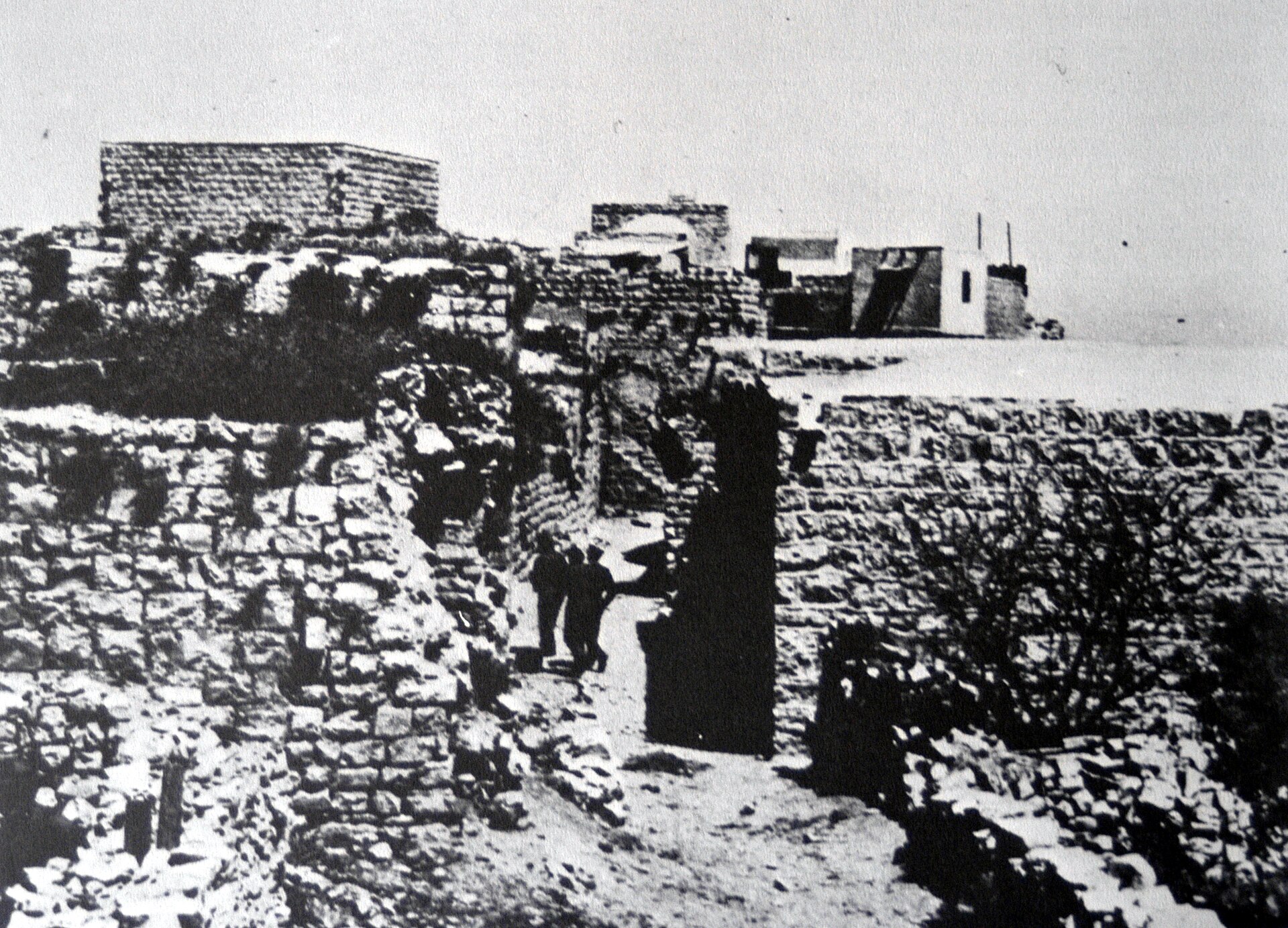
In the Six-Day War of June 1967 Israel captured the West Bank and East Jerusalem from Jordan, the Gaza Strip and Sinai from Egypt, and the Golan Heights from Syria. A further quarter of a million Palestinians were displaced. The West Bank and Gaza have been under Israeli military occupation ever since, a status affirmed by the United Nations Security Council, the International Court of Justice, and the great majority of states, and disputed by Israel in respect of East Jerusalem, which it annexed in 1980 in a move almost no state recognises.
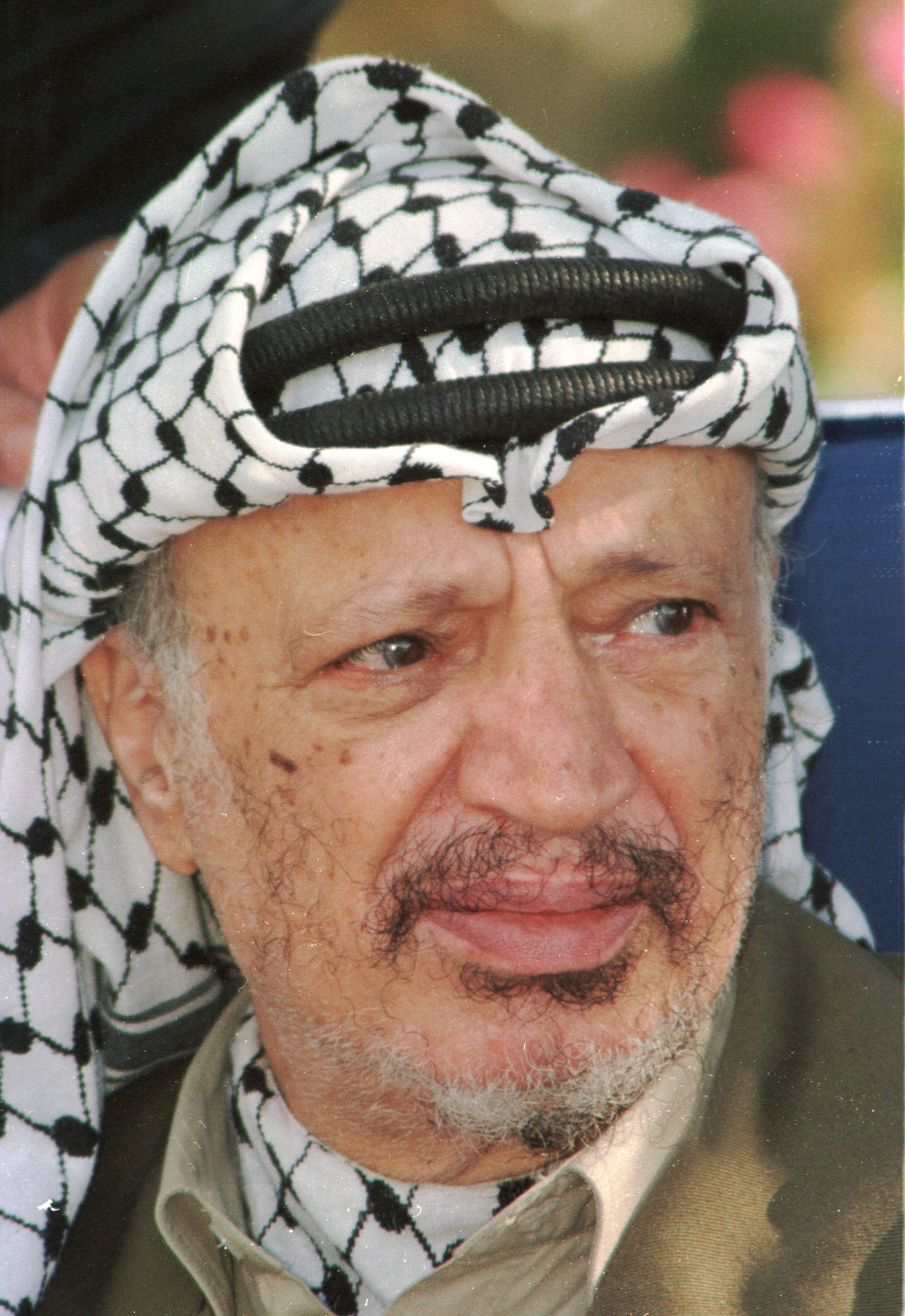
The Palestine Liberation Organization, founded in 1964, became under Yasser Arafat the recognised vehicle of Palestinian nationalism, operating from Jordan and then Lebanon, and combining diplomacy with armed attacks including aircraft hijackings and the killing of Israeli athletes at the Munich Olympics in 1972, actions widely condemned as terrorism. It was recognised by the Arab League in 1974 as the sole legitimate representative of the Palestinian people and given observer status at the United Nations that year. In 1988 it declared the independence of the State of Palestine and accepted the principle of two states.
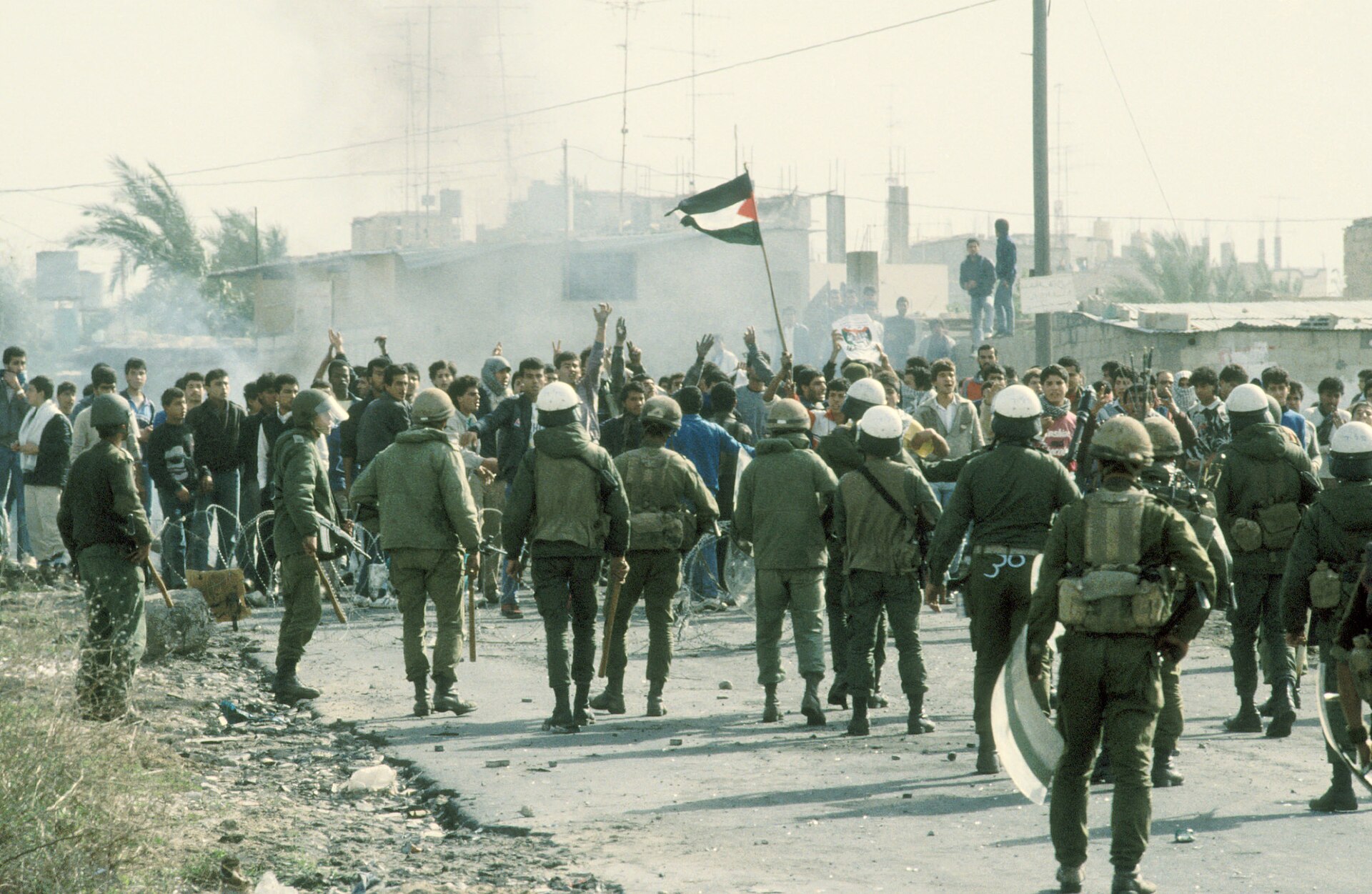
In December 1987 a spontaneous uprising against the occupation broke out in Gaza and spread across the territories. The First Intifada was characterised by strikes, boycotts, mass protest, and stone-throwing, met with a policy of force by the Israeli military; over roughly six years more than a thousand Palestinians and around two hundred Israelis were killed. It shifted the centre of Palestinian politics from the exiled leadership to the territories themselves and produced Hamas, founded in 1987 as an Islamist movement committed to armed struggle and rejecting recognition of Israel.
The Oslo Accords of 1993 and 1995 were the closest the two sides have come to a settlement. Israel and the PLO recognised each other, Arafat returned, and a Palestinian Authority was created with limited self-government over parts of the territories, divided into Areas A, B, and C with differing degrees of Palestinian and Israeli control. Final status questions, borders, Jerusalem, refugees, settlements, were deferred to negotiations meant to conclude within five years. They never did. Israeli settlement in the West Bank expanded substantially during and after the Oslo period, which Palestinians regard as evidence of bad faith; Israelis point to continued attacks, including a campaign of suicide bombings, as evidence of the same on the other side. Rabin, who signed the accords, was assassinated in 1995 by an Israeli opposed to them.
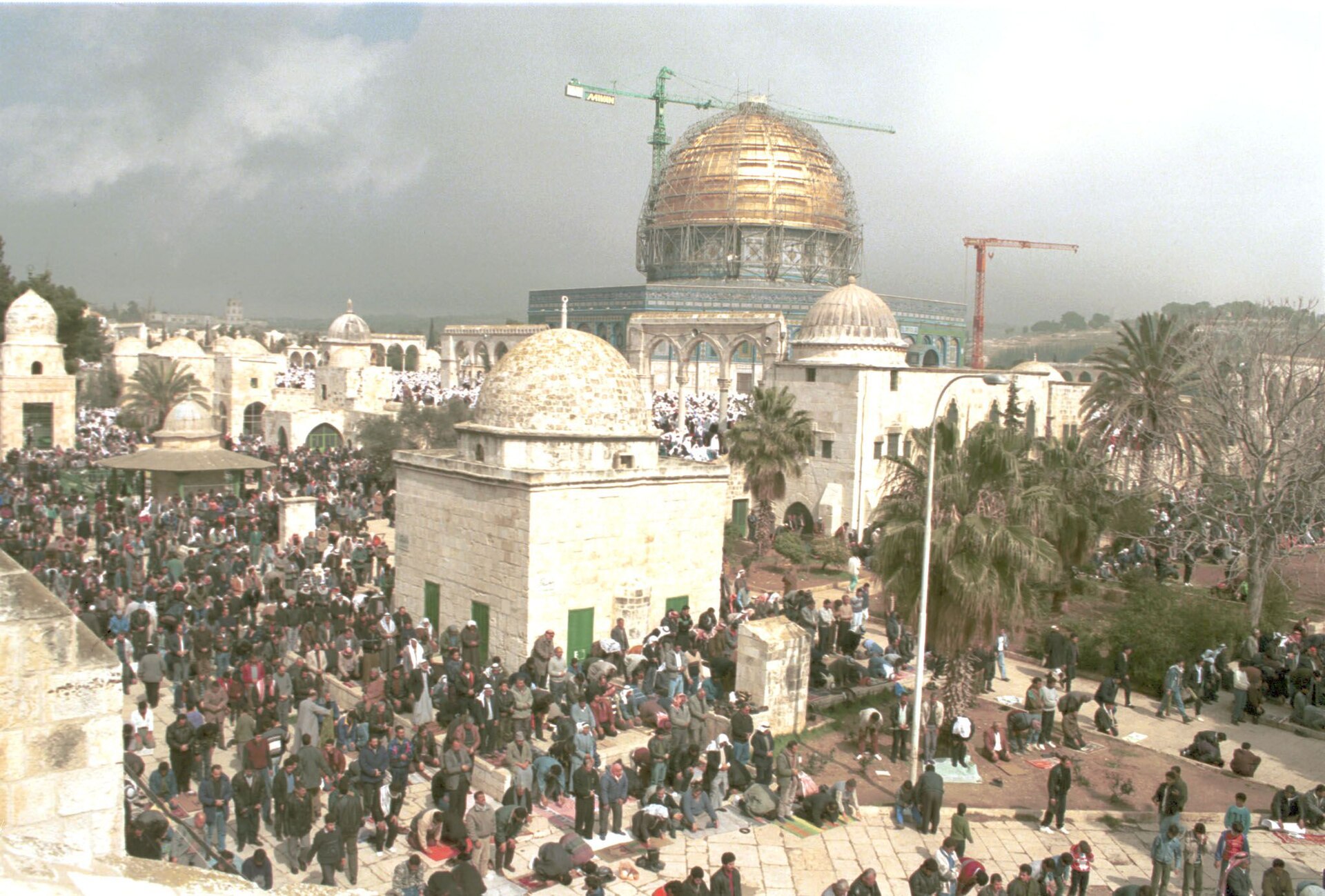
Negotiations at Camp David in 2000 failed, and the two sides have blamed each other for that failure ever since. In September 2000 the Second Intifada began, far more violent than the first: Palestinian suicide bombings killed around a thousand Israelis, most of them civilians, and Israeli military operations, including the reoccupation of West Bank cities in 2002, killed around three thousand Palestinians. Israel began building a barrier through and around the West Bank, which it describes as a security measure that sharply reduced attacks and which the International Court of Justice found in 2004 to be contrary to international law where it runs on occupied territory.
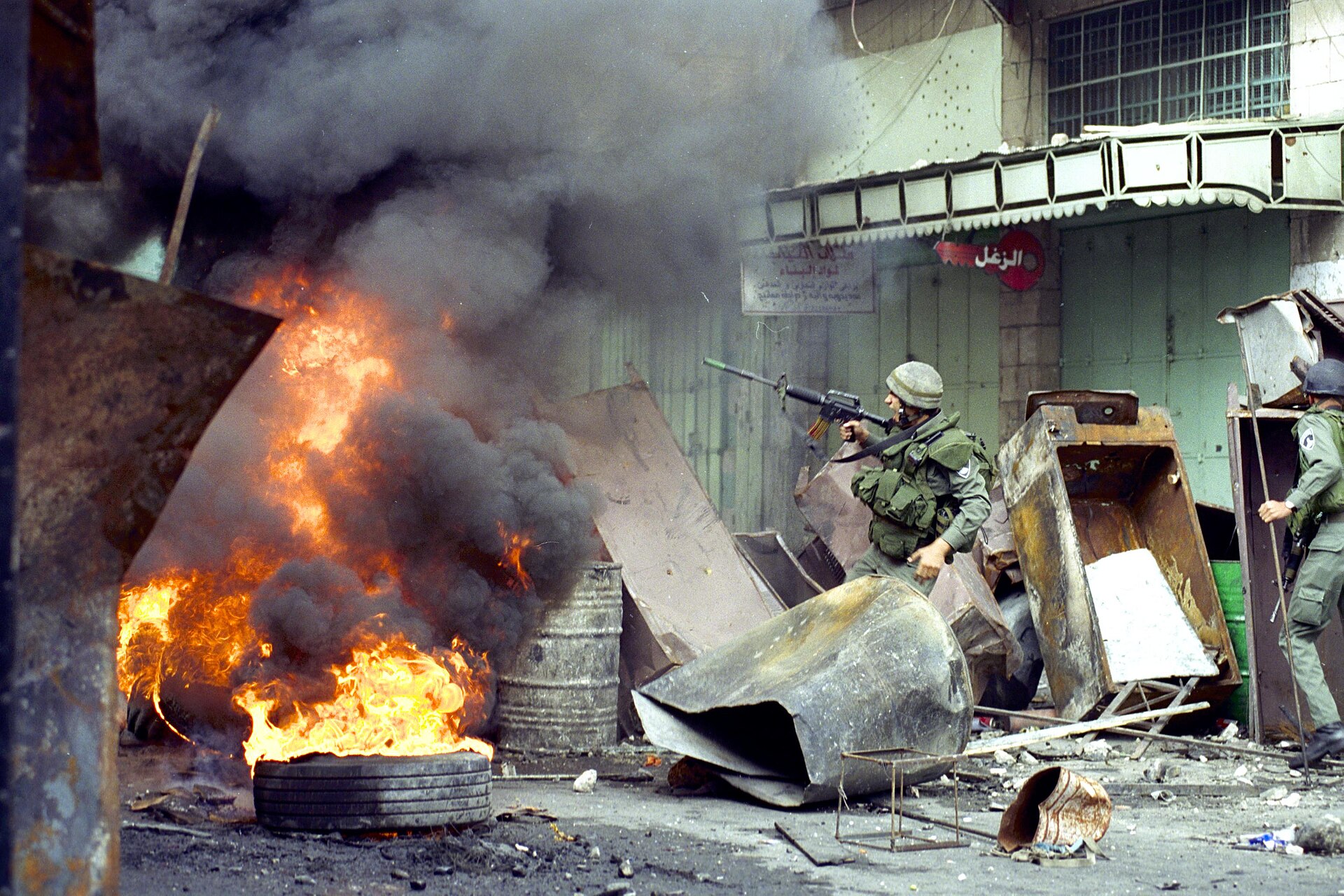
Israel withdrew its settlers and soldiers from inside Gaza in 2005 while retaining control of its airspace, territorial waters, and most of its crossings. In 2006 Hamas won the Palestinian legislative elections, and after a violent split with Fatah in 2007 it took sole control of Gaza, leaving the Palestinian Authority governing parts of the West Bank. Israel and Egypt imposed a blockade on Gaza, which they describe as necessary to prevent Hamas rearming and which United Nations bodies and aid organisations have described as collective punishment of the civilian population. Several rounds of fighting followed, in 2008 and 2009, 2012, 2014, and 2021.
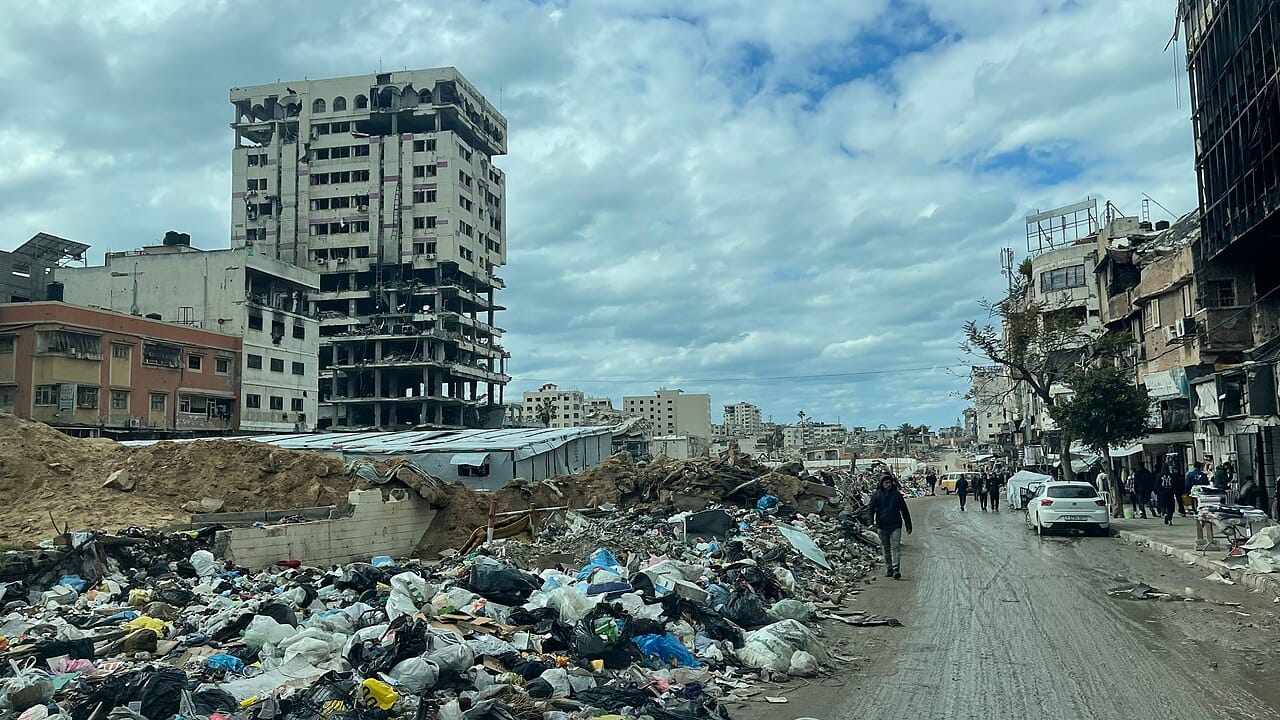
On 7 October 2023 Hamas and allied groups launched an attack from Gaza into southern Israel, killing about twelve hundred people, the great majority of them civilians, and taking about two hundred and fifty hostages. It was the deadliest single day for Jews since the Holocaust. Israel responded with a military campaign in Gaza of a scale without precedent in the conflict. The Gaza health ministry, whose figures the United Nations has generally used while noting they do not distinguish combatants, recorded tens of thousands of Palestinians killed, a large proportion of them women and children; most of the population was displaced, repeatedly, and much of the territory's housing, hospitals, schools, and water and sanitation systems was destroyed, with United Nations agencies reporting famine conditions.
The war produced legal proceedings of exceptional gravity, none of them concluded. South Africa brought a case at the International Court of Justice alleging genocide, and the court ordered provisional measures in 2024 without ruling on the merits, which may take years; Israel rejects the allegation absolutely, holding that it fights an enemy that embeds itself in civilian areas and that it takes steps to limit civilian harm. In July 2024 the same court issued an advisory opinion that Israel's continued presence in the occupied Palestinian territory is unlawful and should end as rapidly as possible. In November 2024 the International Criminal Court issued arrest warrants for the Israeli prime minister and former defence minister and for a Hamas commander, alleging war crimes and crimes against humanity; Israel rejects the court's jurisdiction.
A ceasefire agreed in October 2025 and endorsed by the Security Council in November brought the main fighting to an end and returned hostages and prisoners. It moved to a second phase in January 2026, overseen by a transitional Board of Peace, with a Palestinian technocratic committee named to administer Gaza. As of mid-2026 the arrangement remains fragile: Israeli forces hold a substantial part of the territory, Hamas retains its weapons, violations have been reported on both sides, the new bodies are not yet operating on the ground, and reconstruction has barely begun.
Whether Palestine is a sovereign state is genuinely unresolved, and the disagreement is legal as much as political.
The case that it is: the State of Palestine was declared in 1988, is recognised by around 157 of the 193 United Nations member states, more than four in five, holds non-member observer state status at the United Nations granted in 2012, and is a party to numerous international treaties and a member of the International Criminal Court, UNESCO, and Interpol. In 2025 the United Kingdom, Canada, Australia, France, Portugal, Belgium, and several others recognised it, the first G7 members to do so. Its supporters argue that statehood is a right of the Palestinian people under the principle of self-determination and does not depend on the consent of the power occupying the territory.
The case that it is not: a state on the classical criteria requires an effective government exercising control over a defined territory, and the Palestinian Authority governs only parts of the West Bank, with Gaza under separate arrangements and, at present, substantial Israeli military control; its borders are undefined, and it conducts no independent control of its airspace, frontiers, or currency. The United States, Germany, Japan, and others withhold recognition on the position that statehood should emerge from a negotiated settlement rather than precede one, and that unilateral recognition removes the incentive to negotiate. Israel's current government opposes Palestinian statehood outright.
Beneath the legal argument sits a political one that has grown harder. A two-state settlement has been the declared aim of most international diplomacy for thirty years, but Israeli settlement in the West Bank has continued throughout, with the settler population now in the hundreds of thousands and the territory fragmented; the ICJ, the Security Council, and most states hold the settlements to be illegal under the Fourth Geneva Convention, a position Israel disputes. Palestinian governance is itself split between two authorities that have not held an election since 2006. Some now argue the two-state outcome is no longer physically achievable and that the alternatives are a single state with equal rights, a single state without them, or the indefinite continuation of the present arrangement. None of these commands anything near consensus.
The territories claimed by the State of Palestine fall into two areas, separated by Israel and with no direct connection between them. The West Bank is inland, a highland of limestone ridges running north to south, greener and cooler in the north around Nablus and Jenin, terraced with olives and vines around Ramallah, Bethlehem, and Hebron, and dropping steeply east into the Jordan Valley and the Dead Sea, whose shore at more than four hundred metres below sea level is the lowest land on Earth. Jericho, on that floor, is one of the oldest continuously inhabited places in the world. East of Jerusalem the land falls away into the arid Judean Desert.
The Gaza Strip is entirely different: a flat coastal plain about forty kilometres long and between six and twelve wide, with dunes and a Mediterranean shore, and one of the highest population densities in the world. Both areas share a Mediterranean climate of hot dry summers and mild wet winters. Water is the scarcest resource and among the most contested: the West Bank's aquifers are shared with Israel under Oslo-era arrangements that Palestinians and international bodies describe as heavily unequal, and Gaza's own aquifer has been drawn down and contaminated by seawater to the point that it is largely undrinkable.
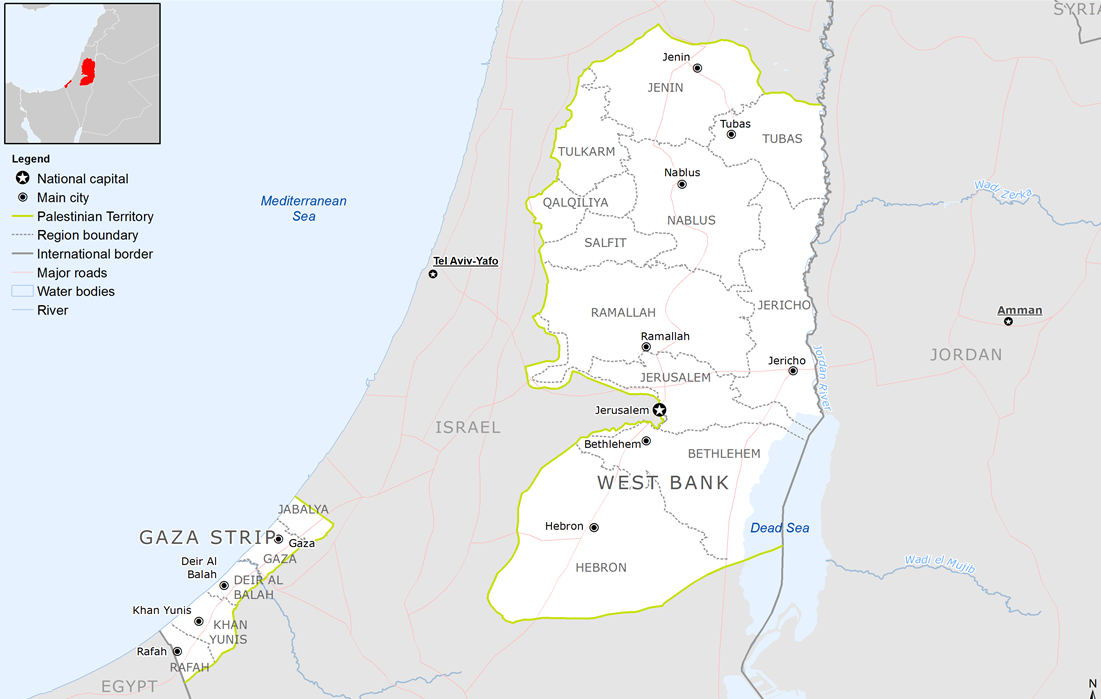
The Palestinian Authority, created by the Oslo Accords in 1994, administers civil affairs in Areas A and B of the West Bank, roughly forty per cent of that territory, containing most of its Palestinian population; Area C, some sixty per cent including the Jordan Valley and the settlements, remains under full Israeli control. The PA has a president, a prime minister, and security forces that coordinate with Israel, an arrangement deeply unpopular among Palestinians and defended by the PA as the only means of preserving what self-government exists.
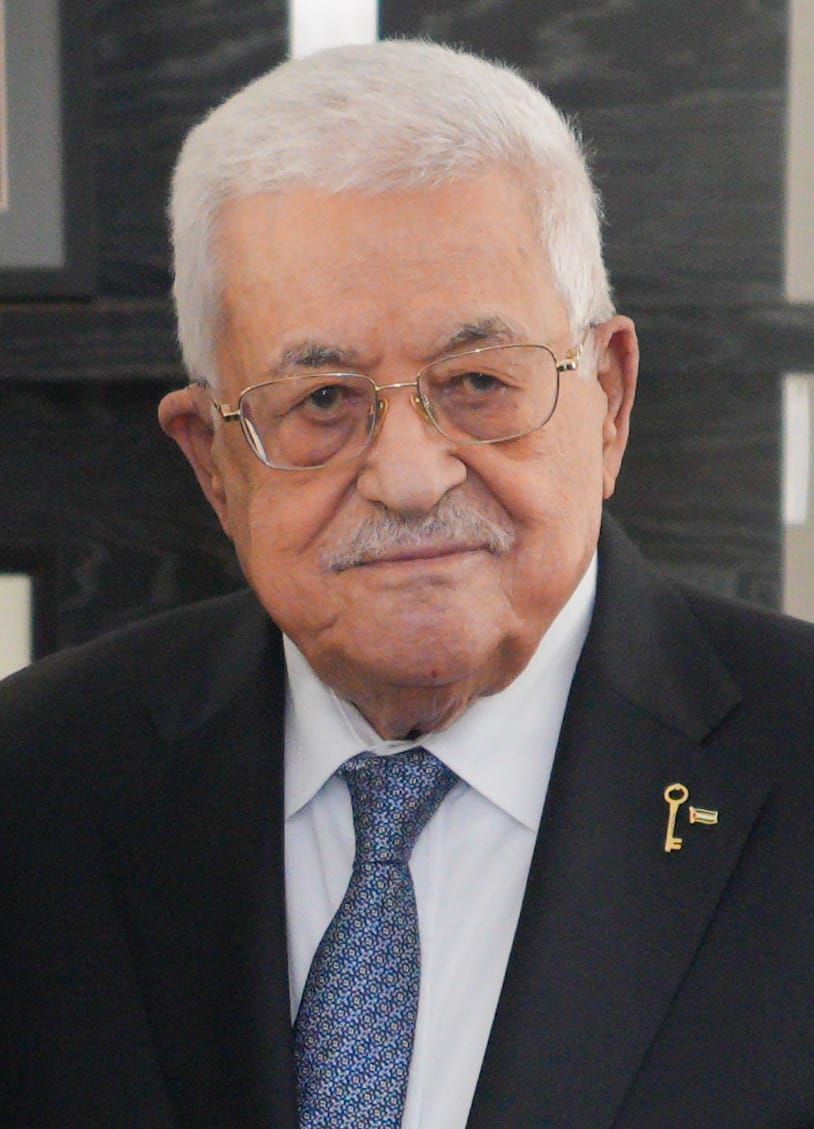
Mahmoud Abbas has been president since 2005. His elected term expired in 2009, and no presidential or legislative election has been held since 2006; a vote scheduled for 2021 was cancelled. Polling consistently shows low confidence in the Authority, which is also in severe financial difficulty, dependent on donor funding and on tax revenue collected on its behalf by Israel and periodically withheld. Gaza was governed by Hamas from 2007 until the 2025 ceasefire arrangements, under which a technocratic committee is intended to take over. Reconciliation between Fatah and Hamas has been attempted repeatedly since 2007 and has failed each time.
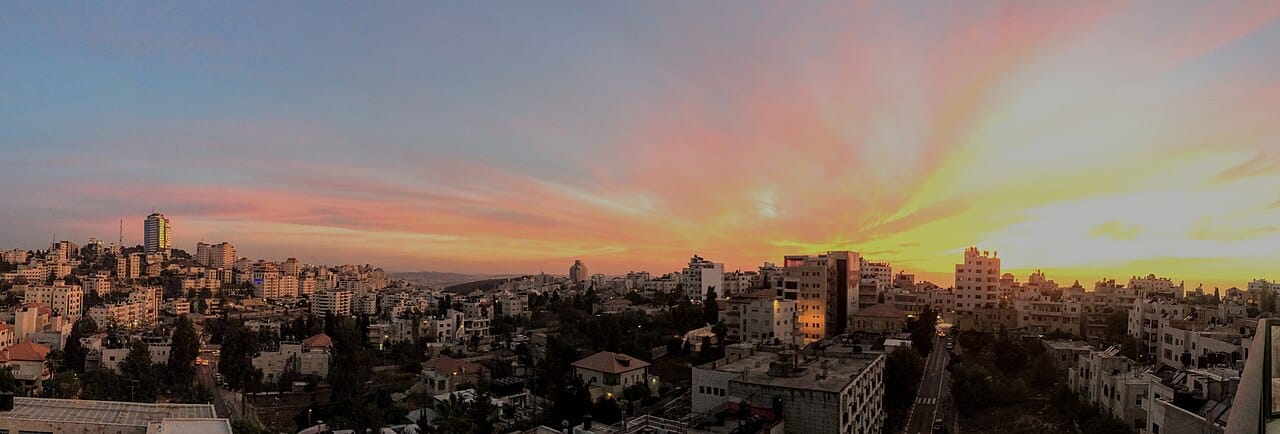
The Palestinian economy is small, and its defining characteristic is that it does not control the conditions under which it operates. It has no currency of its own, using the Israeli shekel alongside the dinar and the dollar; its trade passes through Israeli-controlled crossings; and its customs revenue is collected by Israel under the Paris Protocol and transferred, or withheld, as a matter of Israeli policy. Movement of goods and workers is governed by permits and checkpoints. The result is an economy heavily dependent on external aid, on remittances, and on wages earned by Palestinians working in Israel and the settlements.
The West Bank economy rests on agriculture, above all olives and olive oil, on stone quarrying, light manufacturing, services, and a pilgrimage tourism concentrated in Bethlehem and Jericho. Access to land and water in Area C, and settler violence during the olive harvest, are recurring constraints documented by United Nations monitors. Gaza's economy, already severely constrained by the blockade after 2007, with unemployment among the highest recorded anywhere, was largely destroyed in the war that began in 2023; reconstruction estimates run to tens of billions of dollars and depend on political arrangements that are not yet settled.
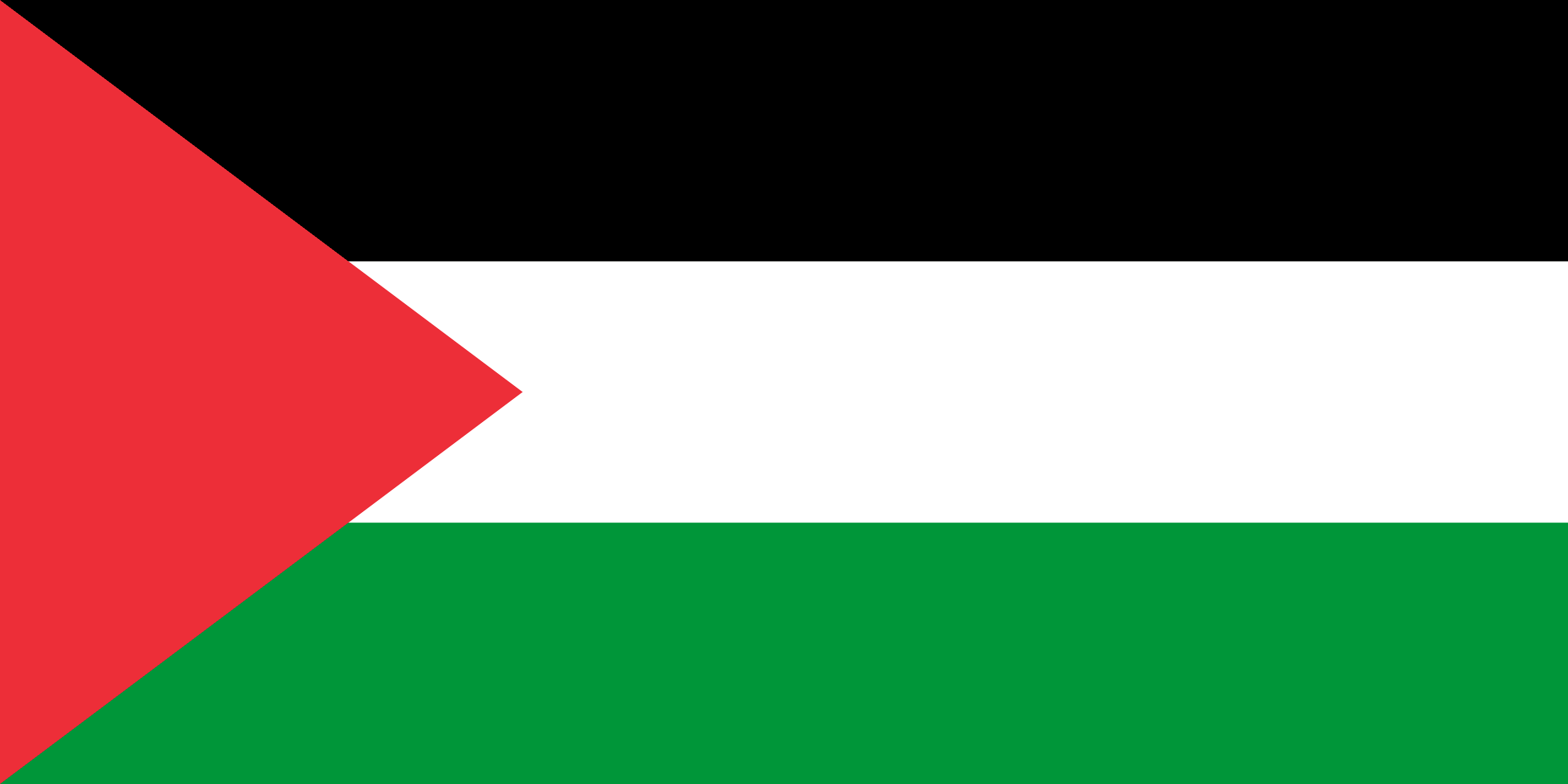
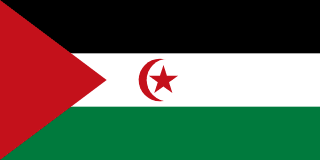
The flag of Palestine has three horizontal bands of black, white, and green, with a red triangle at the hoist. These are the pan-Arab colours, associated with the Arab revolt and with the broader Arab world, and each is linked by tradition to a chapter of Arab history. The flag has been used as a symbol of the Palestinian national movement for over a century and is flown by Palestinians both in the territories and across their large worldwide diaspora as an emblem of national identity and aspiration.
The great majority of Palestinians are Muslims, predominantly Sunni, and Islam is central to the culture and daily life of the territories. There is also a long-established Palestinian Christian minority, among the oldest Christian communities in the world, worshipping in Greek Orthodox, Catholic, and other rites and concentrated in Bethlehem, Beit Jala, Beit Sahour, Ramallah, and Jerusalem. Its numbers have fallen sharply over the past century through emigration, and Palestinian Christians have historically been prominent well out of proportion to their numbers in politics, education, and the professions, among them the intellectual Edward Said and the PLO figure George Habash. A very small Samaritan community survives near Nablus.
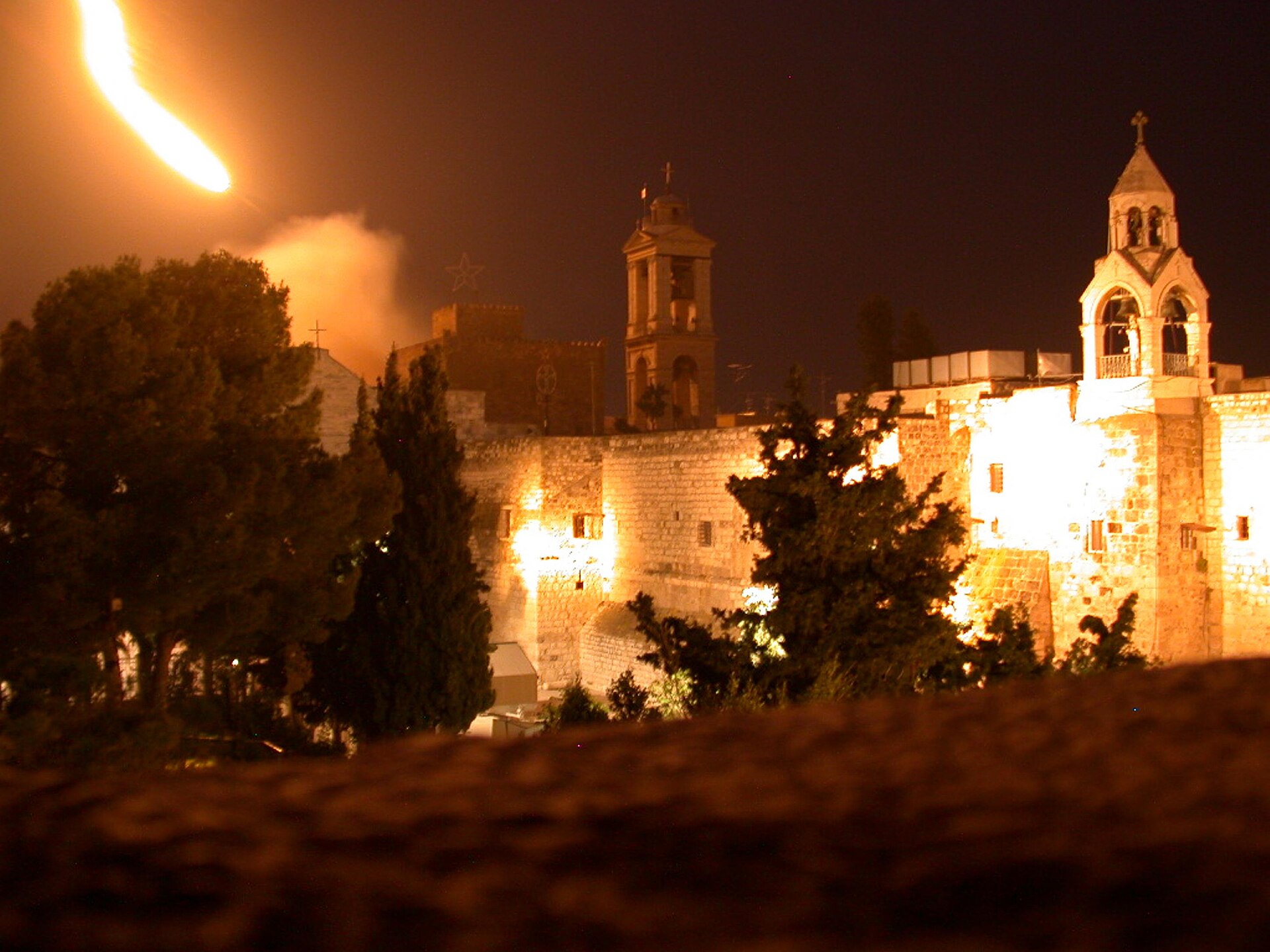
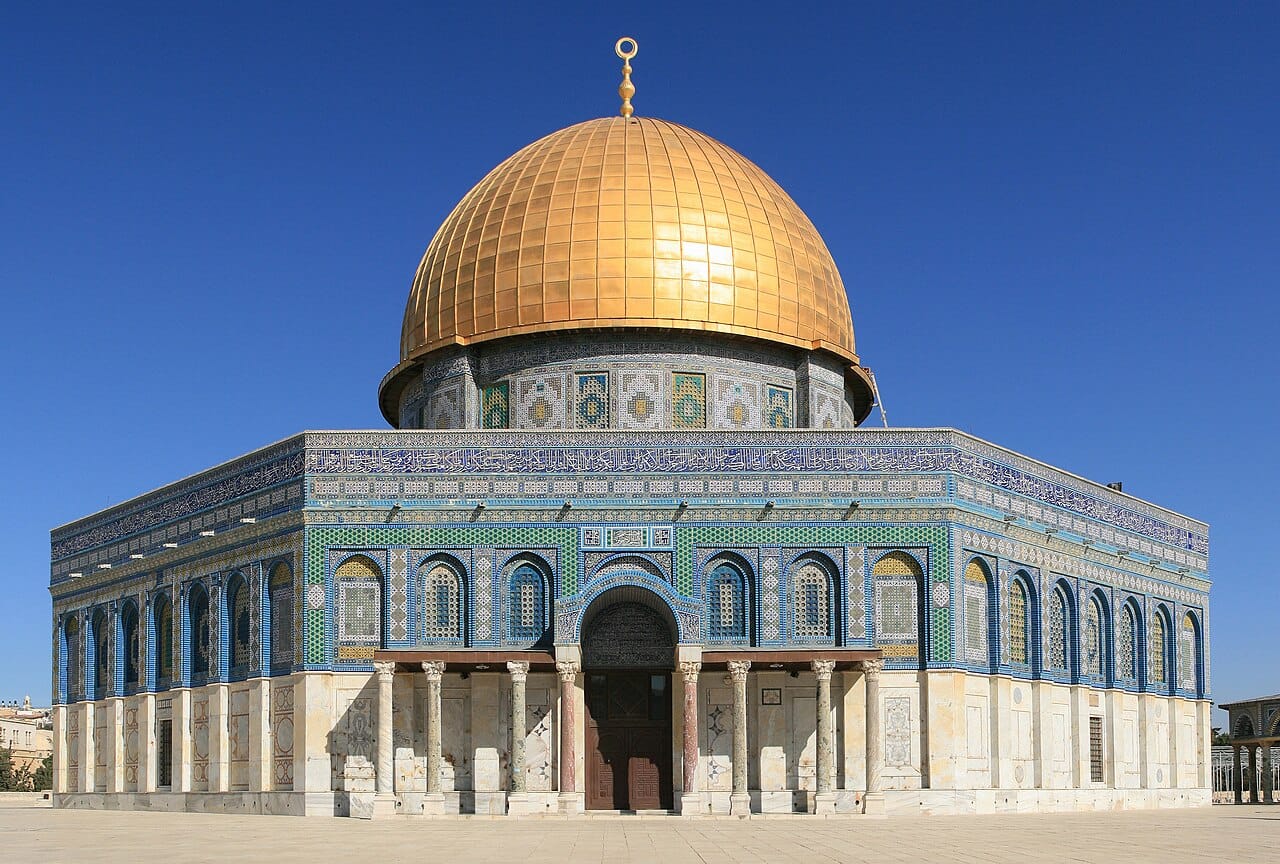
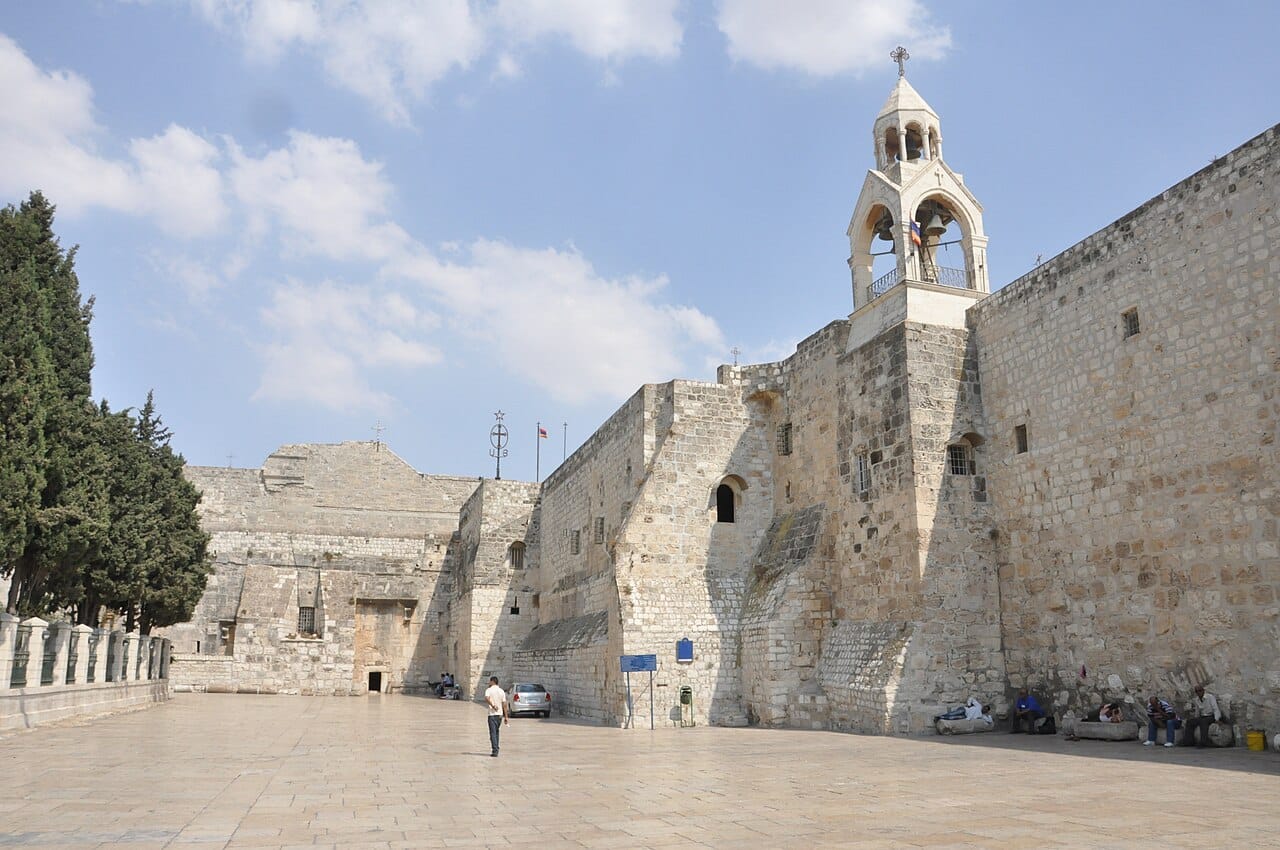
The land holds sites of the first importance to all three Abrahamic faiths, and Jerusalem holds the most contested ground in the world. The elevated platform in the Old City is the Haram al-Sharif to Muslims, site of the Dome of the Rock and al-Aqsa Mosque, the third holiest place in Islam and the destination of the Prophet's night journey, and the Temple Mount to Jews, the site of the two Temples and Judaism's holiest place, at whose retaining wall Jews pray. It is administered by an Islamic trust under Jordanian custodianship, with Israel controlling access, and disputes over the arrangements governing it have repeatedly set off wider violence. Bethlehem's Church of the Nativity, built over the traditional birthplace of Jesus, and Hebron's shrine over the tombs attributed to Abraham, sacred to Muslims as the Ibrahimi Mosque and to Jews as the Cave of the Patriarchs and physically divided between them since 1994, are similarly shared and similarly contested.
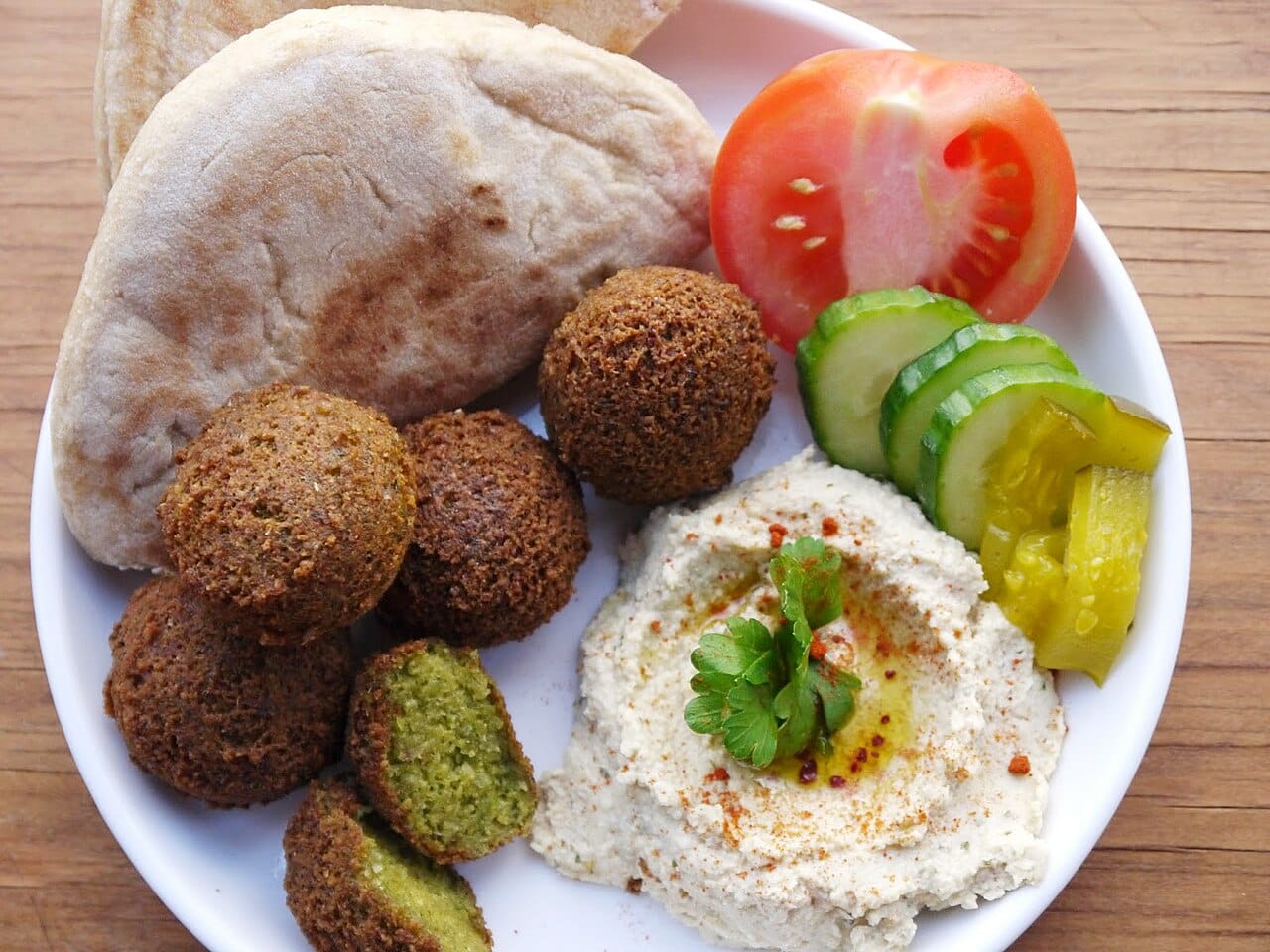
Palestinian cuisine is a celebrated part of the wider Levantine tradition, built on olive oil, wheat, pulses, fresh vegetables, herbs, and yoghurt. The signature dish is musakhan, flatbread soaked in olive oil and heaped with onions cooked down with sumac and roasted chicken, eaten with the hands and closely tied to the olive harvest. Maqluba, the upside-down pot of rice, meat, and fried vegetables inverted onto the plate at the table, is the great communal dish, and mansaf, lamb in fermented dried yoghurt over rice, is the feast of the south and of Jordan. Za'atar, the blend of wild thyme, sumac, and sesame that is eaten with oil and bread at breakfast every day, is close to a national emblem, as are the mezze of hummus, falafel, and pickles shared across the region and the Nabulsi cheese and knafeh of Nablus, a shredded pastry over hot cheese soaked in syrup.
Food carries an unusual political weight here. Dishes shared across the eastern Mediterranean are claimed by several national cuisines at once, and Palestinians frequently describe the attribution of hummus, falafel, or za'atar to other national traditions as a form of erasure, while others regard them simply as regional foods older than any of the modern states. What is not in dispute is that the olive tree, some of them centuries old, is the central image Palestinians use of themselves and their attachment to the land.
Agriculture has deep roots in Palestinian life and identity, especially in the West Bank, where the cultivation of olives is both an economic mainstay and a cultural symbol, the olive harvest a central event of the year. Farmers also grow other fruits, vegetables, grapes, citrus, and grains, and herd livestock, though access to land and water is heavily constrained by the political situation. In the Gaza Strip, intensive farming and fishing are practised under difficult conditions. Agriculture remains important to the economy and to the connection between the people and their land.
Palestinian culture is Levantine Arab, and much of its modern expression has been shaped by dispersal and by the effort to hold an identity together across it. Embroidery, tatreez, is the most distinctive traditional art: the cross-stitched panels on a woman's thob carry patterns once specific enough to identify her village, which after 1948 became a way of carrying a destroyed place forward, and the practice was added to the UNESCO intangible heritage list in 2021. The keffiyeh, the chequered cotton headscarf, became a national symbol during the 1936 revolt and later an international one. The dabke, the line dance of the eastern Mediterranean performed at every wedding, and the improvised sung poetry that accompanies it are living traditions rather than displays.
Palestinians have produced a literature and a scholarship of international standing, particularly the poet Mahmoud Darwish, whose work functions as something close to a national text, the novelist Ghassan Kanafani, and Edward Said, whose criticism reshaped how the academy reads the relationship between knowledge and empire. Palestinian cinema has been repeatedly nominated for international awards, and Palestinian journalists have documented the recent war at very heavy cost in lives. Education is highly valued and literacy is among the highest in the Arab world, an emphasis often explained by Palestinians themselves as investment in the one form of property that cannot be confiscated.
Around five million Palestinians live in the territories, roughly three million in the West Bank including East Jerusalem and around two million in the Gaza Strip, which before the recent war was among the most densely populated places on Earth. The population is strikingly young, with a median age in the early twenties. Palestinians are an Arab people speaking Levantine Arabic, overwhelmingly Muslim with the Christian minority described above.
A larger number of Palestinians live outside the territories than within them. Roughly two million are citizens of Israel, about a fifth of that country's population, descended from those who remained in 1948. Several million more live in Jordan, where they form a very large share of the population and mostly hold citizenship, and in Lebanon, Syria, the Gulf states, Chile, which has the largest Palestinian community outside the Middle East, and across Europe and the Americas. Some six million are registered as refugees with UNRWA, many still living in camps that have become permanent urban districts. The right of return for those displaced in 1948 and their descendants, asserted by Palestinians on the basis of United Nations General Assembly Resolution 194 and rejected by Israel as incompatible with its existence as a Jewish-majority state, is among the final status questions that has never been resolved, and it is the one on which the two positions are furthest apart.