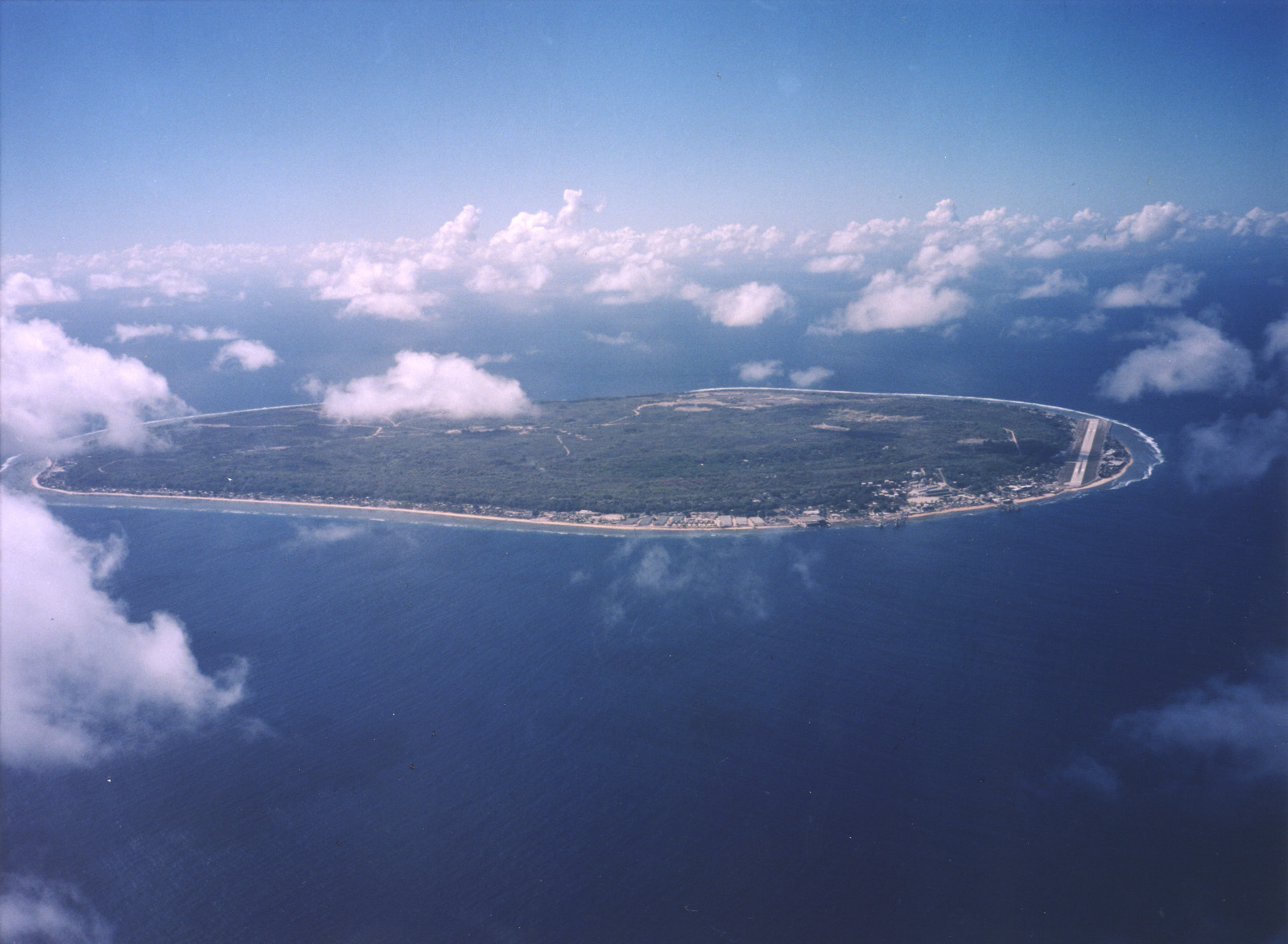
Nauru is a tiny island country in the central Pacific, a single raised coral island just south of the equator. The smallest island nation and the third smallest country in the world, with only a few thousand people, it has one of the most extraordinary and cautionary histories of any nation. Its interior was once made almost entirely of rich phosphate rock, the mining of which briefly made Nauru one of the wealthiest places on Earth per person, before the deposits ran out, leaving a ravaged landscape, a collapsed economy, and a nation grappling with the aftermath.
Nauru's history is a cautionary parable of a small island whose fortunes rose and fell with a single buried treasure.
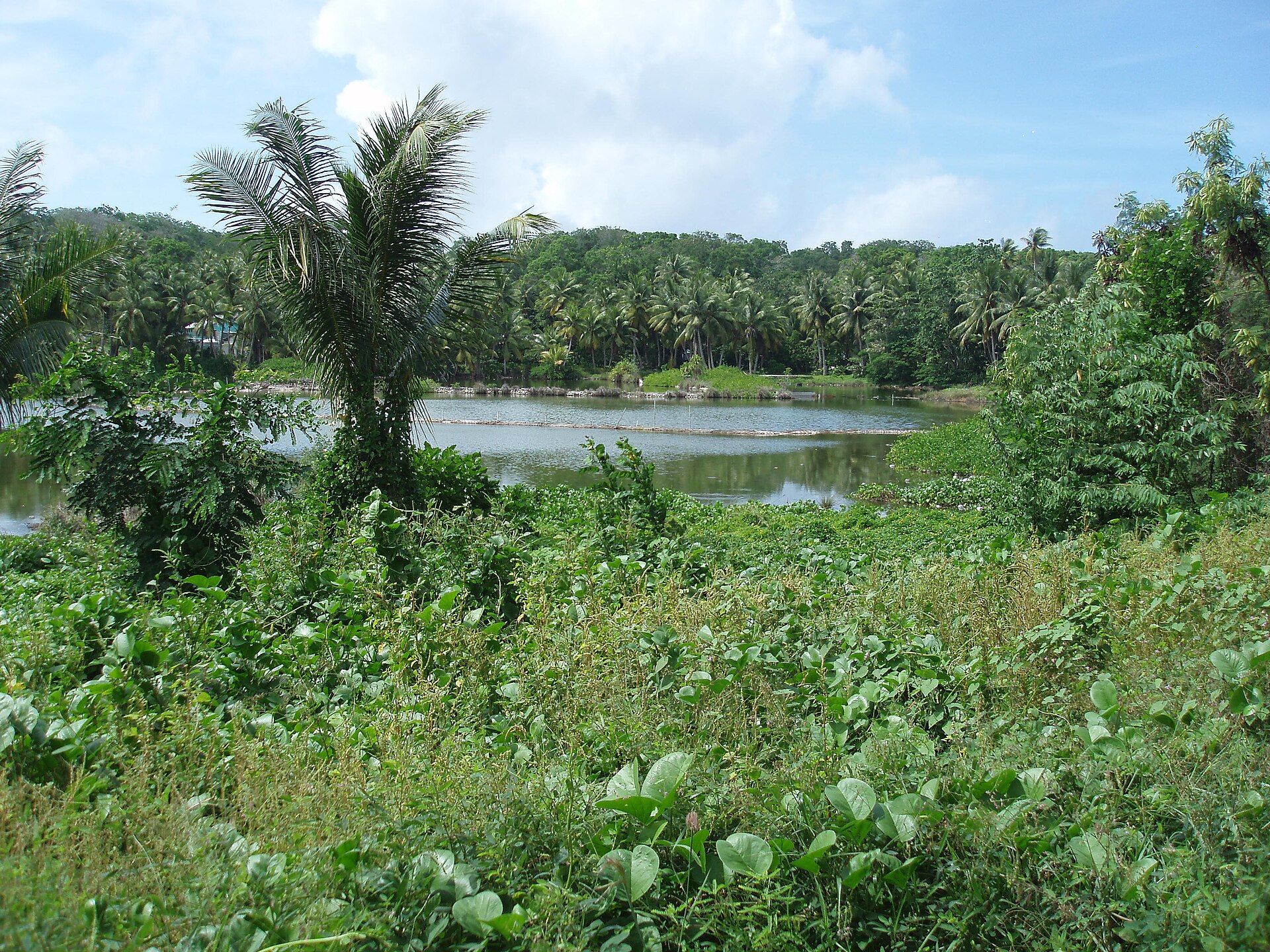
Nauru was settled thousands of years ago by peoples of Micronesian and Polynesian origin, who lived on the small island divided into twelve clans, remembered in the twelve-pointed star of the modern flag. Skilled fishers, they reared fish in the inland Buada Lagoon and lived largely cut off from the world until European ships arrived, bringing firearms that fuelled a destructive internal war in the late nineteenth century.
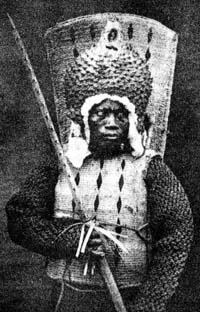
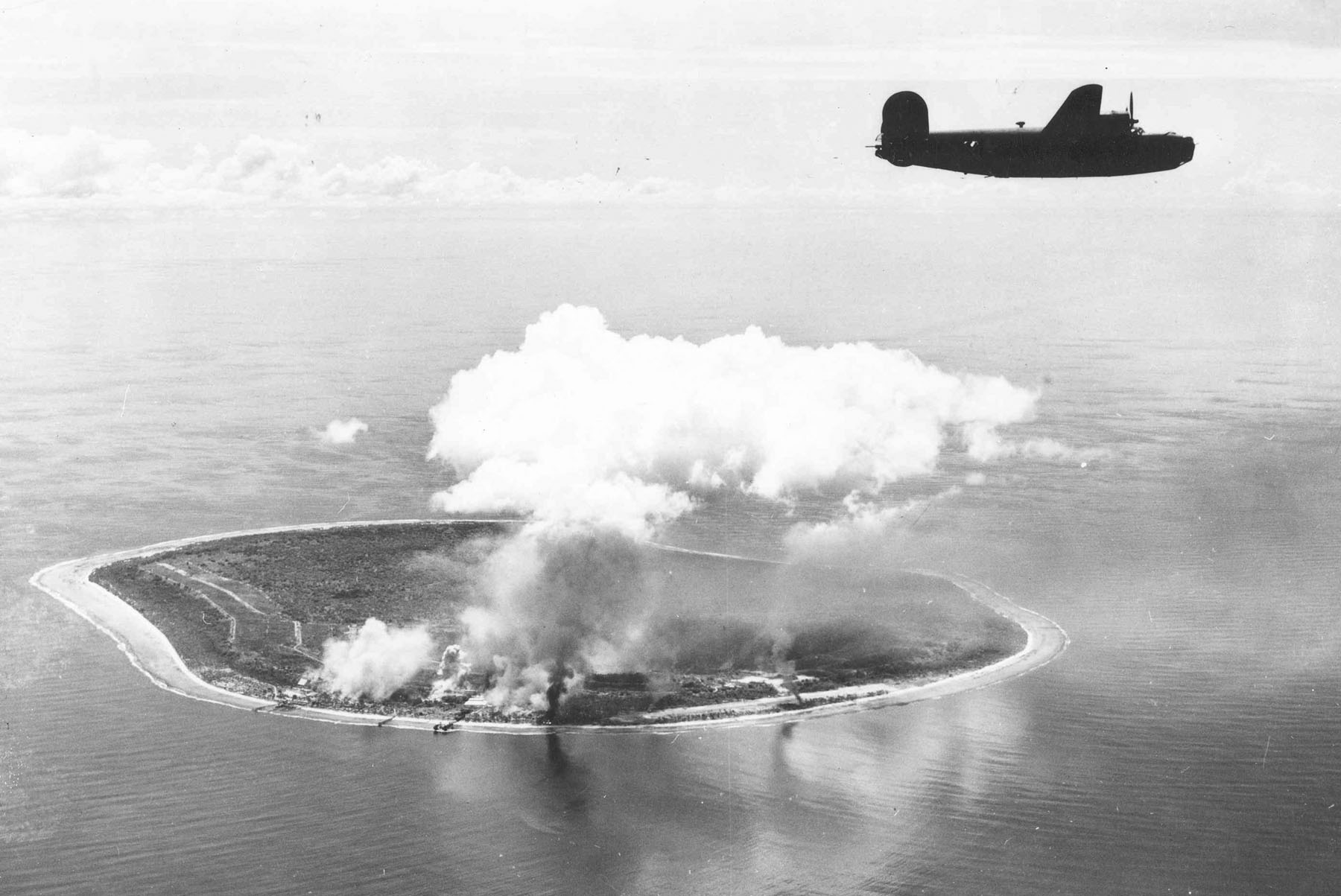
Germany annexed Nauru in 1888, and soon after came the discovery that would define the island: its interior was almost solid phosphate, a prized fertiliser. Control passed after the First World War to an Australian-led administration, which mined the rock. In the Second World War Japan occupied the island, built an airfield that drew heavy Allied bombing, and deported over a thousand Nauruans to distant Chuuk, where many died.
Nauru became independent in 1968 and took ownership of its phosphate, which for a time made its citizens among the richest on Earth per person. But the wealth was squandered on bad investments even as the deposits ran down, and when the phosphate was largely exhausted the economy collapsed, leaving behind a ruined landscape and a nation searching for a way to live.
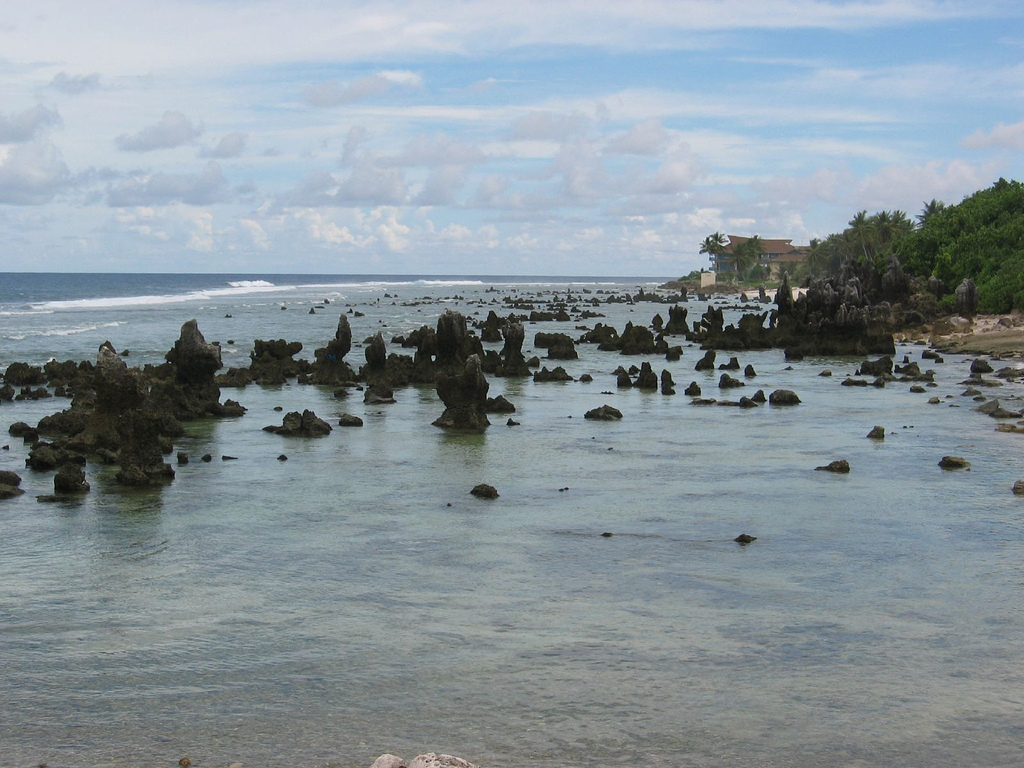
Nauru is a single small island of raised coral, an oval just 21 square kilometres in area, ringed by a narrow coastal belt of beaches and fertile land where the population lives, around a central plateau. That plateau, known as Topside, was once rich phosphate rock, and a century of mining has stripped it bare, leaving a desolate moonscape of jagged limestone pinnacles where little can grow. The island is surrounded by a reef, has no natural harbour, and possesses a single lagoon, the Buada, inland. The environmental devastation of the interior is among the most extreme of any nation.
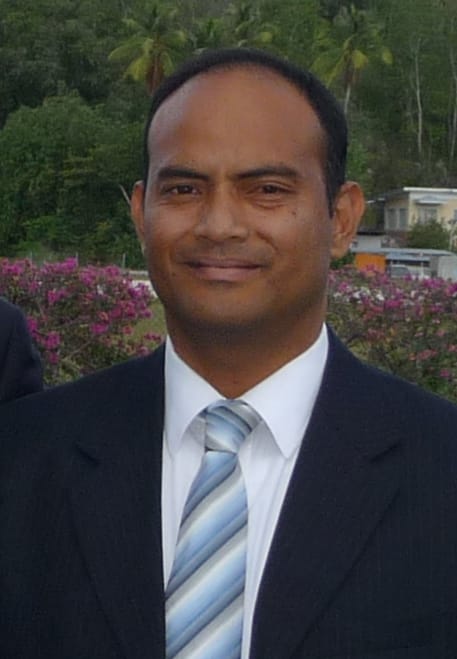
Nauru is a parliamentary republic, one of the smallest in the world, whose president is both head of state and head of government and is chosen by a small elected parliament. Politics is fluid and personal, without strong parties, and leadership has changed hands often. The president since 2023 is David Adeang. In a striking turn early in his tenure, Nauru switched its diplomatic recognition from Taiwan to China in 2024, joining the wider realignment of Pacific states and setting it apart from neighbours such as Tuvalu and Palau, which still recognise Taiwan. Nauru has no official capital; government offices sit in the Yaren district.
With its phosphate largely gone, Nauru survives on an improvised and often precarious mix of income. The largest source for years has been payments from Australia for hosting an offshore processing centre for asylum seekers on the island. Alongside this come fishing licences sold to foreign fleets, foreign aid, the sale of citizenship, residual phosphate mining, and, more recently, a controversial bid to profit from sponsoring deep-sea mining of the Pacific floor. It is an economy built on selling access, location, and sovereignty rather than on producing goods, and it leaves the tiny nation heavily dependent on outside powers.
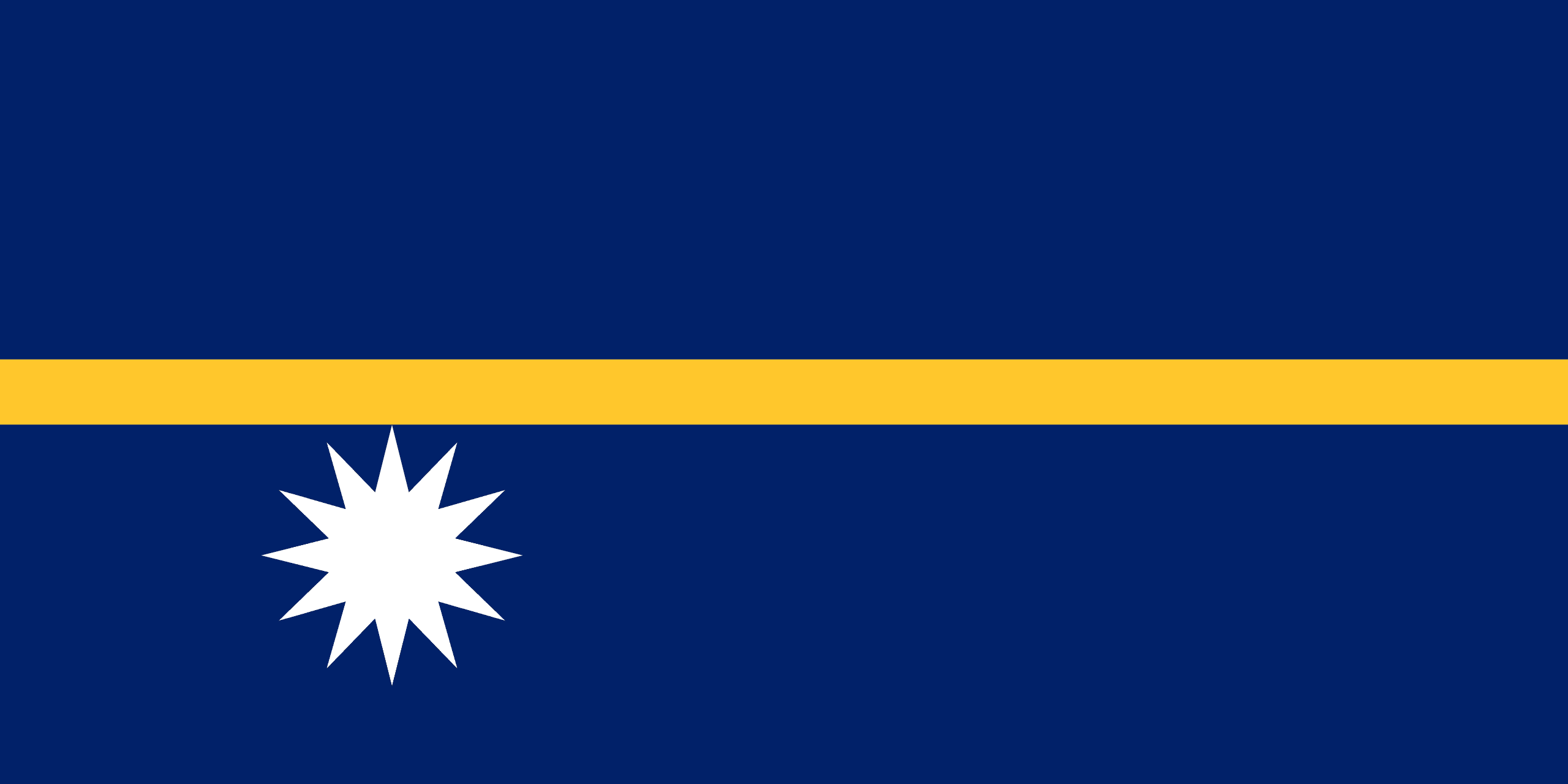
The flag of Nauru is blue with a narrow horizontal yellow stripe across the centre and a white twelve-pointed star below it near the hoist. The blue represents the Pacific Ocean, the yellow stripe the equator, and the white star Nauru's position just south of it, the star sitting below the line as the island sits below the equator. The twelve points of the star stand for the twelve original tribes of the island. The simple, map-like design thus locates the tiny nation precisely in its ocean setting.
Nauru is a predominantly Christian country, the legacy of missionary activity, with the population belonging mainly to Protestant churches, especially a Congregationalist tradition, alongside a Roman Catholic minority. The church is an important part of community life on the small island, and Christianity is woven into Nauruan culture and the calendar. Older traditions and the clan structure of Nauruan society endure beneath the now firmly Christian character of the island, whose tight-knit community has been shaped by both its isolation and its turbulent recent history.
Nauruan cuisine traditionally centred on the resources of the sea and the island's limited produce: fish and seafood from the surrounding reef and ocean, coconut, pandanus, and a little fruit. A distinctive traditional practice was the rearing of fish, including the noddy bird and ikan, in the inland Buada Lagoon. In modern times, however, the loss of agricultural land to mining and the wealth of the phosphate era brought a heavy reliance on imported and processed foods, which, combined with changing lifestyles, has contributed to serious public health problems on the island.
Agriculture has always been minimal on Nauru and is now almost impossible across much of the island, where phosphate mining has destroyed the soil of the interior, leaving the barren pinnacles of Topside. Only the narrow coastal fringe and the area around the Buada Lagoon support coconut palms, pandanus, and a little fruit and vegetable growing. The island produces almost no food and imports nearly everything it eats, a dependence that, together with the loss of the old fishing and gardening life, lies behind serious problems of diet and health.
Beneath its turbulent modern history, Nauru keeps a tight-knit and traditional community life, built on the extended family, the clan, and a shared and devout Christianity. It is a place where nearly everyone knows everyone, bound by kinship across the small island. Australian rules football is a national passion, and older traditions of fishing, song, and the rearing of frigatebirds survive alongside a modern, largely imported way of living. That modern life, and the loss of the island's gardens and self-sufficiency, has also brought a heavy toll: Nauru has among the highest rates of obesity and type 2 diabetes in the world.
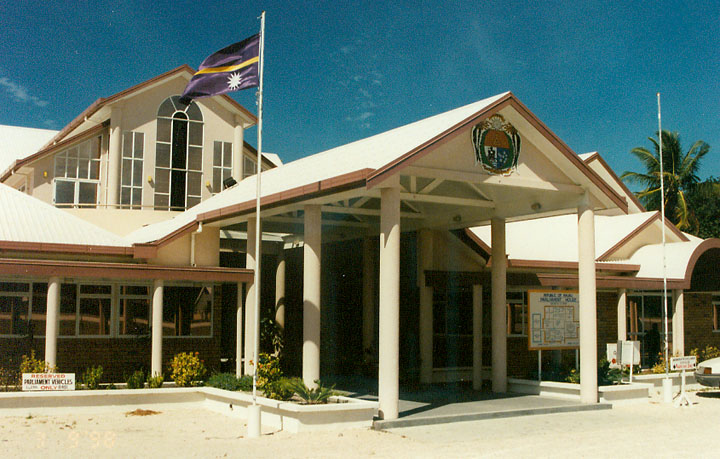
Nauru is often told as a parable, of a nation that grew rich beyond measure on a single buried resource and was left, when it ran out, with a wrecked land and a broken economy. The debates that follow from that story are live and difficult. The environmental ruin of the interior raises unresolved questions of blame and repair between Nauru and the powers that mined it. The offshore detention centre that now underpins the economy is condemned by human-rights groups for the treatment of asylum seekers held there, yet defended as an economic lifeline the island can ill afford to lose. And Nauru's latest gamble, championing the deep-sea mining of the ocean floor, pits the promise of new revenue against warnings of fresh environmental harm. How a tiny, exposed nation should sustain itself, and at what cost, remains an open question.
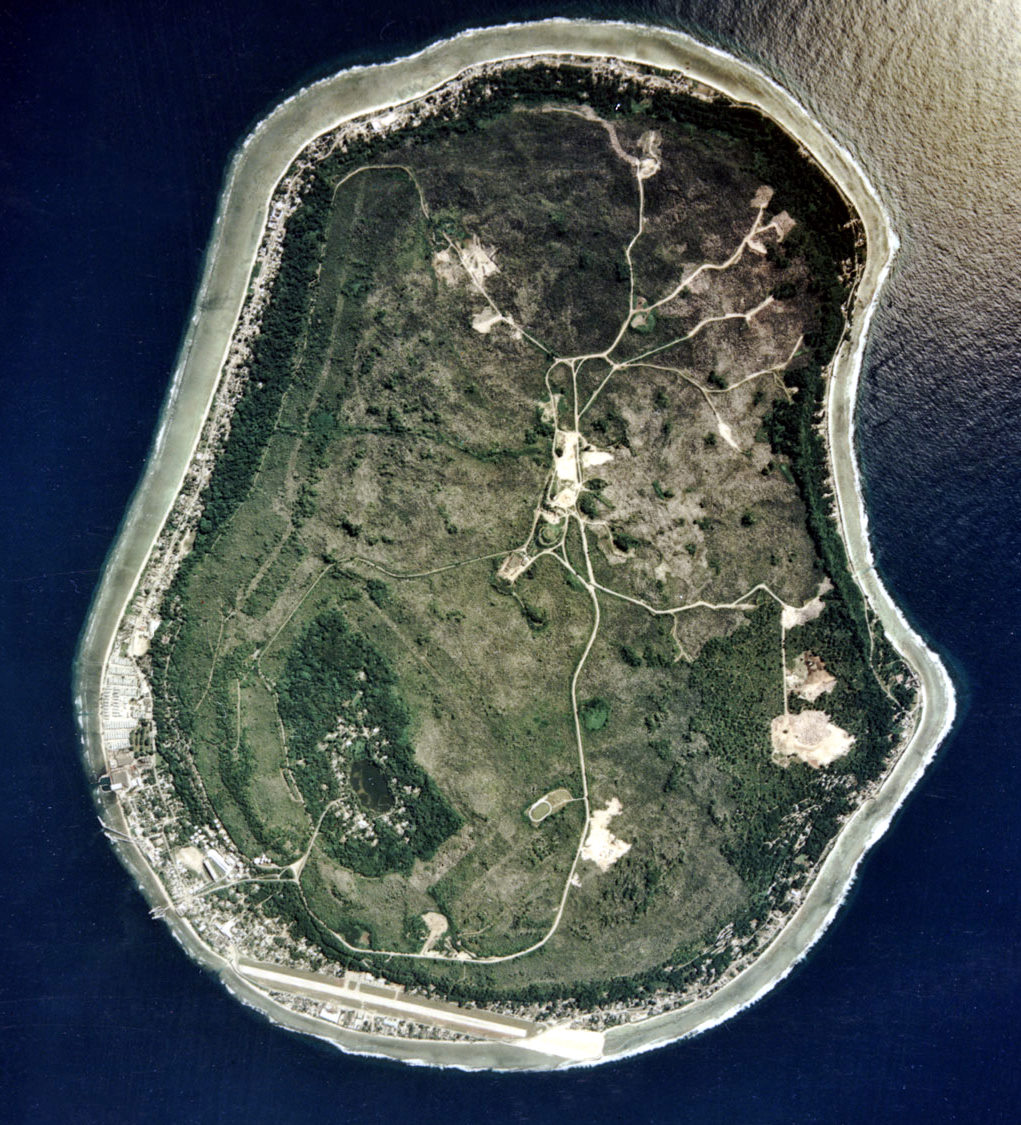
Nauru has a population of only around 12,000 people, making it one of the least populous countries in the world, predominantly the indigenous Micronesian Nauruans, with minorities of other Pacific islanders, Chinese, and Europeans. Nauruan is the national language, with English widely used. Almost the entire population lives on the narrow, fertile coastal strip, since the mined-out interior is largely uninhabitable, with the largest settlement and the seat of government in the Yaren district, for Nauru has no official capital city. The small, close community continues to live with the consequences of its singular history.