The Federated States of Micronesia is an island nation in the western Pacific, a federation of four states spread across more than 600 islands of the wider Caroline Islands group. A diverse country of distinct cultures and languages, it is home to one of the wonders of the Pacific, the ancient ruined city of Nan Madol, built on a network of artificial islets, and to the famous stone money of Yap, giant carved discs that served as currency. Closely associated with the United States, it is a remote, ocean-spanning nation of deep traditions.
Micronesia's history spans a deep past of seafaring island societies, a remarkable stone city, four successive foreign empires, and a modern nation bound to the United States.
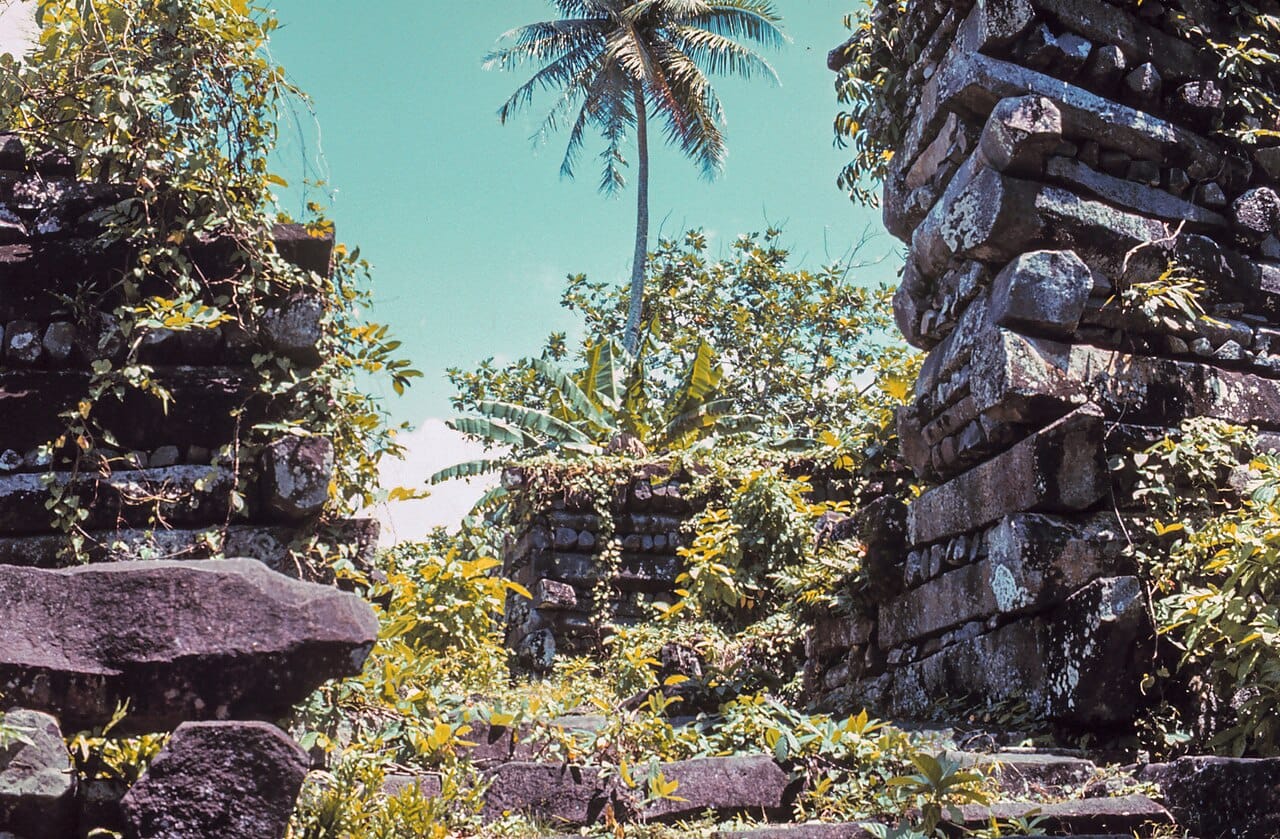
The islands were settled by seafaring peoples thousands of years ago, who built distinct societies on the scattered high islands and atolls. The most extraordinary was on Pohnpei, where, from around the thirteenth century, the rulers of the Saudeleur dynasty raised Nan Madol, a city of stone palaces, temples, and tombs built on some hundred artificial islets in a lagoon, one of the great wonders of the ancient Pacific.
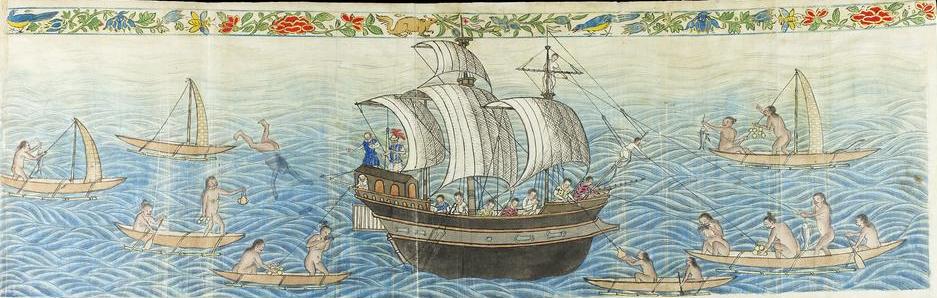
European contact came with Spanish explorers, and the islands passed in turn through Spanish, German, and Japanese rule. The Japanese era was intense, bringing colonists and development, and in the Second World War the great lagoon of Chuuk, then called Truk, served as a major Japanese naval base until it was devastated by American air attack. After the war the islands were administered by the United States as part of a United Nations trust territory, before the Federated States of Micronesia adopted its own constitution and gained independence, in free association with the United States, in 1986.
On the island of Pohnpei stand the ruins of Nan Madol, a vast complex of stone palaces, temples, and tombs built on around a hundred artificial islets in a lagoon, constructed from enormous columnar basalt logs. Local tradition holds that twin sorcerers raised the immense stones into place by magic, flying them through the air, and oral histories surround the site with the supernatural. How a pre-industrial island society actually quarried, transported, and stacked the huge basalt remains genuinely uncertain and debated by archaeologists, who reject the magical explanations but have not fully resolved the methods used.
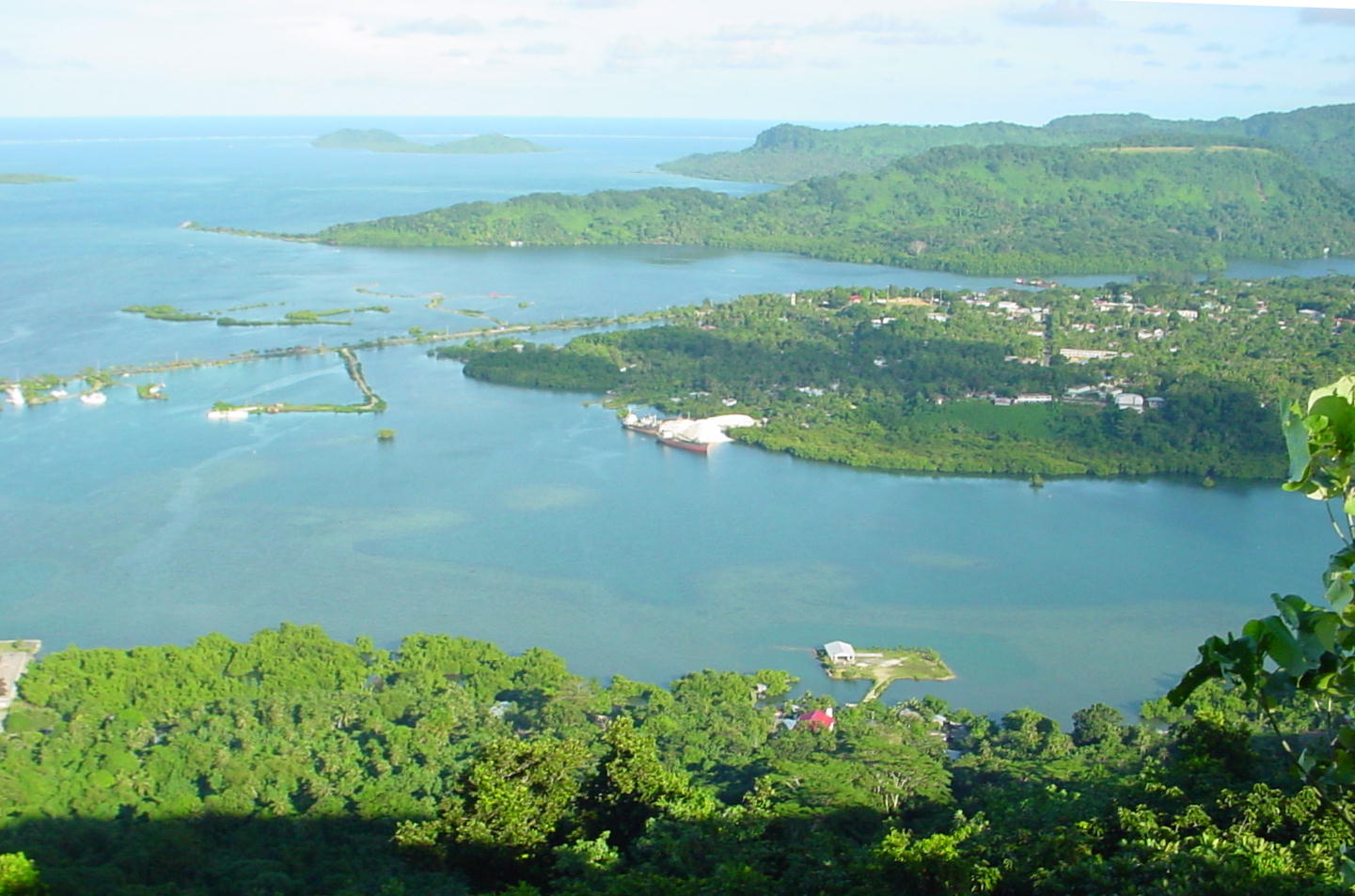
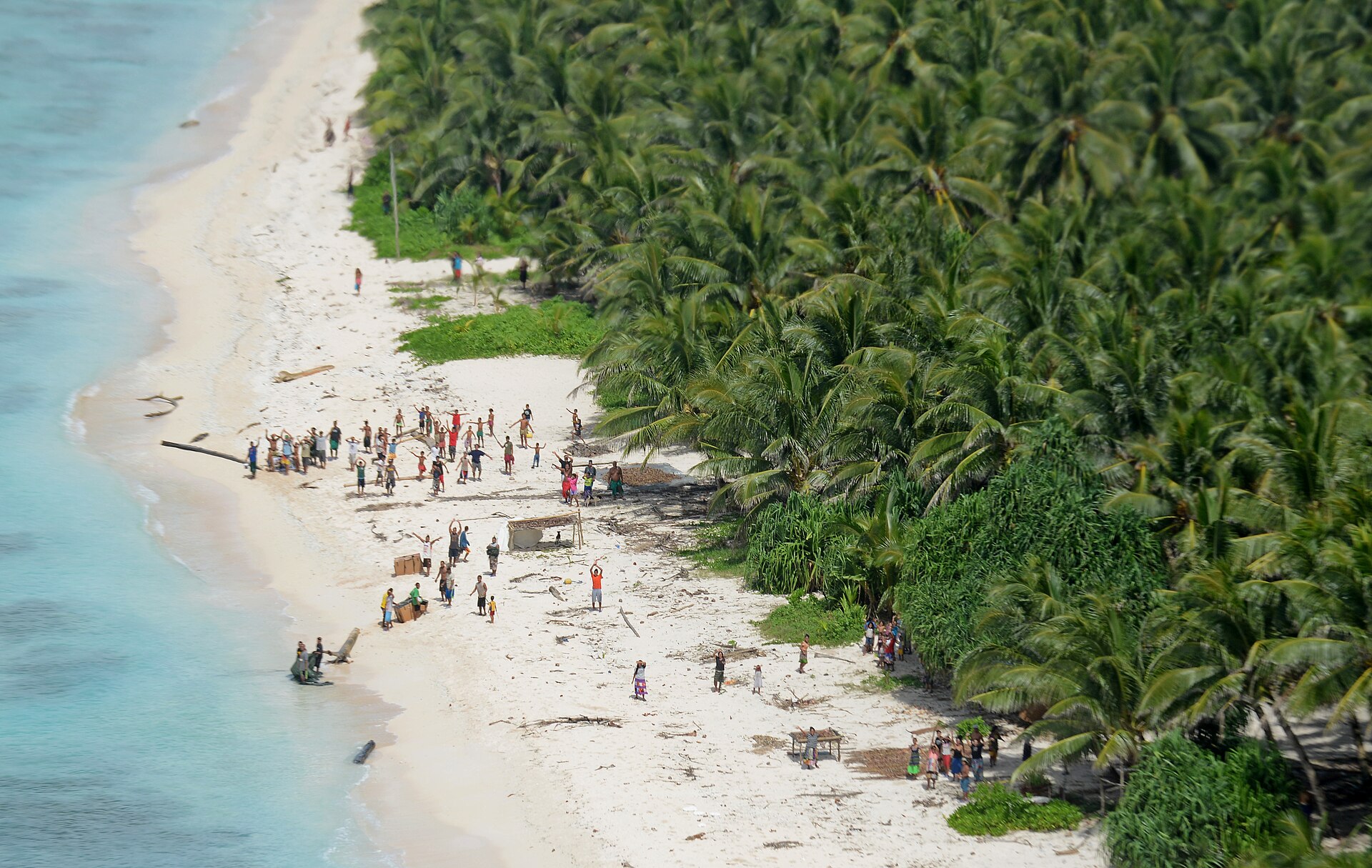
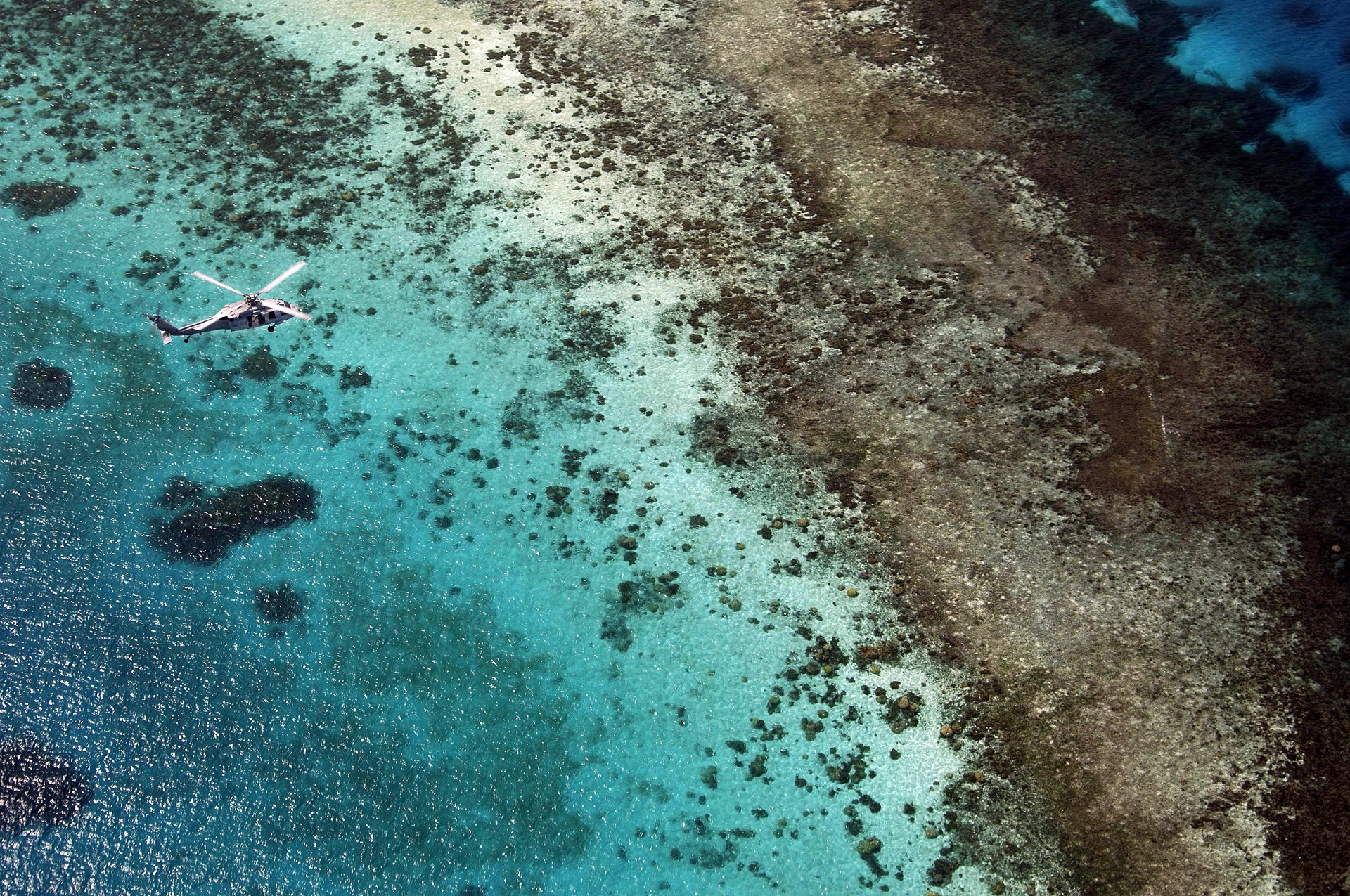
The Federated States of Micronesia stretches across a huge expanse of the western Pacific, comprising more than 600 islands grouped into four states, Yap, Chuuk, Pohnpei, and Kosrae, running roughly west to east. The islands vary from high, lush volcanic islands with rainforested mountains and rivers, such as Pohnpei and Kosrae, to low coral atolls and tiny reef islets. Surrounded by warm tropical seas, coral reefs, and lagoons, including the vast Chuuk lagoon, the country is rich in marine life, while its widely scattered geography gives it an enormous ocean territory.
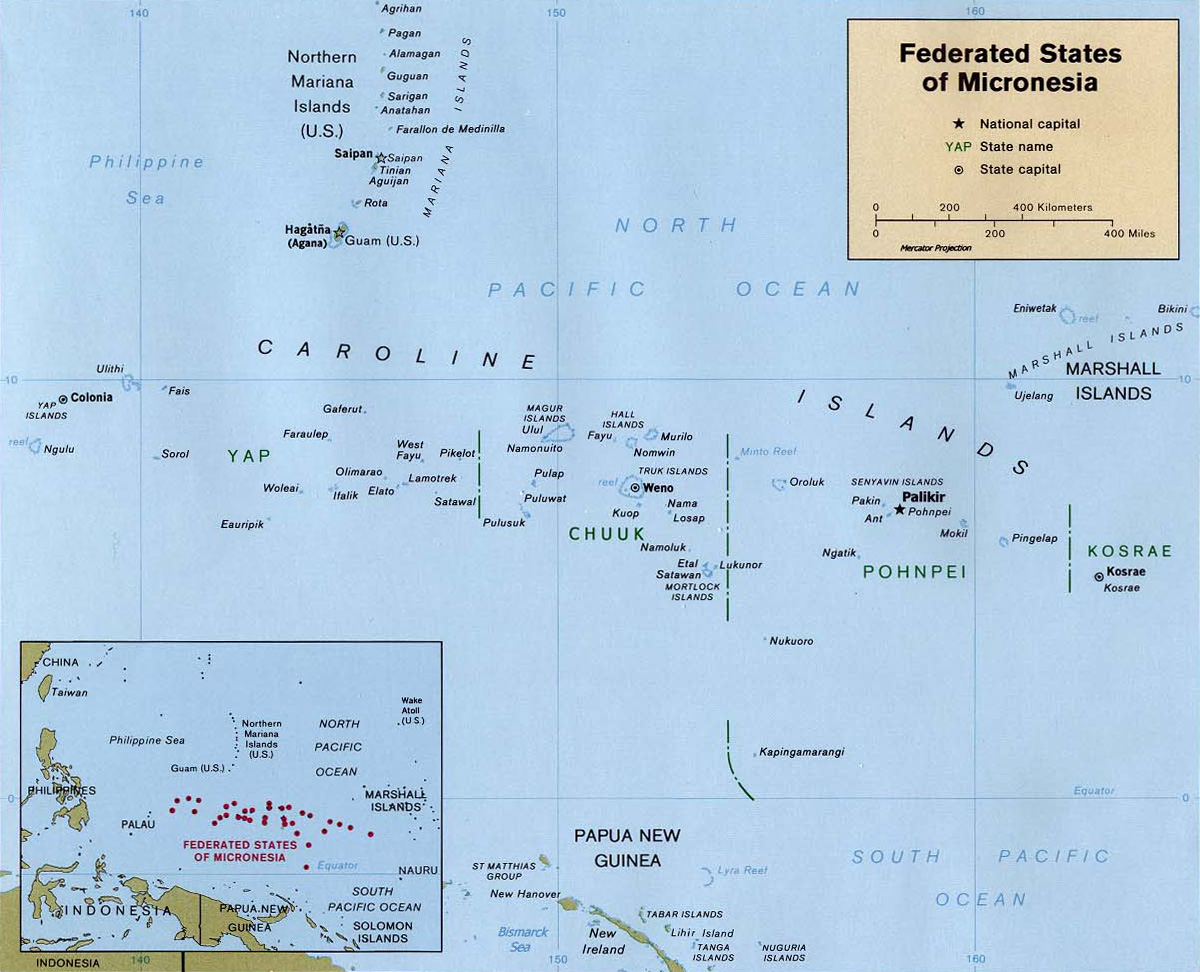
The Federated States of Micronesia is a federal republic, a union of its four states, each with its own culture, language, and considerable autonomy. A national congress elects the president as head of state and government from among its members, and the balance between the federal government and the strong-minded states, especially Chuuk, the most populous, is a recurring theme of national life. The president since 2023 is Wesley Simina. The country's central relationship is the Compact of Free Association with the United States, renewed in the 2020s, under which America provides defence and substantial funding and Micronesians may live and work freely in the United States. Unlike its neighbours Palau and the Marshall Islands, Micronesia maintains diplomatic relations with China rather than Taiwan.

Micronesia has a small economy that depends heavily on outside support. By far the most important source is the Compact of Free Association with the United States, whose grants underpin the government and public services. Beyond this, the country earns from selling licences to foreign fleets to fish its vast and tuna-rich ocean territory, from subsistence farming and fishing that sustain most families directly, and from small amounts of copra and other exports. Remittances from the many Micronesians living and working in the United States are also significant, and building a self-sustaining economy remains a long-term challenge.
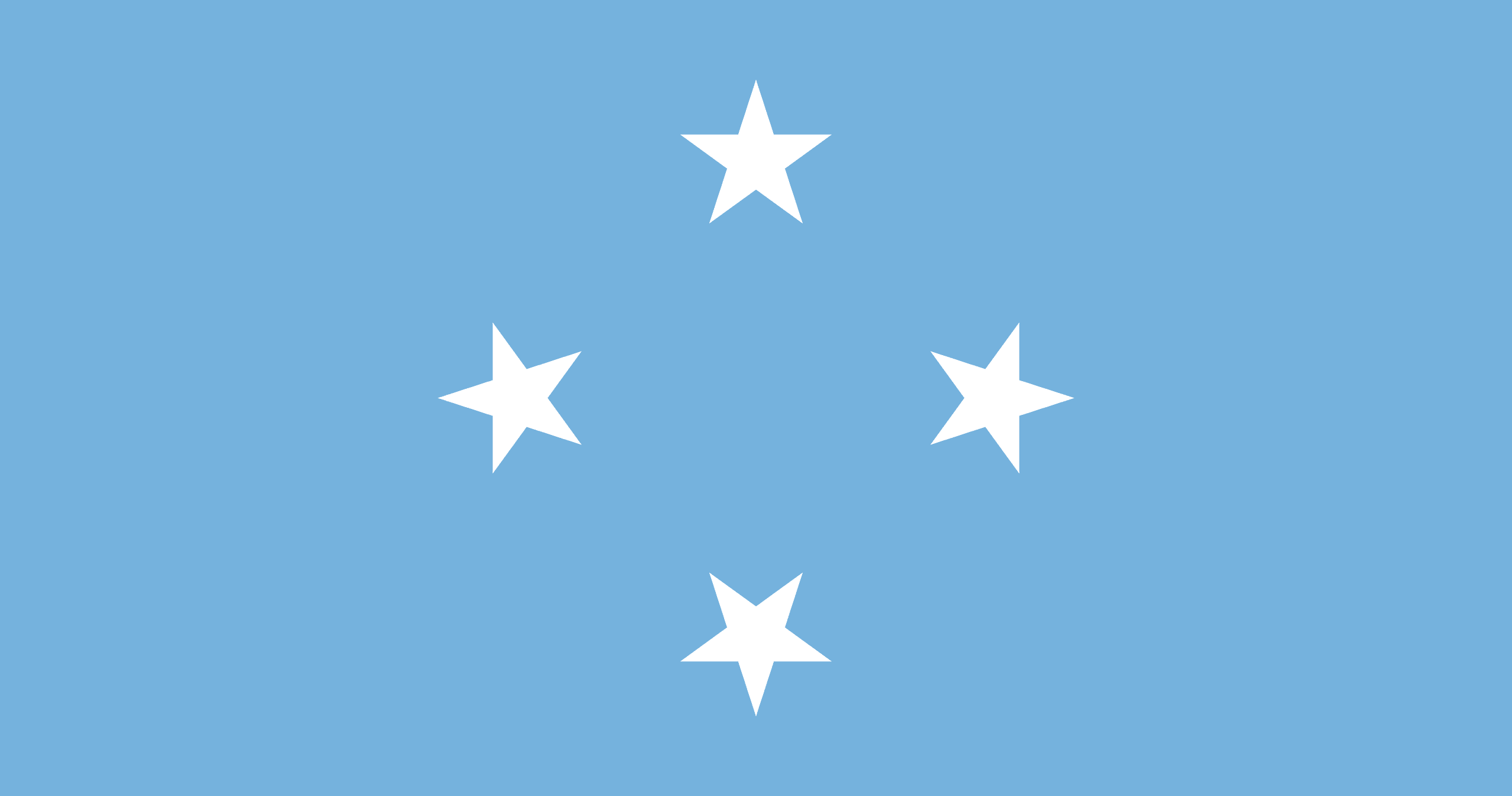
The flag of the Federated States of Micronesia is light blue with four white five-pointed stars arranged in a diamond in the centre. The blue field represents the Pacific Ocean that surrounds and unites the islands, and the four stars stand for the four states that make up the federation, Yap, Chuuk, Pohnpei, and Kosrae. The light blue echoes the colours of the United Nations, recalling the islands' period as a trust territory, and the simple, balanced design expresses the union of the country's four diverse island groups.
The Federated States of Micronesia is overwhelmingly Christian, the result of missionary activity, with the population divided mainly between Roman Catholics and various Protestant denominations, the balance differing among the four states. The church is central to community life across the islands, and Christianity is deeply woven into the culture and calendar. Alongside the Christian faith, traditional beliefs, customs, clan systems, and the authority of chiefs remain influential, and respect for custom and for the intricate social hierarchies of the islands continues to shape daily life.
The cuisine of the Federated States of Micronesia draws on the produce of the islands and the abundance of the sea. Fish and seafood are central, along with staples such as taro, breadfruit, yams, bananas, and coconut, often cooked in earth ovens for feasts. Each island group has its own specialities, and on Pohnpei the kava-like drink sakau, pounded from a pepper root, holds an important ceremonial place. The diet, traditionally based on local crops and the ocean, has come to include imported rice and other goods, as elsewhere in the modern Pacific.
Agriculture in the Federated States of Micronesia ranges from subsistence gardening on the high volcanic islands, where the richer soils support taro, yams, breadfruit, bananas, and other crops, to the very limited cultivation possible on the coral atolls. Copra, from coconuts, has been the traditional cash crop and export, along with some tropical produce and betel nut. Most farming, though, is for the family table rather than the market, part of a way of life still closely tied to the land and the reef.
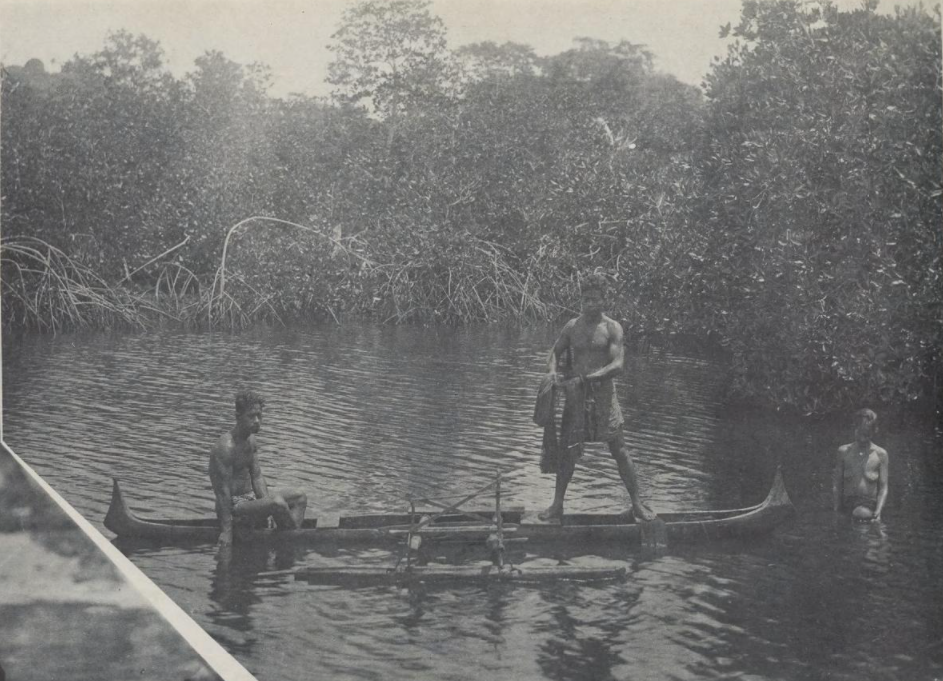
Micronesia is not one culture but several, for its four states differ from one another in language and custom as much as neighbouring countries might. Everywhere, life centres on the clan, the extended family, and the inherited authority of chiefs, and etiquette and respect for rank run deep. Yap is famous for its rai, the great carved discs of stone money, some taller than a person, whose ownership is remembered by the community and passed on without the stones ever moving. On Pohnpei the ceremonial drink sakau, pounded from a pepper root, holds an honoured place. Traditional navigation, weaving, and dance endure across the islands, alongside a devout Christianity.
For all its deep traditions, Micronesia faces sharp modern pressures. Its economy and security rest on the Compact with the United States, a dependence that leaves the country exposed whenever that arrangement is renegotiated. Many of its people, especially the young, have emigrated to the United States for work and study, thinning the population of some islands. Its low atolls are threatened by rising seas, and, like its neighbours, it finds itself courted within the wider contest between the United States and China for influence in the Pacific, a competition that a departing president once warned had reached even into Micronesia's own politics.
The Federated States of Micronesia has a population of around 100,000 people, made up of several distinct Micronesian and related ethnic groups across its four states, speaking a number of different languages, with English serving as the common official tongue. The population is spread across the four states and their many islands, with the largest numbers on Chuuk and Pohnpei, the latter home to the national capital, Palikir. Society remains deeply traditional, organised around clans, chiefs, and the extended family, and a significant number of citizens have emigrated to the United States under the compact.