Mali is a large, landlocked country in West Africa, much of it lying within the Sahara Desert and the semi-arid Sahel, with the life-giving Niger River curving through its heart. Once the seat of one of the wealthiest empires in medieval history and the home of the legendary city of Timbuktu, a centre of trade and learning, Mali carries an extraordinary cultural heritage. In recent years, however, it has been troubled by conflict and instability in its vast northern deserts.
Mali's history is dominated by the memory of the great medieval empires that made it one of the richest and most learned lands of its age, an inheritance that shadows a far more troubled present.
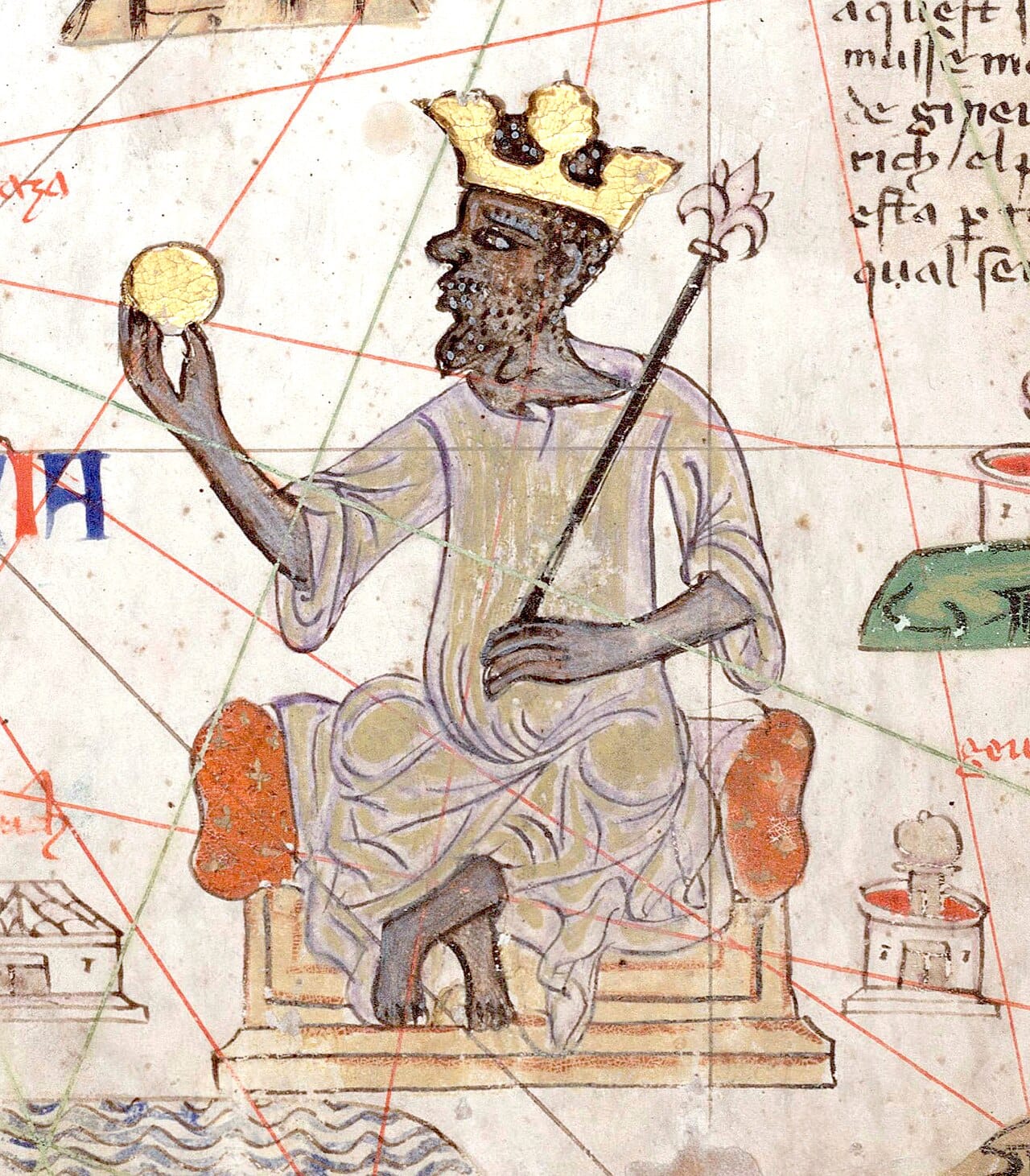
For centuries this region was the heart of a succession of powerful empires, Ghana, then Mali, then Songhai, built on control of the trans-Saharan trade in gold and salt. The Mali Empire, at its fourteenth-century height, was one of the largest and wealthiest states in the world, and its ruler Mansa Musa, whose pilgrimage to Mecca scattered so much gold that it is said to have disturbed the economies of the lands he passed through, is often reckoned among the richest people in all of history.
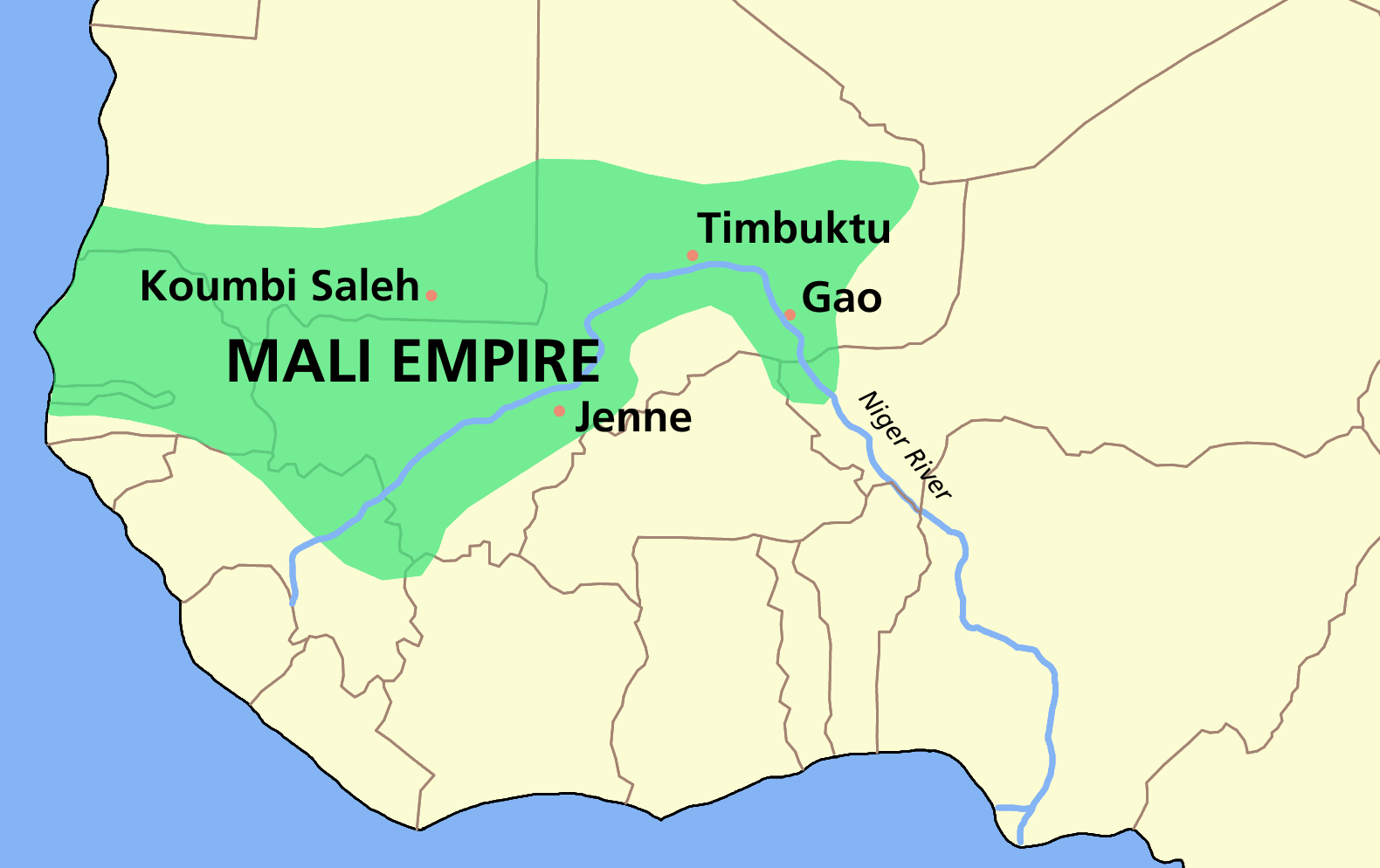
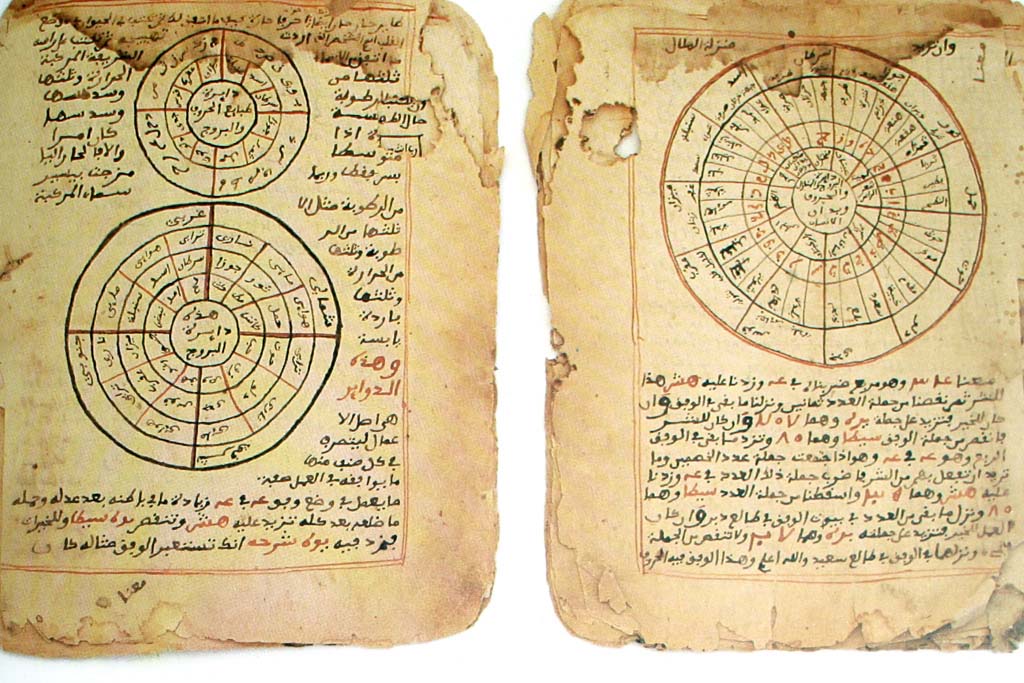
Under these empires the desert-edge cities of Timbuktu and Djenne grew into famed centres of trade and of Islamic scholarship, drawing scholars from across the Muslim world. Timbuktu's libraries and universities held hundreds of thousands of manuscripts on law, astronomy, medicine, and poetry, and the city became a legend in Europe as a place of unimaginable riches at the ends of the earth.
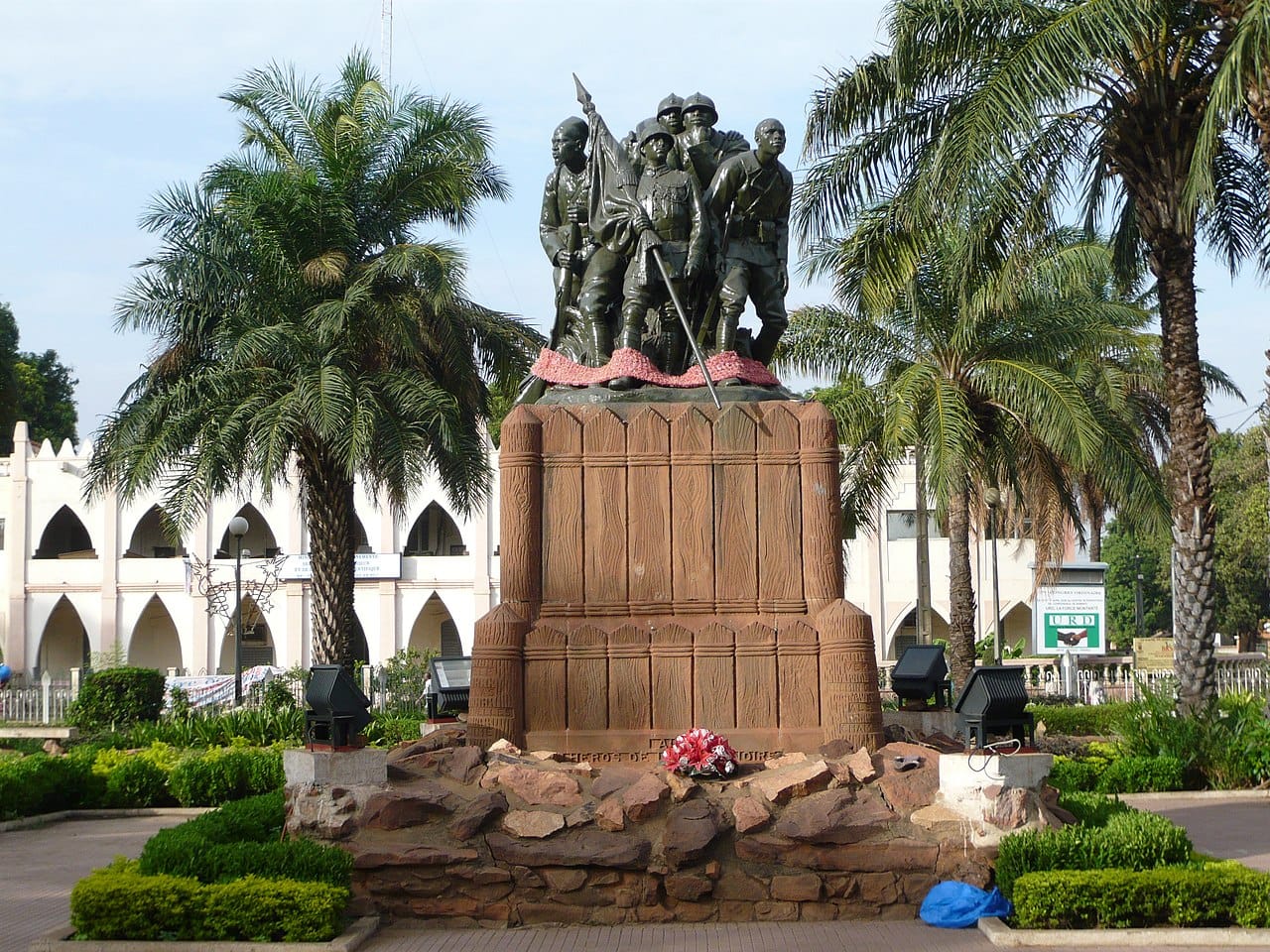
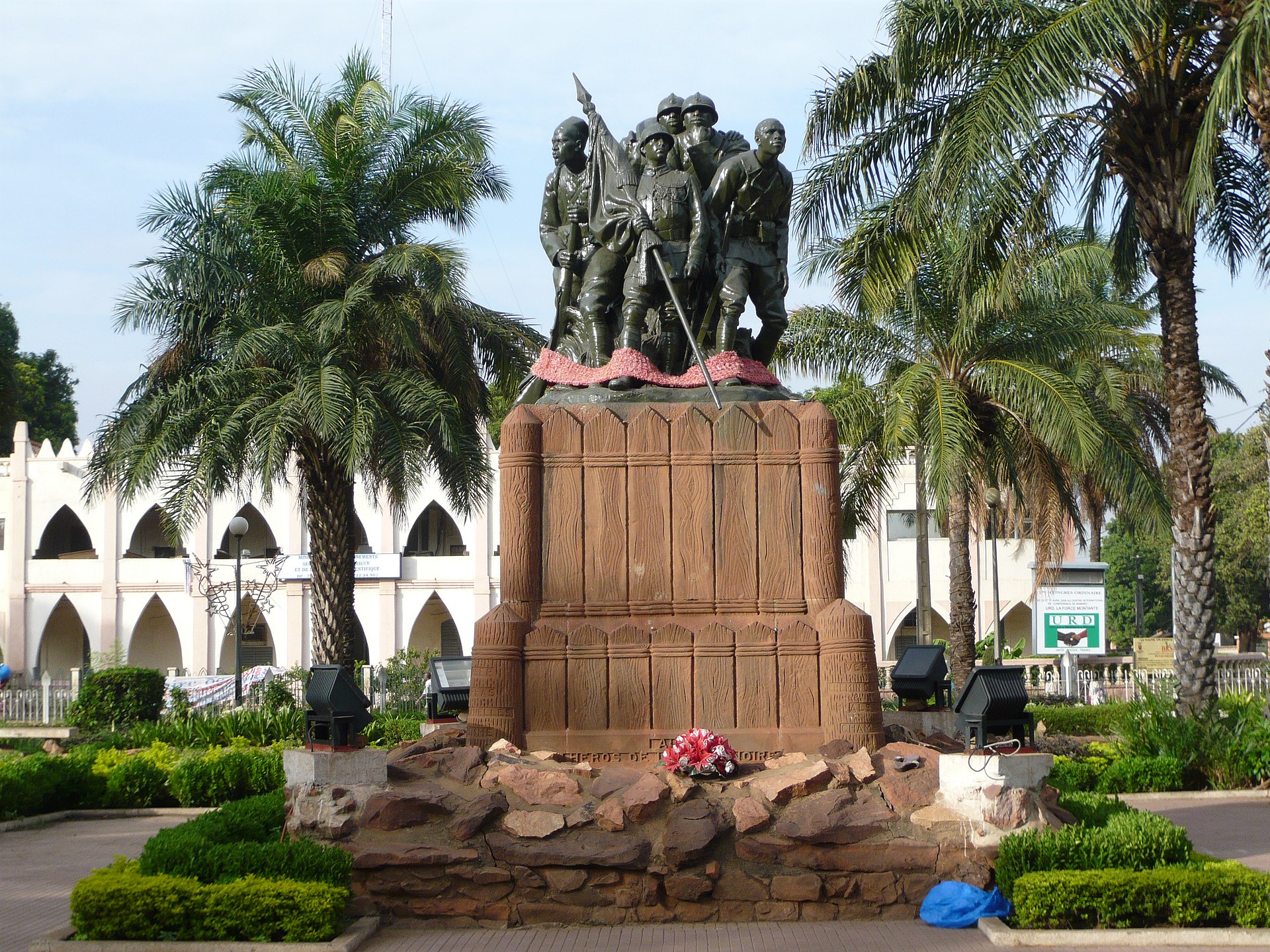
After the fall of Songhai, broken by a Moroccan invasion at the end of the sixteenth century, the region fragmented. In the late nineteenth century France conquered it, ruling it as French Sudan, and Malians were drawn into France's wars, many serving and dying in the ranks of its colonial army. Independence came in 1960, at first in a short-lived union with Senegal, after which Mali took its name from the medieval empire whose glory it claimed.
The founding of the Mali Empire is told in the Epic of Sundiata, a great oral tradition recounting how Sundiata Keita, a prince who overcame childhood disability, rose to defeat a cruel sorcerer-king and unite the Mandinka people to build the empire. Passed down for centuries by griots, the hereditary singers and historians of West Africa, the epic preserves real memories of Mali's foundation, but its marvels and details belong to legend and oral tradition rather than to the strict historical record.
Mali is dominated by the Sahara, which covers the vast, sparsely peopled north, giving way southward to the semi-arid Sahel and then to wetter savanna in the far south. The country's lifeline is the Niger River, which loops in a great curve through its centre, creating an inland delta of marshes and floodplains that supports farming, fishing, and herding in an otherwise dry land. Most of the population lives along the river and in the more fertile south, away from the encroaching desert.
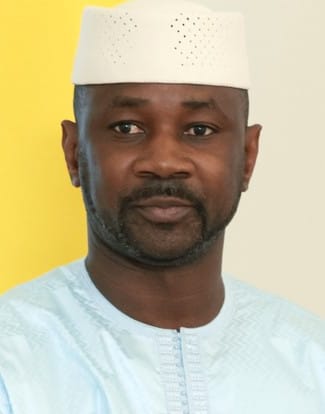
Mali's democracy, once counted among the more hopeful in West Africa, has given way to military rule. A wave of rebellion and jihadist violence from 2012 destabilised the state, and two coups, in 2020 and 2021, brought a junta led by Colonel Assimi Goita to power. The government has repeatedly postponed a promised return to civilian rule, and in 2025 Goita was granted a renewable five-year term as transitional president without an election, while political parties were dissolved. In a sharp break with the past, Mali has expelled French forces and a United Nations peacekeeping mission, turned to Russia for military support, and joined neighbouring Burkina Faso and Niger, all three now under juntas, in leaving the West African bloc ECOWAS to form the Alliance of Sahel States.
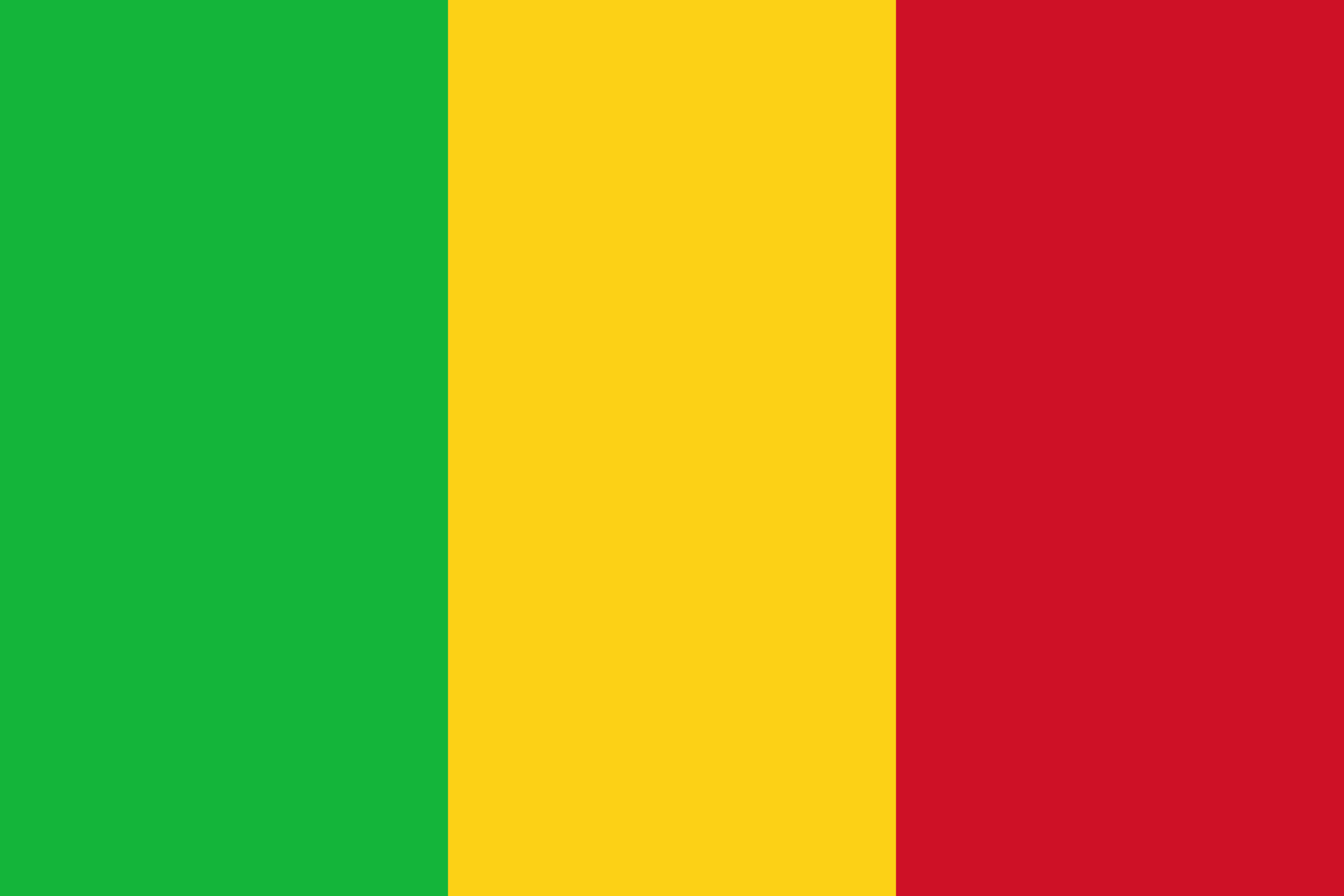
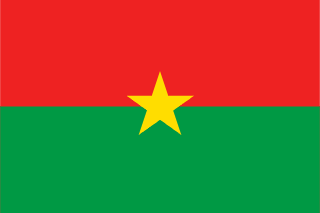
The flag of Mali has three vertical bands of green, gold, and red, the pan-African colours adopted by many newly independent nations of the continent. The green is taken to represent the fertile land and hope, the gold the country's mineral wealth, above all the gold for which its empires were famous, and the red the blood shed in the struggle for independence. The simple tricolour links Mali to the wider movement for African freedom.
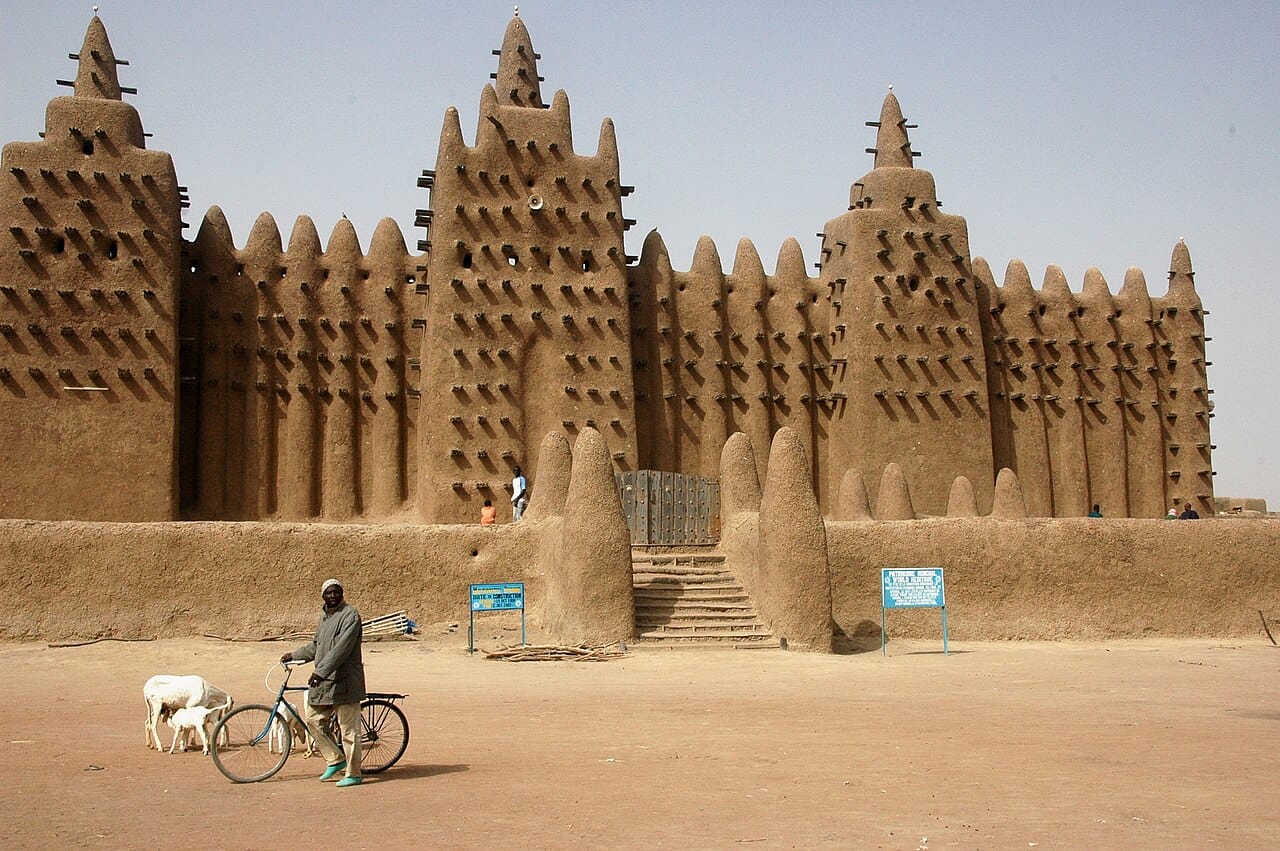
The great majority of Malians are Muslims, predominantly Sunni, a faith that arrived across the Sahara more than a thousand years ago and made cities like Timbuktu famous centres of Islamic learning. Malian Islam has long been marked by tolerance and by Sufi traditions, and is often interwoven with older local customs. There are small Christian and traditional-religion minorities, and the country's rich heritage includes the spectacular mud-brick mosques, such as the great mosque of Djenne, that are masterpieces of African architecture.
Malian cuisine is hearty and based on grains suited to a dry climate, above all millet, sorghum, and rice. A common dish is to, a thick porridge of millet or sorghum flour served with sauces, while rice dishes flavoured with meat or fish, such as the West African favourite jollof, are widely enjoyed. Peanut and leaf-based sauces, grilled meat, and freshwater fish from the Niger River fill the table, in a food culture shaped by the produce of the Sahel.
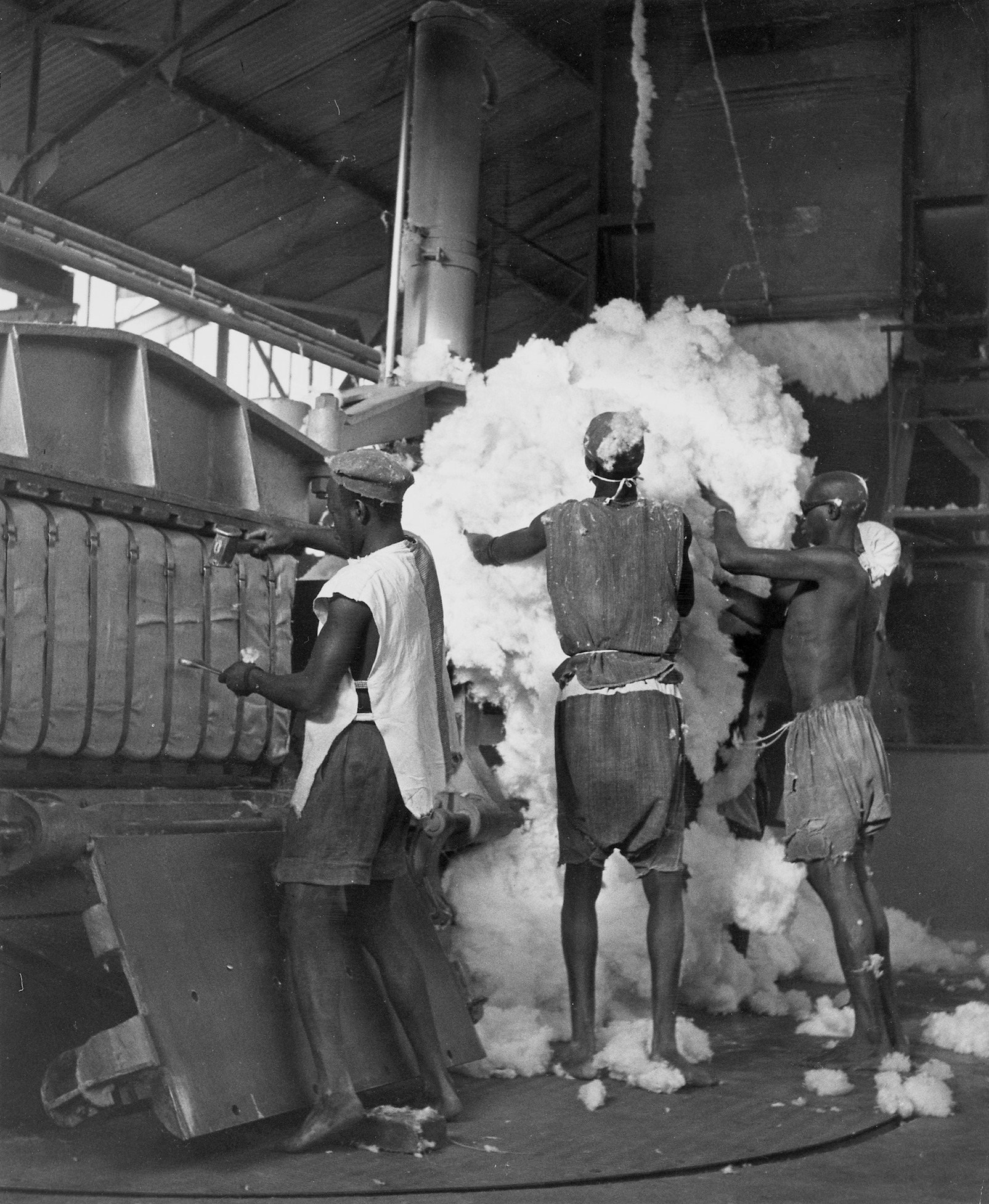
Agriculture is the foundation of Mali's economy and the livelihood of most of its people, concentrated along the Niger River and in the wetter south. Cotton is the leading cash crop and a major export, earning Mali a place among Africa's significant producers, while millet, sorghum, rice, and maize are grown as staples. Herding of cattle, sheep, and goats is important in the drier lands, and gold, mined since the days of the empires, remains a vital national export.
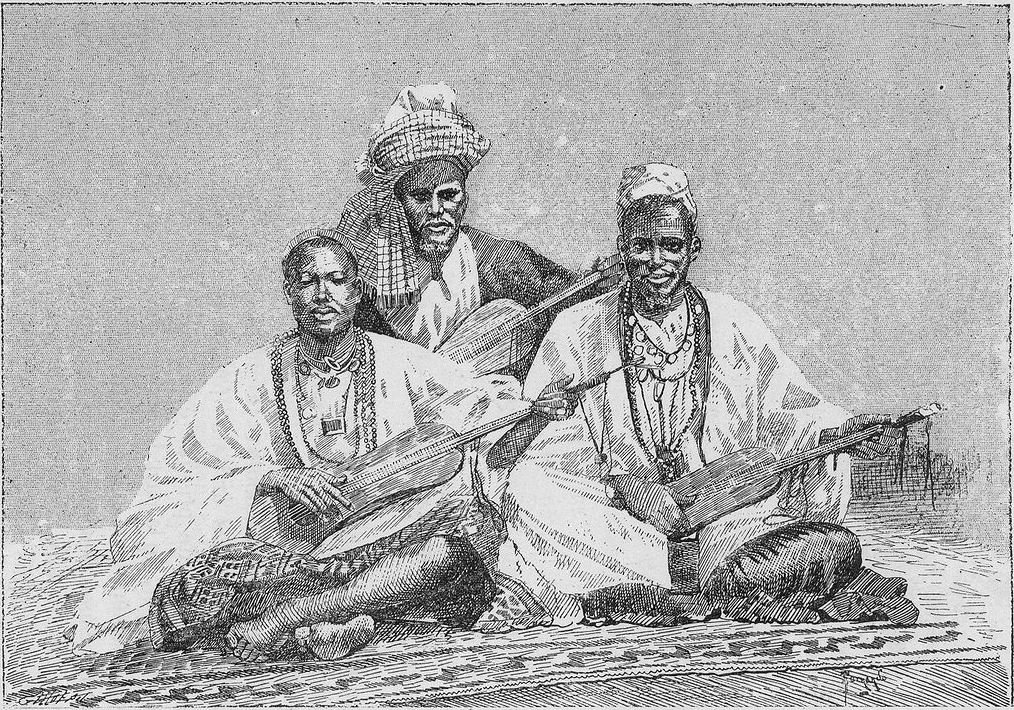
Mali holds one of the richest cultural heritages in Africa, and above all it is a nation of music. Its griots, hereditary singers and oral historians who have preserved the region's history for centuries, are the root of a musical tradition that has given the world stars such as Salif Keita, Oumou Sangare, and the desert guitarist Ali Farka Toure, and made the country a wellspring of the blues. Alongside the music stand the mud-brick architecture of the Sahel, a celebrated tradition of textiles and craft, and the deep heritage of Timbuktu, symbols of a culture whose prestige far outstrips the country's material wealth.
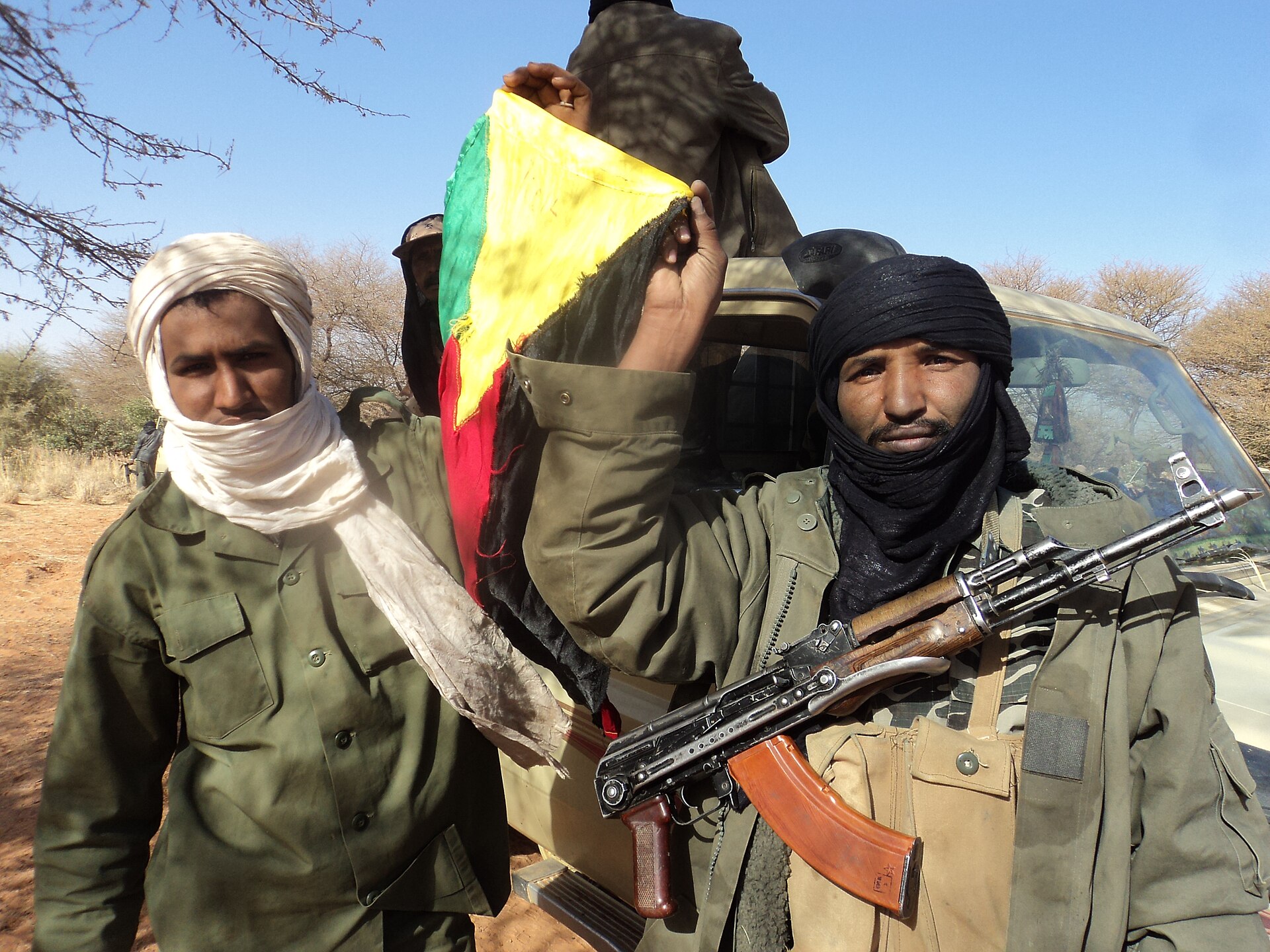
Since 2012 Mali has been the centre of a spreading catastrophe in the Sahel, and how to understand it is fiercely disputed. It began when Tuareg separatists in the north, joined and then pushed aside by al-Qaeda-linked jihadists, seized the northern half of the country; a French-led intervention drove the militants from the towns in 2013, but they regrouped in the countryside, and the insurgency has since spread across the region, killing thousands and displacing millions.
Frustration at the failure to defeat the militants helped bring the army to power in the coups of 2020 and 2021. The junta broke sharply with the former colonial power, France, expelling its troops and the United Nations peacekeeping force and instead hiring Russian military contractors, a pivot echoed in neighbouring Burkina Faso and Niger. Supporters, and a wave of pan-Africanist and anti-colonial sentiment across the Sahel, hail this as the reclaiming of true sovereignty from a France blamed for decades of interference; critics point out that the violence has continued to worsen since the coups, that rights groups accuse the army and its Russian partners of massacres of civilians, and that democracy has been suspended with no clear end. This account records the documented course of events.
Mali has a population of around 22 million people, made up of many ethnic groups, including the Bambara, Fulani, Songhai, and the Tuareg of the northern deserts, speaking a variety of languages with French as the official tongue. The population is young and fast-growing, concentrated in the south and along the Niger River, and largely rural. Mali is also famous for its musicians, who have brought the sounds of the Sahel and the griot tradition to audiences around the world.