Libya is a large country in North Africa, on the Mediterranean coast, the great majority of it covered by the Sahara Desert. A land of ancient Greek and Roman cities and vast oil wealth, it was for decades ruled by a single eccentric and authoritarian leader before being plunged, after his fall in 2011, into a prolonged period of conflict and division. With a small population spread along its coast and oases, Libya sits atop some of Africa's largest petroleum reserves.
Libya has never been an easy country to hold together. The name covers three regions that faced in different directions for most of recorded history: Tripolitania in the west, looking to Tunisia and the sea; Cyrenaica in the east, long tied to Egypt and the Greek world; and the vast desert of Fezzan in the south, oriented to the caravan routes of the Sahara. Almost every difficulty of the modern state can be traced to the effort to govern the three as one.
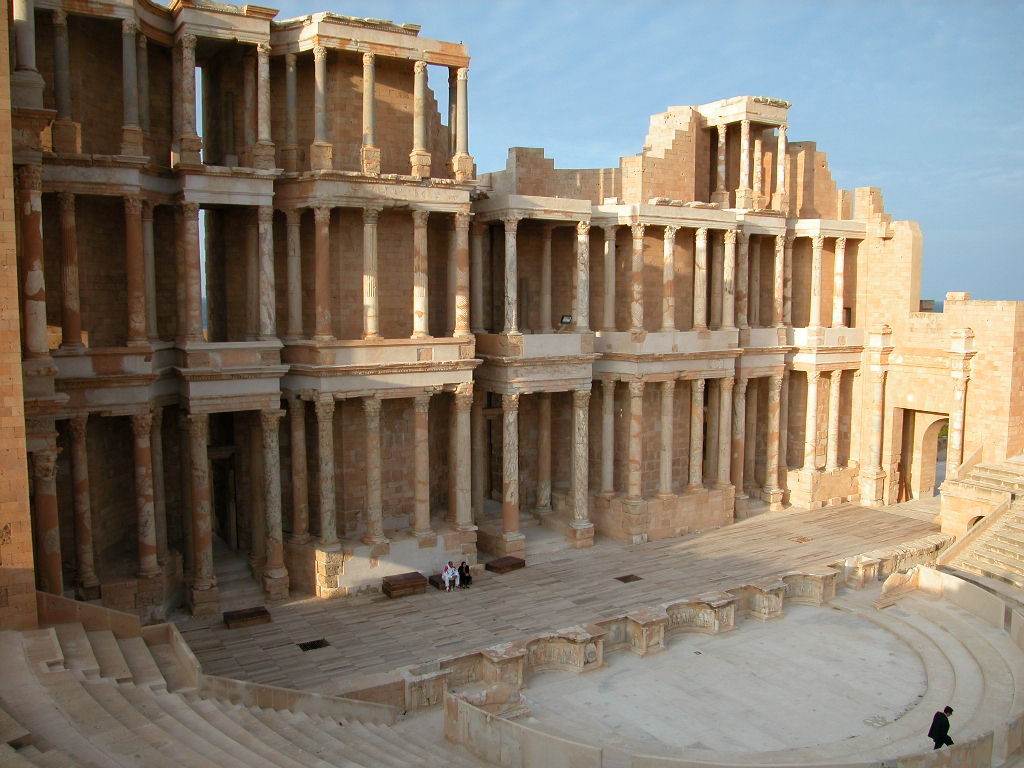
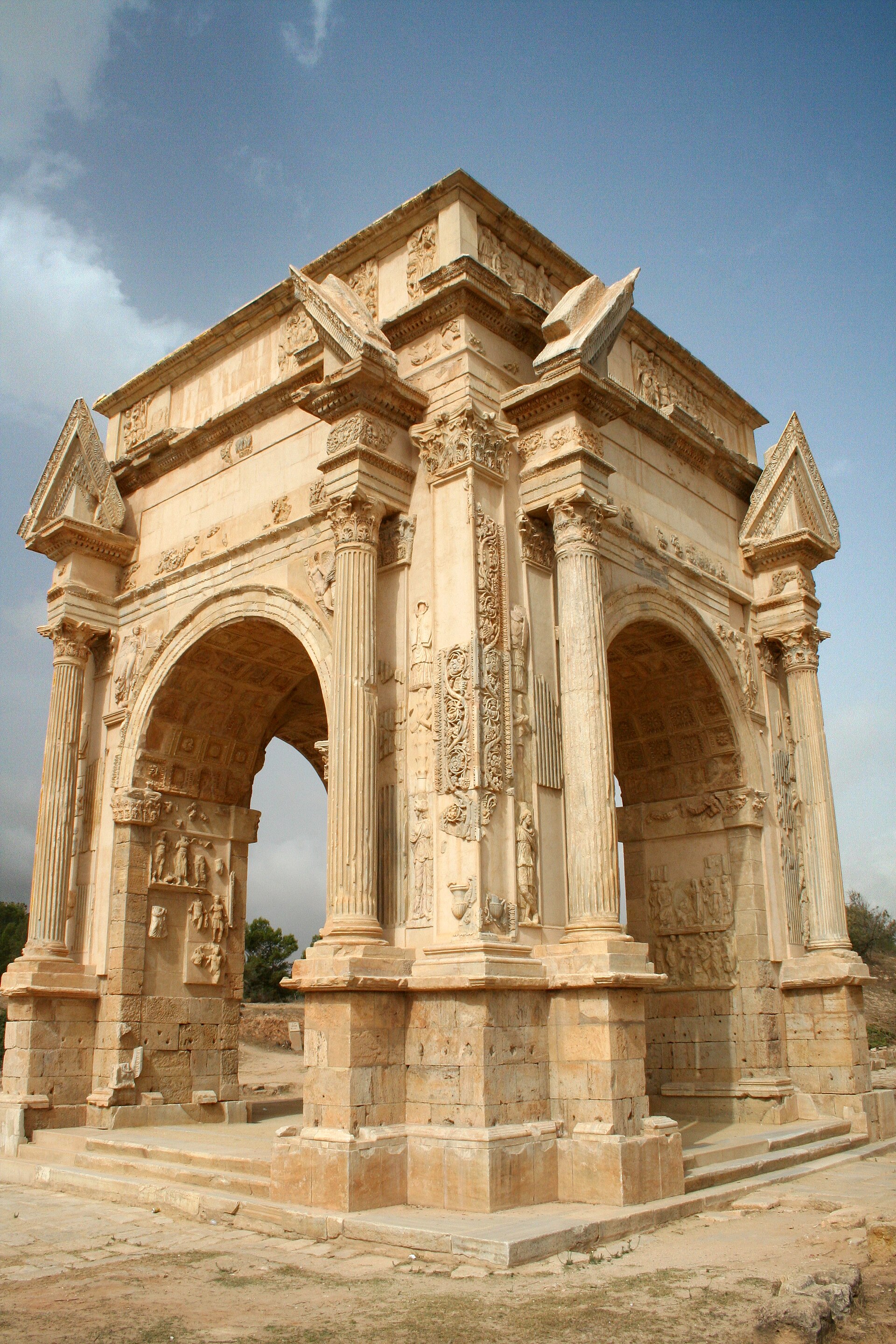
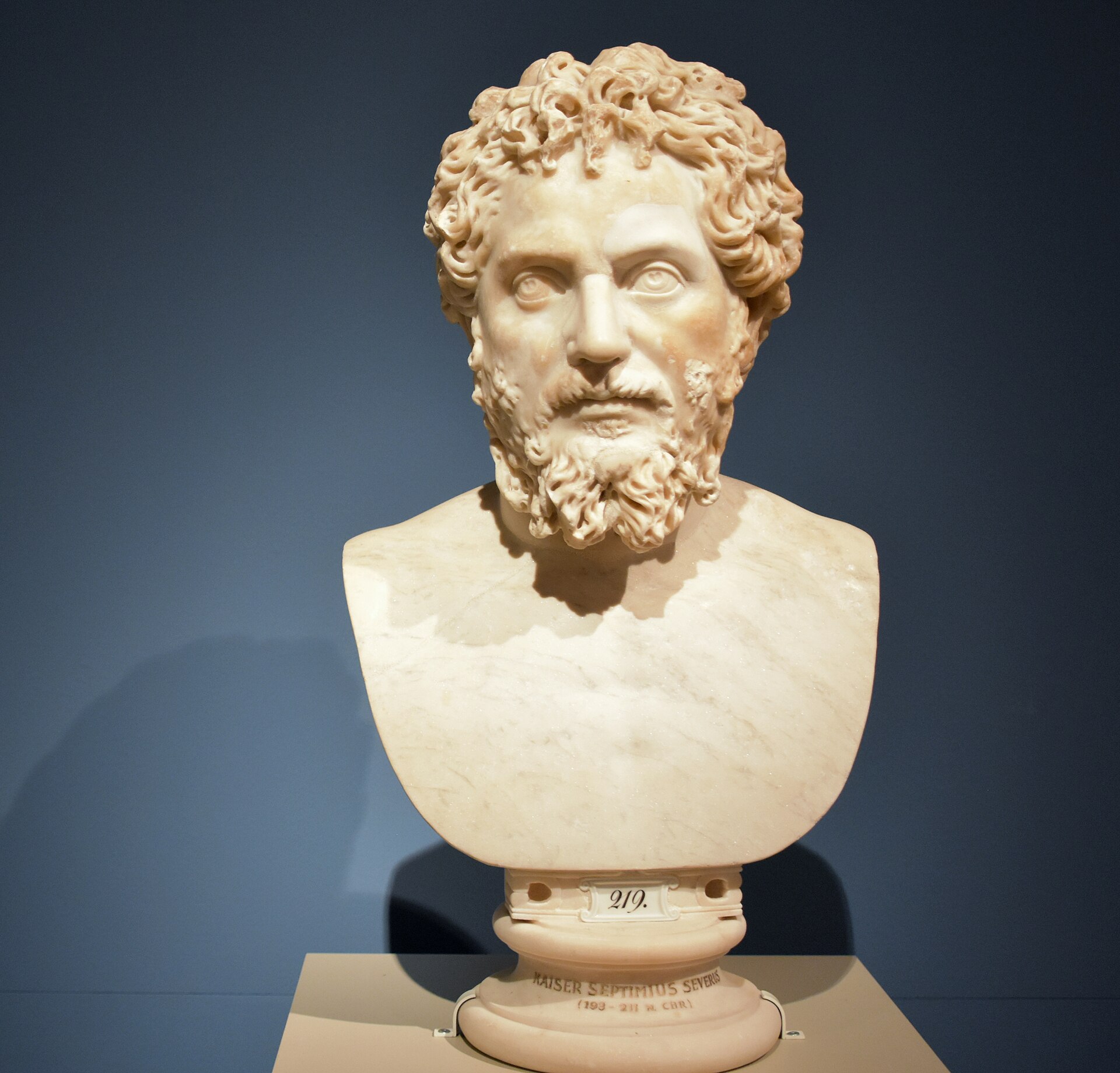
Phoenicians founded trading cities along the western coast, three of which, Oea, Sabratha, and Leptis Magna, gave Tripolitania its name, meaning the three cities. Greeks from Thera settled the east from the seventh century BC and built Cyrene, which became one of the intellectual centres of the Hellenistic world. Both fell eventually to Rome, and the coast prospered spectacularly under the empire. Leptis Magna produced Septimius Severus, who became Roman emperor in AD 193 and lavished monuments on his birthplace, leaving one of the most complete Roman cities anywhere, preserved for centuries under sand.
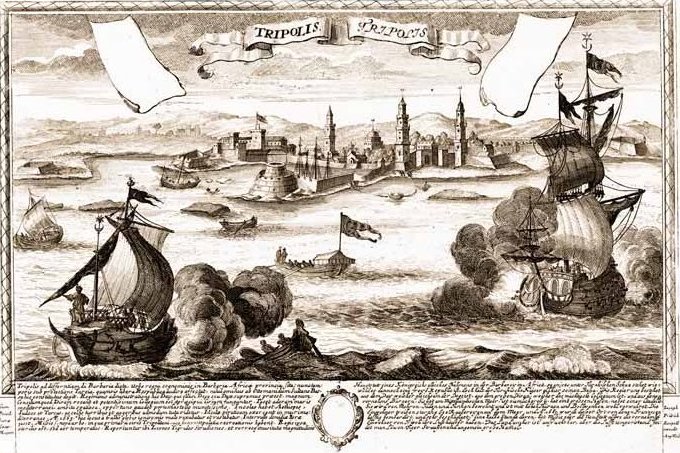
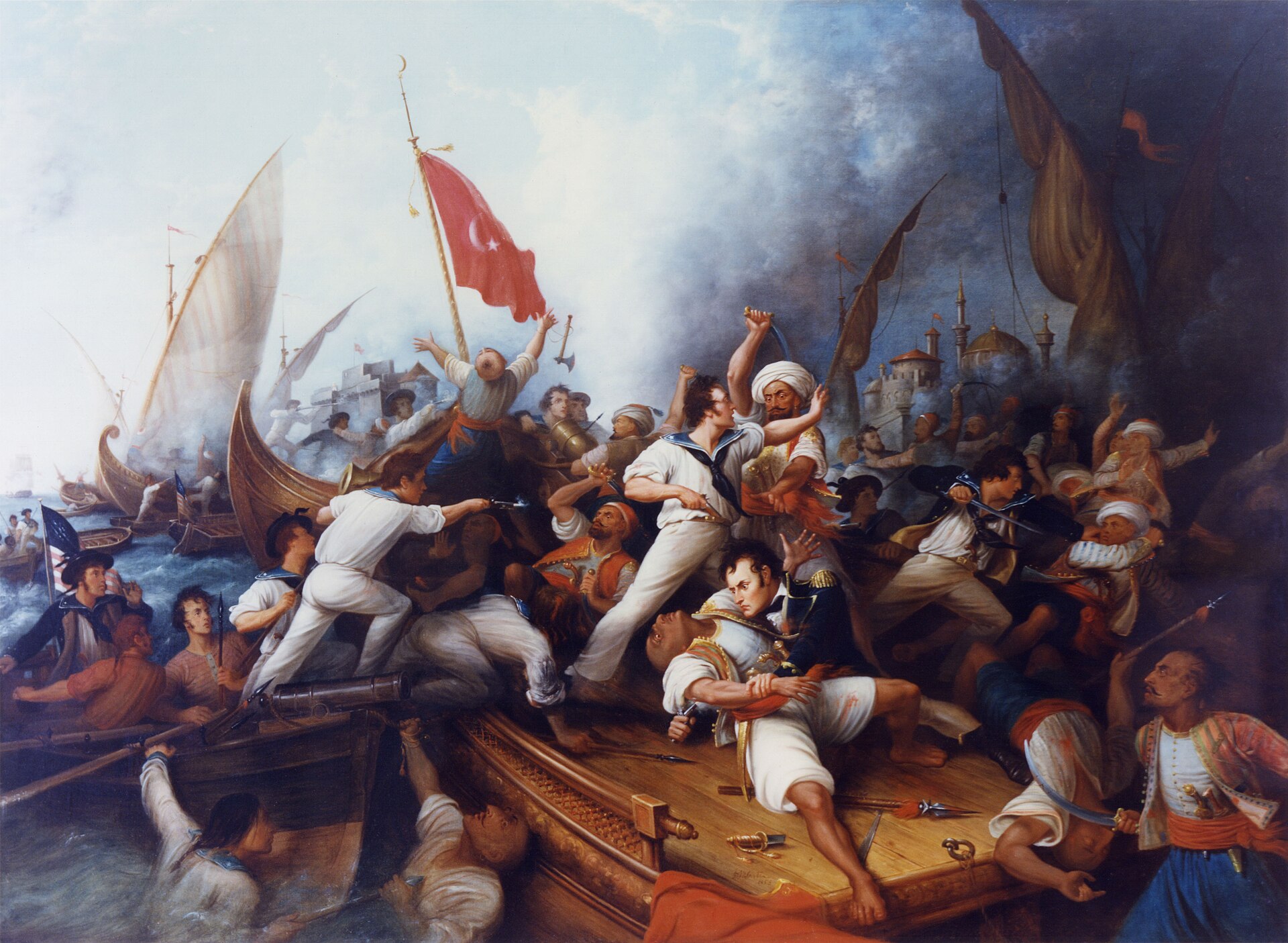
Arab armies took the region in the seventh century, bringing Islam and Arabic, and the population was progressively Arabised over the following centuries, particularly after the migration of the Banu Hilal in the eleventh. Spain and then the Knights of St John held Tripoli briefly in the sixteenth century before the Ottomans took it in 1551, and Ottoman suzerainty lasted, with a long interruption under the effectively independent Karamanli dynasty, until 1911. Tripoli was one of the Barbary ports, and corsairing against Mediterranean shipping was central to its economy and its diplomacy: tribute was extracted from European and, later, American vessels, and the refusal to keep paying it led the young United States into the First Barbary War, its first overseas conflict, fought largely off this coast between 1801 and 1805.
Italy invaded in 1911 and spent two decades subduing the country against a resistance in Cyrenaica led by Omar al-Mukhtar, a Senussi teacher who fought a guerrilla campaign into his seventies and was hanged before his own people in 1931. The pacification was brutal even by the standards of the period, with a large part of the eastern population confined in concentration camps in which very many died. Libya became the ground on which British and Axis armies fought back and forth across the desert in the Second World War, at Tobruk and El Alamein, and in 1951 the United Nations brought it to independence as a kingdom under Idris, head of the Senussi order, uniting the three provinces in a federation. It was then one of the poorest countries in the world. The discovery of oil in 1959 changed everything within a decade.
In 1969 a group of young officers led by Muammar Gaddafi, then twenty-seven, deposed the king in a bloodless coup. He held no formal office for most of the next forty-two years, ruling instead as Brother Leader over a system he set out in his Green Book, the Jamahiriya or state of the masses, in which power was nominally held by popular committees and actually held by him and his security apparatus. He nationalised the oil, funded education, healthcare, and the enormous Great Man-Made River project, and used the revenue abroad on a scale that made him internationally notorious: support for a long list of armed movements, responsibility accepted in a civil settlement for the Lockerbie bombing of 1988, and years under international sanctions, followed by rehabilitation in the 2000s when he surrendered his unconventional weapons programmes. At home, opposition was met with imprisonment, exile, and killing, including the 1996 Abu Salim prison massacre, whose victims' families would later provide the spark for the uprising against him.
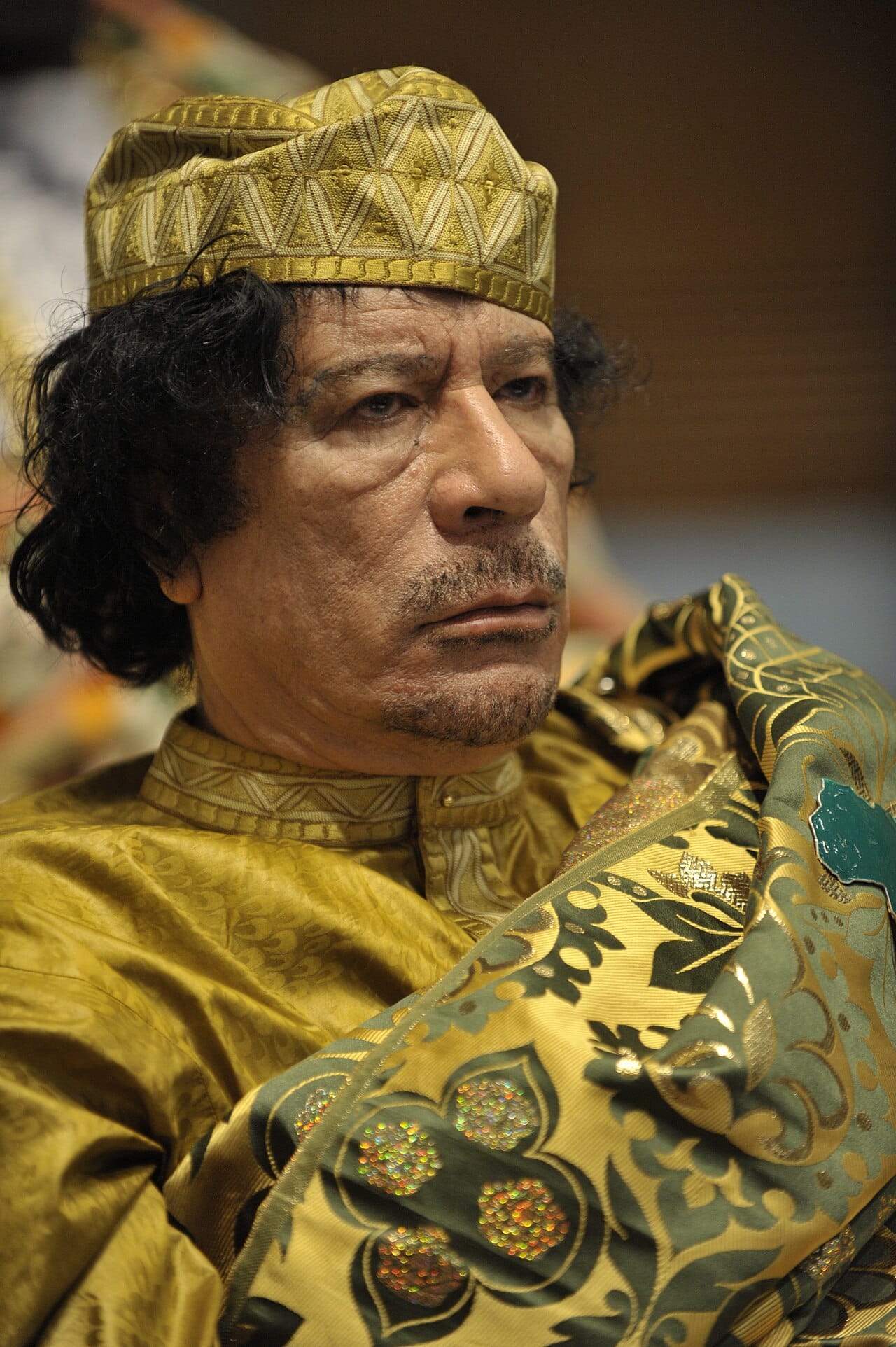
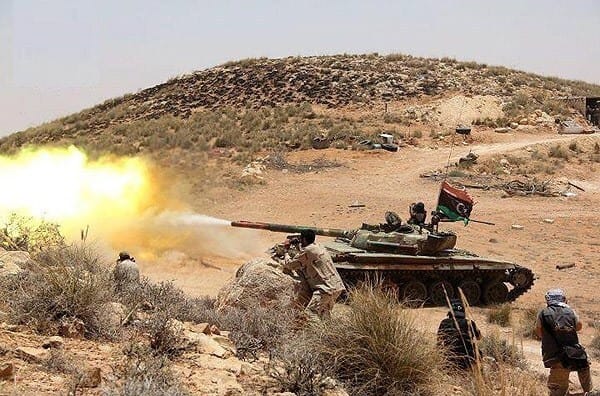
In February 2011, in the wake of Tunisia and Egypt, protests began in Benghazi over the detention of a lawyer representing the Abu Salim families and spread rapidly. Gaddafi's forces moved to crush the revolt, and as they closed on Benghazi the United Nations Security Council authorised measures to protect civilians. A NATO air campaign followed, the rebels advanced, and in October Gaddafi was captured and killed near his birthplace of Sirte. What came after has proved far harder than the war. The revolutionary militias never disarmed; two rival parliaments and governments emerged in 2014; the Islamic State held Sirte for a period before being driven out; and a second civil war between 2019 and 2020 saw the eastern forces of Khalifa Haftar assault Tripoli unsuccessfully. Outside powers armed and funded both sides. A ceasefire in October 2020 has broadly held, and elections were scheduled for December 2021, then postponed, and have been postponed ever since. On 3 February 2026 Saif al-Islam Gaddafi, the former leader's son and a candidate for the election then planned for April, was shot dead by masked gunmen in Zintan; no one claimed responsibility, and the April vote did not take place.
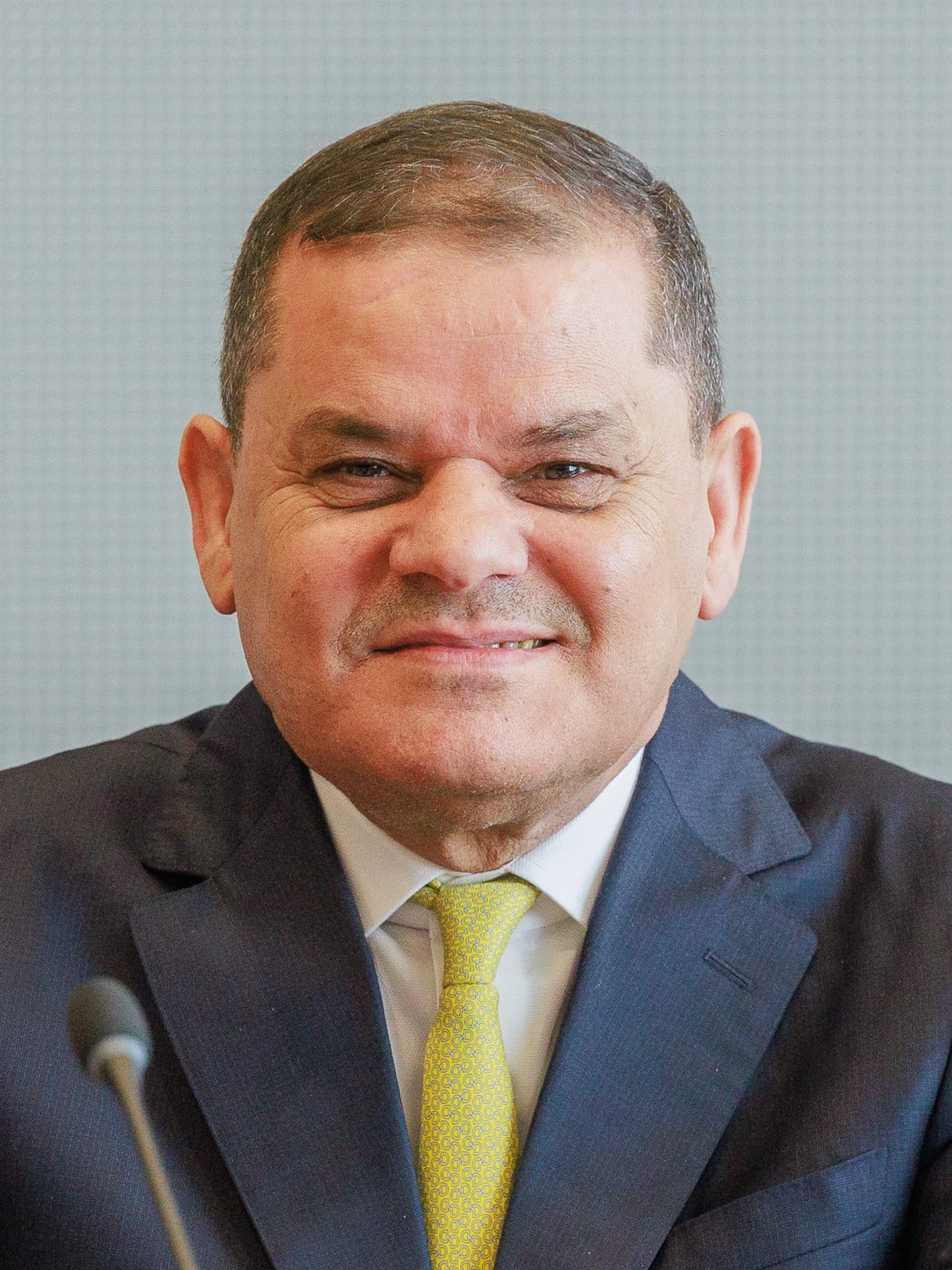
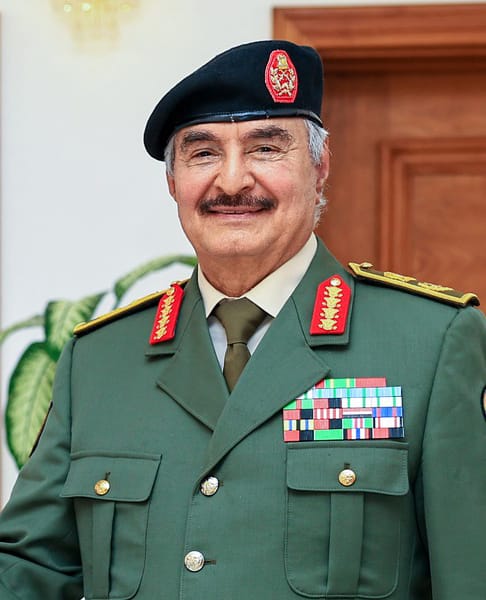
Libya has not had a single effective government since 2014. Power is split between the Government of National Unity in Tripoli, headed by Abdul Hamid Dbeibah and recognised by the United Nations, and a rival administration in the east under Osama Hamad, backed by the elected House of Representatives that sits in Tobruk and by the Libyan National Army of Field Marshal Khalifa Haftar, which controls most of the east and south. Both claim legitimacy, neither can remove the other, and each is underwritten by outside states with their own interests in Libyan oil and Libyan territory. Beneath the two governments, real authority in many places rests with armed groups whose loyalty is local and negotiable, and the central bank and the National Oil Corporation, which hold the revenue everyone wants, have themselves been the object of takeover attempts.
Efforts to hold the elections that would settle the question have foundered repeatedly on the same points: who is entitled to stand, whether a president should be directly elected, and whether a unified interim government must be formed first. The vote scheduled for December 2021 was cancelled days beforehand; a further attempt aimed at April 2026 did not happen either. In 2026 the United Nations mission continued to report the political process as stalled.
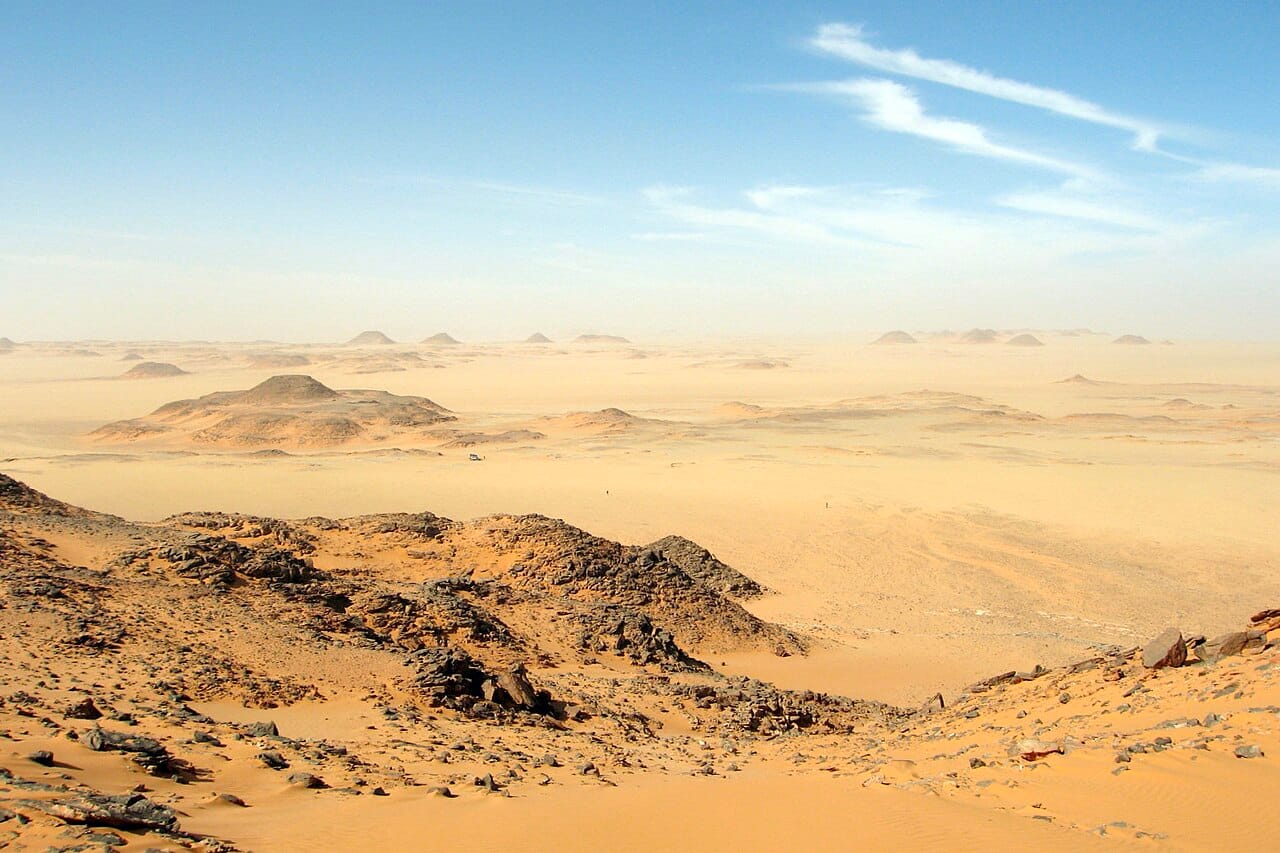
Libya is the fourth largest country in Africa and about ninety per cent desert. The Sahara covers the interior in sand seas, gravel plains, and rocky uplands, rising in the far south to the Tibesti massif on the border with Chad. There is not a single permanent river in the country. Rain falls in useful quantity only on the Jebel Akhdar, the green mountain behind Benghazi, and on the coastal strip of Tripolitania, and almost the whole population lives in those two narrow bands or in the scattered oases. Water for the coastal cities comes largely from the Great Man-Made River, a network of enormous buried pipelines built from the 1980s to draw fossil water from aquifers beneath the Sahara, laid down when the desert was green and not replenished since, which makes it a finite inheritance rather than a renewable supply. The southwestern desert holds the rock art of the Acacus mountains, showing herds and hunters from the period thousands of years ago when the region had lakes and grassland.
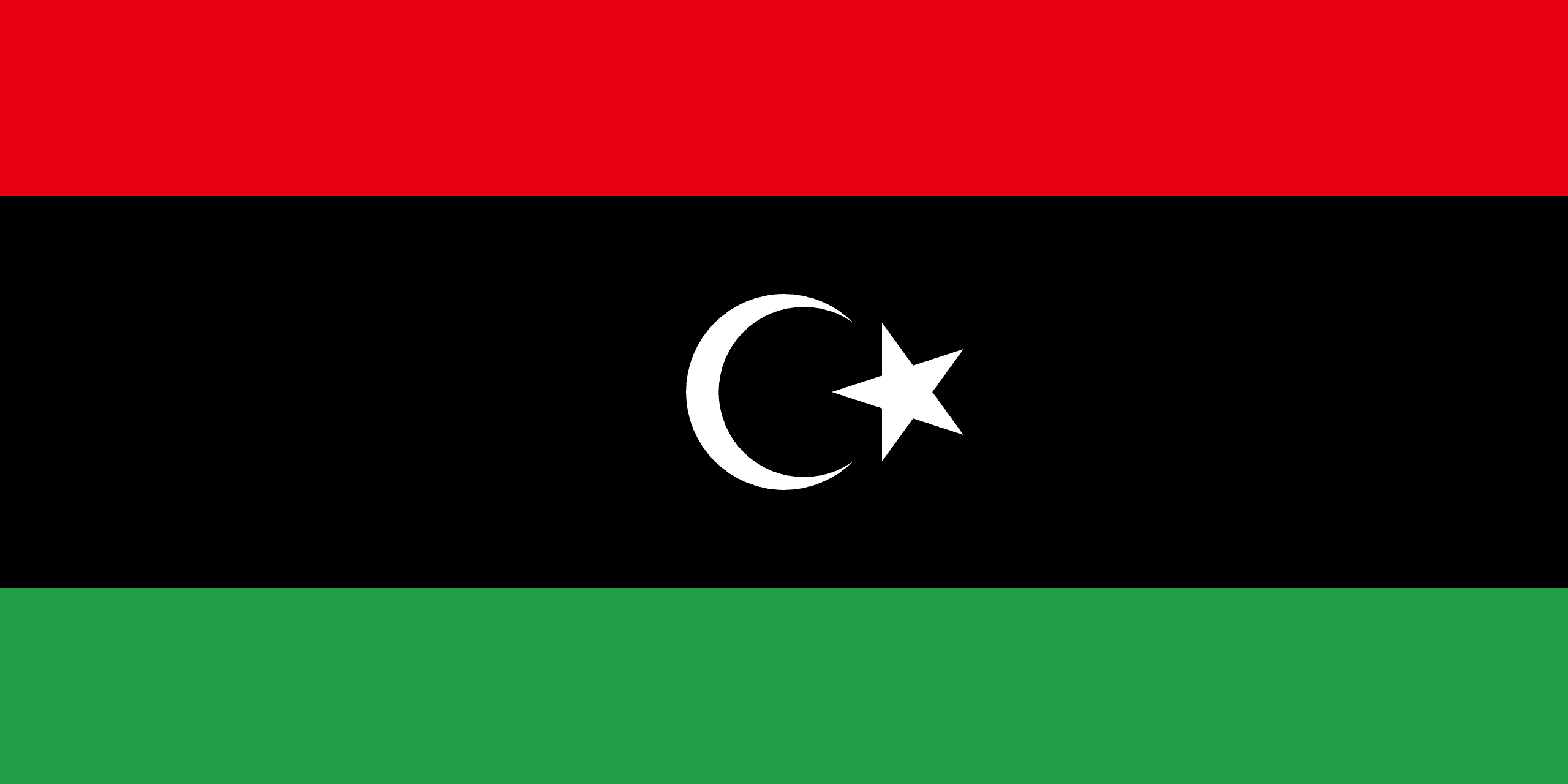
The flag of Libya has three horizontal bands of red, black, and green, with the black band wider than the others and bearing a white crescent and star in the centre. The red is said to represent the blood shed for freedom, the black the dark days of foreign occupation, and the green the future and the country's land, while the crescent and star reflect Islam. This flag, used at independence in 1951, was restored after the fall of Gaddafi, replacing the plain green banner he had imposed.
Libya is an overwhelmingly Muslim country, with the great majority of its people following Sunni Islam, a faith that arrived with the Arab conquests and is central to the nation's culture, law, and daily life. Islam in Libya has long included strong traditions of Sufism, above all the Senussi order founded in the nineteenth century, which built lodges across the desert, led the resistance to Italian rule, and supplied the country's only king. That inheritance has been under attack in the years of disorder: Salafist groups have demolished Sufi shrines and tombs in several cities, destroying a religious heritage that had stood for centuries. The country's older past includes the pagan cults of its Greek and Roman cities and Christian and Jewish communities that were once substantial, the Jewish one dating back more than two thousand years and effectively ended by emigration and expulsion in the middle of the twentieth century.
Libyan cuisine blends North African, Mediterranean, and Italian influences, the last a legacy of colonisation. A national dish is bazin, a hard dough of barley flour eaten with a rich tomato and meat sauce, while couscous and pasta, the latter reflecting the Italian past, are widely enjoyed. Spicy stews, grilled meats, and the fiery chili paste shared across the Maghreb feature on the table, along with dates from the desert oases, and strong, sweet tea accompanies meals.
Agriculture in Libya is severely limited by the desert that covers most of the country, confined to the narrow coastal strip and the oases, where farmers grow dates, olives, citrus, and other fruits, along with wheat, barley, and vegetables. The scarcity of water is the central challenge, addressed in part by drawing on ancient underground reserves through a vast network of pipelines. Agriculture, however, is dwarfed by the oil and gas that dominate the economy and fund the import of much of the country's food.
Libya has the largest proven oil reserves in Africa, and hydrocarbons account for almost all of its export earnings and the great bulk of government revenue. The oil is light, low in sulphur, cheap to extract, and close to European markets, which makes it valuable out of proportion to the volume produced. That single fact explains a great deal about the country: it made Libya rich enough that Gaddafi could subsidise almost everything and still fund adventures abroad, and it is now the prize that keeps the war going, since whoever controls the fields, the terminals, the central bank, and the National Oil Corporation controls the state's income. Production has repeatedly been halted by blockades of the export terminals used as leverage in the political struggle, each shutdown costing billions.
Almost nothing else in the economy has been developed. Employment is concentrated in a bloated public sector, imports supply most food and manufactured goods, and the banking system has struggled with liquidity to the point that people have queued for cash. Reconstruction has been minimal, infrastructure has decayed, and the consequences were made brutally plain in September 2023 when Storm Daniel burst two poorly maintained dams above Derna and a wall of water destroyed a large part of the city, killing many thousands of people, a disaster widely attributed to a decade of neglected maintenance and divided authority.
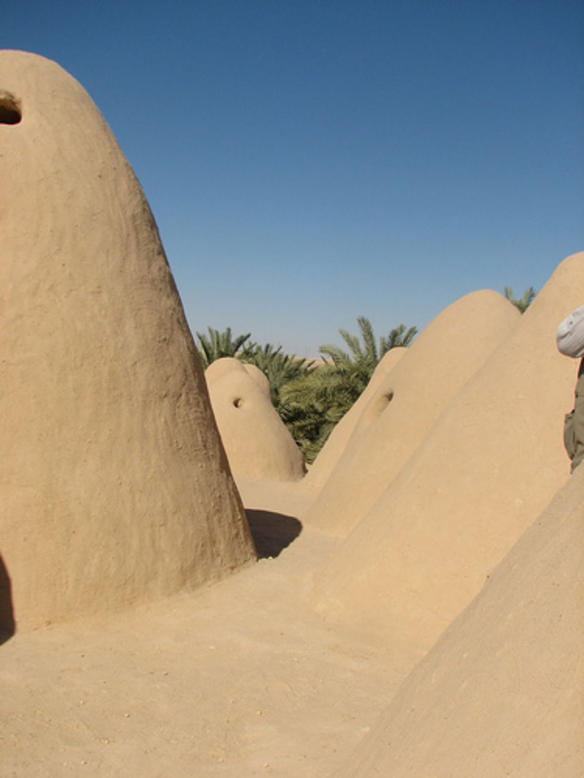
Libyan culture is Arab and Amazigh, Mediterranean on the coast and Saharan in the interior, and it has had little chance to present itself to the world in the last half century. The old towns of Ghadames and Ghat, with their covered alleys and mud-brick houses designed for extreme heat, and the rock art of the Acacus, are among the most remarkable things in North Africa and are seen by almost no one. Tea drunk in three rounds, each stronger than the last, is a social ritual across the country. Amazigh communities in the Nafusa mountains, at Ghadames, and among the Tuareg of the south preserve their own languages, which were suppressed under Gaddafi, who denied that Berbers existed as a distinct people; Amazigh language and identity were publicly reclaimed after 2011 and their constitutional status remains unsettled. Poetry, oral and formal, holds a place in Libyan life it has largely lost elsewhere, and the memory of Omar al-Mukhtar's resistance is the one point of national reference that both halves of the divided country still share.
The 2011 intervention in Libya is one of the most argued-over foreign policy decisions of the century, and the argument has only sharpened as the country's condition has worsened.
Those who defended it then and defend it still point to what was happening in March 2011: Gaddafi's forces were advancing on Benghazi, a city of three quarters of a million people, and he had publicly promised to show no mercy and to hunt his opponents alley by alley. The Security Council authorised measures to protect civilians with no state voting against, the Arab League requested action, and a massacre in Benghazi was, on this view, prevented. Libyans, they note, overwhelmingly wanted him gone.
Those who consider it a mistake argue that the mandate to protect civilians was stretched into a campaign to change the regime, which is not what the resolution said and not what Russia and China understood themselves to be abstaining on, and that this poisoned the Security Council for later crises, Syria above all. They argue the intervention stopped at the fall of the government, with no plan for what came next and no willingness to provide security afterwards, leaving militias, weapons flowing south into the Sahel, and a state that has not functioned since. Some also point out that Gaddafi had given up his unconventional weapons programmes in exchange for rehabilitation, and that his fate is cited by other governments as a reason never to make a similar bargain.
A third position accepts both halves: that stopping the immediate killing was right and that the failure to plan for the aftermath was a serious and foreseeable error, and that the two judgements do not cancel out. What is not in dispute is the outcome. More than a decade later Libya remains divided between two governments, its elections indefinitely deferred, its oil the object of the contest rather than the foundation of a recovery.
Libya has a population of around seven million, the great majority Arab-Berber Muslims, with Amazigh, Tuareg, and Toubou minorities and, before the conflict, a very large migrant workforce from Egypt and sub-Saharan Africa. The people are concentrated in two coastal clusters, around Tripoli in the west and Benghazi in the east, with the enormous desert interior nearly empty; the country is among the most sparsely populated on Earth overall and among the most urbanised in the share of its people living in cities. The regional split between Tripolitania and Cyrenaica, older than the state itself, continues to shape its politics.
The years of conflict have displaced hundreds of thousands internally and driven many educated Libyans abroad. Libya has also become the main departure point for migration across the central Mediterranean to Europe, and the treatment of migrants held in detention centres there has been documented by United Nations investigators in terms including arbitrary detention, extortion, and forced labour, a situation European migration policy is accused by rights organisations of sustaining.