Jordan is a country in the Middle East, set on the east bank of the Jordan River between the deserts of Arabia and the Mediterranean world. A largely arid land of desert, dramatic canyons, and ancient ruins, it has been crossed by traders and pilgrims for thousands of years and holds one of the world's most famous archaeological wonders, the rock-carved city of Petra. In a turbulent region it has been a notably stable kingdom and a refuge for many.
Jordan's history runs from some of the world's earliest settlements, through the ancient kingdoms of the Bible and the golden age of the Nabataeans at Petra, to Roman, Byzantine, and Islamic rule, before the modern Hashemite kingdom took shape in the twentieth century.
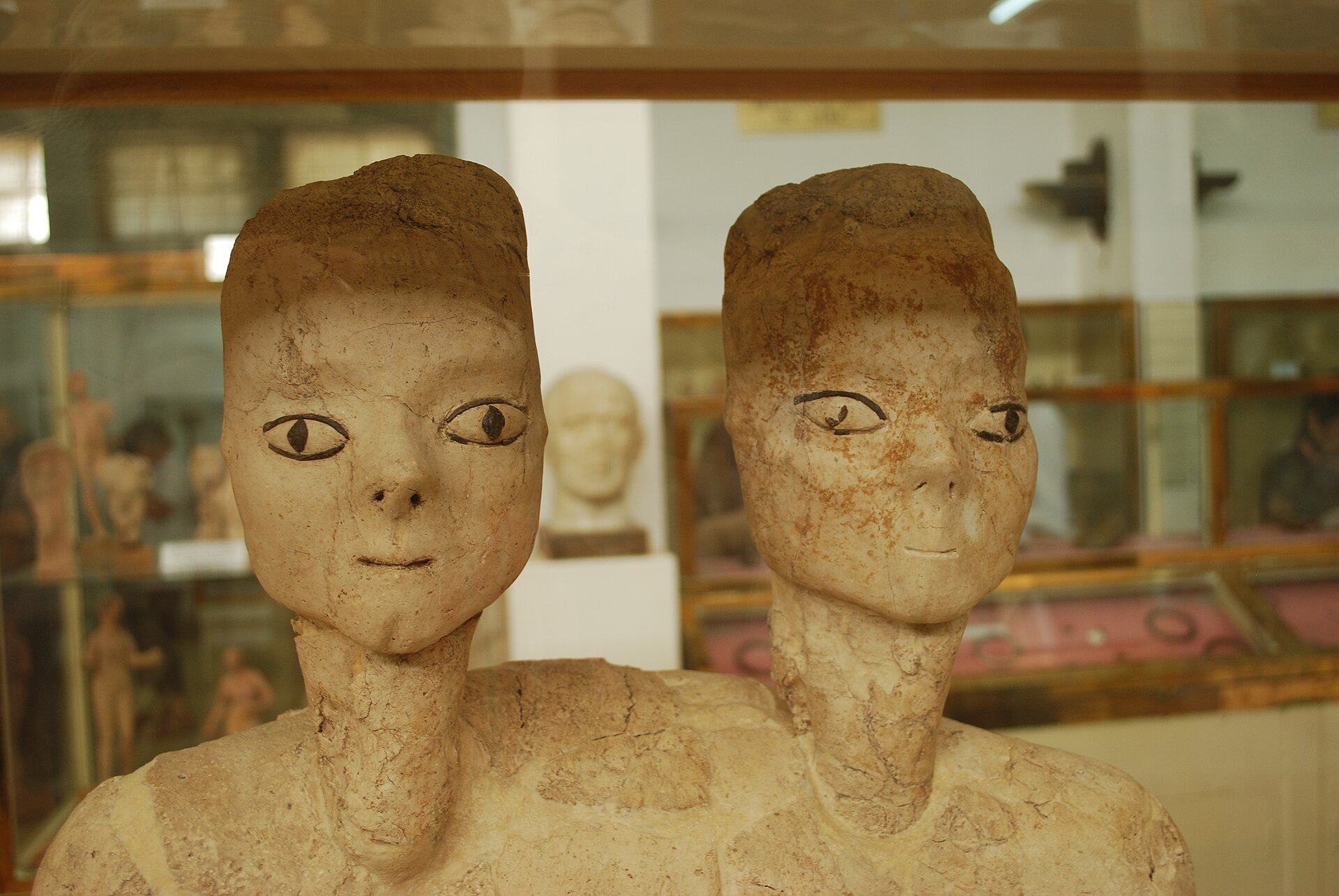
The land of Jordan holds traces of some of the earliest human settlement anywhere, where people began to farm and build permanent villages many thousands of years ago. Among the most remarkable finds are the statues of Ain Ghazal, made around 7250 BC and counted among the oldest large-scale human figures ever created.
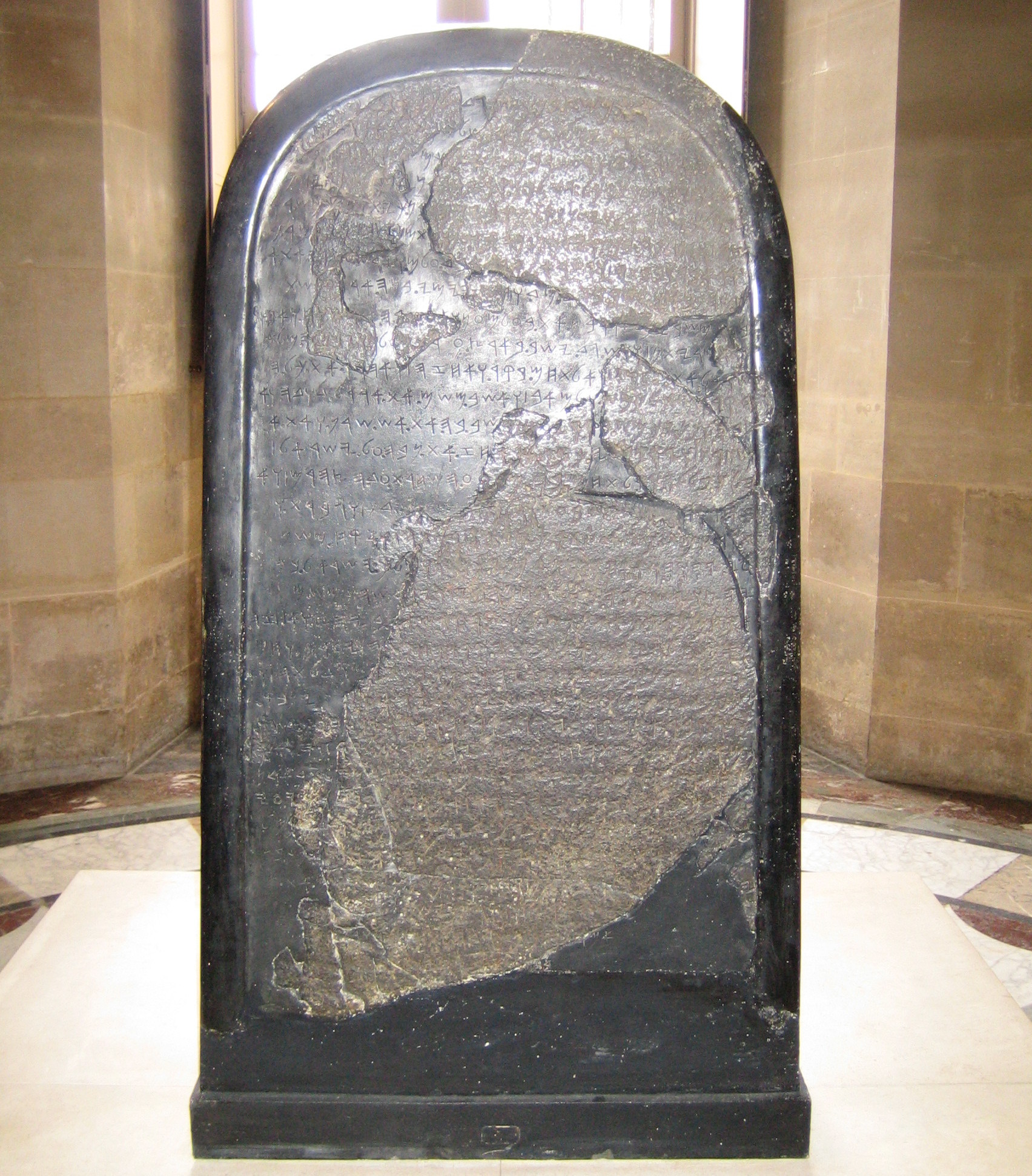
In biblical times the land east of the Jordan River was home to the kingdoms of Ammon, Moab, and Edom, which fought and traded with their neighbours. Their existence is confirmed by finds such as the Mesha Stele, a rare royal inscription that offers a glimpse of these early states in their own words.
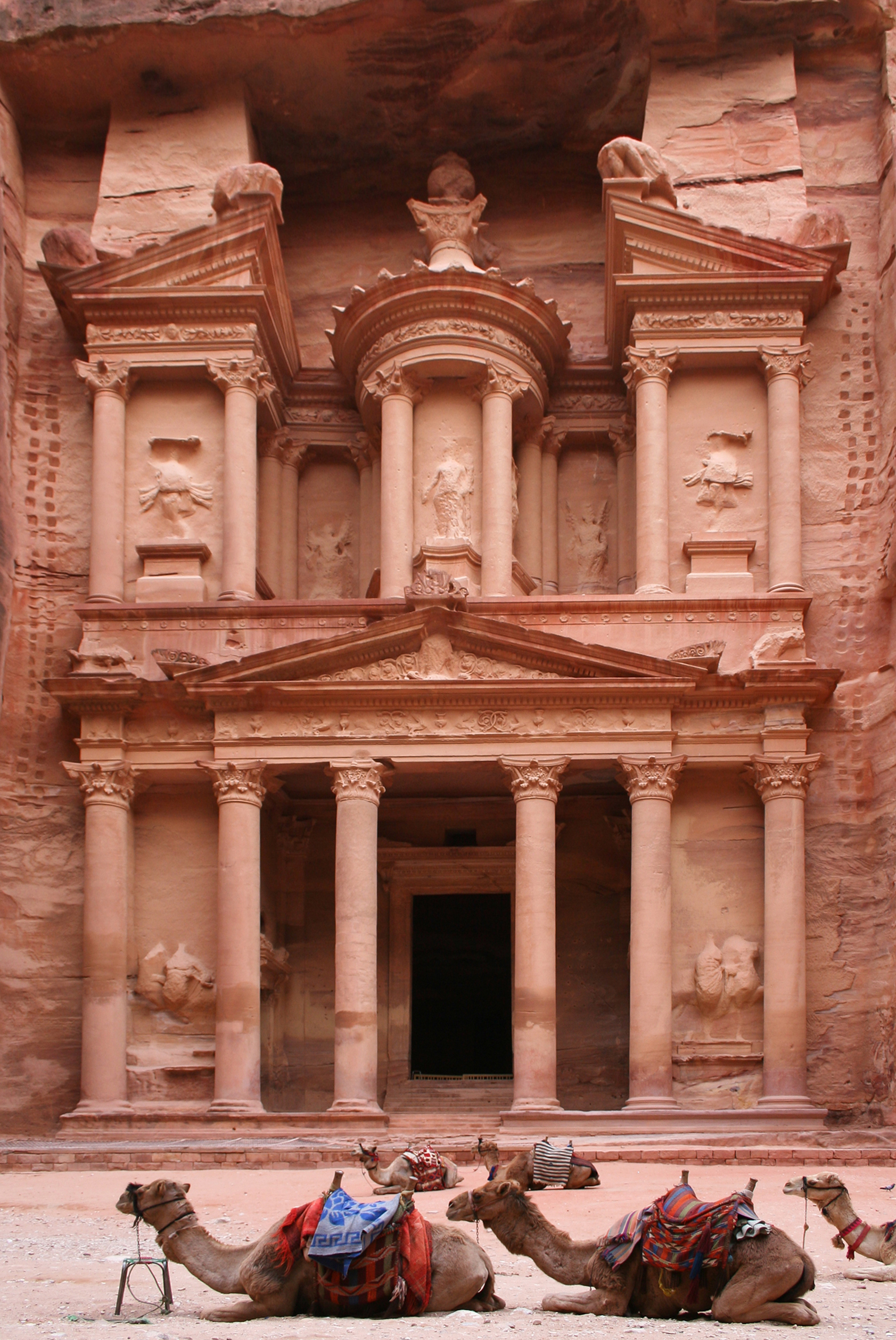
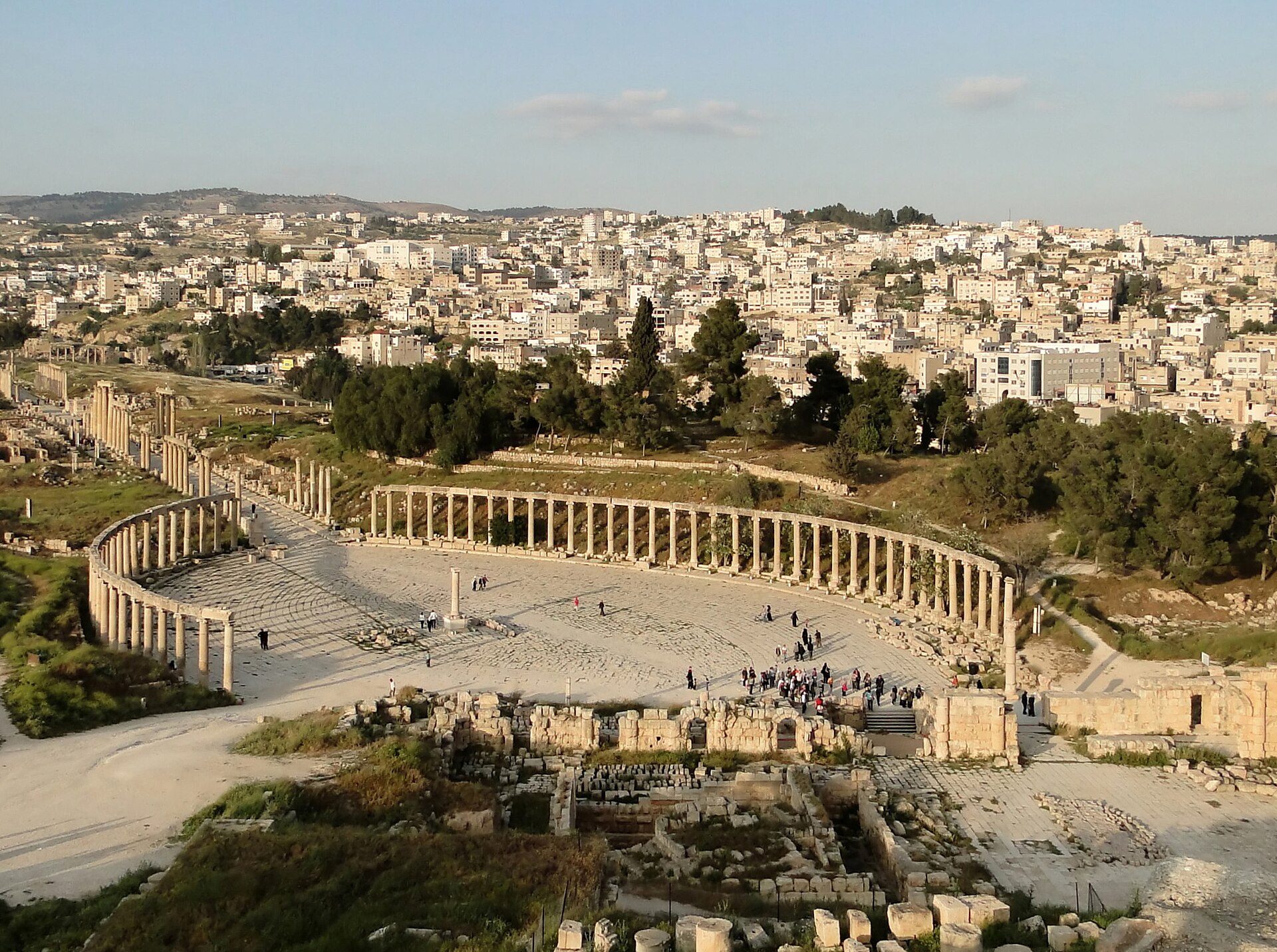
The greatest chapter of ancient Jordan belonged to the Nabataeans, an Arab people who grew immensely rich controlling the desert caravan trade and carved the spectacular city of Petra from rose-coloured rock. Rome later absorbed the region and built grand provincial cities, several of them part of the league known as the Decapolis.
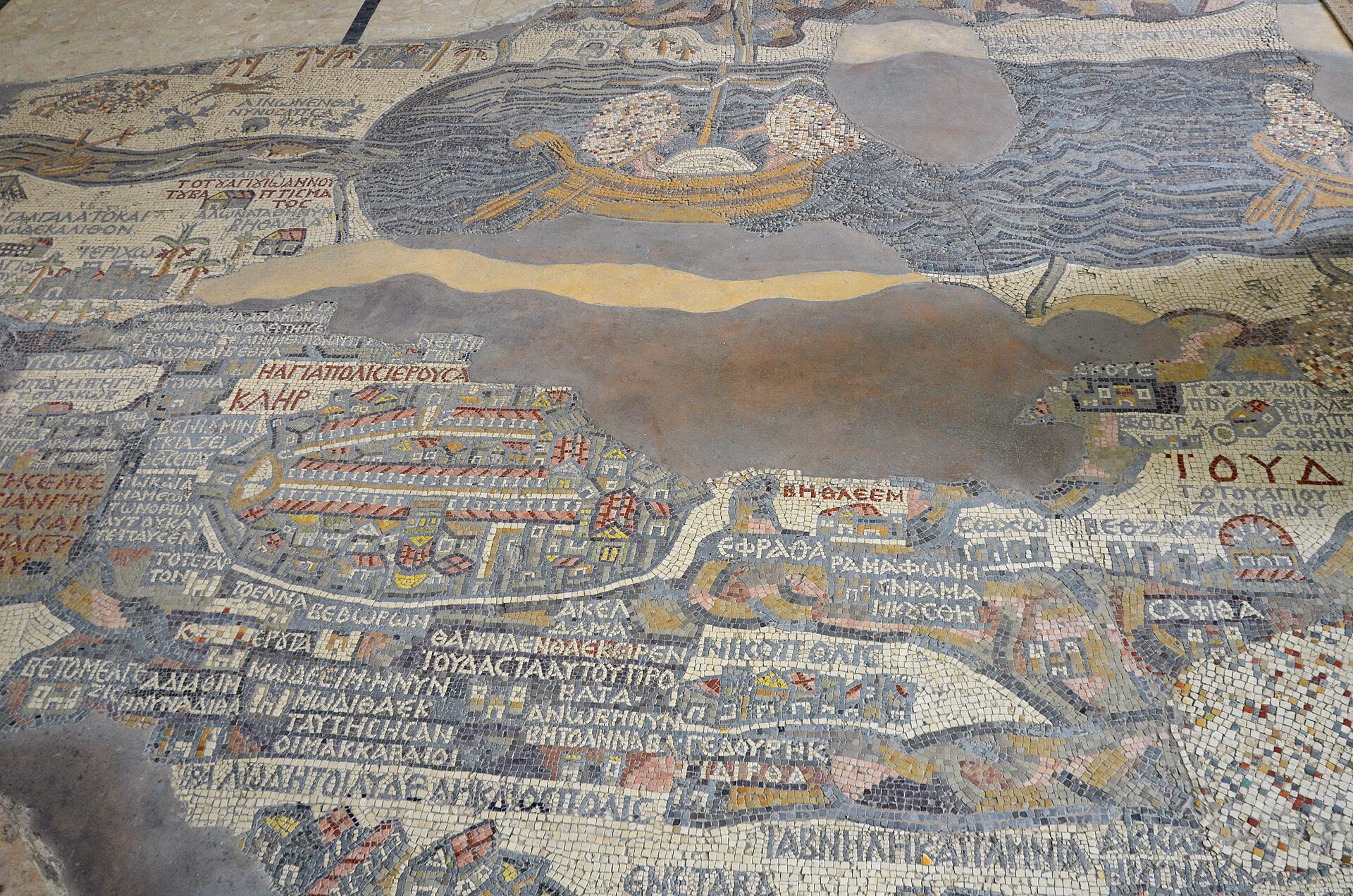
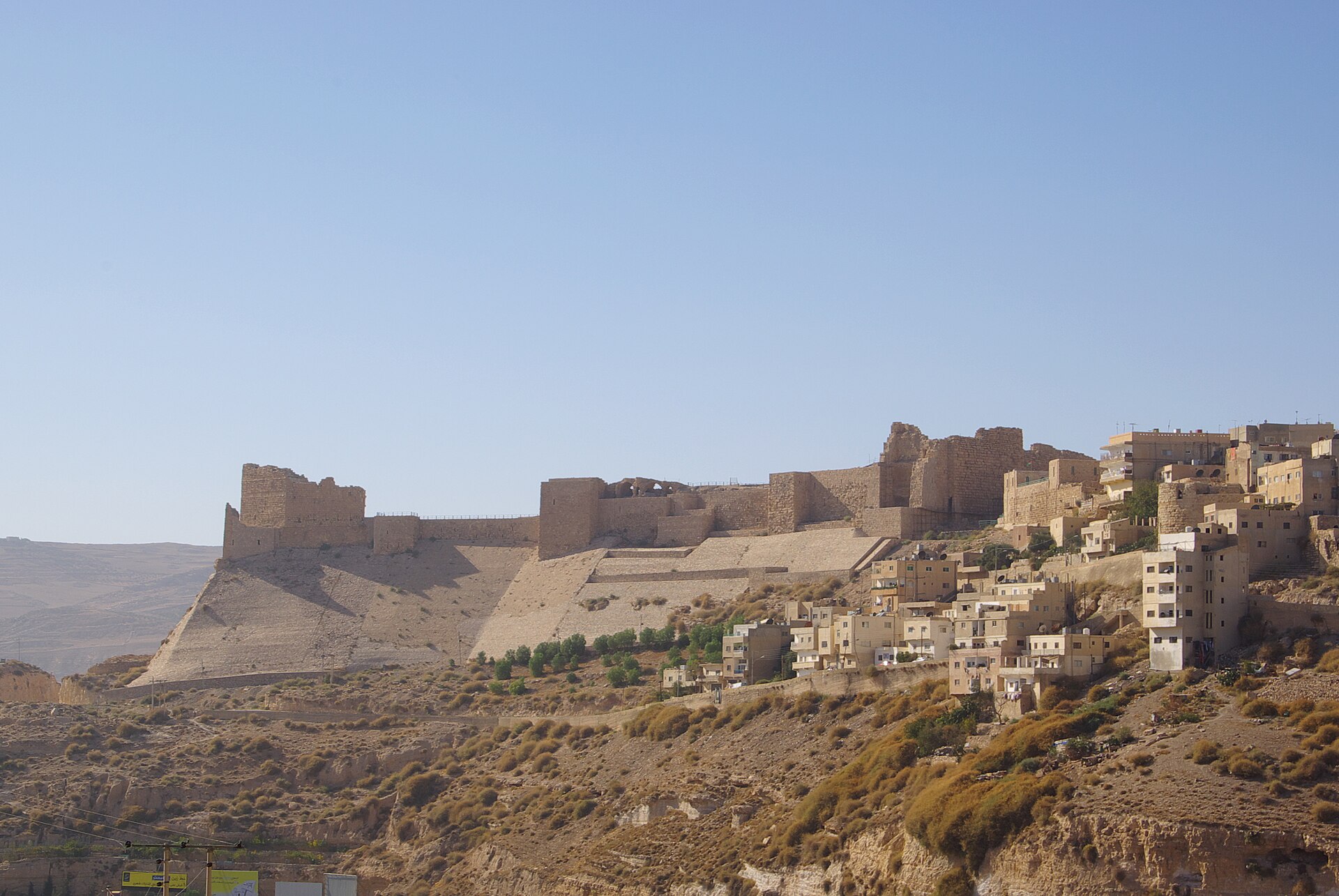
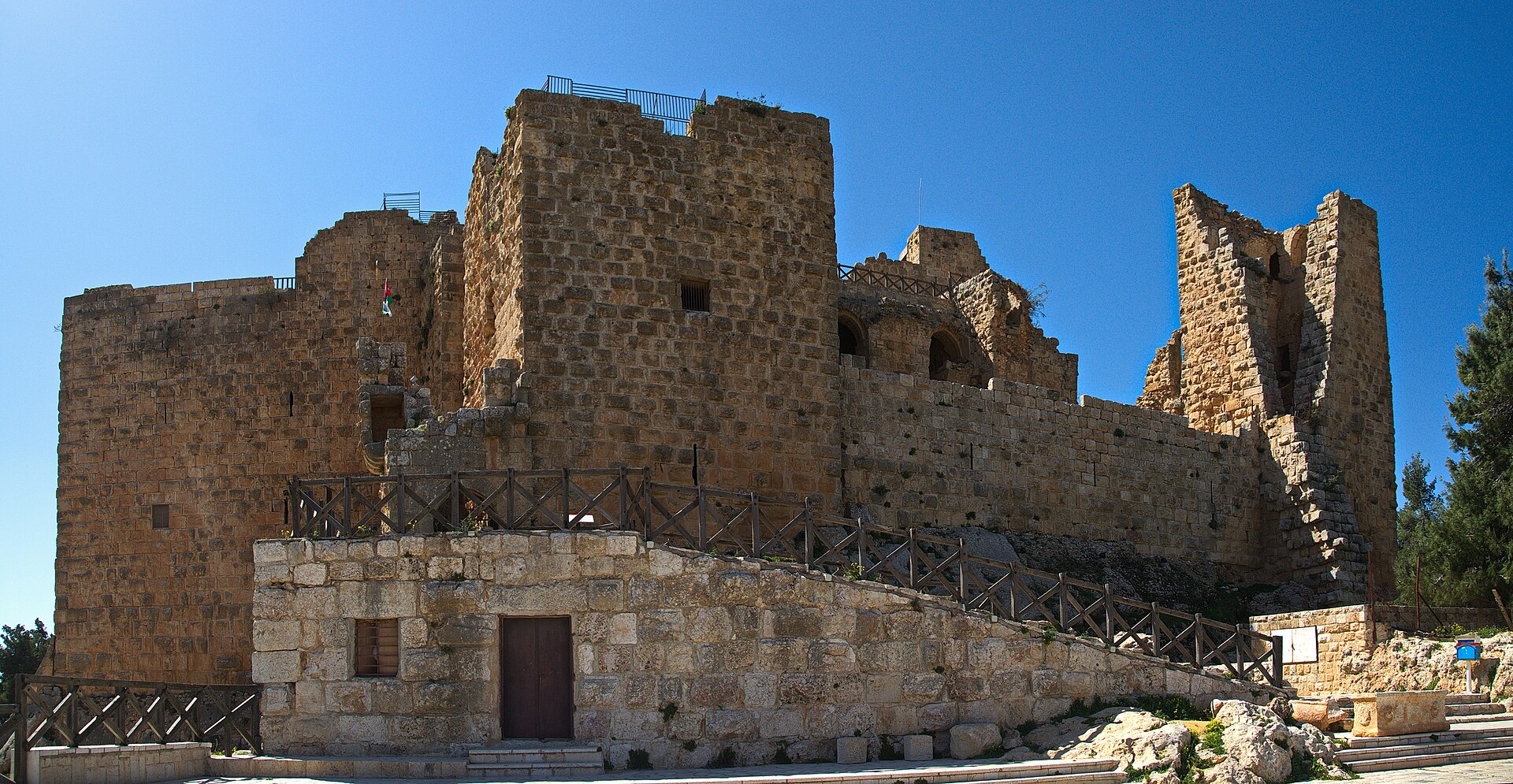
Under the Christian Byzantine Empire the land was dotted with churches and famous mosaics, and after the rise of Islam in the seventh century it became part of the Muslim world. Later centuries brought Crusader and then Ayyubid and Mamluk rule, which left a chain of mighty hilltop castles guarding the region.
After four centuries of Ottoman rule, the Arab Revolt of the First World War helped reshape the region. The Hashemite dynasty established the Emirate of Transjordan under British oversight in 1921, and the country became the fully independent Kingdom of Jordan in 1946, since ruled by the same royal house.
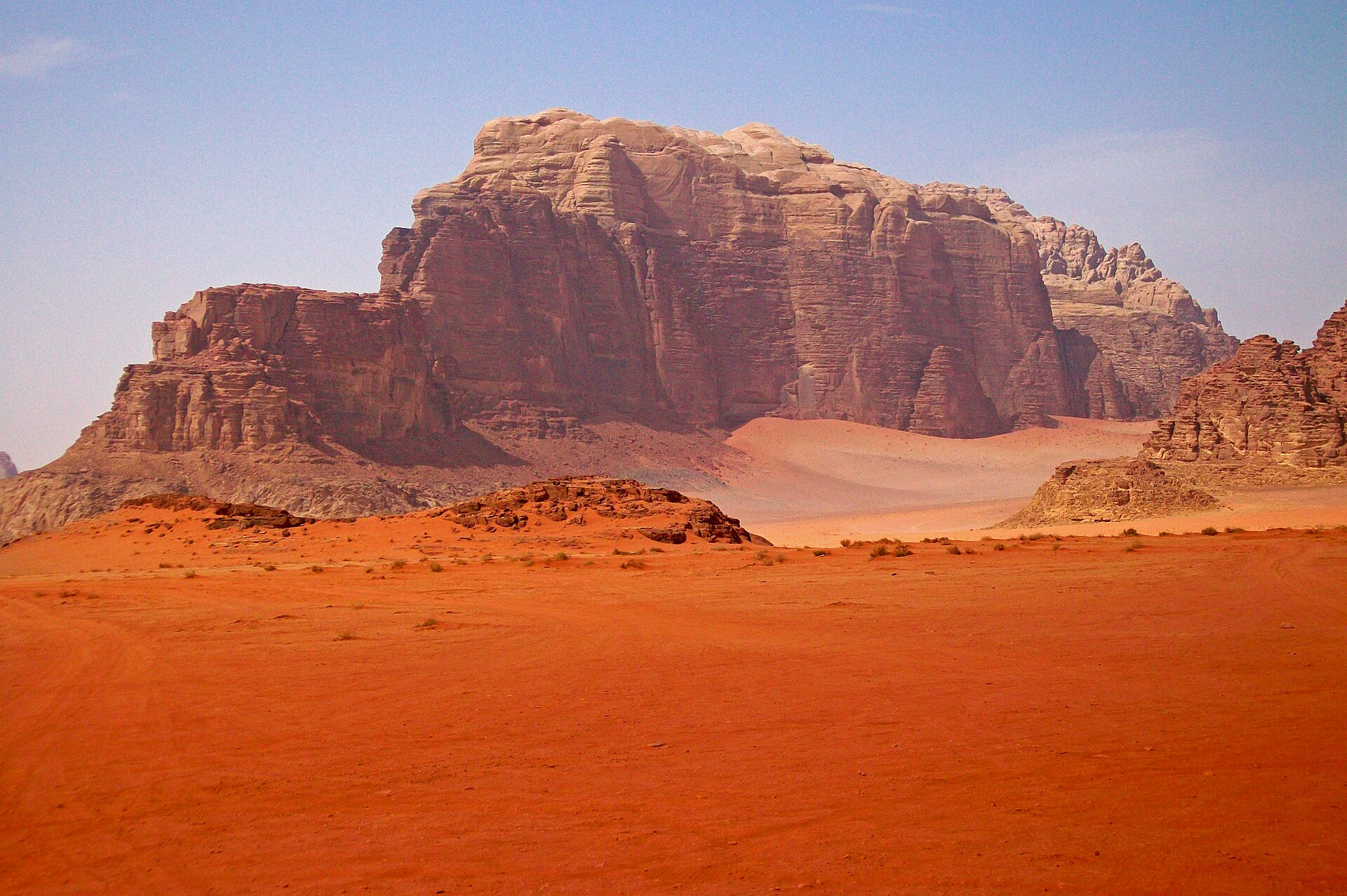
Jordan is mostly desert plateau, rising from the deep rift of the Jordan Valley, which holds the Dead Sea, the lowest point on land anywhere on Earth, where the water is so salty that swimmers float effortlessly. To the south lies the dramatic desert of Wadi Rum, with its towering sandstone cliffs, and a short coastline on the Red Sea at Aqaba. Water is extremely scarce, and Jordan ranks among the most water-poor countries in the world.
Jordan is a constitutional monarchy ruled by the Hashemite dynasty, which traces its descent to the Prophet Muhammad. The king is head of state and holds substantial powers, appointing the government and able to dissolve parliament, while an elected lower house and an appointed senate make up the National Assembly. The monarchy has long been the anchor of stability in a turbulent region, steering a careful course between reform, tradition, and the pressures of neighbouring conflicts.
Jordan has a small economy with few natural resources, no significant oil, and a chronic shortage of water, which makes it heavily dependent on trade, services, and foreign aid. Its notable assets include large deposits of phosphates and potash extracted from the Dead Sea, a well-educated workforce, and a tourism industry drawn to Petra, the Dead Sea, and desert landscapes. Money sent home by Jordanians working abroad is an important support, and the country has absorbed the heavy economic cost of hosting successive waves of refugees.
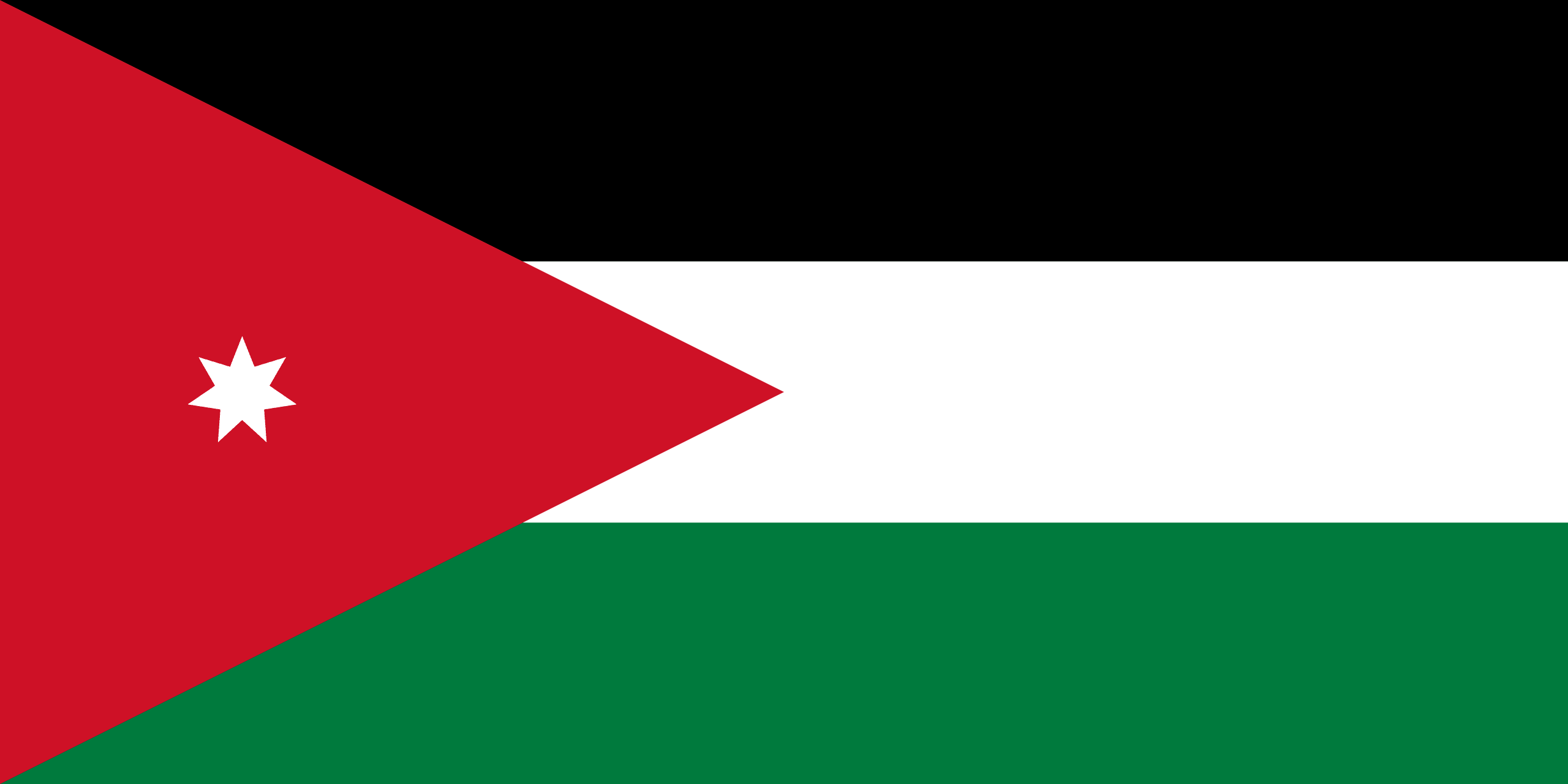
The flag of Jordan has three horizontal bands of black, white, and green, with a red triangle at the hoist bearing a white seven-pointed star. The colours derive from the banners of the Arab Revolt against Ottoman rule, and they are shared with several neighbouring nations. The seven points of the star are commonly said to represent the opening verses of the Quran, while the red triangle recalls the dynasty that has ruled the kingdom.
The great majority of Jordanians are Sunni Muslims, and Islam is the state religion and central to public and family life. Jordan is also home to a long-established Christian minority, one of the oldest in the world, which lives alongside the Muslim majority with a relative degree of harmony. The land holds many sites revered in Islam, Christianity, and Judaism, and pilgrimage and religious heritage are important to its identity.
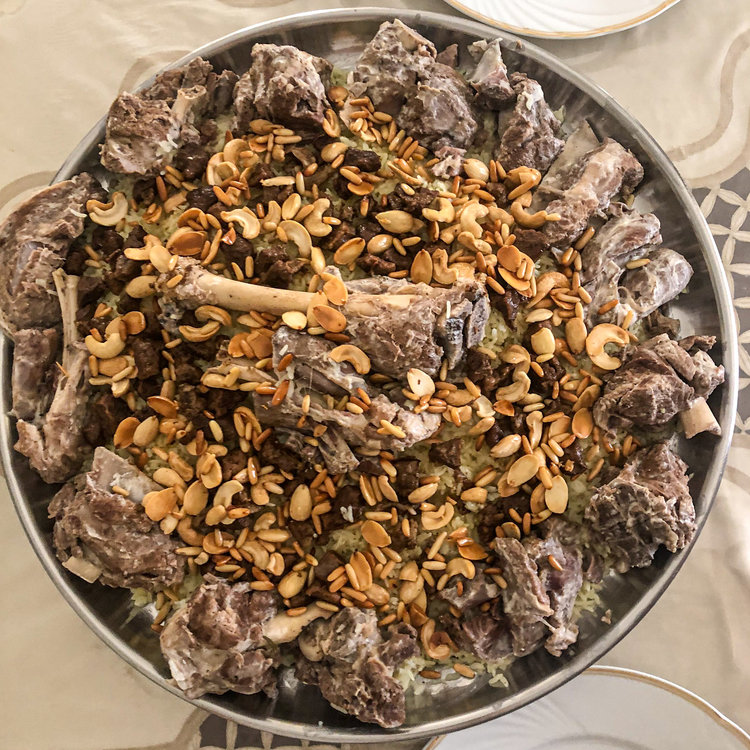
Jordanian cuisine belongs to the rich tradition of the Levant and Arabian Peninsula. The national dish is mansaf, tender lamb cooked in a sauce of fermented dried yogurt and served over rice, traditionally eaten communally from a large shared platter, a centrepiece of hospitality and celebration. Mezze, falafel, hummus, and grilled meats are everyday favourites, and strong, sweet coffee and tea accompany a culture that prizes generosity toward guests.
Farming in Jordan is constrained above all by the scarcity of water in this dry land. The most productive agriculture is in the Jordan Valley, where a warm climate and irrigation allow the growing of vegetables, citrus, bananas, and other fruits, much of it for export. Elsewhere, rain-fed farming of wheat, barley, and olives is limited and uncertain. Managing precious water resources is one of the central challenges facing the country.
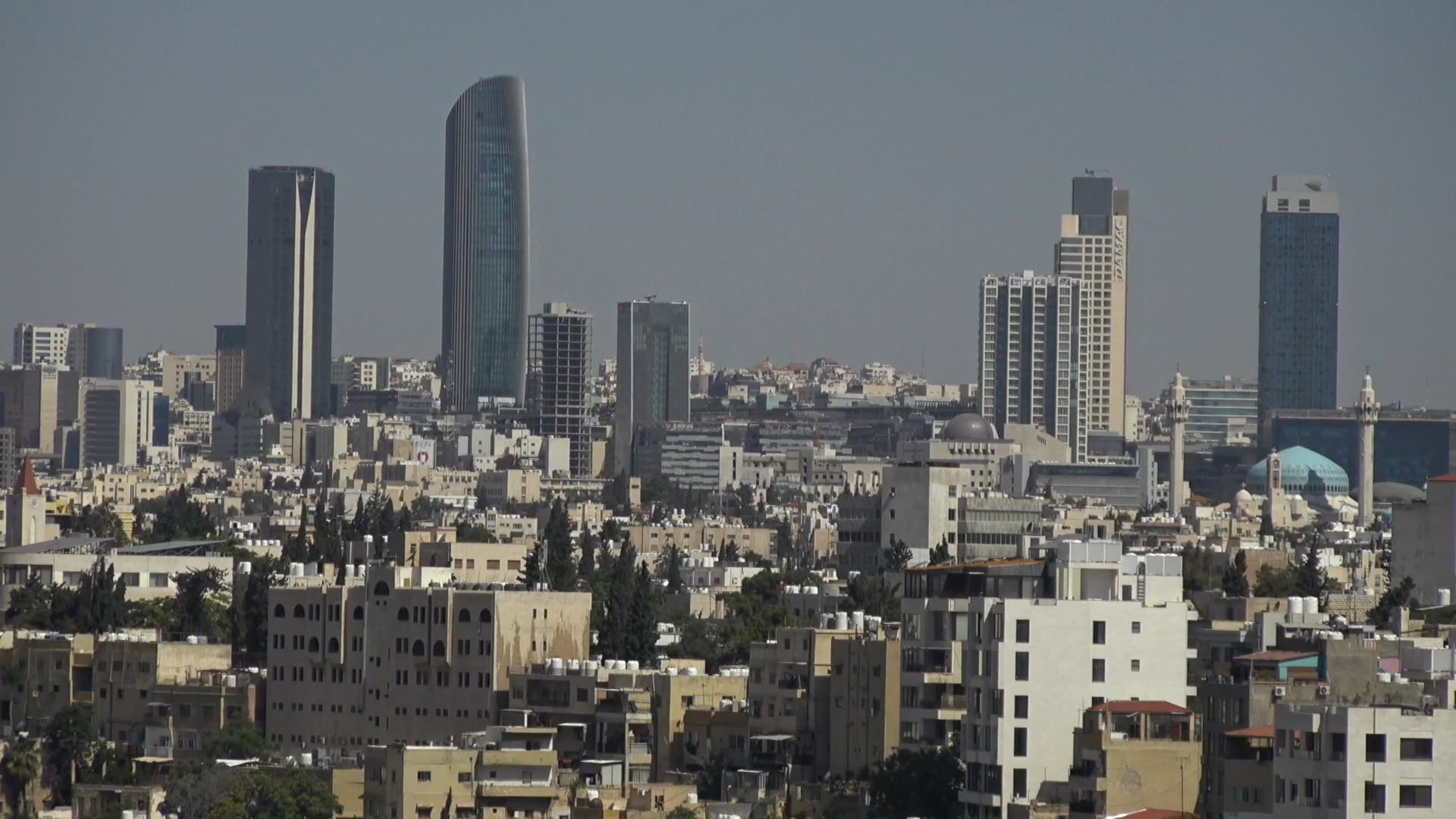
Jordanian culture blends deep Bedouin roots with the settled life of ancient towns and a modern urban society. Hospitality is prized above almost all else, and traditions of poetry, music, and communal feasting remain strong. The great majority of Jordanians are Arabs, including a large population of Palestinian origin alongside Bedouin and other communities. Much of national life now centres on Amman, a modern capital built across a series of hills that has grown rapidly with waves of newcomers.
Jordan has been an island of relative stability in a turbulent region, but it faces real strains. It has taken in successive waves of refugees from neighbouring conflicts, including large Palestinian, Iraqi, and Syrian populations, which has profoundly shaped its society while straining its scarce water, jobs, and public services. The kingdom also grapples with a fragile economy and heavy reliance on foreign aid, and it sits close to the Israeli-Palestinian conflict, in which it plays a sensitive role as custodian of Muslim holy sites in Jerusalem. Debate continues over economic reform, political openness, and how to sustain the country's stability under these pressures.
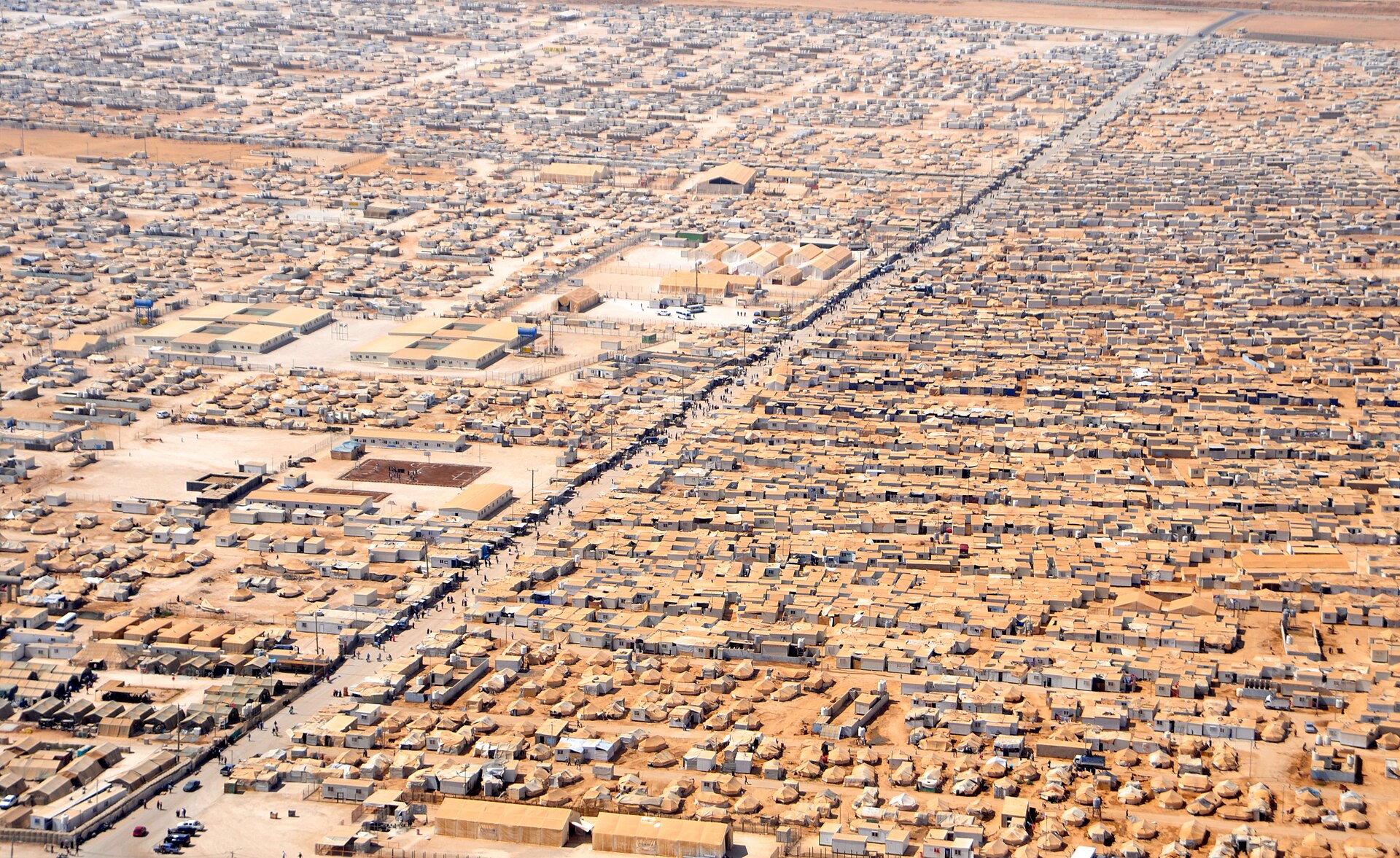
The Nabataean kingdom centred on Petra, and the later Roman cities, mark Jordan's place in the ancient trading world. In modern times the Arab Revolt during the First World War shaped the creation of the state, and the Hashemite monarchy has since steered the country through a turbulent region. Jordan has taken in successive waves of refugees from neighbouring conflicts, including large Palestinian, Iraqi, and Syrian populations, profoundly shaping its society.
Jordan has a population of around 11 million people, the great majority Arabs. A defining feature of the country is the large share of its people of Palestinian origin, alongside Jordanians of Bedouin and other descent, and the many refugees it has welcomed over the decades. The population is heavily concentrated in the northwest, especially in and around the capital, Amman, a modern city built across a series of hills.