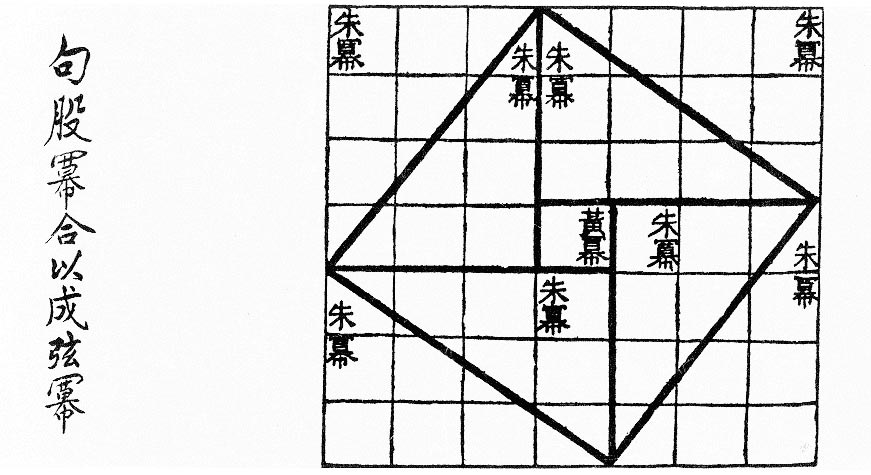
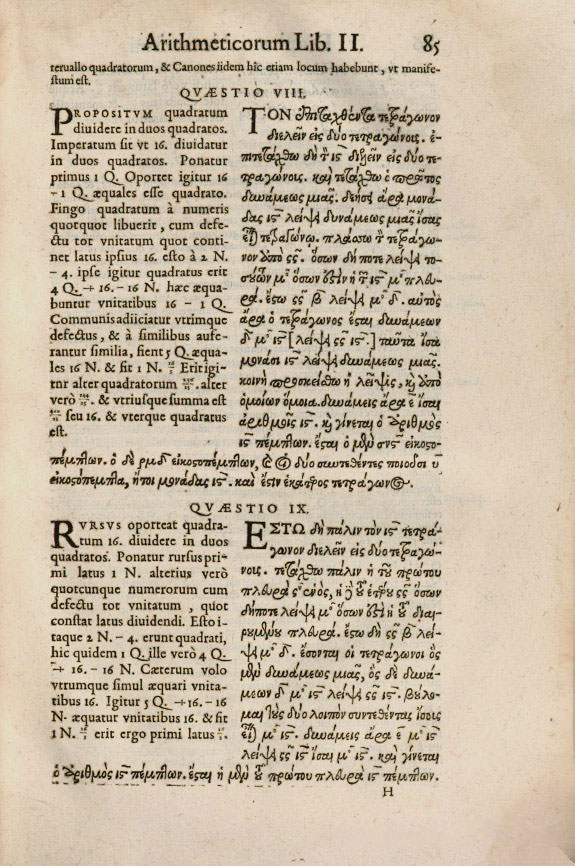
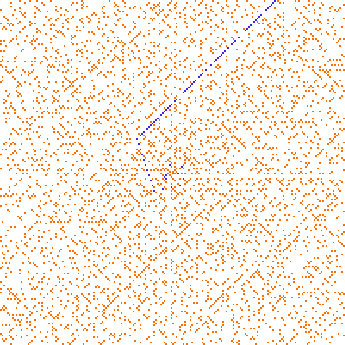
The square root of two, the number which when multiplied by itself gives exactly two, cannot be written as a fraction of two whole numbers. It is, in the language of mathematics, irrational. This was proven in ancient Greece more than two thousand years ago, by an argument of beautiful simplicity, and it was one of the first hints that numbers are stranger and richer than anyone had imagined.
The result is famous not only for being true but for how cleanly it can be proven. The square root of two arises naturally as the length of the diagonal of a square whose sides are one unit long, so it is a perfectly real and constructible length. Yet it can be shown with certainty that no fraction, no ratio of whole numbers however large, can ever equal it exactly. The proof leaves no room for doubt or exception.
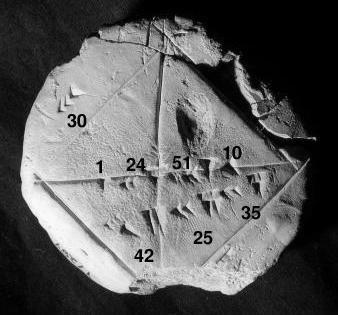
According to tradition, the discovery caused a crisis among the followers of Pythagoras, who held that all of nature could be expressed in whole numbers and their ratios. A number that could not be written as a fraction seemed to threaten their entire worldview. Legend, probably embellished, even tells of the man who revealed the secret being drowned at sea. Whatever the truth of the story, the discovery genuinely overturned an ancient certainty.
The proof works by assuming the opposite and showing it leads to nonsense. Suppose the square root of two could be written as a fraction reduced to its lowest terms. A short chain of reasoning about even and odd numbers then shows that both the top and the bottom of that fraction would have to be even, which means it was not in lowest terms after all, a contradiction. Since the assumption leads to an impossibility, it must be false, and the square root of two cannot be a fraction.
The irrationality of the square root of two was the first crack in the idea that whole numbers and their ratios are enough to measure the world. It revealed a vast hidden population of irrational numbers, including many of the most important in mathematics, and it forced the development of a deeper understanding of what numbers really are. A simple ancient proof thus opened the door to the modern conception of the number line.