The transfer of risk from an individual to a pool in exchange for a payment. It works because large numbers behave predictably even when individuals do not, and its two persistent difficulties both come from the insurer knowing less than the insured.
A single person cannot predict whether their house will burn down. An insurer covering a hundred thousand houses can predict how many will, with useful accuracy.
This is the law of large numbers. The average outcome of many independent events converges on the expected value, so the aggregate is far more predictable than any individual case, which the probability capsule sets out.
The premium is therefore the expected loss plus expenses plus a margin. If it is priced correctly, the insurer expects to pay out most of what it takes in.
The value to the buyer is not a positive expected return, since on average buyers pay more than they receive. It is the removal of a loss they could not absorb. Losing a house is catastrophic; paying a premium is not, and people are willing to accept a small certain cost to avoid a small chance of ruin.
Independence is the requirement that makes it work, and it is where insurance fails. Fires are largely independent; a flood, an earthquake or a hurricane damages thousands of properties at once, and the pool cannot absorb correlated losses. This is why catastrophe cover is priced differently, why reinsurance exists to spread it further, and why some risks become uninsurable.
Adverse selection occurs before the contract. The people most likely to claim are the most likely to buy, and they know more about their own risk than the insurer does. Left alone this raises prices, which drives out the lower-risk buyers, which raises prices again. Insurers respond by underwriting, by requiring medical examinations, by excluding pre-existing conditions and by making cover compulsory, which is a principal argument for mandatory health insurance.
Moral hazard occurs after the contract. Being insured reduces the incentive to avoid the loss. Insurers respond with deductibles, co-payments, no-claims discounts and exclusions, all of which leave the insured carrying part of the risk deliberately.
Both are information problems rather than dishonesty, and the work identifying them formally has been recognised with several Nobel Memorial Prizes in Economics.
Marine risk came first. Bottomry loans in the ancient Mediterranean advanced money against a ship, repayable only if it arrived, which combines a loan with insurance.
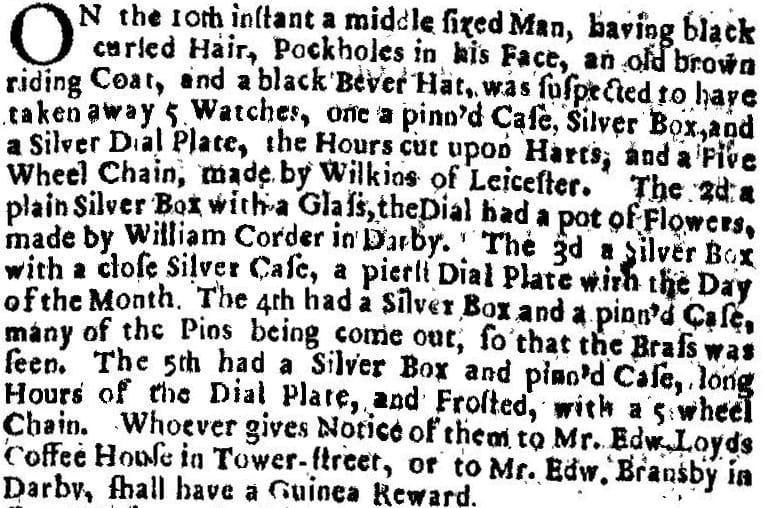
Edward Lloyd's coffee house in London, from the 1680s, became the place where merchants and underwriters met, and its value was the shipping information that circulated there. Underwriters literally wrote their names under the description of a risk, each taking a share, which is where the word comes from and how the Lloyd's market still works.
Fire insurance followed the Great Fire of London in 1666, and early insurers maintained their own fire brigades, attending only buildings bearing their company's mark.
Life insurance required mortality data. The Equitable Life Assurance Society, founded in 1762, was the first to price policies using mortality tables and age, which turned life insurance from a wager into actuarial practice.
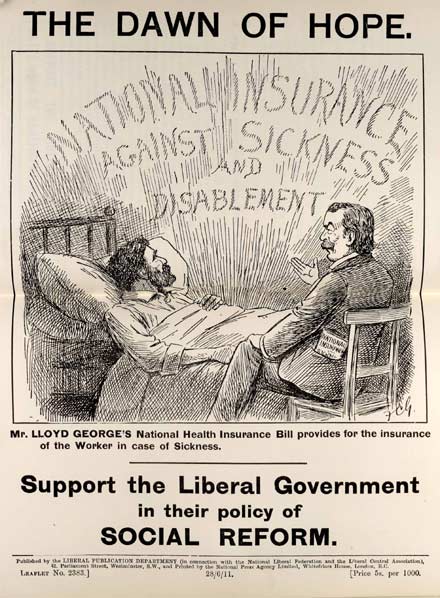
Social insurance was a state response to what markets would not cover. Bismarck's schemes in Germany from the 1880s and the British National Insurance Act of 1911 provided sickness and unemployment cover through compulsory contribution, on the reasoning that voluntary markets leave out precisely those who need cover most.
Climate risk is the sharpest current problem. Insurers have withdrawn from wildfire and flood exposed regions in several countries, and premiums elsewhere have risen sharply. The correlated nature of climate losses is exactly what pooling cannot handle, and state-backed schemes have expanded to fill the gap, which transfers the risk to taxpayers rather than removing it.
Better prediction is in tension with the purpose of insurance. Genetic testing, telematics in vehicles and detailed personal data let insurers price individual risk more precisely, and perfectly accurate pricing would eliminate pooling altogether: everyone would pay their own expected loss and nobody would be insured against anything. Several jurisdictions restrict the use of genetic information for this reason.
Whether that is discrimination or accuracy is a genuine disagreement rather than a settled question, and it recurs with every new data source.
Health insurance markets in particular are unstable without compulsion, which is the mechanism behind mandates and the reason removing them tends to raise premiums.
Insurance is what makes large risks bearable, and its absence is visible: without it, a single fire, illness or accident ends a household's economic life, which was the ordinary situation for most people through most of history.
It also carries a tension worth naming. The industry's business is predicting risk accurately, and its social function depends on not predicting it too accurately, because pooling only helps while outcomes remain uncertain.