There are infinitely many prime numbers. This was proven more than two thousand years ago by the Greek mathematician Euclid, in an argument so clear and elegant that it is still taught today exactly as he gave it. It is a perfect example of mathematical certainty: not a pattern observed and trusted, but a fact established by pure logic, true forever and beyond any possible doubt.
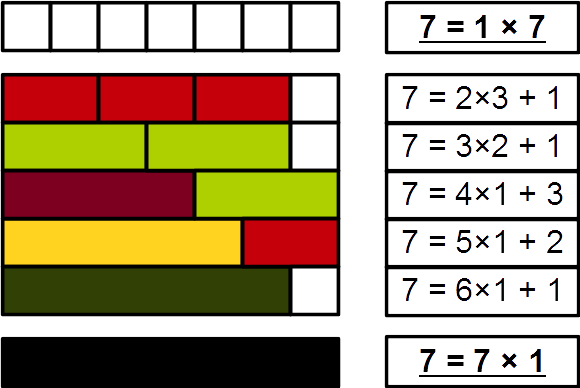
A prime number is a whole number greater than one that cannot be divided evenly by any numbers except one and itself. The first few are two, three, five, seven, eleven, and thirteen. The primes are the building blocks of arithmetic, because every whole number can be written as a product of primes in exactly one way. A natural question is whether the list of primes eventually runs out, or goes on forever.
Euclid's argument shows that there can be no largest prime. Suppose, for the sake of argument, that there were only finitely many primes. Multiply all of them together and add one. The new number is not evenly divisible by any prime on the list, since each would leave a remainder of one. So either the new number is itself a prime not on the list, or it has a prime factor not on the list. Either way, there is always a prime beyond any finite collection, so the primes never end. This kind of reasoning, proving something by showing the opposite leads to a contradiction, is settled with total certainty.
Far from being an abstract curiosity, the primes are the foundation of modern digital security. The encryption that protects online banking, messages, and commerce relies on the fact that multiplying two large primes together is easy, but working backwards to find those primes from the result is fantastically hard. Every secure connection on the internet rests, in part, on the deep properties of prime numbers.
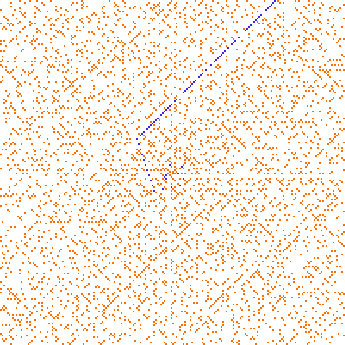
Although their infinitude is settled, the primes still guard some of the greatest unsolved problems in mathematics. Whether there are infinitely many pairs of primes just two apart, such as eleven and thirteen, is still unproven. So is the famous Riemann hypothesis, which concerns the precise way the primes thin out among the larger numbers. Patterns such as the so-called Ulam spiral hint at hidden order that no one has fully explained.
The infinitude of primes captures the special character of mathematics. One simple, ancient proof settles a question about infinity for all time, while around that bedrock of certainty cluster mysteries that have resisted the finest minds for centuries. The primes are at once completely understood and endlessly deep.