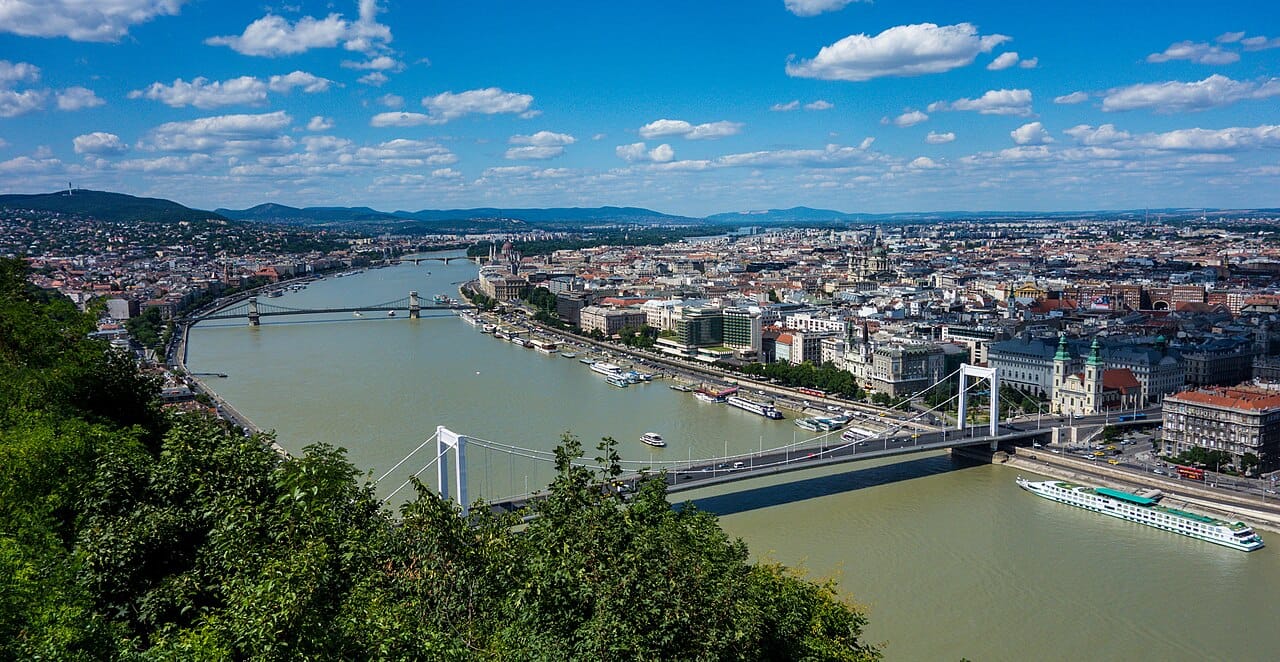
Hungary is a landlocked country in Central Europe, set on the broad plains of the Carpathian Basin and divided by the river Danube. Its people, the Magyars, are unusual in Europe, speaking a language unrelated to those of their neighbours and tracing their origins to migrants who arrived from the east more than a thousand years ago. With its grand capital Budapest, its thermal spas, and its distinctive culture and cuisine, Hungary stands out as a singular nation at the heart of the continent.
Hungary's history is that of a people from the eastern steppes who built a Christian kingdom at the heart of Europe, endured centuries of conquest and division, and emerged as a proud and singular modern nation.
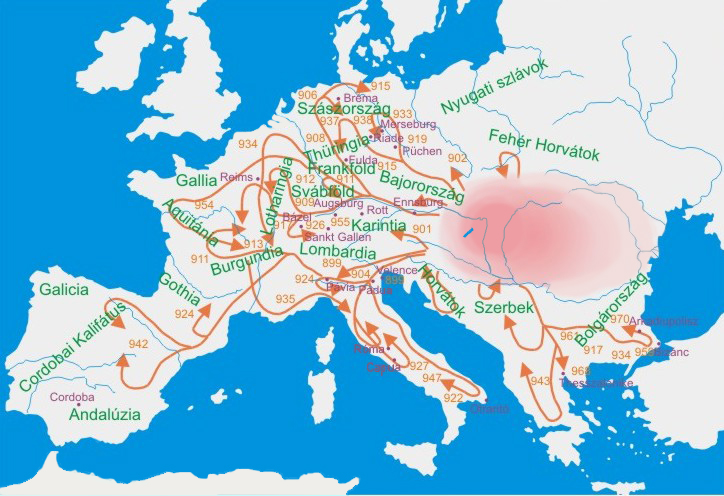
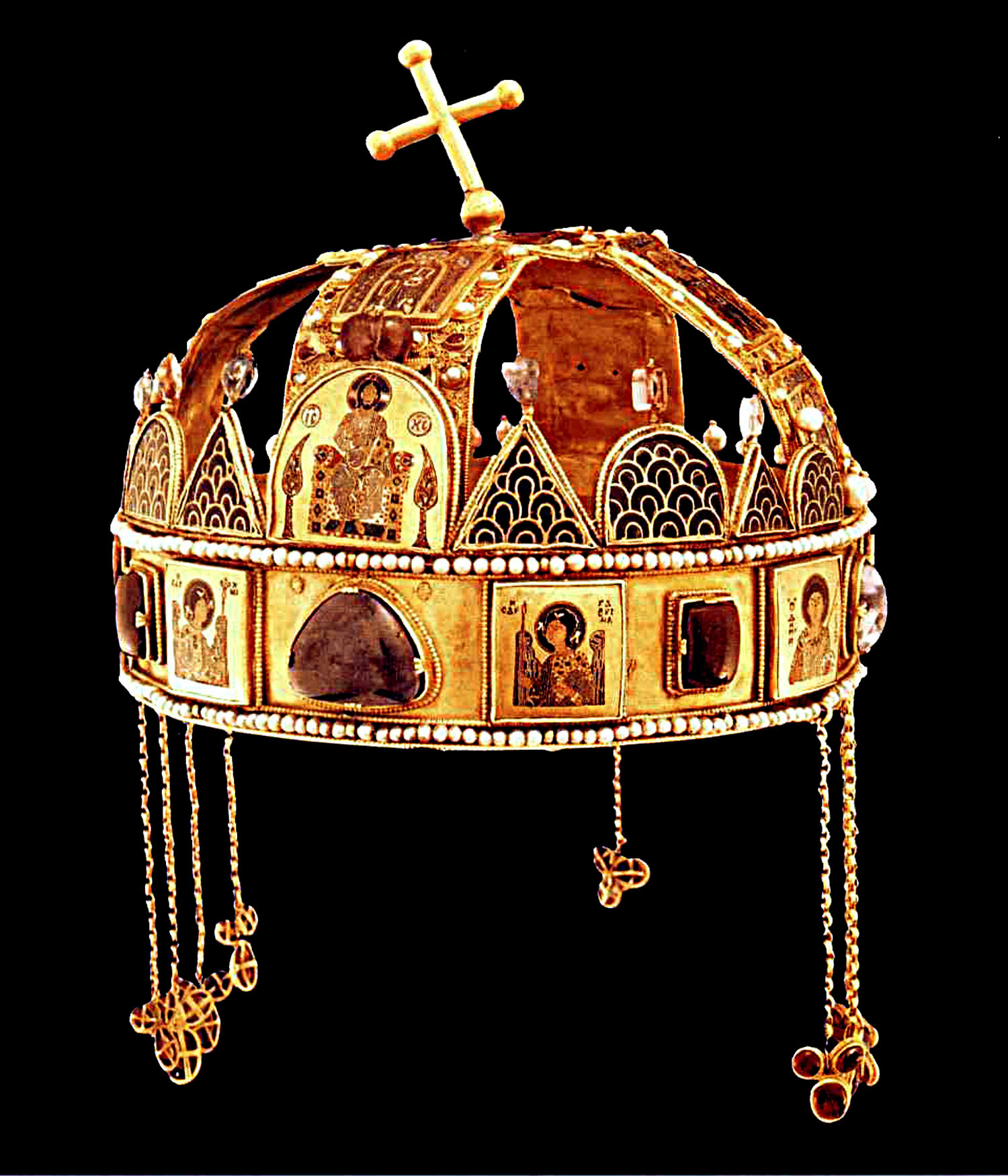
The Magyars, a nomadic people from the eastern steppes, swept into the Carpathian Basin at the end of the ninth century and, for decades, raided far across Europe. Then, around the year 1000, their king, Stephen, adopted Christianity and founded a Christian kingdom, binding Hungary to Western Europe. The Holy Crown associated with Stephen became the sacred emblem of the Hungarian state, revered for a thousand years.
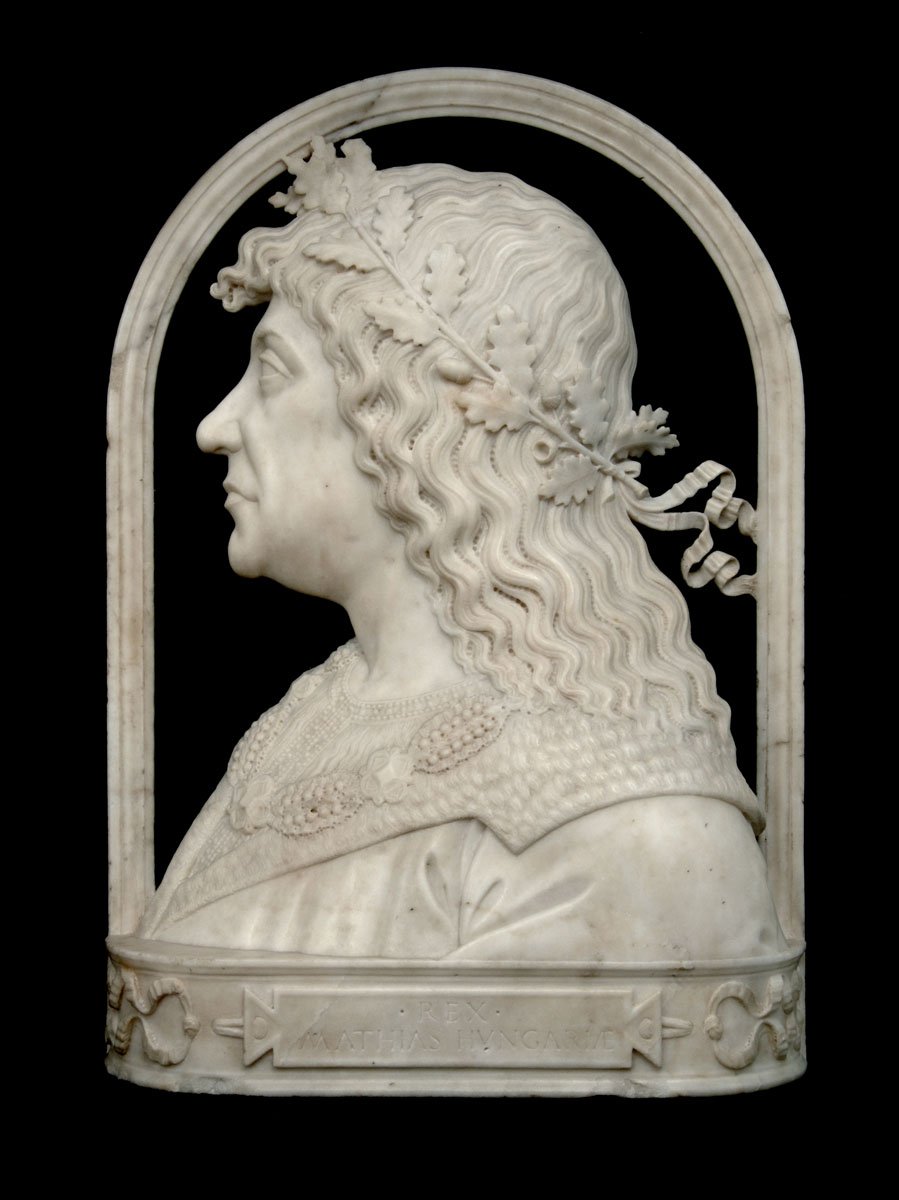
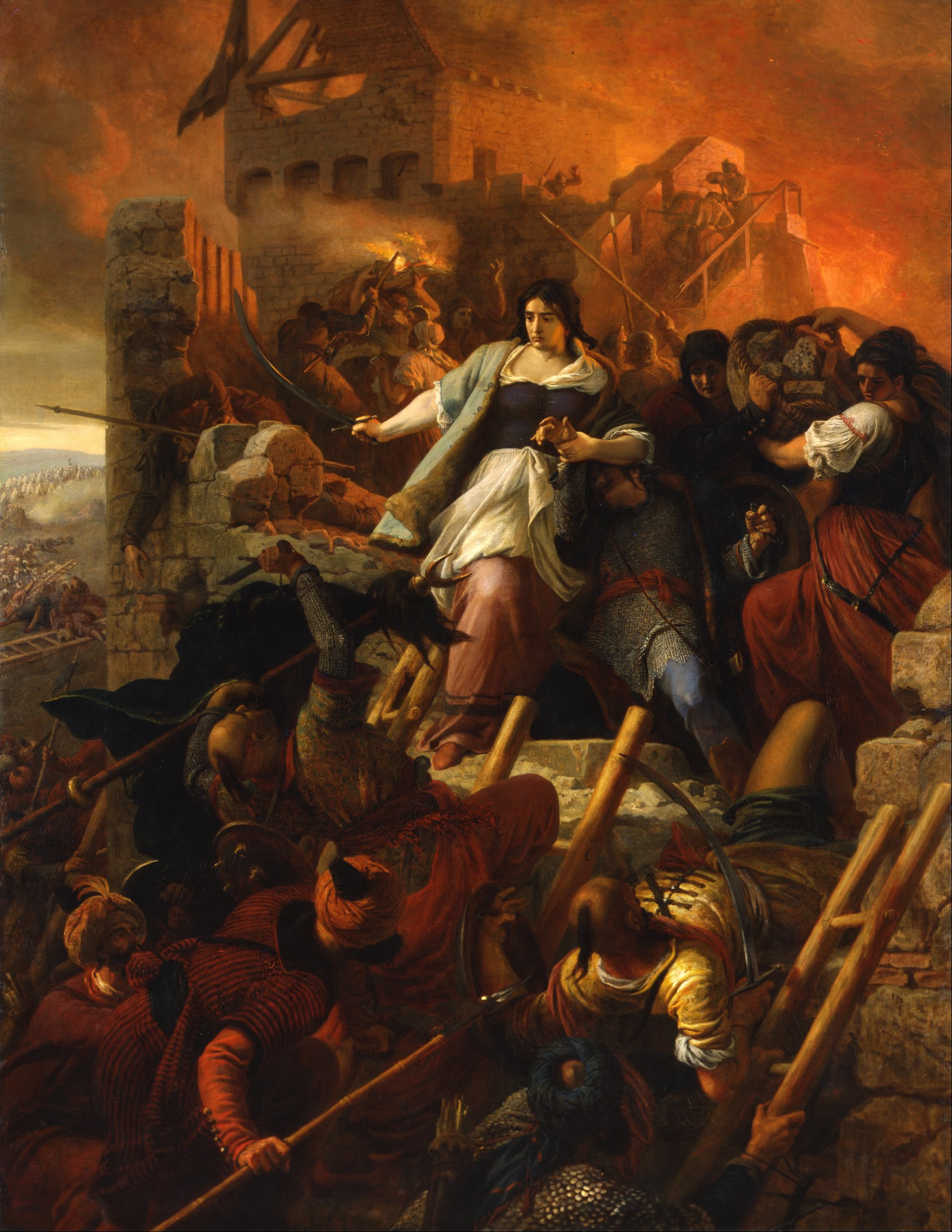
Medieval Hungary grew into a major power, reaching a brilliant cultural height under the Renaissance king Matthias Corvinus in the fifteenth century. But catastrophe followed: crushing defeat by the Ottoman Turks at Mohacs in 1526 broke the kingdom, which was split for some 150 years between Ottoman occupation, Habsburg rule, and a semi-independent Transylvania, an age remembered for heroic sieges such as the defence of Eger.
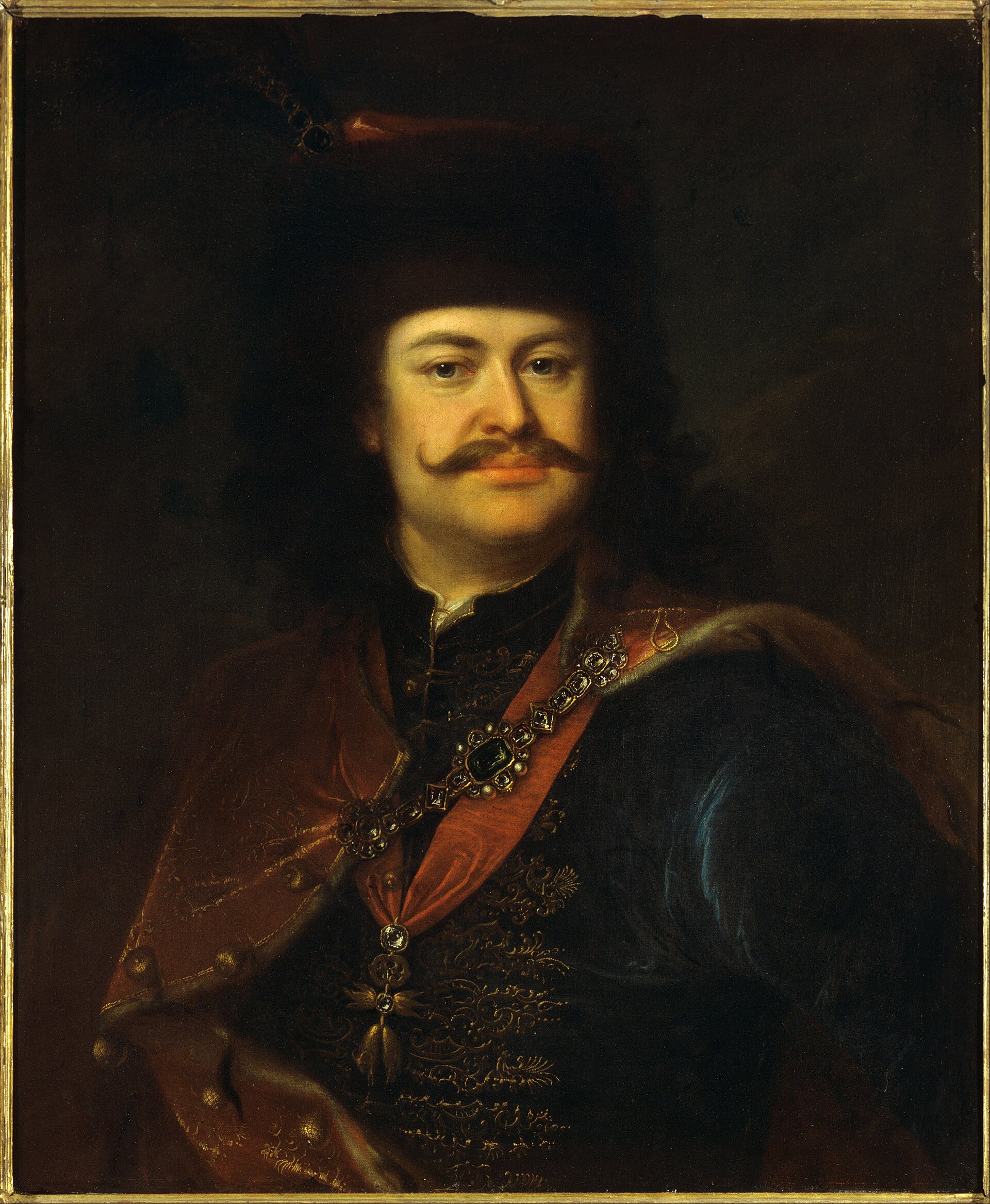
After the Turks were driven out, Hungary chafed under Habsburg rule, rising in repeated struggles for independence such as that led by Ferenc Rakoczi. In 1867 it became an equal partner in the Austro-Hungarian Empire, but the empire's collapse after the First World War brought the Treaty of Trianon, which stripped Hungary of two thirds of its territory and left millions of Hungarians outside its borders, a wound still keenly felt. Communist rule followed the Second World War, defied by the crushed but heroic uprising of 1956, until freedom returned in 1989.
A cherished Hungarian origin legend tells of two brothers, Hunor and Magor, who while hunting pursued a magical, wondrous stag that led them into new lands, where they settled and became the forefathers of the Huns and the Magyars. The tale expresses the eastern, nomadic roots of the Hungarian people and their sense of a distinct origin. Like other such founding stories, the wondrous stag and the brothers belong to legend and myth rather than to documented history.
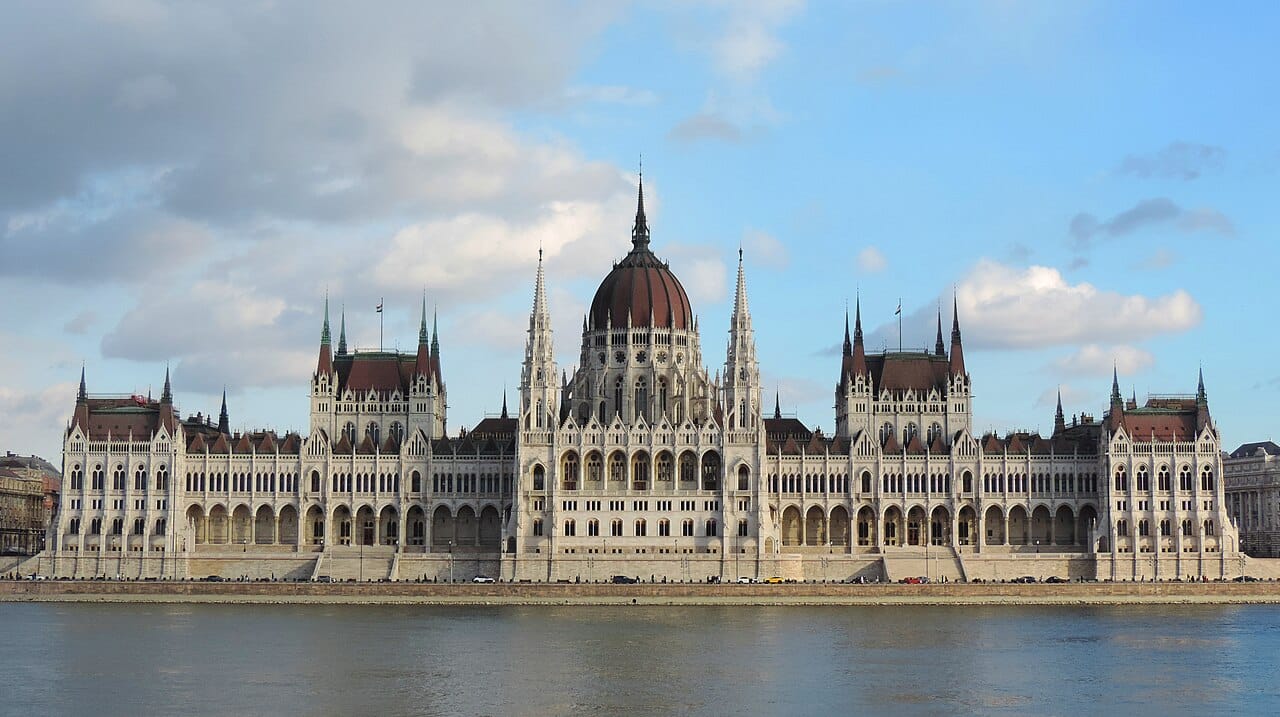
Hungary is mostly flat or gently rolling, dominated by the Great Hungarian Plain, a vast expanse of fertile farmland and grassland in the east, with low mountains and hills in the north and west. The Danube flows through the country from north to south, splitting the capital into its halves of Buda and Pest, and Lake Balaton, the largest lake in Central Europe, is a popular retreat. The land sits atop abundant geothermal waters, feeding the famous thermal baths.
Hungary is a parliamentary republic and a member of the European Union and NATO, but its politics has come to be dominated by a single figure. Since 2010 the prime minister has been Viktor Orban, whose Fidesz party, through repeated landslide victories, has reshaped the state, the courts, the media, and the electoral system in ways he openly calls building an illiberal democracy. To his many supporters he is a defender of national sovereignty, Christian tradition, and secure borders; to his critics he has hollowed out the checks and balances of democracy and entrenched his own power. His government's frequent clashes with the European Union, and its notably friendly stance toward Russia, have made Hungary a persistent source of tension within both the EU and NATO.

Hungary has a developed, open economy tightly integrated with the rest of Europe, above all Germany. Manufacturing is central, especially the automotive industry, with major German and Asian carmakers running large plants in the country, alongside electronics, pharmaceuticals, and engineering. Its fertile plains also make it a significant agricultural producer. European Union membership and funds have supported its growth, even as political disputes with Brussels have at times put that funding at risk, and the economy remains sensitive to the fortunes of European industry.

The flag of Hungary has three horizontal bands of red, white, and green. The colours have deep roots in Hungarian heraldry and history, and by tradition the red is said to stand for strength, the white for faithfulness, and the green for hope. The horizontal tricolour, inspired by the revolutionary ideals of the nineteenth century, became a symbol of Hungarian national identity and the struggle for independence.
Hungary is historically a Christian country, with Roman Catholicism the largest faith, a legacy of King Stephen's founding of a Christian kingdom, alongside a significant Protestant, mainly Calvinist, minority that took root during the Reformation. As across much of Europe, religious observance has declined and the society has grown more secular, though Christian heritage remains important to national identity and is reflected in the country's churches, traditions, and public life.
Hungarian cuisine is rich, hearty, and famous above all for paprika, the ground red pepper that gives so many of its dishes their warm colour and flavour. The national dish is goulash, originally a herdsmen's soup or stew of meat and vegetables seasoned with paprika, known and imitated around the world. Other favourites include rich meat stews, stuffed cabbage, and the deep-fried flatbread langos, while Hungary also produces fine wines, including the celebrated sweet Tokaji.
Hungary's fertile plains make it a strong agricultural country. The rich soils of the Great Hungarian Plain produce abundant wheat, maize, and sunflowers, and the country is a notable grower of the paprika peppers central to its cuisine. Hungary has a long and distinguished winemaking tradition, especially the sweet wines of the Tokaj region, once prized by European royalty. Livestock, including a famous native breed of long-horned grey cattle, are also part of the rural landscape.
Hungarian culture is marked, above all, by its language, a tongue unrelated to those of any of its neighbours, which gives the nation a powerful sense of standing apart. It is a land of music, from the composer Franz Liszt to Bela Bartok and Zoltan Kodaly, who drew on the country's rich folk traditions, and of a scientific brilliance that has produced a striking number of Nobel laureates and inventors, among them the creator of the Rubik's cube. Daily life is warmed by the pleasures of the thermal bath, the paprika-rich table, and the wines of Tokaj, and threaded through it all is a proud, sometimes melancholy, sense of a small nation that has survived at the crossroads of Europe.
No event weighs on the Hungarian sense of self like the Treaty of Trianon of 1920, which, after the First World War, stripped the kingdom of some two thirds of its land and left roughly a third of all Hungarians living outside the new borders, in what became Romania, Slovakia, Serbia, Ukraine, and elsewhere. A century on, the loss remains a live and emotional presence in national life. Hungary has extended citizenship and the vote to ethnic Hungarians in neighbouring countries and speaks of a single Hungarian nation transcending borders, which many Hungarians see as a natural duty of care toward their kin. Neighbours, however, and many outside observers, watch such rhetoric warily, hearing in it echoes of old territorial grievances. How Hungary should relate to the Hungarians beyond its frontiers, and how far to press their cause, remains a sensitive and contested question at the heart of its identity and its foreign relations.
Hungary has a population of around 9.6 million people, overwhelmingly ethnic Hungarians, or Magyars, whose language belongs to a small family unrelated to those of the surrounding nations, setting them apart in the heart of Europe. Large Hungarian communities also live in neighbouring countries, a result of the border changes of the twentieth century. The population is concentrated in cities and towns, above all in the capital, Budapest, a grand city straddling the Danube.