Greece is a country in southeastern Europe, occupying the southern tip of the Balkan Peninsula along with thousands of islands scattered across the Aegean and Ionian Seas. Widely regarded as the cradle of Western civilisation, it gave the world democracy, philosophy, theatre, and the Olympic Games. Its sunlit landscape of mountains, coastlines, and ancient ruins draws visitors from across the globe.
Greece's history reaches back more than three thousand years, from Bronze Age palaces through the classical city-states that shaped Western thought, to Alexander's empire, Rome, Byzantium, and Ottoman rule.
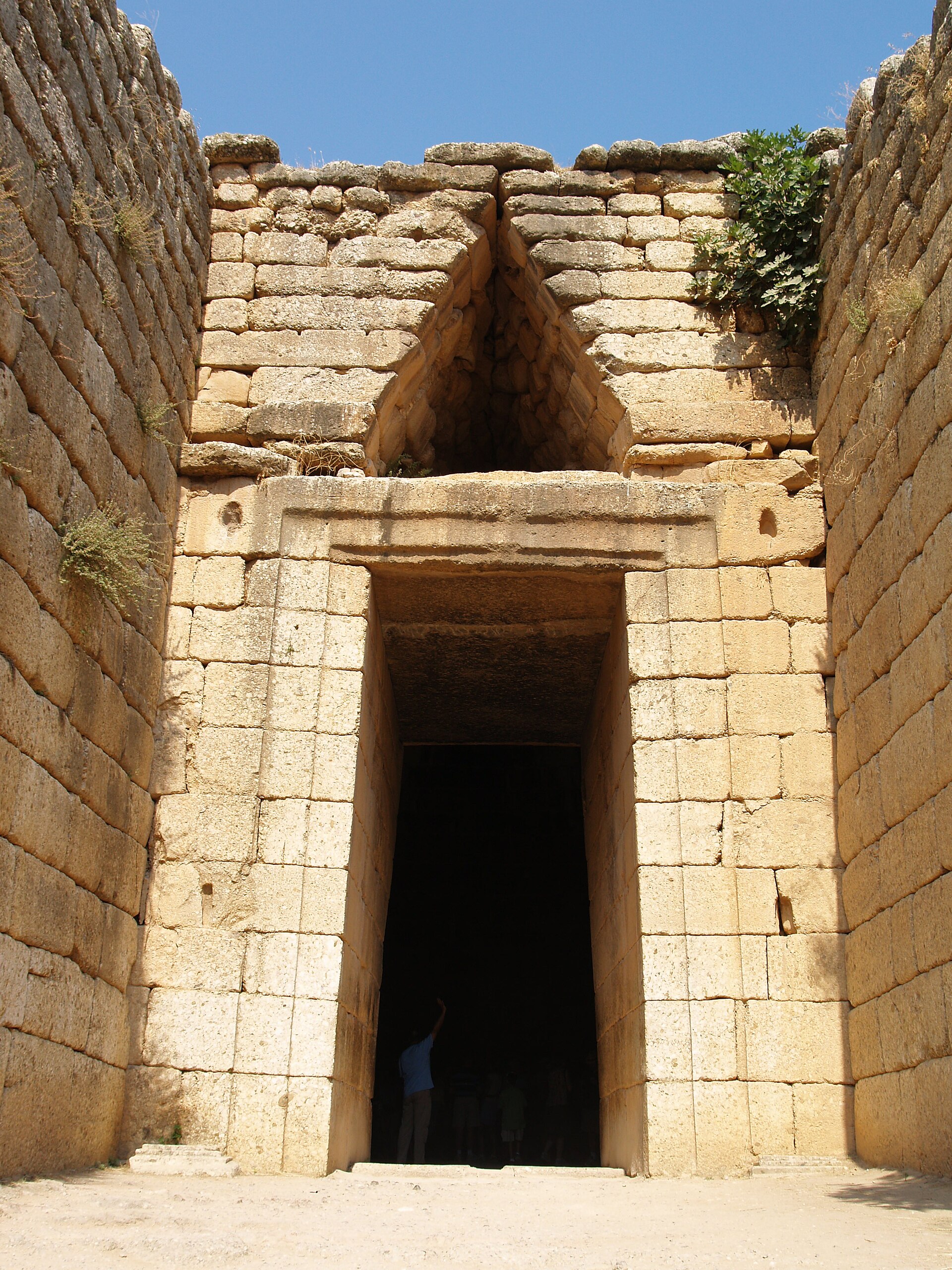
The first great civilisations on Greek soil were the Minoans of Crete and the Mycenaeans of the mainland, whose fortified palaces and tombs survive from the second millennium BC. Their world, half remembered in later legend, collapsed around 1200 BC.
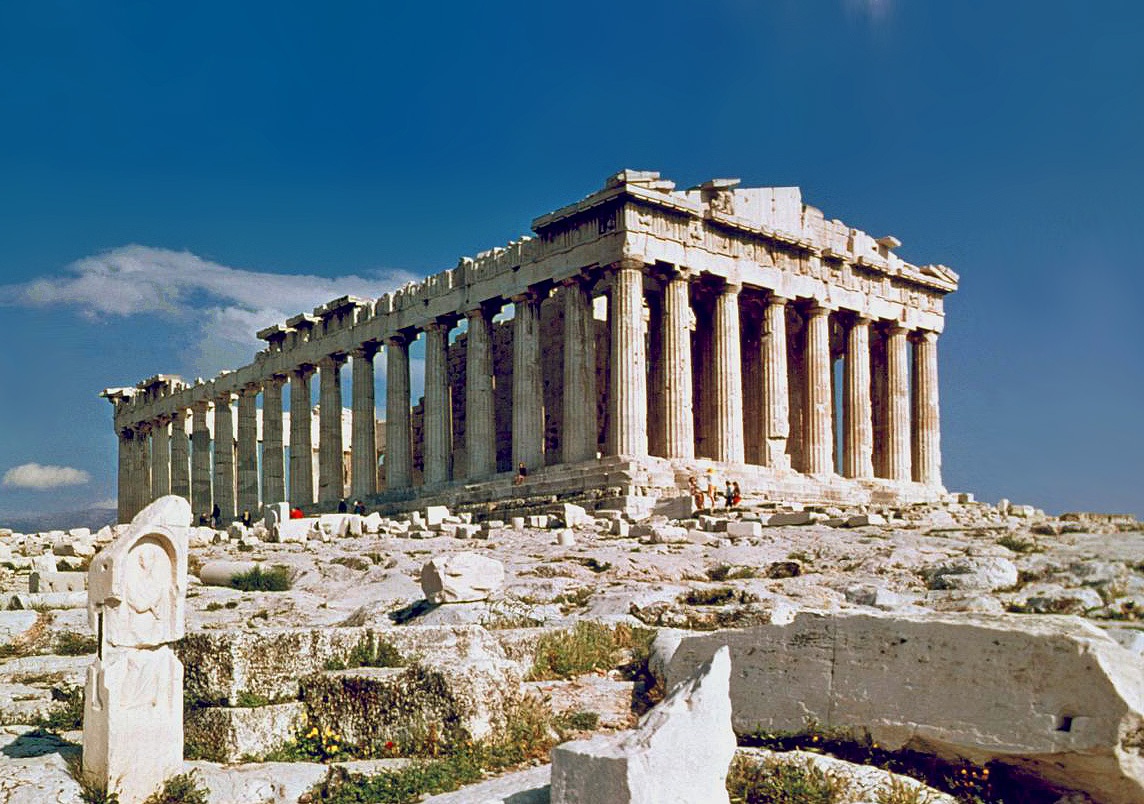
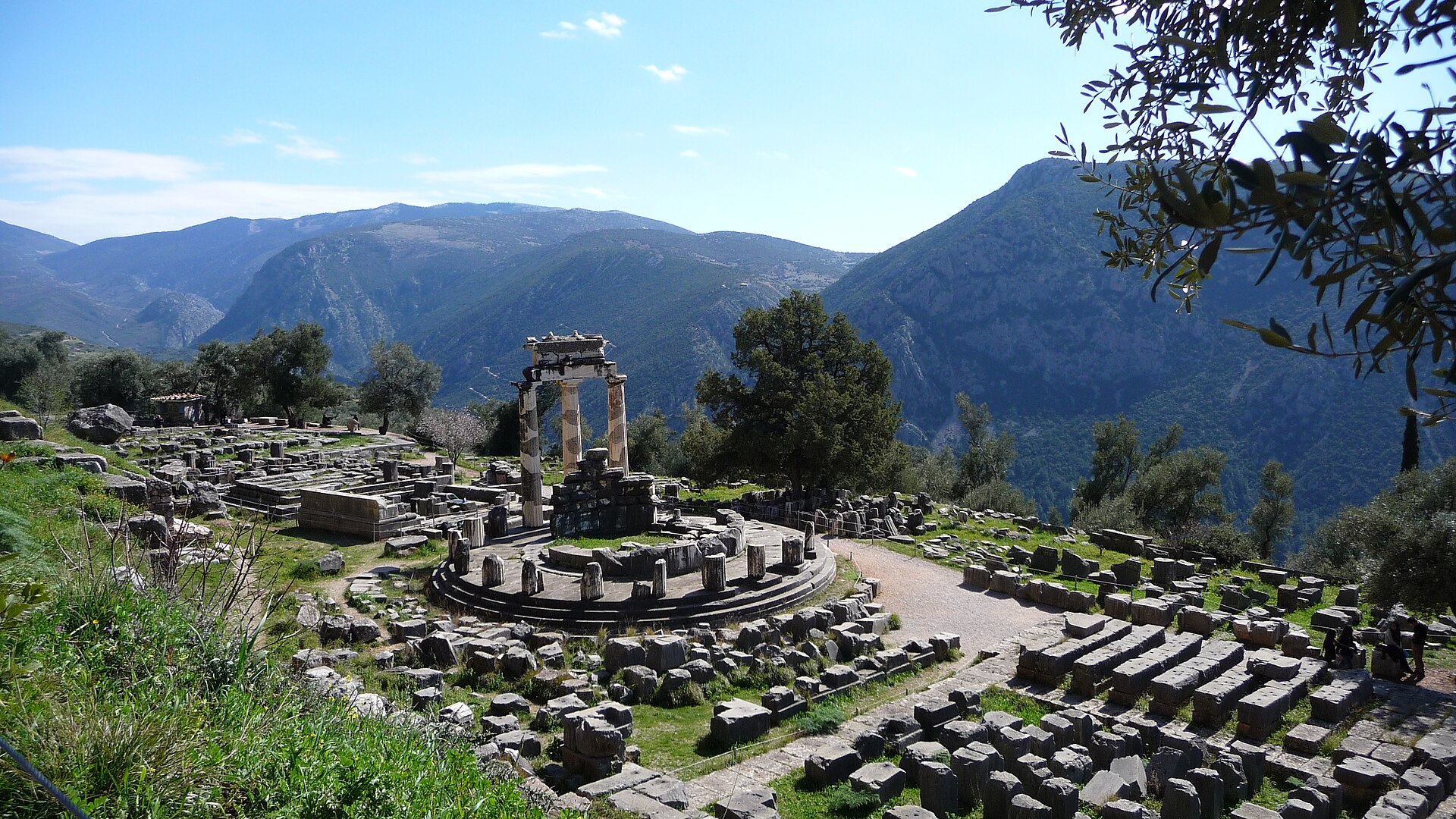
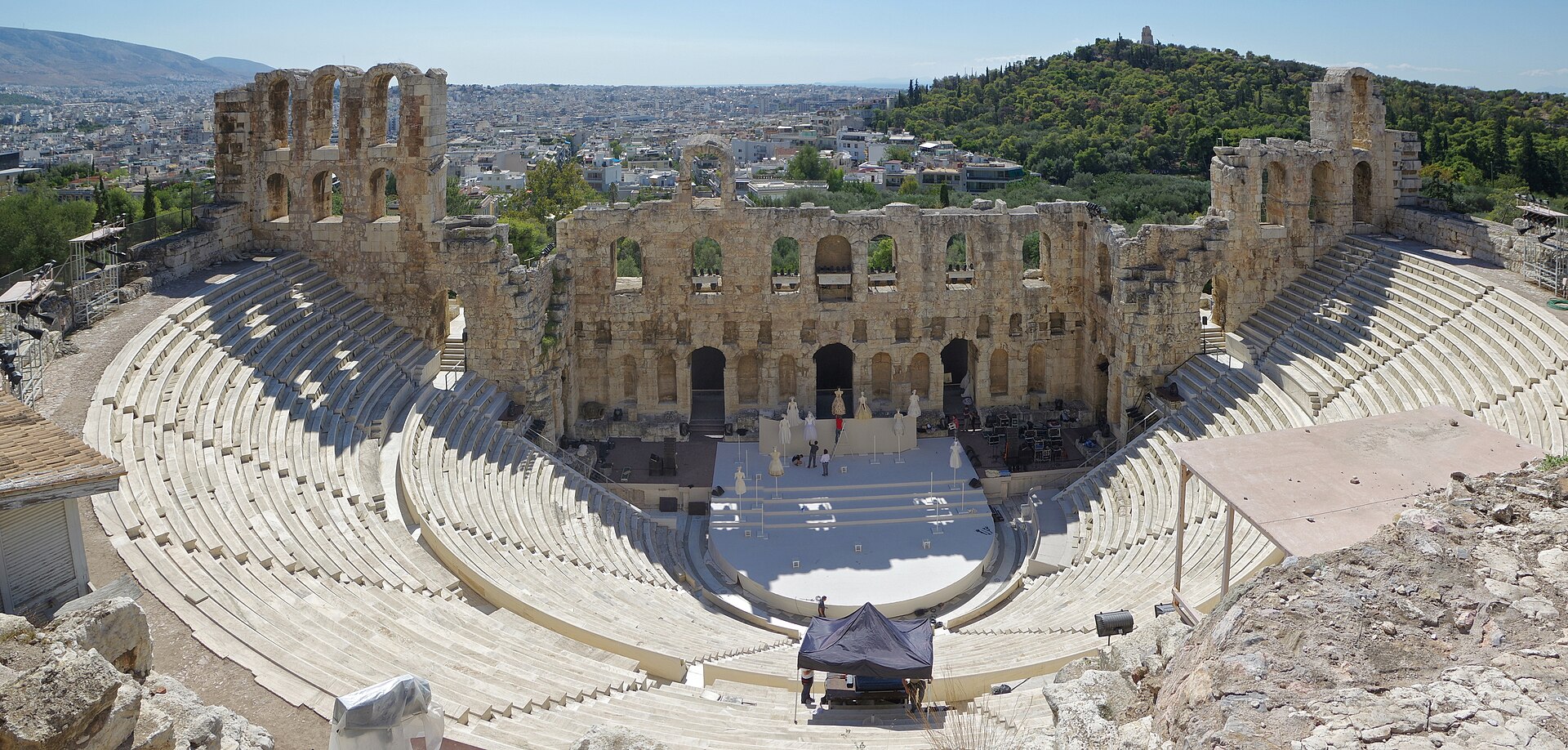
From around the eighth century BC rose the classical Greek world of independent city-states, above all democratic Athens and warlike Sparta. In a few extraordinary centuries the Greeks created philosophy, drama, history, and much of the art and science that underpin Western civilisation, and raised temples such as the Parthenon and sanctuaries such as Delphi.
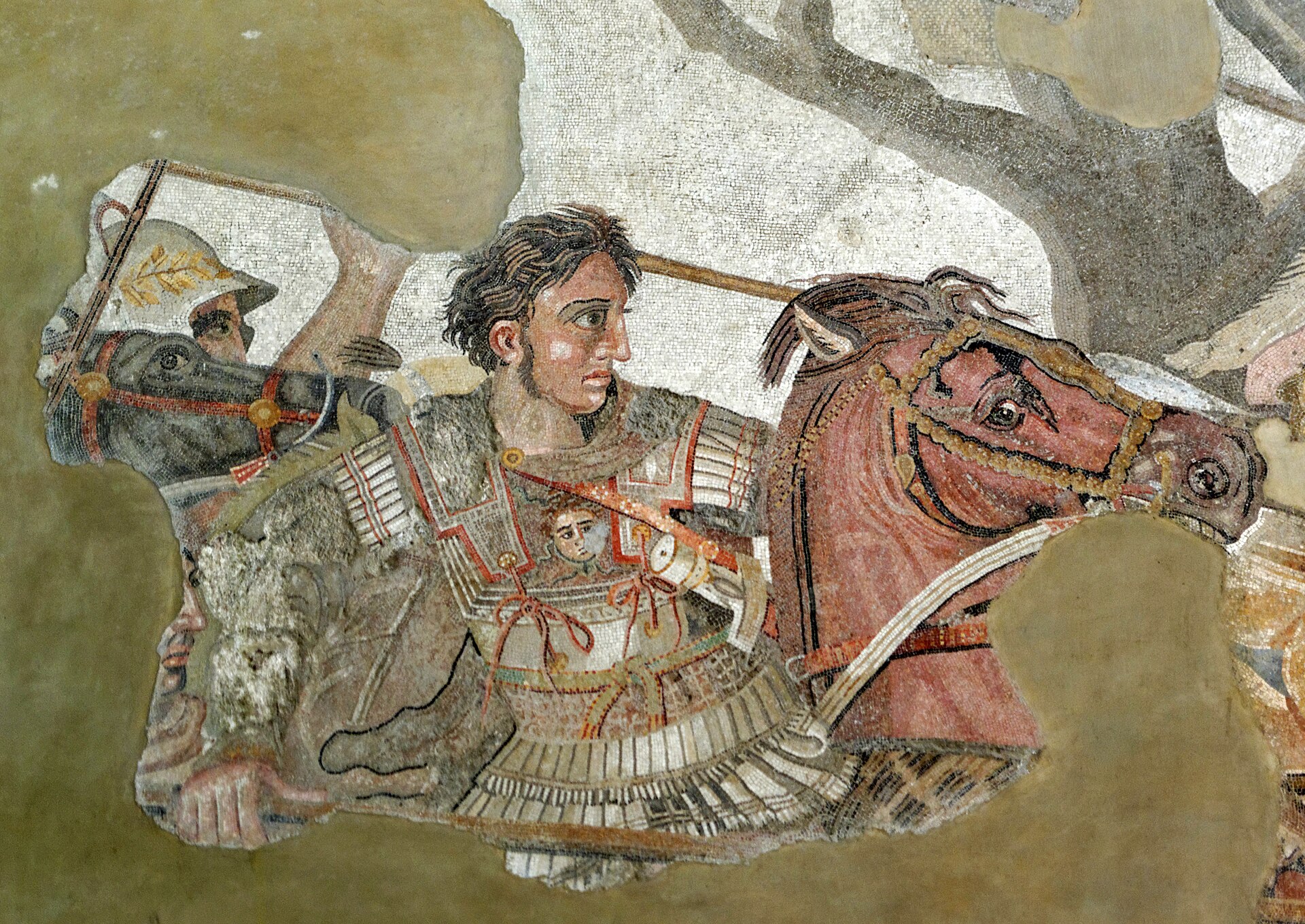
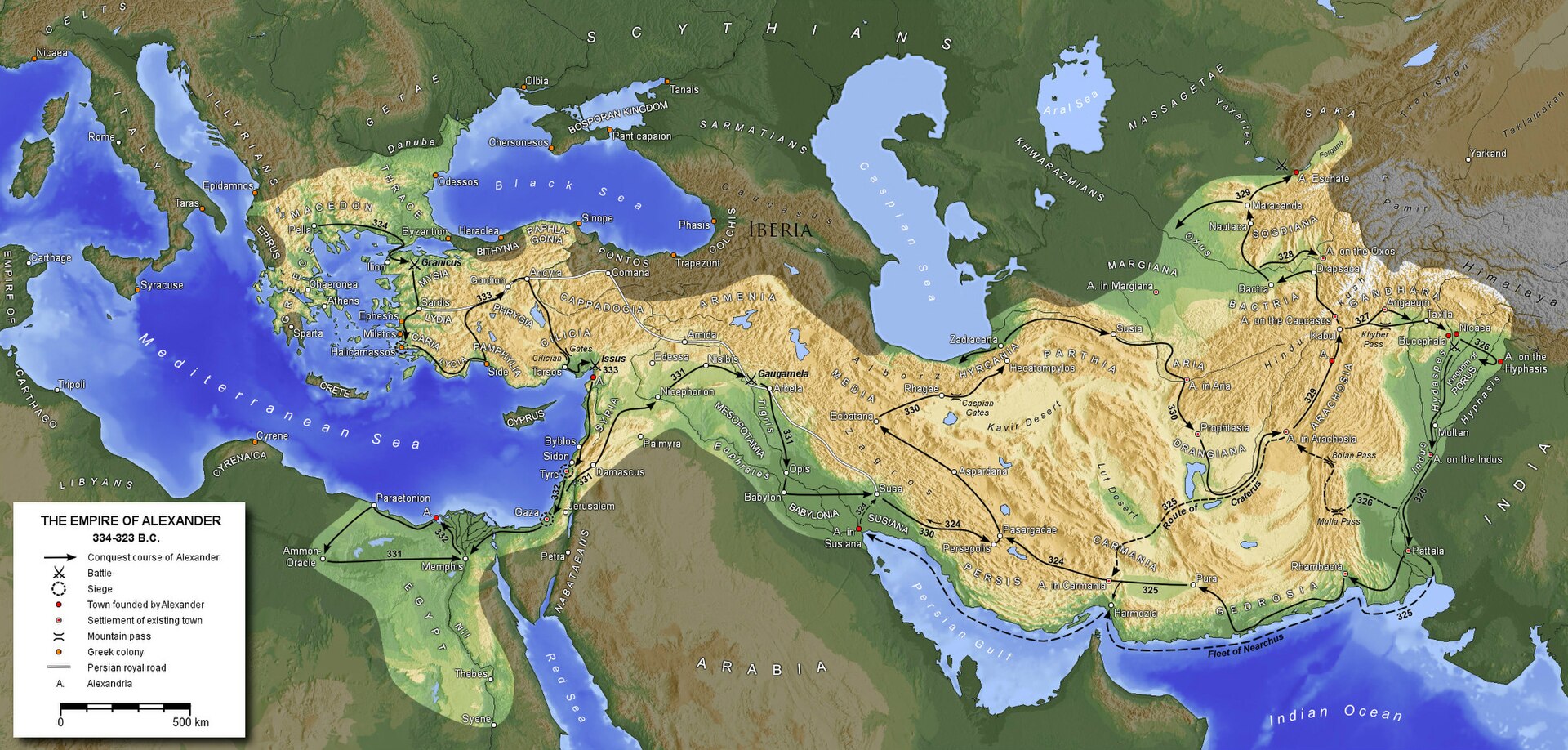
The kingdom of Macedon united the Greek world, and Alexander the Great carried Greek language and culture as far as Egypt and India, creating the vast Hellenistic world. After his death his empire splintered into kingdoms that spread Greek civilisation across the East for centuries.
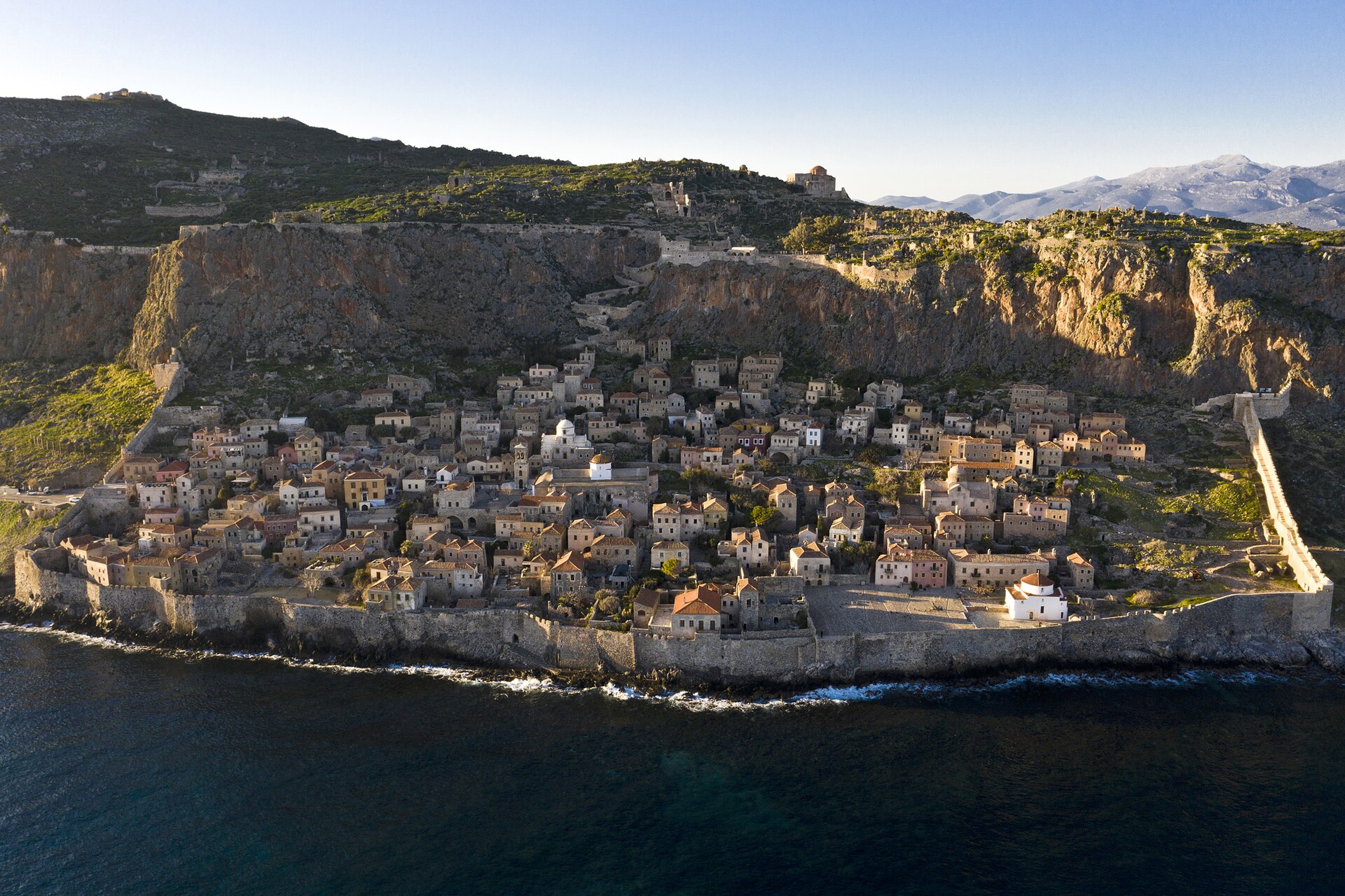
Greece was absorbed by Rome, then became the heart of the Greek-speaking Byzantine Empire, the Christian continuation of Rome that endured for a thousand years. After Constantinople fell in 1453, Greece spent nearly four centuries under Ottoman rule, its language and Orthodox faith preserved until the war of independence of 1821.
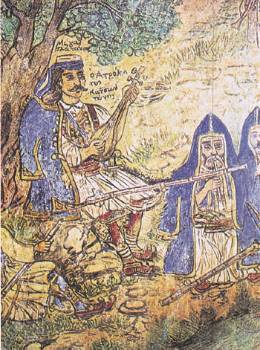
The Greeks remembered an age of heroes, of gods on Mount Olympus and of legendary deeds such as the Trojan War recounted in Homer's epics. These myths were foundational to Greek identity and to Western literature. Whether the Trojan War reflects a real conflict, and how much of the heroic age is history rather than legend, remains genuinely debated, with archaeology offering tantalising but inconclusive clues.
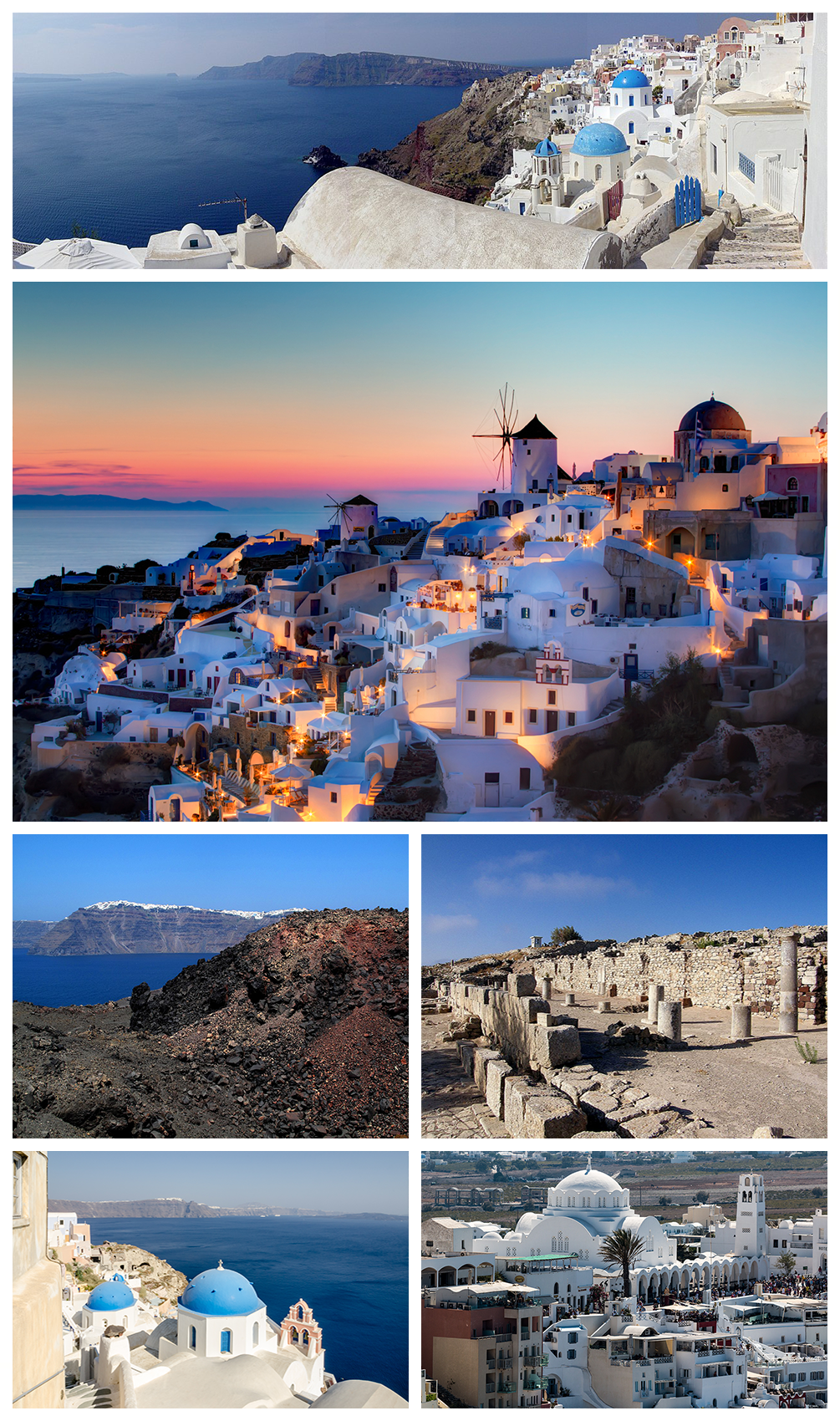
Greece is overwhelmingly mountainous, with ranges covering much of the mainland and ridges continuing out to sea as countless rugged islands. No part of the country lies far from the water, and its deeply indented coastline is among the longest in the world. The land is rocky and the climate Mediterranean, with hot, dry summers and mild winters, conditions that have long shaped a life built around the sea, the olive, and the vine.
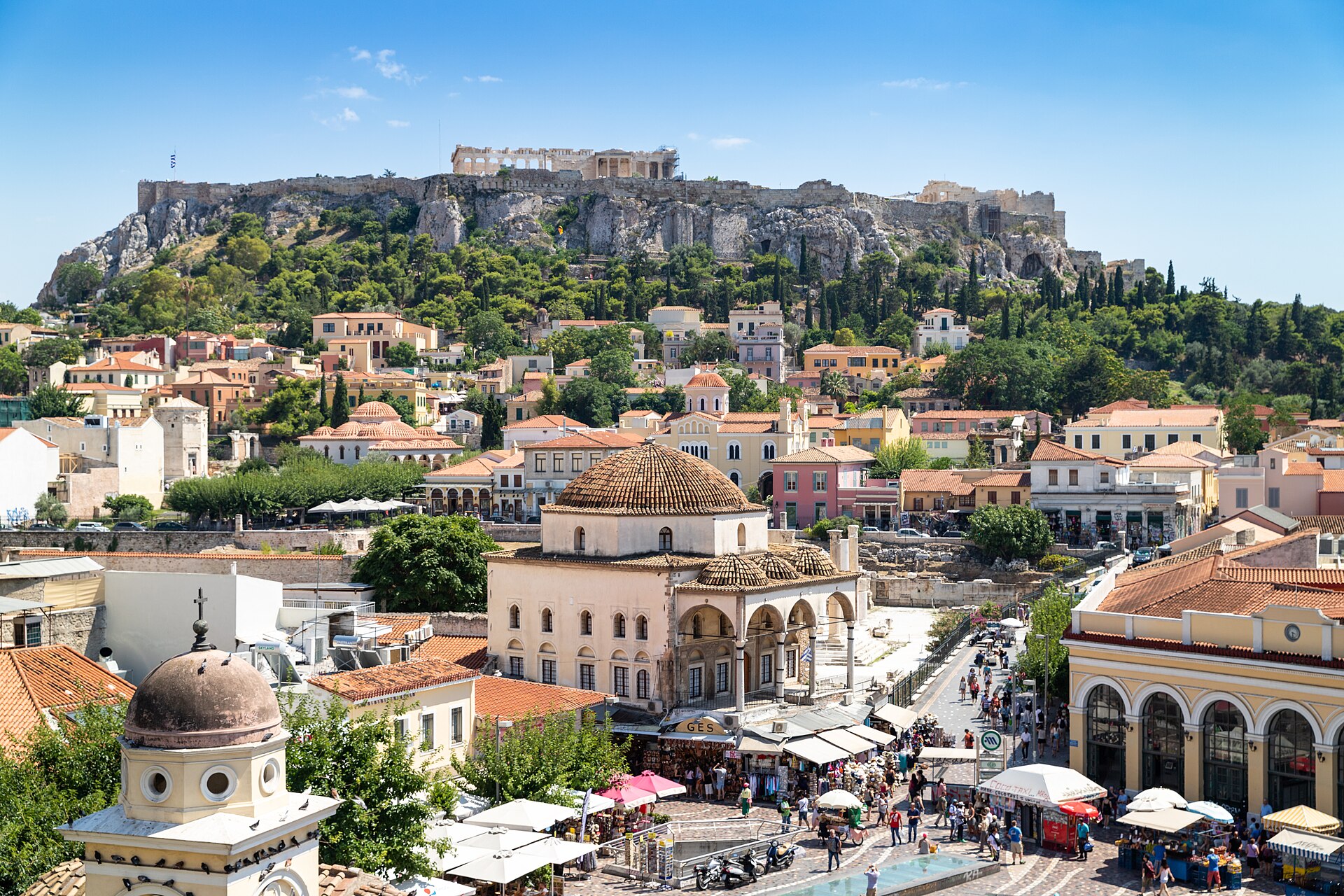
Greece is a parliamentary republic and the birthplace of democracy, though its modern democratic state dates from the fall of a military junta in 1974. A president serves as head of state while a prime minister leads the government, answerable to an elected parliament. Greece is a member of the European Union and of the eurozone, and it occupies a strategically sensitive position where Europe, the Balkans, and the eastern Mediterranean meet.
Greece's economy rests heavily on services, above all tourism, drawn by its antiquities, islands, and climate, and shipping: Greek owners control one of the largest merchant fleets in the world. The country went through a severe debt crisis from 2009, requiring international bailouts and harsh austerity that caused deep hardship, before returning to growth. Agriculture and food, including olive oil and wine, remain important exports.
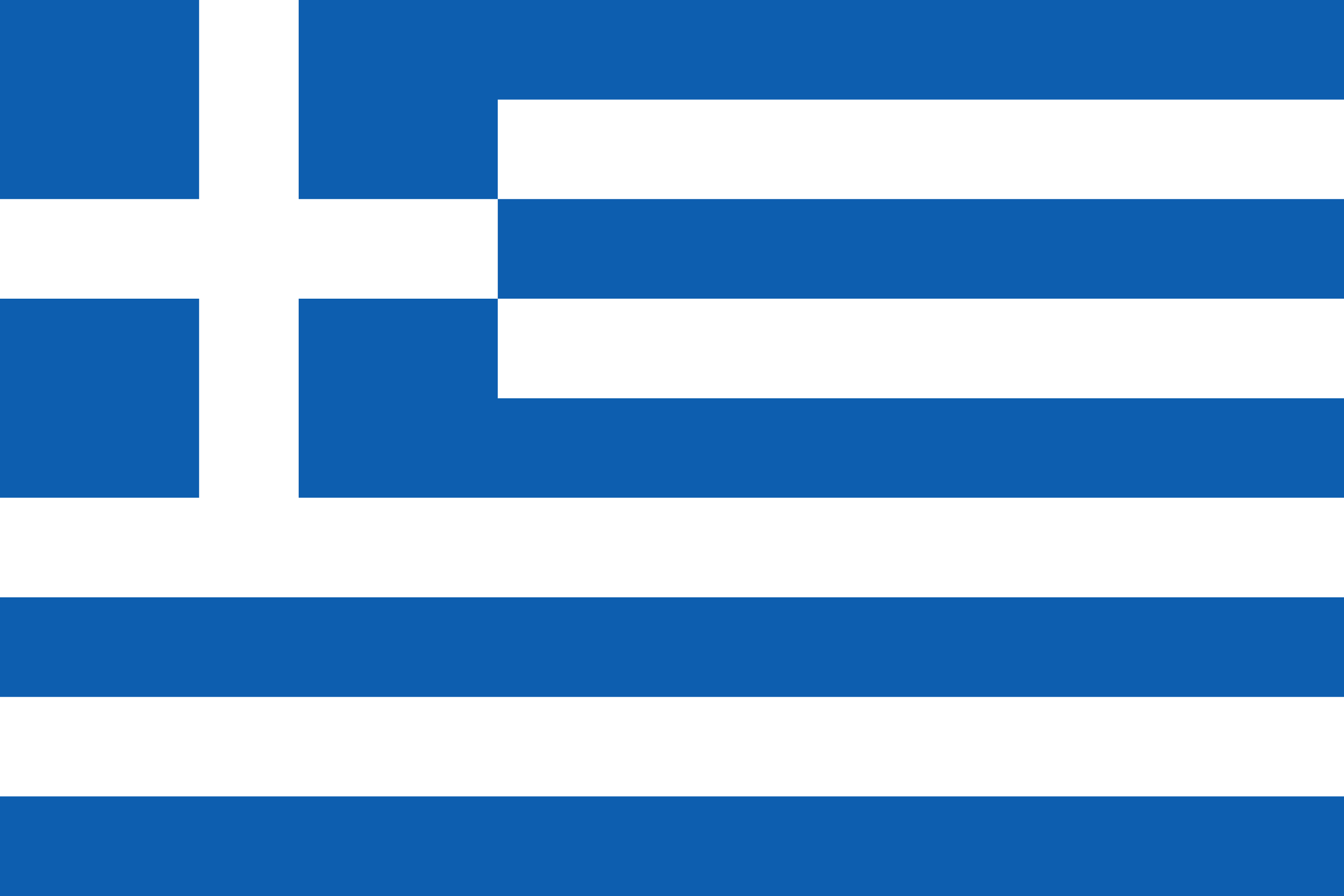
The Greek flag has nine horizontal stripes of blue and white, with a white cross on a blue field in the upper corner. The cross reflects the central place of Greek Orthodox Christianity in the nation's identity. The blue and white are commonly linked to the sky and the sea that surround the country, and the nine stripes are often said to stand for the syllables of the Greek motto meaning Freedom or Death, the cry of the war of independence.
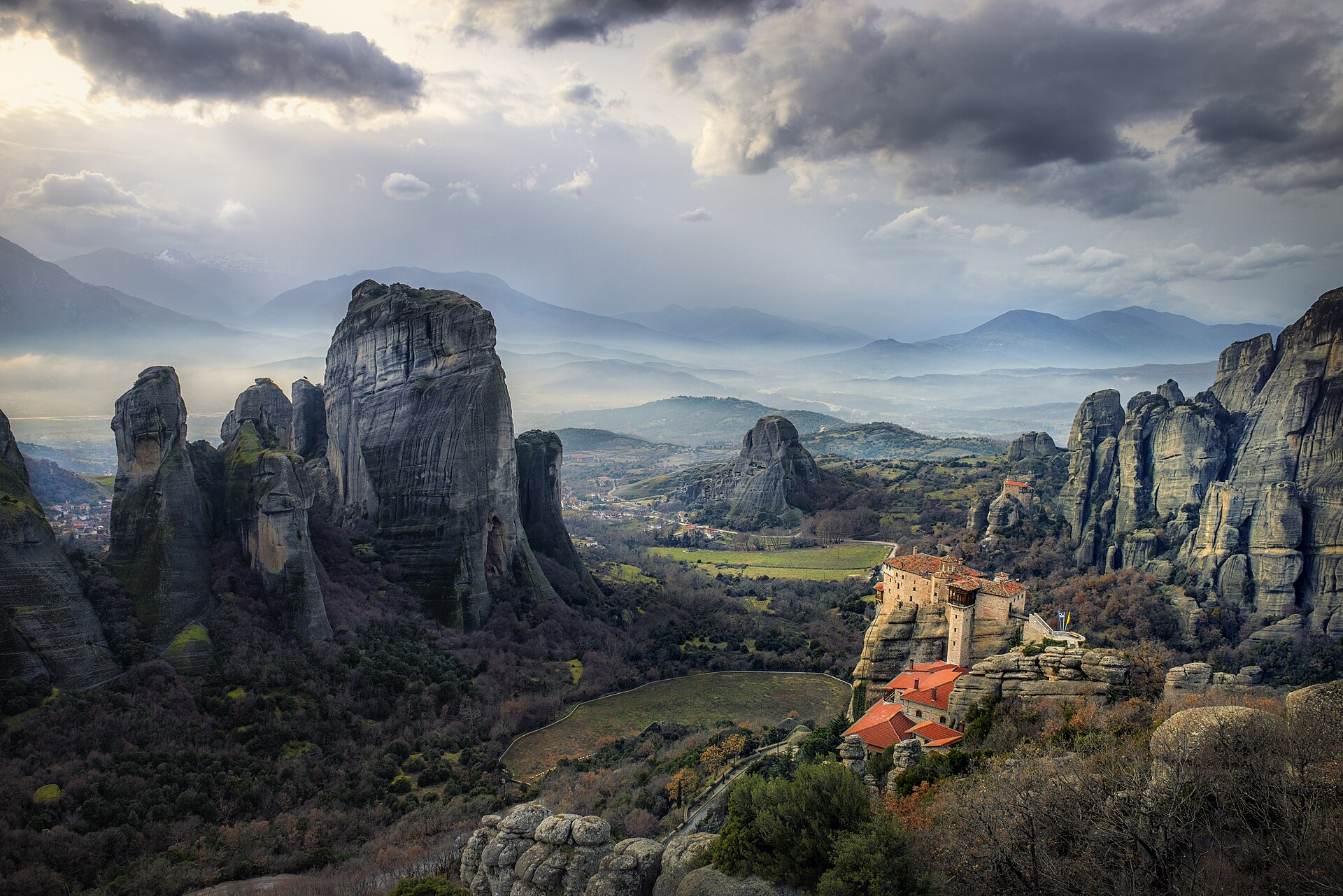
Greece is one of the most religiously uniform countries in Europe, with the overwhelming majority belonging to the Greek Orthodox Church. Orthodoxy is bound tightly to Greek identity and history, having preserved the language and culture through centuries of foreign rule, and it remains influential in national life, its feast days and rituals woven into the calendar. Monasteries such as those of Mount Athos and Meteora are revered centres of the faith.
Greek cuisine is a celebrated expression of the Mediterranean diet, built on olive oil, fresh vegetables, grains, fish, and herbs. The Greek salad of tomatoes, cucumber, olives, and feta cheese is known everywhere, as are dishes like moussaka, a baked layering of aubergine and minced meat, souvlaki and gyros of grilled meat, and creamy yogurt drizzled with honey. Olives, bread, and wine have anchored the Greek table since antiquity.
Despite its rocky, mountainous terrain, Greece has a strong agricultural tradition suited to its Mediterranean climate. It is one of the world's leading producers of olives and olive oil, the heart of its cooking, and grows grapes for a long winemaking tradition, along with citrus, tomatoes, cotton, and tobacco. Feta cheese, made from sheep and goat milk, is a protected national product. Farming remains important to rural life and to exports.
Greece's gift to the world is foundational: democracy, philosophy from Socrates to Aristotle, the Olympic Games, theatre, and the roots of Western literature and science. That classical inheritance sits alongside a vivid living culture of music, dance, festivals, and a famously warm hospitality, all bound up with the Orthodox faith and a strong sense of national identity forged through centuries of foreign rule.
Several pressures shape modern Greece. As a frontier of the European Union on the eastern Mediterranean, it sits on the front line of migration, with large numbers of people reaching its islands, fuelling argument over asylum and Europe's shared responsibility. The scars of the debt crisis and austerity still mark its politics. Greece also manages long-running tensions with neighbouring Turkey over Aegean waters, airspace, and the divided island of Cyprus.
After almost four centuries under Ottoman rule, Greeks won a hard-fought war of independence beginning in 1821 to refound their nation, a cause that drew passionate support from across Europe. In the twentieth century the country lived through occupation, a bitter civil war, and a military dictatorship before restoring democracy in 1974. More recently it endured a severe debt crisis that tested both Greece and the wider European Union.
Greece has a population of around 10 million people, the great majority ethnic Greeks united by language and the Orthodox faith. Like much of southern Europe, it has an ageing population and low birth rate. Roughly a third of all Greeks live in the Athens metropolitan area, the historic and modern centre of the country, while a large Greek diaspora, scattered by waves of emigration, maintains strong ties to the homeland from around the world.