The golden ratio is a real and interesting number. The claim that it governs the Parthenon, the Great Pyramid, the Mona Lisa and the proportions of the human body is not supported by any of the evidence usually offered for it.
The golden ratio, written phi, is approximately 1.618. It is the number that satisfies a simple condition: a line divided so the whole is to the larger part as the larger part is to the smaller. It is irrational, and it is the limit approached by the ratio of consecutive Fibonacci numbers.
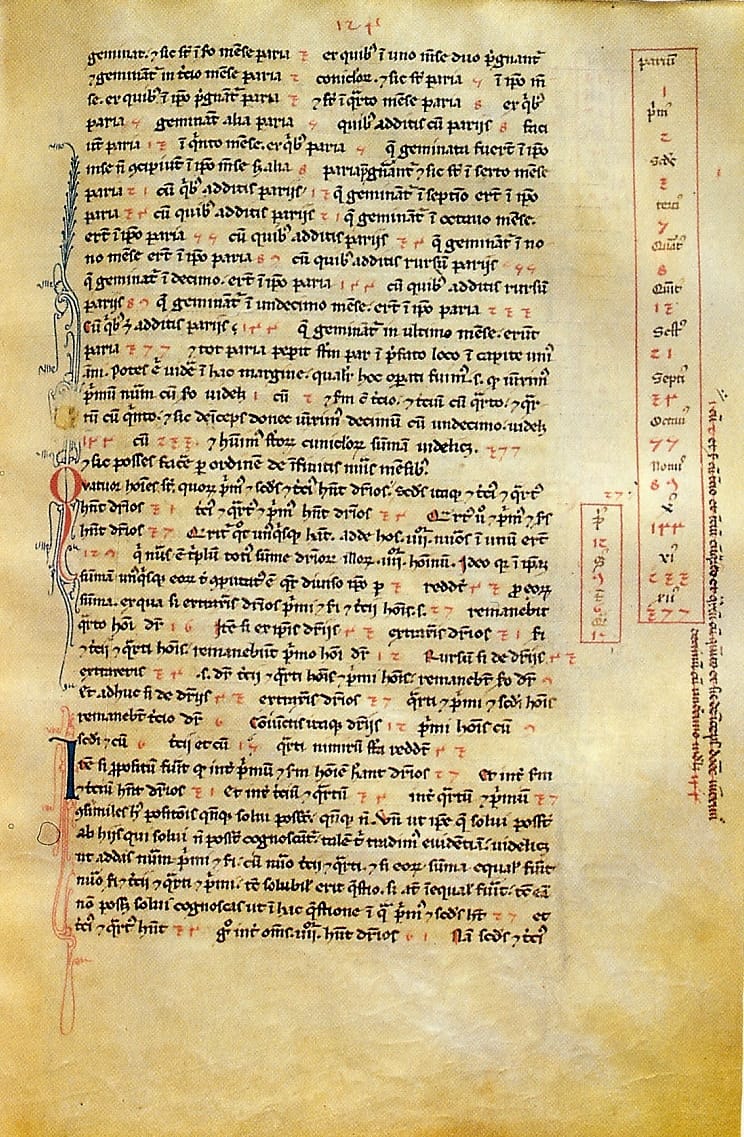
Its mathematical properties are genuine and not in question. Euclid described the division around 300 BC. It appears in the geometry of the pentagon and the icosahedron, and it turns up in phyllotaxis, the arrangement of leaves and seeds in plants, where it has a demonstrated mechanical explanation involving efficient packing.
The most repeated claim is that the Parthenon's facade fits a golden rectangle. It does not, unless the rectangle is placed by hand.
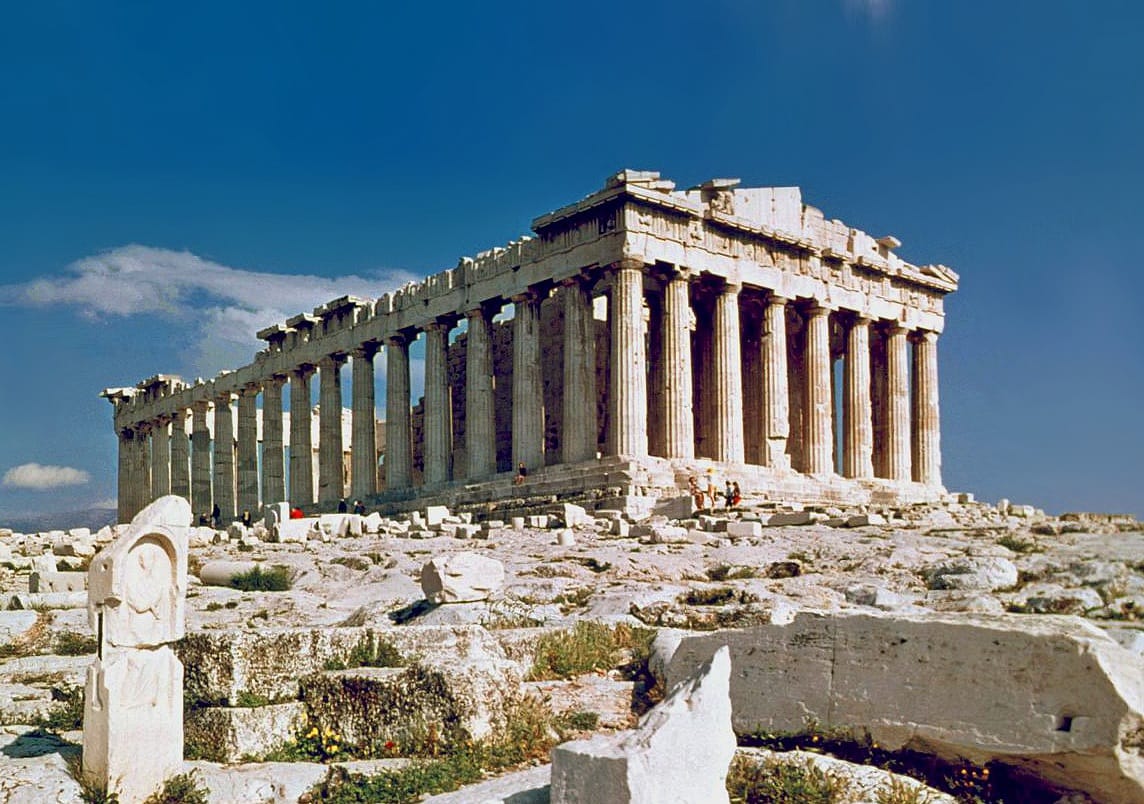
The measurement depends entirely on which points are chosen. Including the steps gives one number, excluding them another. The pediment is missing, so its apex must be reconstructed, and small changes there move the ratio substantially. Published analyses that follow a consistent rule get values ranging from about 1.55 to 1.75, and the diagrams reproduced in textbooks routinely have edges that do not touch the building.
No Greek text on architecture mentions the ratio as a design principle. Vitruvius, writing on proportion in some detail, does not use it.
The Great Pyramid's slope does produce a number near phi under one measurement convention. It also matches a whole-number slope ratio of 14 to 11, and it matches a construction using a rolling drum to measure distance, which would make pi appear instead. Egyptian mathematical texts that survive show no knowledge of the golden ratio.
Leonardo da Vinci illustrated Luca Pacioli's De Divina Proportione in 1509, which is a book about the ratio, and this is the source of the association. The illustrations are of polyhedra. Neither the Mona Lisa nor the Vitruvian Man is constructed on phi, and the rectangles drawn over the Mona Lisa in popular accounts vary in placement from one source to another.
The claim that the ratio appears throughout the human body, in the navel's position or the bones of the finger, fails on measurement. Human proportions vary widely, and averages land near 1.6 only because a great many ratios of roughly similar quantities do.
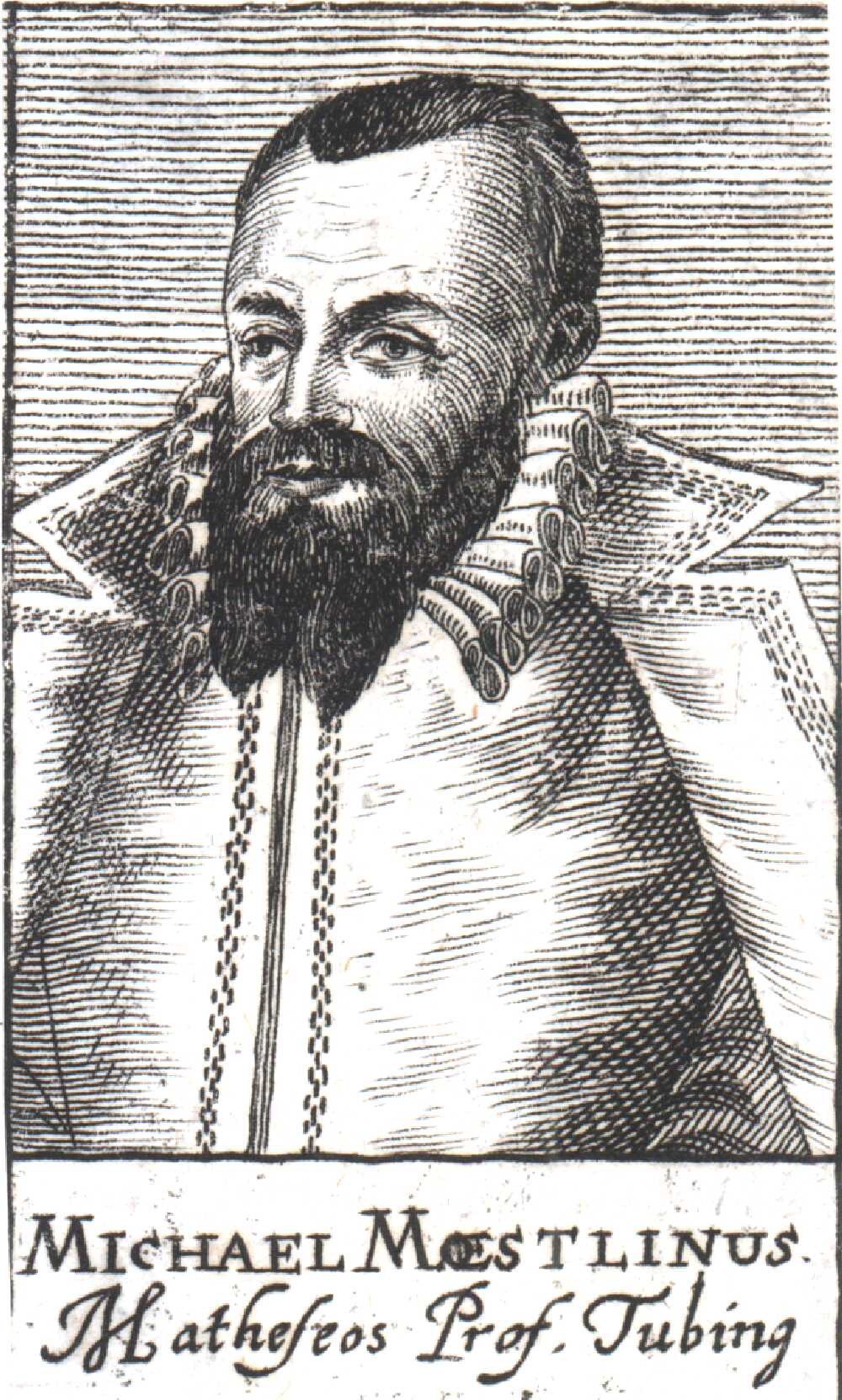
The aesthetic doctrine is nineteenth century. Adolf Zeising, a German psychologist, argued in the 1850s that the ratio was a universal law of beauty in nature and art, and applied it to everything. The term golden section entered use in this period; there is no ancient name for it as an aesthetic principle.
Gustav Fechner ran experiments in the 1870s asking people to choose the most pleasing rectangle, and reported a preference near the golden ratio. His results have been retested many times since with better methods, and the preference is weak, inconsistent, and sensitive to how the question is asked. Several careful replications find no preference at all.
Deliberate use of the ratio by modern artists who believed in it is real. Le Corbusier's Modulor system used it explicitly, Salvador Dali used it in at least one painting, and various twentieth century composers structured works around it.
That is a fact about people who read Zeising, not evidence that the ratio is a law of beauty. A designer who applies a rule produces work that follows the rule, which says nothing about whether the rule was discovered or invented.