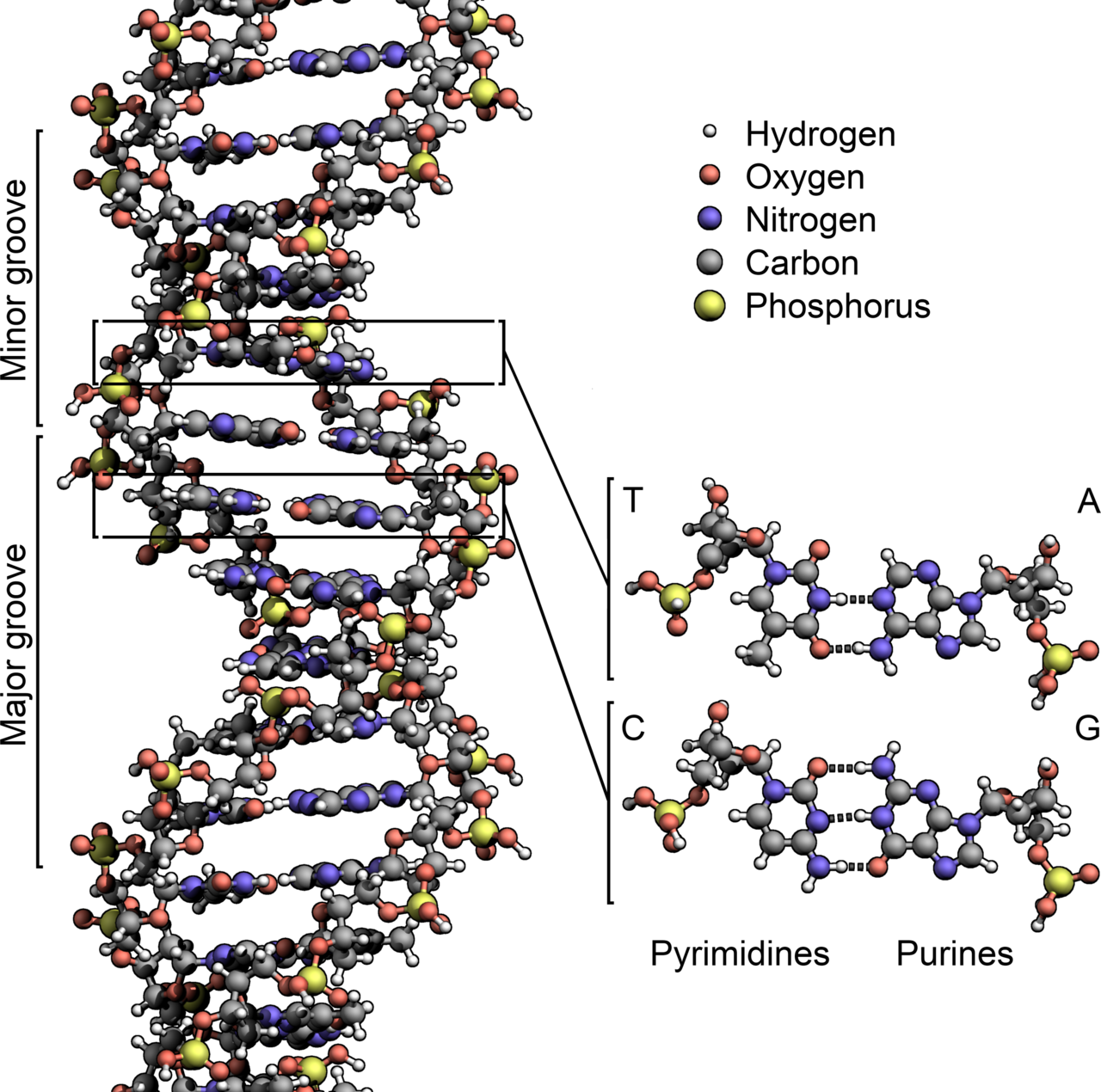
The control of which genes are expressed, when, and how strongly. Every cell in an organism carries the same genome, so what distinguishes a neuron from a liver cell is not which genes are present but which are being used.
A human genome contains roughly twenty thousand protein-coding genes, and a given cell expresses a subset of them.
Regulation therefore has to answer several questions at once: which genes, in which cells, at what time, and in what quantity.
It also has to respond. A bacterium encountering a new sugar, a cell receiving a hormone, and an embryo developing all require expression to change in response to conditions.
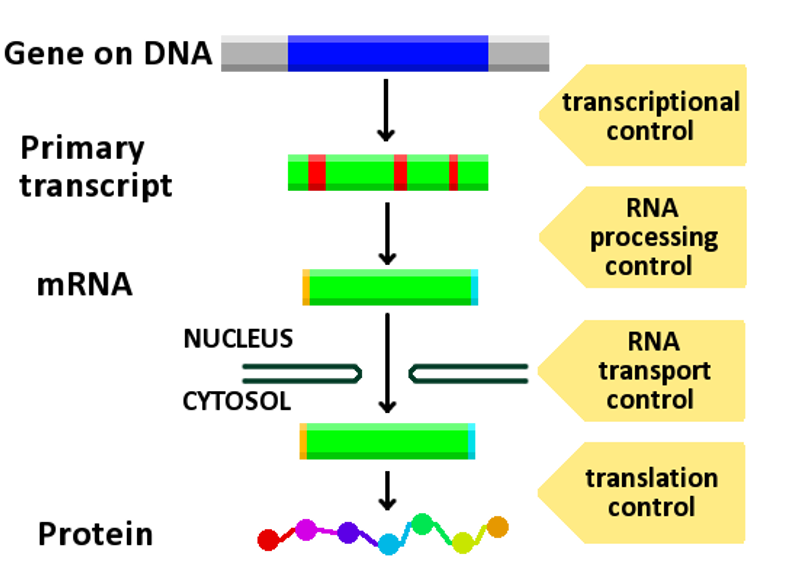
Control occurs at every stage, and this layering is what gives the system its range.
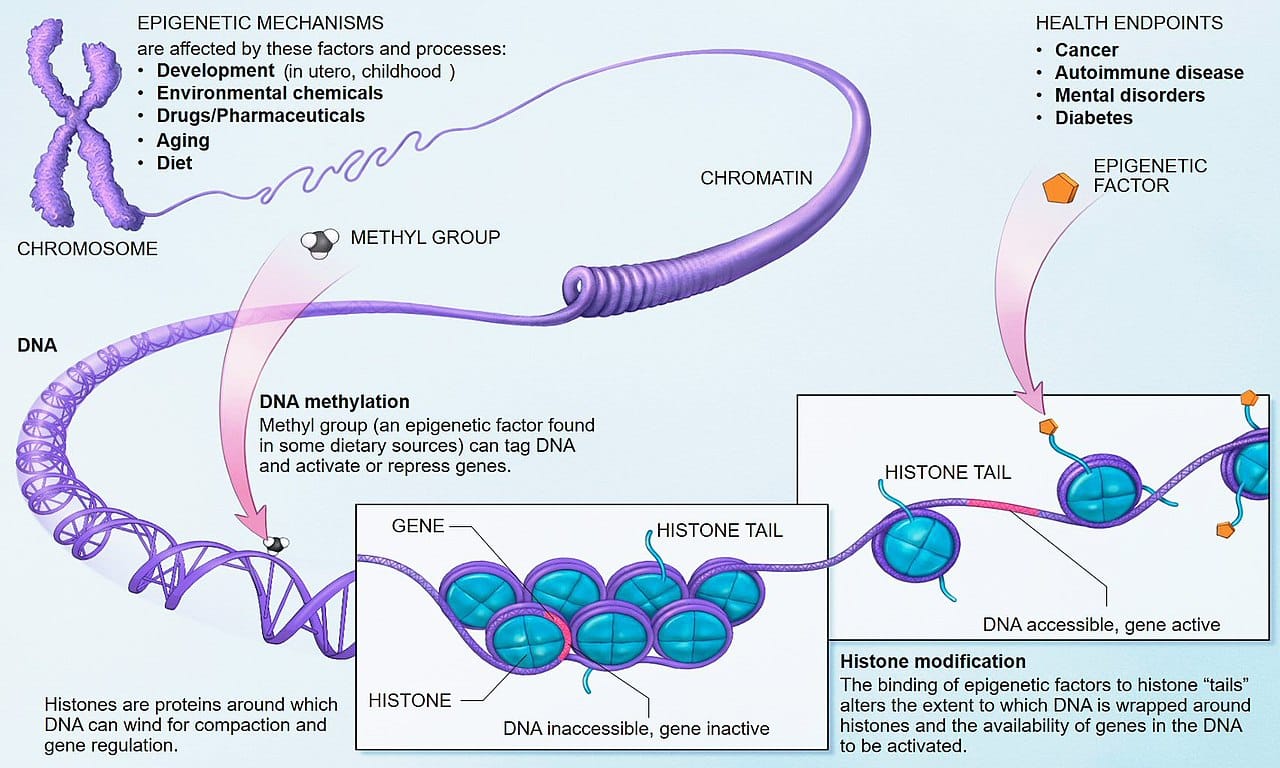
Chromatin accessibility comes first. DNA is packaged around histones, as the chromosomes capsule describes, and tightly packed regions cannot be read at all. Chemical modification of histones and of DNA itself opens or closes regions, which is the mechanism underlying epigenetics, treated separately.
Transcription is the principal control point. Proteins called transcription factors bind specific DNA sequences near a gene and either recruit or block the machinery that copies it. A single gene may be controlled by many factors acting together, and a single factor may control hundreds of genes.
Enhancers are regulatory sequences that can act from a considerable distance, looping the DNA to contact the gene they control. Their existence explains why mutations far from a gene can affect it, and why a large fraction of disease-associated genetic variants fall outside coding sequence.
RNA processing follows. Alternative splicing joins different combinations of segments from one gene, so a single gene can specify several proteins, which is a substantial part of why the human gene count is far lower than was expected before the genome was sequenced.
RNA stability and translation are controlled by regulatory RNAs, described in the RNA capsule, which bind messenger RNAs and suppress them.
Protein stability is the final point. Proteins are tagged for destruction at controlled rates, so expression can be reduced without changing transcription at all.
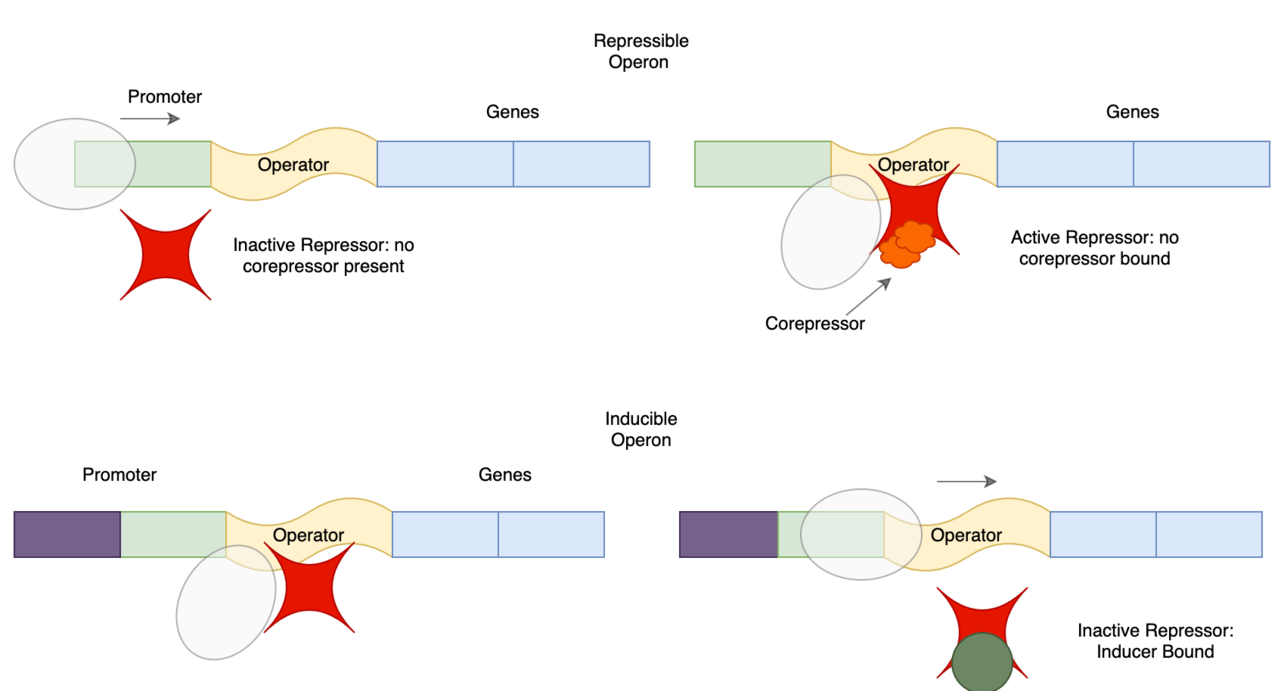
François Jacob and Jacques Monod described the lac operon in Escherichia coli in 1961, and it remains the standard teaching case because it demonstrates the logic clearly.
The bacterium can metabolise lactose and does not need the relevant enzymes when lactose is absent.
A repressor protein binds the DNA and blocks transcription. When lactose is present, a derivative of it binds the repressor, changing its shape so that it releases the DNA, and transcription proceeds.
The system is therefore a switch controlled by the presence of the substrate, and it is efficient: the enzymes are made only when there is something for them to do.
Jacob and Monod shared the Nobel Prize in 1965. Their work established that genes are regulated rather than expressed constitutively, which was not obvious and which founded molecular genetics as a study of control rather than only of sequence.
Development is fundamentally a regulatory problem. A single fertilised cell produces hundreds of cell types, all with identical genomes, through progressive restriction of which genes are active.
Master regulators sit at the top of these cascades. Hox genes specify body segment identity along the head to tail axis, and are so highly conserved that a mouse gene can substitute functionally for its fly counterpart in some experiments.
Cell identity is maintained by regulatory networks that reinforce themselves, which is why a liver cell remains a liver cell through many divisions.
That stability can be reversed. Shinya Yamanaka showed in 2006 that introducing four transcription factors could return an adult cell to a pluripotent state, which earned the Nobel Prize in 2012 and demonstrated that cell identity is a regulatory state rather than an irreversible commitment.
Cancer is substantially a disease of regulation. Oncogenes are genes whose overexpression drives division, and tumour suppressors are genes whose loss removes the brakes, and many cancers involve regulatory rather than coding mutations.
Developmental disorders frequently result from regulatory rather than coding changes, including alterations to enhancers that shift where or when a gene is expressed.
A substantial share of the genetic variation associated with common diseases and traits falls in regulatory regions, which is why interpreting genome-wide association results requires understanding regulation rather than only sequence.
Gene regulation is what makes a multicellular organism possible, since building different cell types from one genome requires controlling expression rather than content.
It also resolves an apparent paradox from the genome sequencing era. Humans have roughly the same number of genes as much simpler organisms, and the difference in complexity lies substantially in how those genes are controlled rather than in how many there are.