The practice of locating underground water, minerals or other targets by walking over ground holding a forked stick or a pair of rods and watching for them to move. The movement is real and is produced by the dowser's own muscles. Controlled tests find no ability to locate anything.
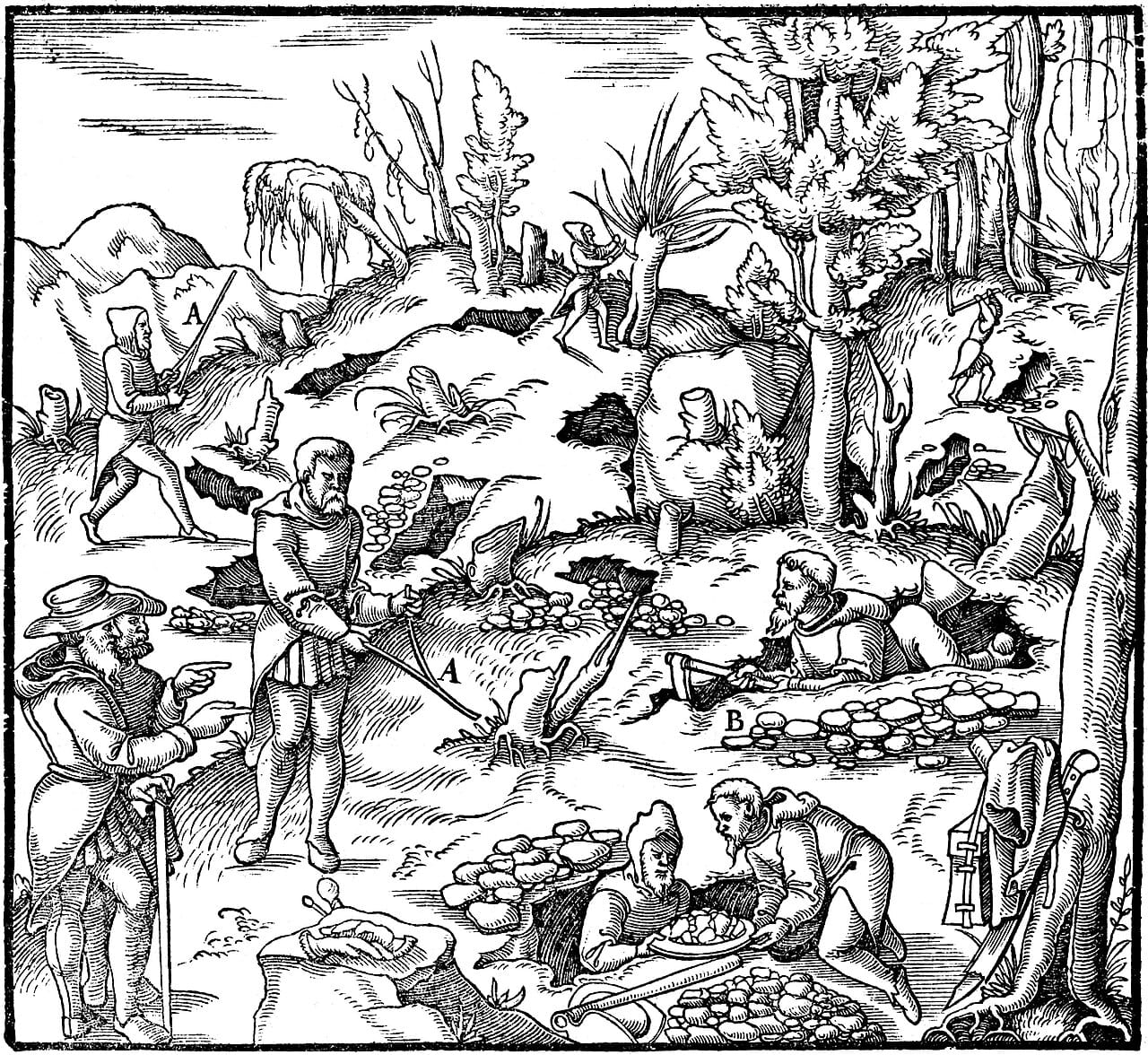
The dowser holds a forked hazel twig by its two ends under tension, or a pair of L-shaped rods loosely in the fists, and walks the ground. Over the target the twig is said to twist downward, or the rods to swing together or apart.
Georgius Agricola described the technique in his 1556 treatise on mining and was sceptical of it, observing that experienced miners judged ore by knowledge of the rocks and that those relying on the rod were the ones who lacked it.
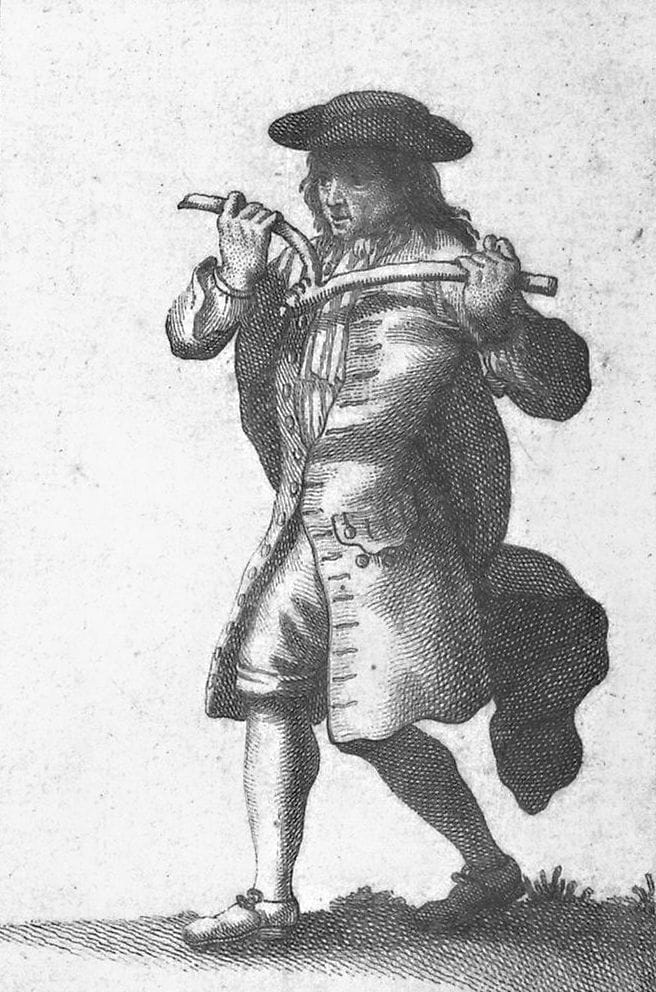
Applications extend well beyond water: minerals, oil, buried pipes and cables, archaeological remains, medical diagnosis, and locating missing persons.
The most substantial test was conducted in Germany in the late 1980s, funded by the federal government and conducted by scientists at Munich, and it was designed with the cooperation of dowsers.
Around five hundred dowsers were screened in preliminary trials, and the best performers, about forty three, went forward to the main test. It was conducted in a barn: a pipe carrying water was moved to a randomly chosen position on the ground floor, and dowsers on the floor above marked where they believed it ran, over many trials.
The original investigators reported that a small number of participants had performed remarkably well. Reanalysis by James Enright, published in 1999, showed that the apparently successful results were what would be expected from chance given the number of participants and trials. The best performers on some days were not the best on others, which is the signature of chance rather than skill. Enright concluded that the study, the largest ever conducted, provided no support for the practice.
Other trials have reached the same conclusion. Tests conducted under James Randi's prize protocols, in which dowsers agreed in advance what would constitute success, were consistently failed by participants who had been confident beforehand. A characteristic feature is that dowsers routinely perform well in demonstrations where they can see the terrain and know the target's likely position, and fail when that information is removed.
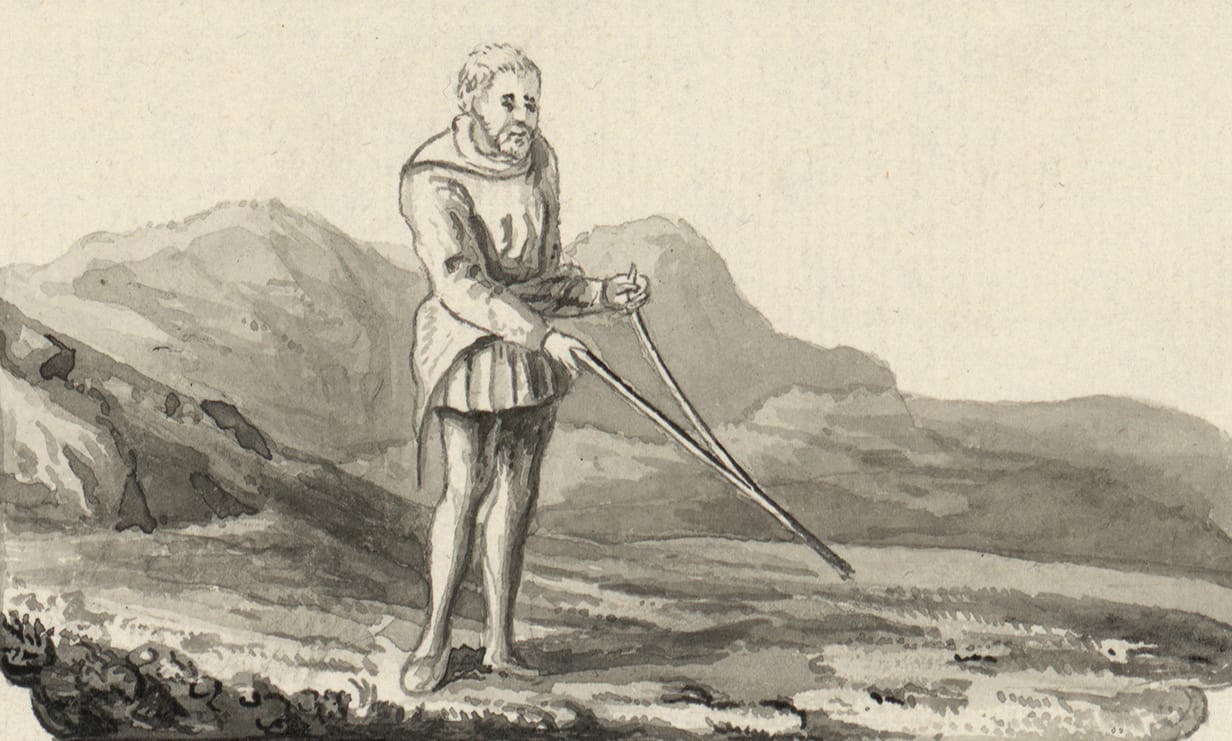
The rods do move, and dowsers are not, as a rule, pretending.
The cause is the ideomotor effect, small unconscious muscular movements produced by expectation and not registered as voluntary. The apparatus amplifies them: a twig held under tension is in unstable equilibrium, so a minute change in grip produces a sudden and dramatic rotation, and rods balanced in loose fists swing with almost no provocation.
William Carpenter described the mechanism in 1852, and Michel Chevreul had demonstrated it earlier with a pendulum, showing that its swing stopped when the holder's hand was restrained or when they could not see the target.
The same mechanism explains Ouija boards, table-turning and facilitated communication, which is treated in its own capsule. In each case a person sincerely experiences their own action as coming from outside.
The apparent success rate is high enough to sustain the practice, and there is a straightforward explanation that does not require any ability.
Groundwater is extremely common. In many regions a well drilled to sufficient depth at an arbitrary location will find water, so a dowser who selects a site and is followed by a drilling rig will usually be vindicated. The relevant comparison is not whether the dowser finds water but whether they do better than an arbitrary point, and that comparison is rarely made.
Dowsers also read the landscape, generally without deliberate deception. Vegetation, topography, soil colour and local knowledge are genuine indicators of where water lies, and long experience of an area produces good judgements that are then attributed to the rod.
Failures are less memorable and less reported than successes, and a dry hole is usually attributed to drilling in slightly the wrong place or to insufficient depth.
For siting a domestic well, dowsing is largely harmless. Applied elsewhere it has not been.
In 2017 it emerged that a majority of United Kingdom water utilities were still using divining rods to locate buried pipes, despite having equipment designed for the purpose. Most stated they would stop.
The serious case is detection equipment sold for finding explosives. Devices consisting of a swivelling antenna on a plastic handle, containing no functioning components, were sold as bomb detectors, most notoriously the ADE 651, which was bought in quantity by the Iraqi government and used at checkpoints. James McCormick, who sold them, was convicted of fraud in Britain in 2013 and sentenced to ten years. The devices operate on the ideomotor effect and detect nothing, and they were in use at checkpoints through a period of repeated bombings.
Dowsing is the clearest everyday demonstration that a person can perform an action, experience it as involuntary, and sincerely report an external cause. That is not a fringe curiosity; it is a general property of human motor control and self-perception, and it explains a family of phenomena that otherwise look like separate mysteries.
It also shows why an uncontrolled success rate is uninformative. Any evaluation of a detection method must compare it against what an arbitrary choice would achieve, and where the base rate is high, doing nothing looks like expertise.