Cambodia is a country in mainland Southeast Asia, set on the lower Mekong River and the great lake of Tonle Sap. Heir to the mighty Khmer Empire that built the temple complex of Angkor, one of the wonders of the world, it carries an extraordinary cultural legacy. That ancient grandeur stands in stark contrast to the horrors of the twentieth century, when the country endured one of the most brutal regimes in modern history.
Cambodia's history runs from the glory of the Khmer Empire and Angkor, through decline and French rule, to the catastrophe of the Khmer Rouge and a slow recovery.
From around the ninth century the Khmer Empire rose to dominate much of mainland Southeast Asia from its capital at Angkor. Grown rich on rice and the waters of the Tonle Sap, its god-kings raised hundreds of temples, above all the vast Angkor Wat, in a civilisation whose scale and artistry still astonish.
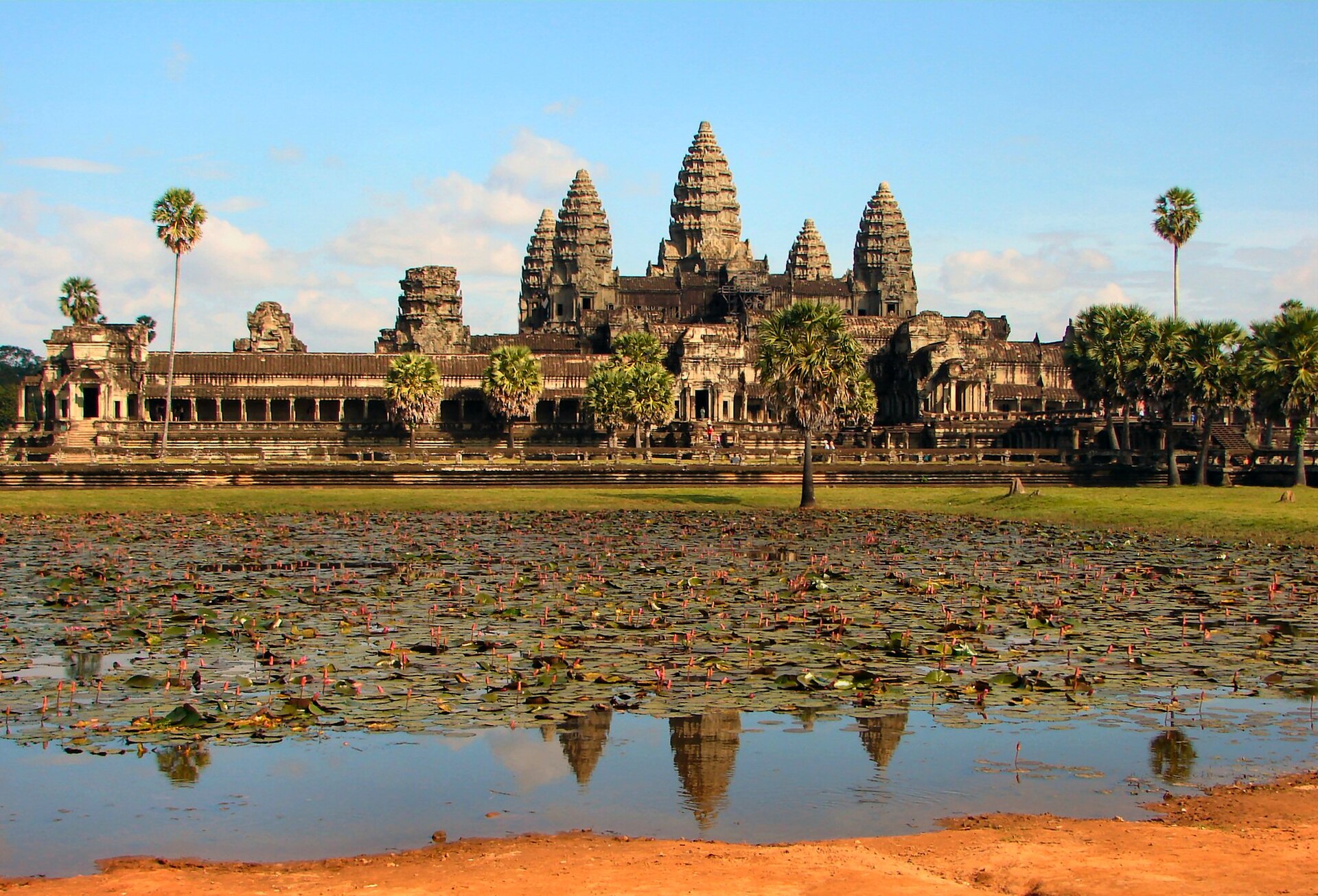
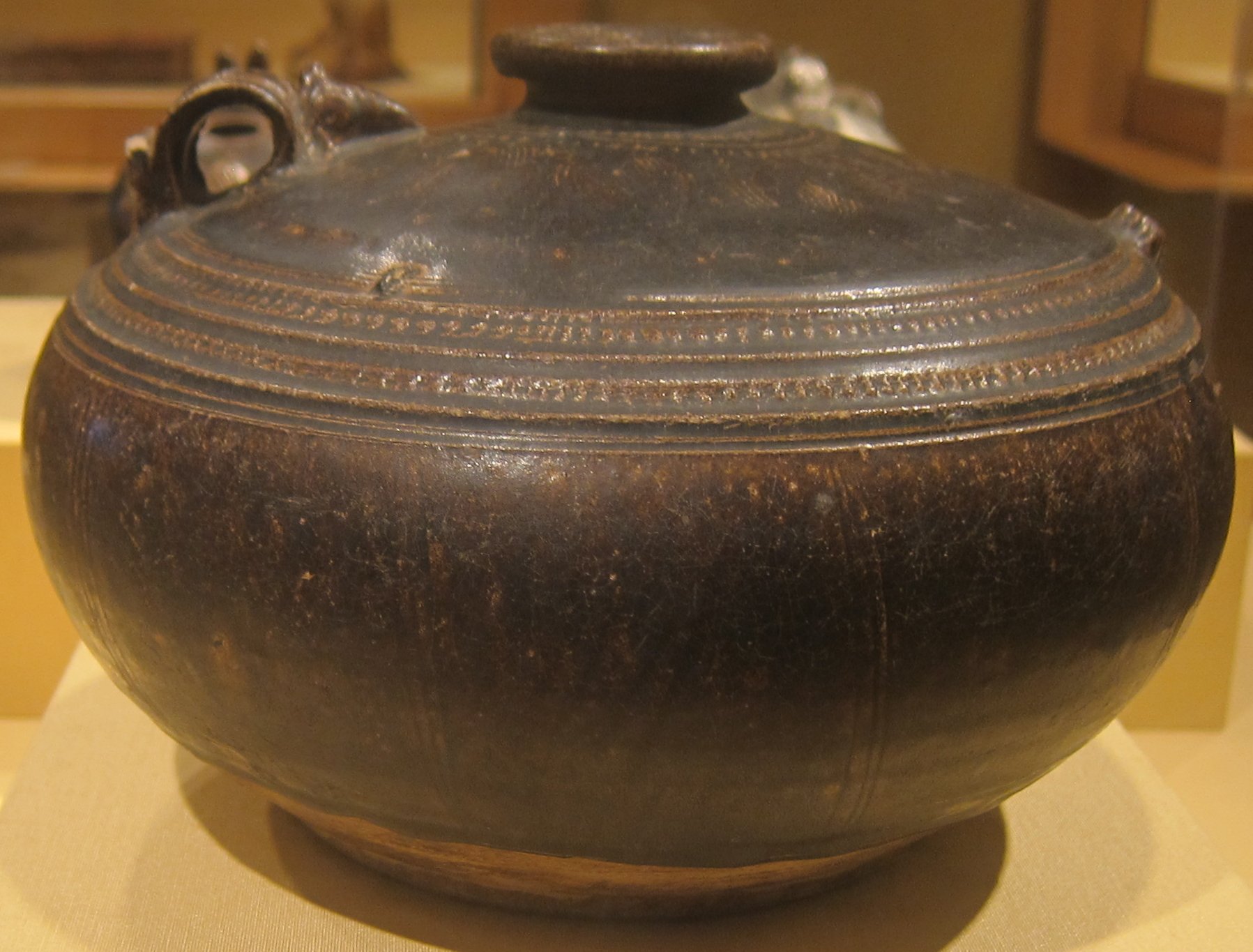
At its height Angkor was one of the largest cities in the pre-industrial world, sustained by a sophisticated network of reservoirs and canals. Its temples, sculpture, and fine metalwork mark the summit of Khmer art, blending Hindu and Buddhist devotion in stone.
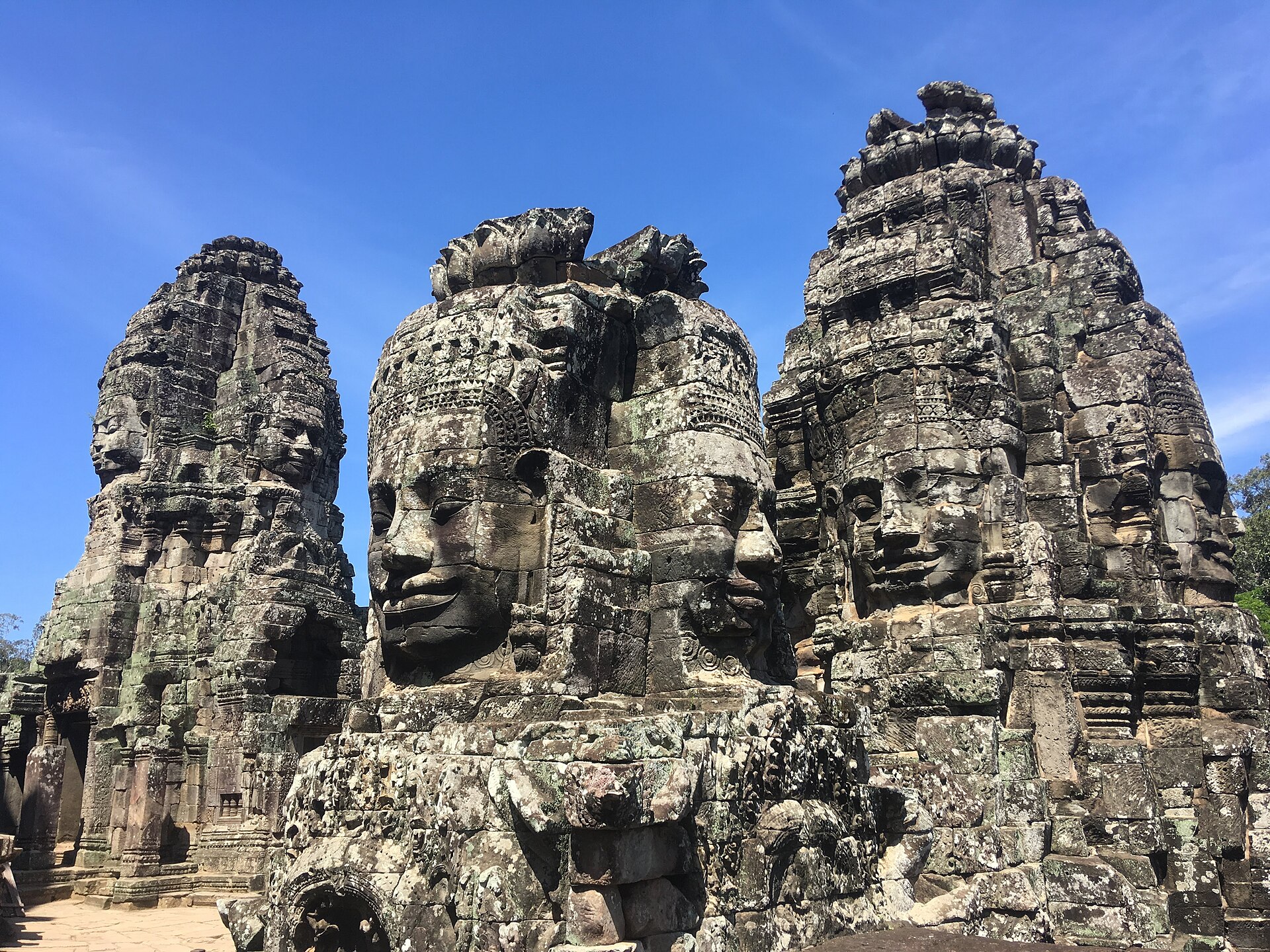
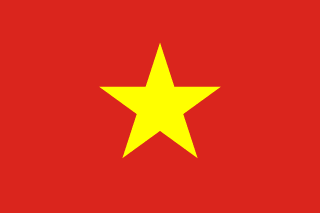
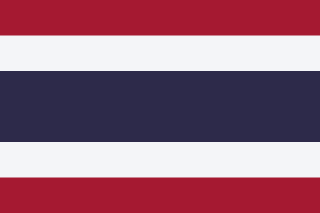
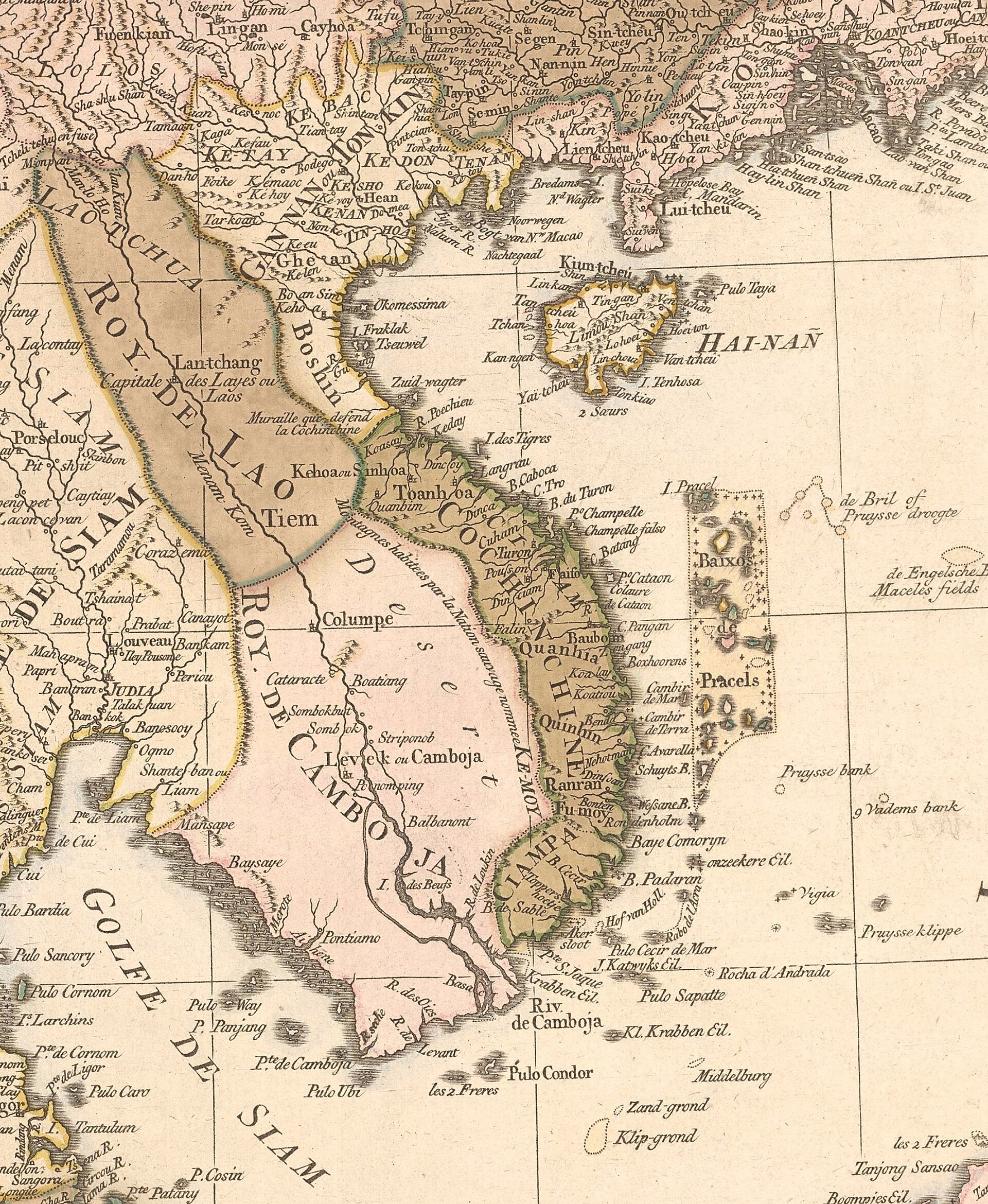
After the fifteenth century the empire declined, its capital abandoned, and Cambodia shrank to a smaller kingdom caught between two powerful neighbours, Siam to the west and Vietnam to the east, both of which pressed in on its territory. In the nineteenth century, to survive, it accepted French protection and became part of French Indochina, regaining full independence in 1953.
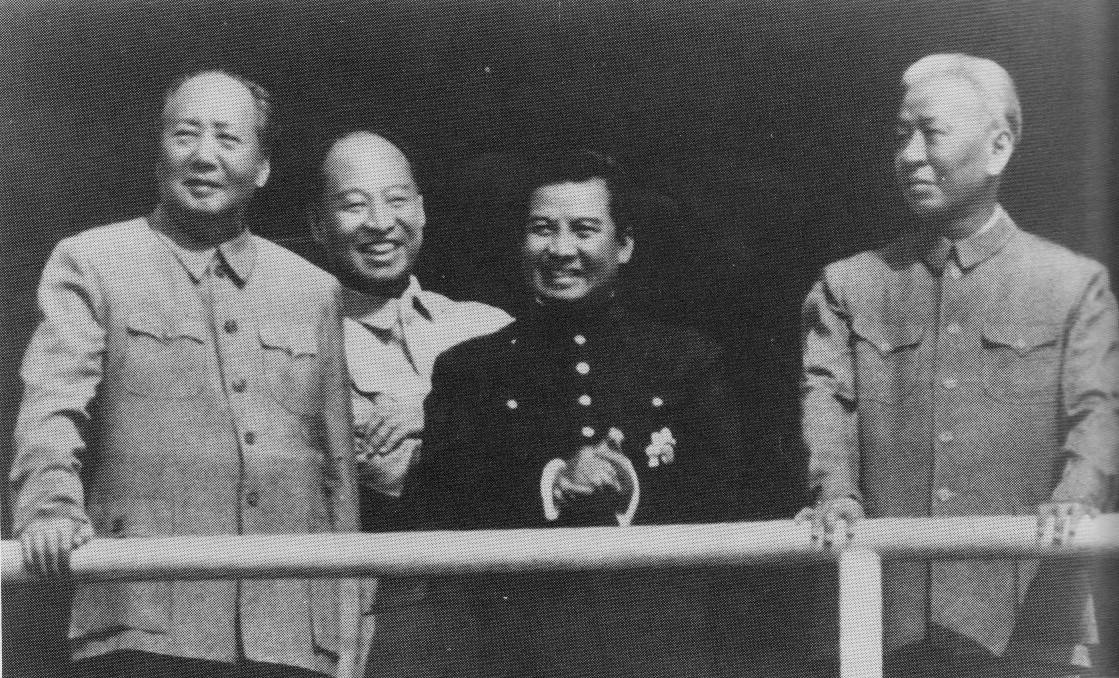
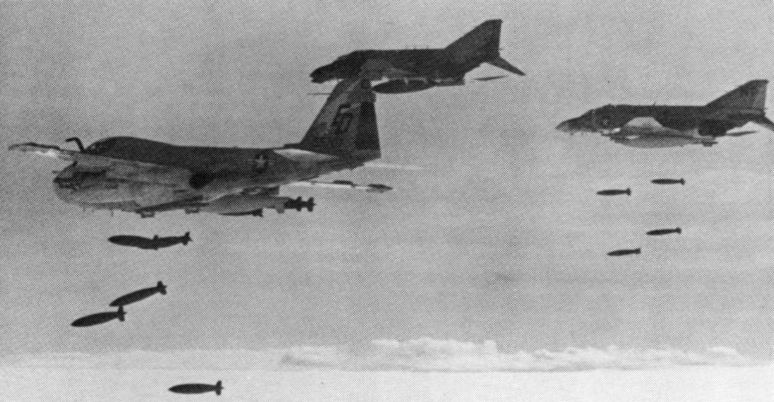
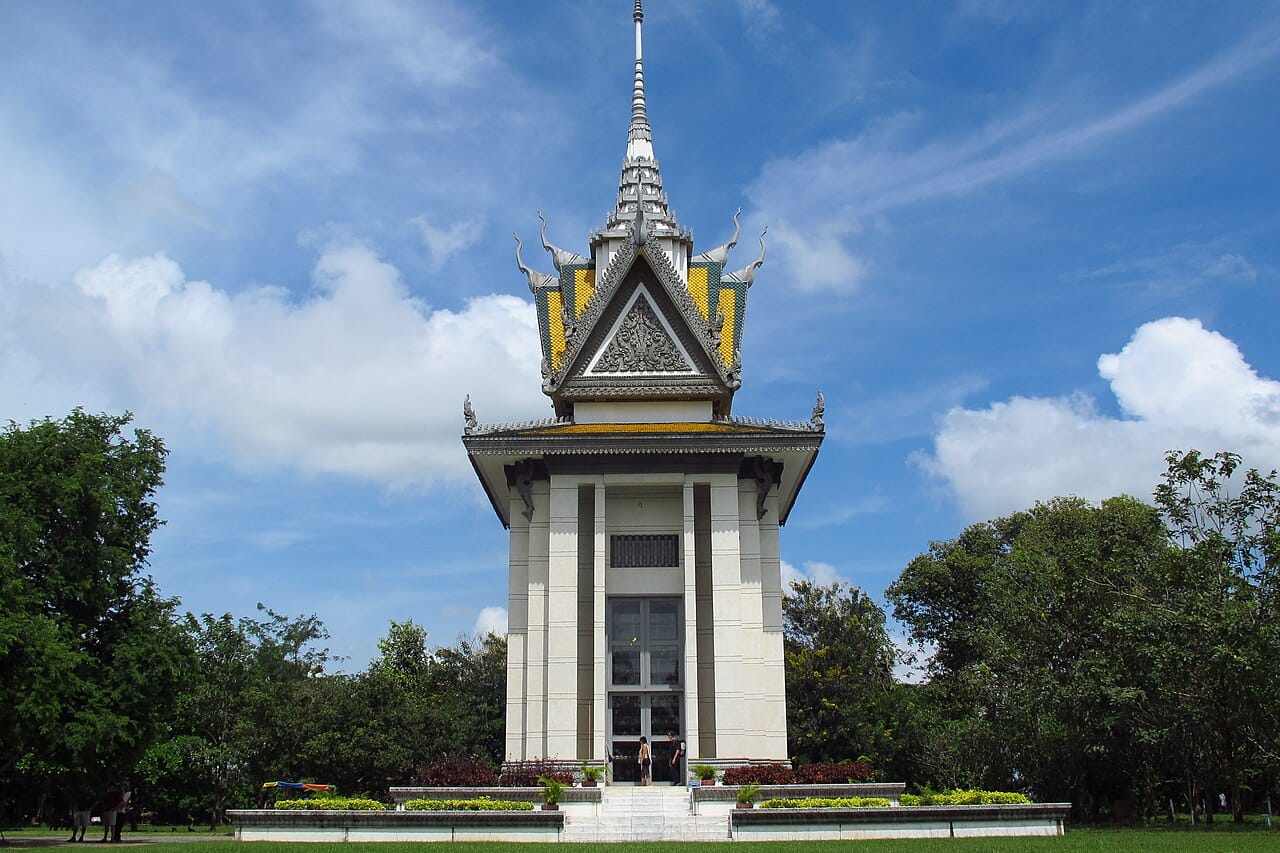
Independent Cambodia, led for years by King Norodom Sihanouk, tried to stay out of the war raging in neighbouring Vietnam but was drawn in, its territory secretly and heavily bombed by the United States. In 1975 the communist Khmer Rouge under Pol Pot seized power and attempted to remake the country into a rural society by force, emptying the cities and carrying out mass killings, forced labour, and starvation in which around two million people, a quarter of the population, died. A Vietnamese invasion ended the regime in 1979.
A cherished founding legend tells that the Khmer people sprang from the union of an Indian holy man or prince named Kaundinya and Soma, a princess of the Naga, the divine serpents who ruled the watery land. The Naga king, the story goes, drank up the floodwaters to create the country as a dowry. The legend expresses the blending of Indian and local culture at the root of Khmer civilisation, but it belongs to myth rather than the documented historical record.
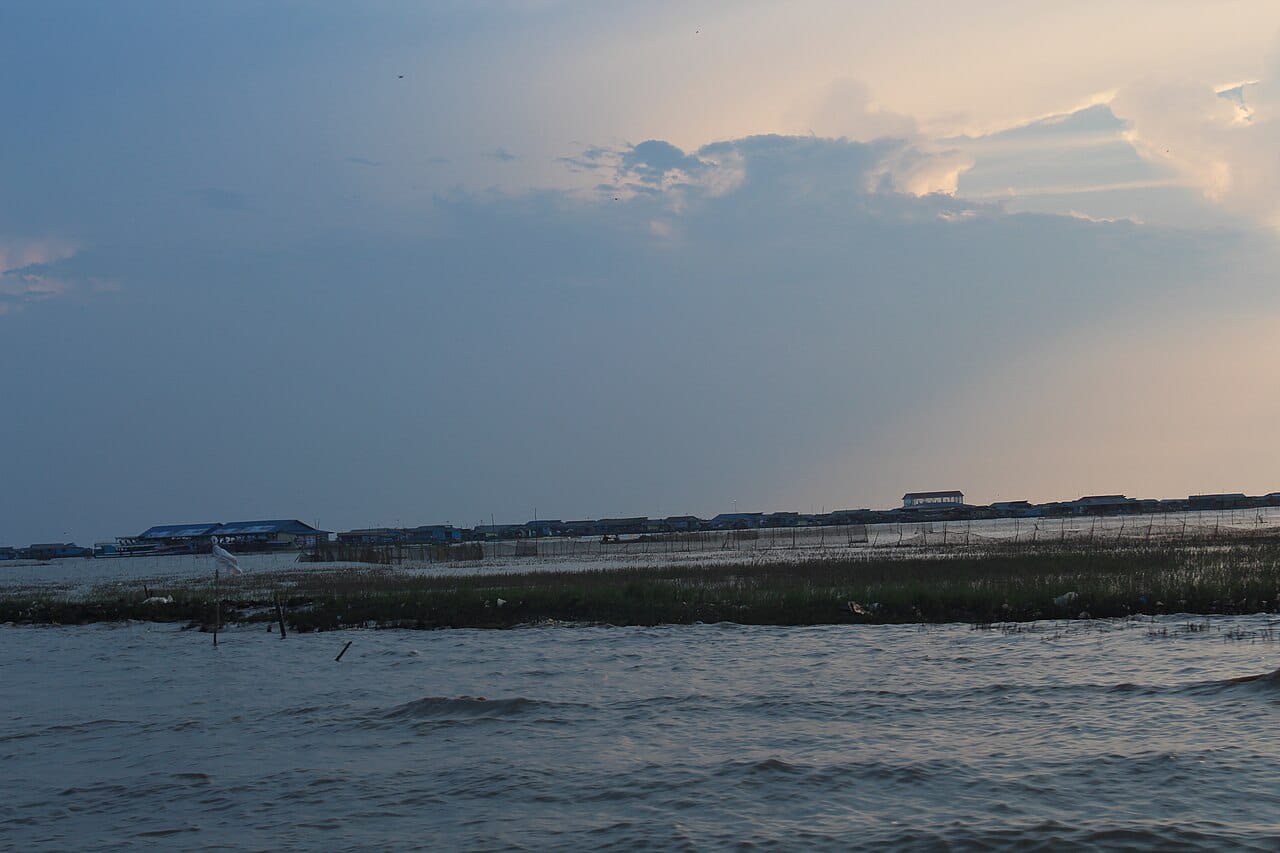
Cambodia is mostly a low, flat country centred on the basin of the Mekong River and the Tonle Sap, the largest freshwater lake in Southeast Asia. In a remarkable natural rhythm, the Tonle Sap river reverses its flow each year as the monsoon swells the Mekong, vastly expanding the lake and flooding the surrounding forests, which makes it one of the richest inland fisheries on Earth. Low mountains rise along some of the borders, and the southwest meets the Gulf of Thailand.
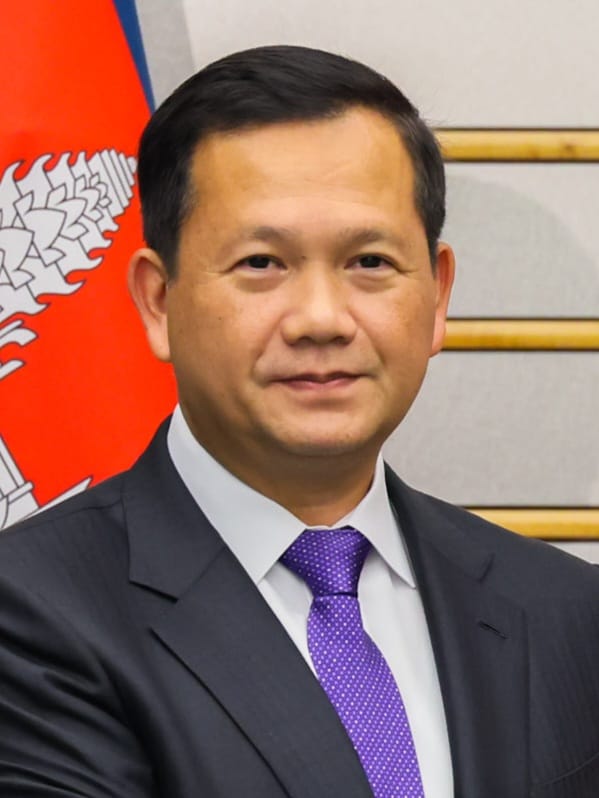
Cambodia is, in form, a constitutional monarchy, with King Norodom Sihamoni as a revered but ceremonial head of state. In practice the country has been dominated for decades by a single party, the Cambodian People's Party, and above all by Hun Sen, who ruled as prime minister for some thirty-eight years while the opposition and independent media were steadily suppressed. In 2023 Hun Sen handed the office to his son, Hun Manet, in a carefully arranged succession, while retaining great influence from behind the scenes as head of the party and the senate. The government points to stability and growth; critics describe a dynastic, one-party state with little room for dissent.
Cambodia is one of the poorer countries of the region but has grown quickly in recent decades. Its economy leans on the manufacture of garments and footwear, its largest export, and on tourism drawn above all to the temples of Angkor, alongside farming and a construction boom. Chinese investment has poured in, financing roads, dams, and the rapid, sometimes troubled, development of the coastal city of Sihanoukville. Agriculture, led by rice and the fishery of the Tonle Sap, still supports much of the population, and the challenge is to spread the new prosperity beyond the cities.
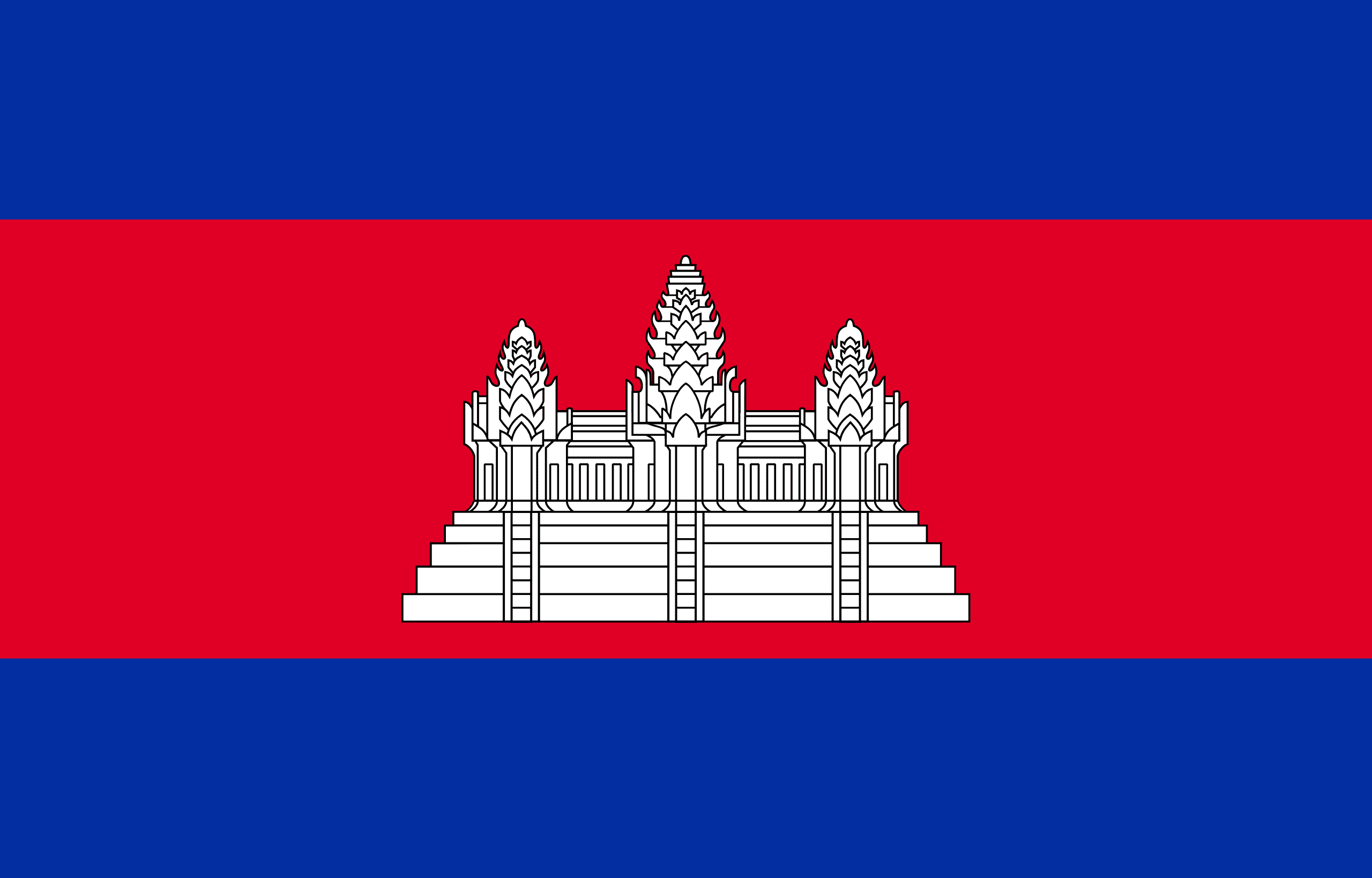
The flag of Cambodia is distinctive as one of the only national flags to feature a building: a white image of the temple of Angkor Wat sits at the centre of a broad red band, framed by two blue bands. The depiction of Angkor Wat reflects the central place of that ancient monument in the nation's identity and pride, while the red and blue are traditionally associated with the nation and the monarchy.
Cambodia is overwhelmingly Buddhist, following the Theravada tradition that has shaped the country for centuries and remains central to daily life, marked by saffron-robed monks and ornate pagodas in every community. Before Buddhism, the Khmer Empire was strongly influenced by Hinduism, which is why Angkor Wat was originally built as a Hindu temple before becoming Buddhist. Small Muslim and other minorities exist, but the rhythm of Buddhist observance defines the country's spiritual life.
Cambodian, or Khmer, cuisine is subtle and fragrant, often milder than that of its neighbours. Rice is the staple of every meal, and freshwater fish from the Tonle Sap is central, both fresh and as the pungent fermented paste called prahok that flavours many dishes. A beloved national dish is fish amok, a delicate curry steamed in banana leaf. Fresh herbs, lime, and a balance of flavours give Khmer food its distinctive, gentle character.
Agriculture is the foundation of Cambodian life, employing a large share of the population. Rice is by far the most important crop, grown in the fertile floodplains and increasingly exported. The astonishing fishery of the Tonle Sap provides a vital source of protein for the nation. Rubber is a significant plantation crop, and the country also grows cassava, maize, and other produce. Much farming remains small-scale and dependent on the seasonal floods.
Cambodian culture is heir to the grandeur of Angkor and shaped by Theravada Buddhism, expressed in the graceful classical dance known as the Apsara, in silk weaving and silversmithing, and in festivals such as the water festival that celebrates the reversing of the Tonle Sap. Family, the village, and the pagoda are the anchors of daily life. Yet the society also carries a deep wound: the loss of a quarter of the population under the Khmer Rouge, including much of the country's educated class, whose absence is still felt in a nation that remains strikingly young.
Two contested matters shape Cambodia's present. The first is the nature of its government. Supporters credit the long rule of Hun Sen and the Cambodian People's Party, and the recent handover to his son Hun Manet, with peace and rapid growth after decades of war; critics point to the suppression of opposition parties, the muzzling of independent media, and a dynastic grip on power as the marks of an authoritarian, one-party state. The second is the border with Thailand. The two countries have long disputed the ownership of ancient temples along their frontier, above all the cliff-top temple of Preah Vihear, which international courts have assigned to Cambodia; the quarrel flared into deadly armed clashes in 2025, and despite ceasefires the border has remained tense and largely closed, with each side accusing the other of aggression. Both the shape of Cambodian democracy and the dispute with Thailand remain unresolved and sensitive.
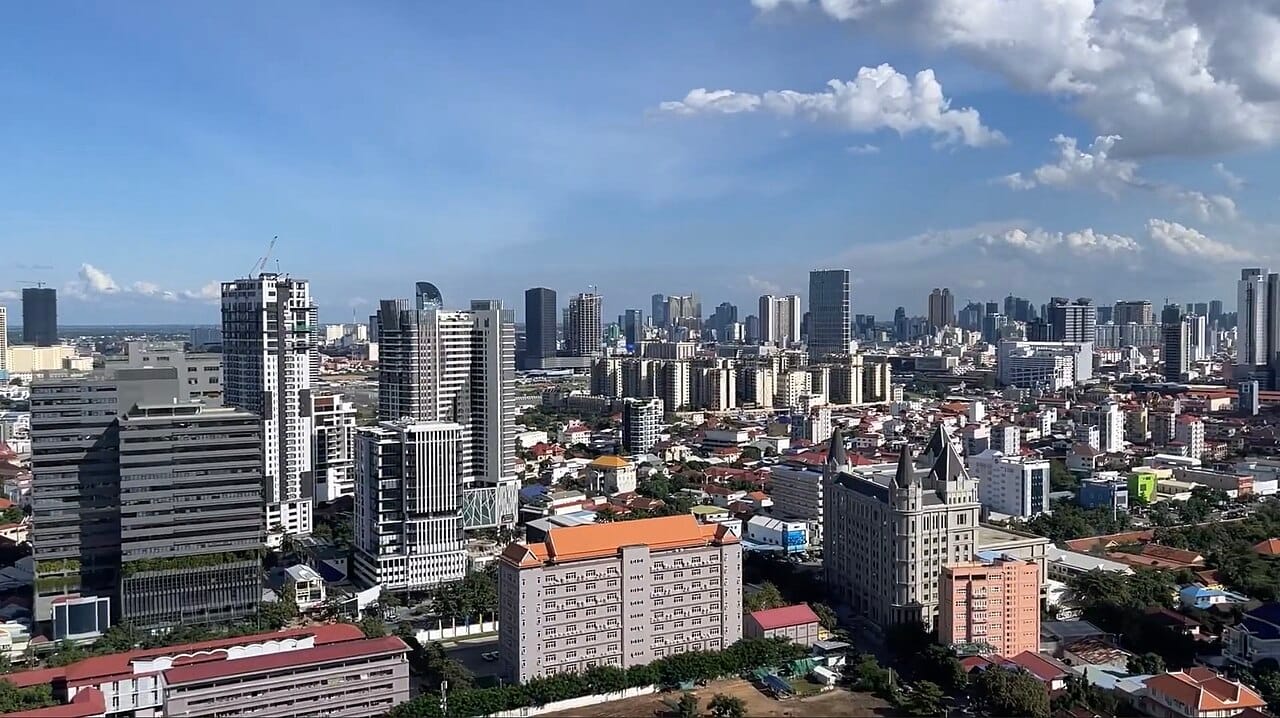
Cambodia has a population of around 17 million people, overwhelmingly ethnic Khmer, with Vietnamese, Cham, Chinese, and hill peoples among the minorities. The population is notably young, a demographic shaped in part by the loss of so many lives a generation ago. Most Cambodians live in the countryside along the rivers and around the great lake, though the capital, Phnom Penh, has grown rapidly as the centre of a recovering and modernising nation.