Azerbaijan is a country in the Caucasus, where Eastern Europe meets Western Asia, on the western shore of the Caspian Sea between Russia and Iran. Known as the Land of Fire for the natural flames that once burned from its gas-rich ground and inspired ancient fire worship, it is an oil-rich nation that helped pioneer the modern petroleum industry. A secular country with a Muslim majority, it blends Turkic, Persian, and Caucasian heritage and looks out from its dynamic capital, Baku, over the Caspian.
Azerbaijan's history runs from ancient fire worshippers and the medieval realm of the Shirvanshahs, through centuries as a borderland between Persian, Turkic, and Russian powers, to a pioneering oil boom and a modern independence marked by conflict.
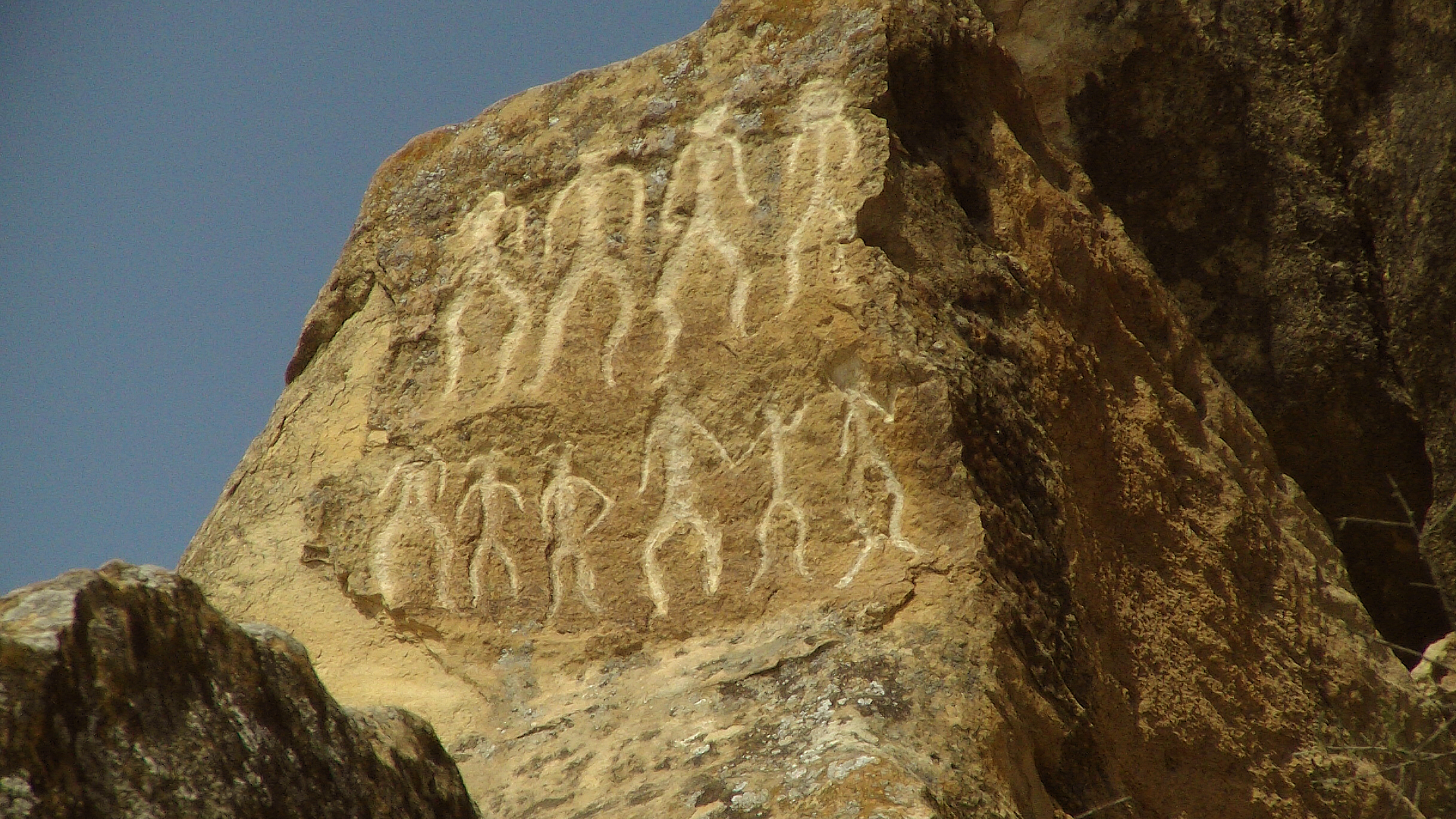
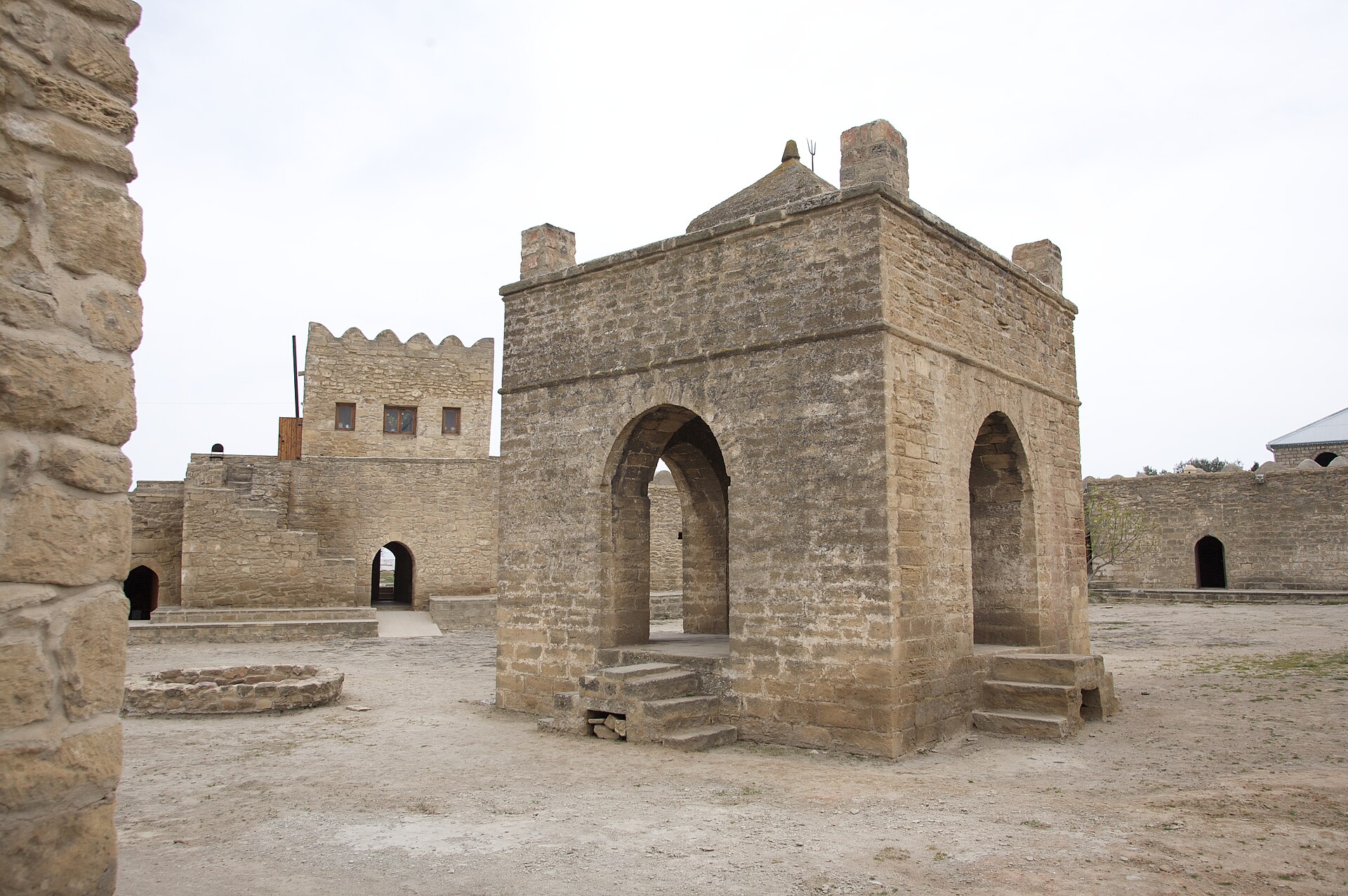
The land has been inhabited since deep antiquity, its ancient rock carvings at Gobustan among the oldest traces of human life in the region. Natural gas seeping from the ground kept eternal flames burning, and these gave rise to fire worship and to the Zoroastrian faith, earning the country its lasting name as the Land of Fire.
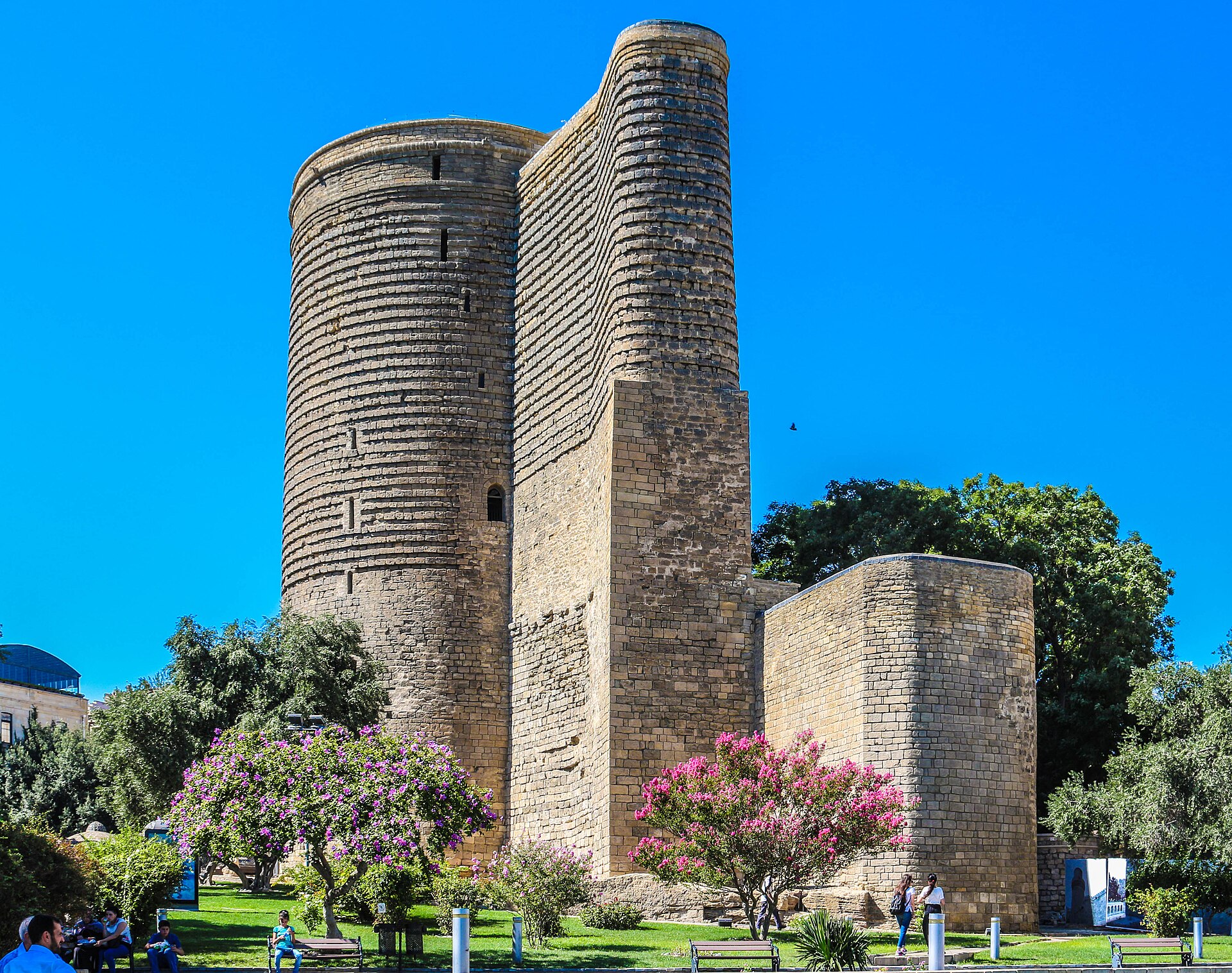
Over the centuries the region was ruled by Persian, Arab, and Turkic powers, and the people came to speak a Turkic language and embrace Islam. Local dynasties, above all the long-lived Shirvanshahs, made Baku and their other cities into centres of trade and culture, leaving behind fine palaces and monuments.
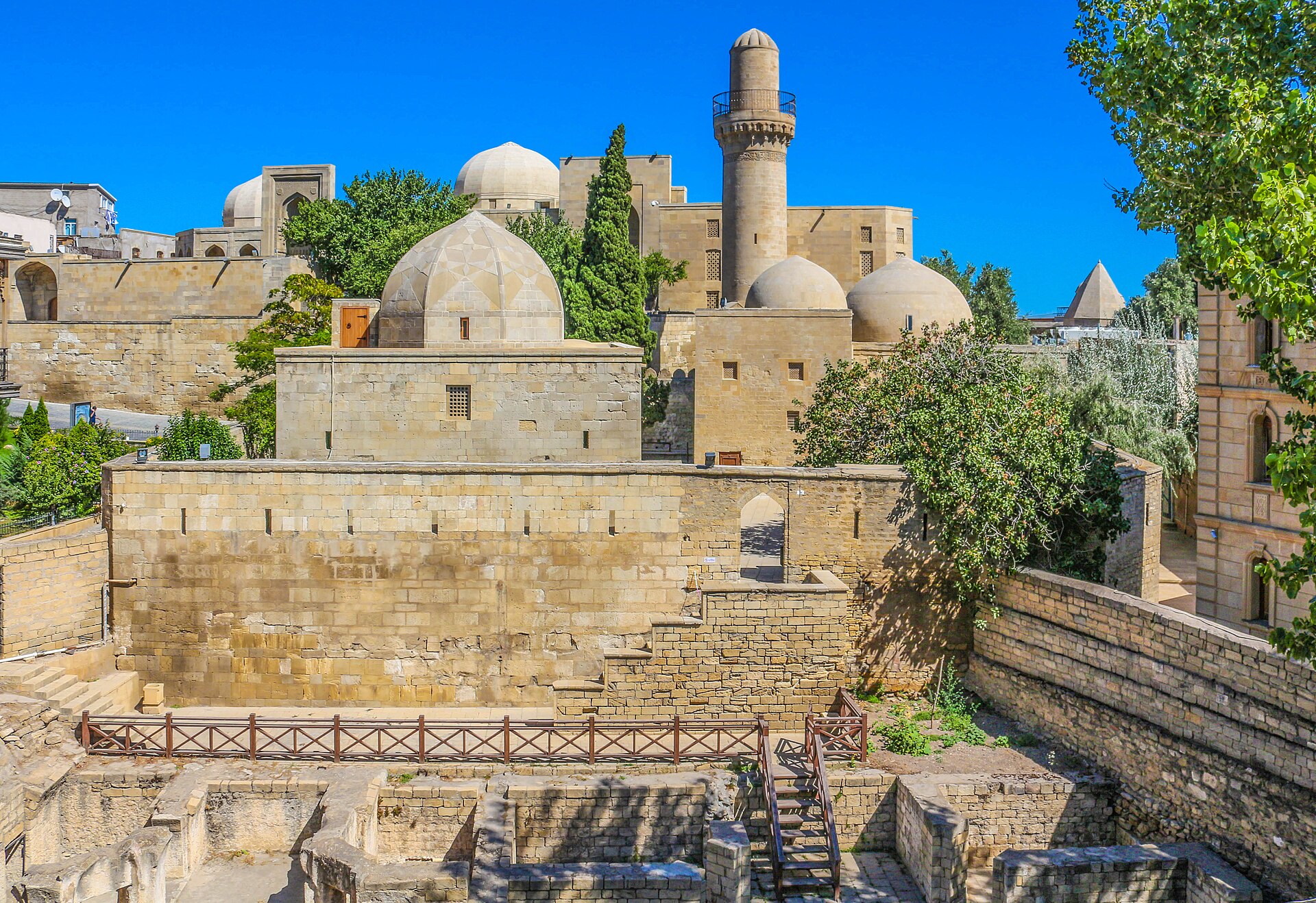
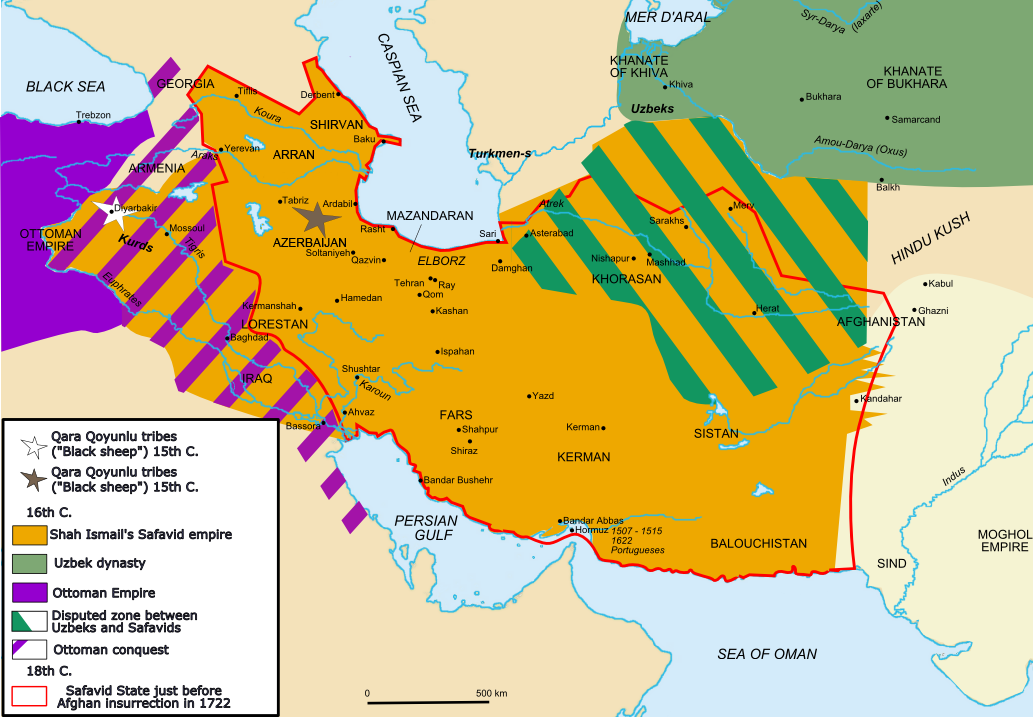
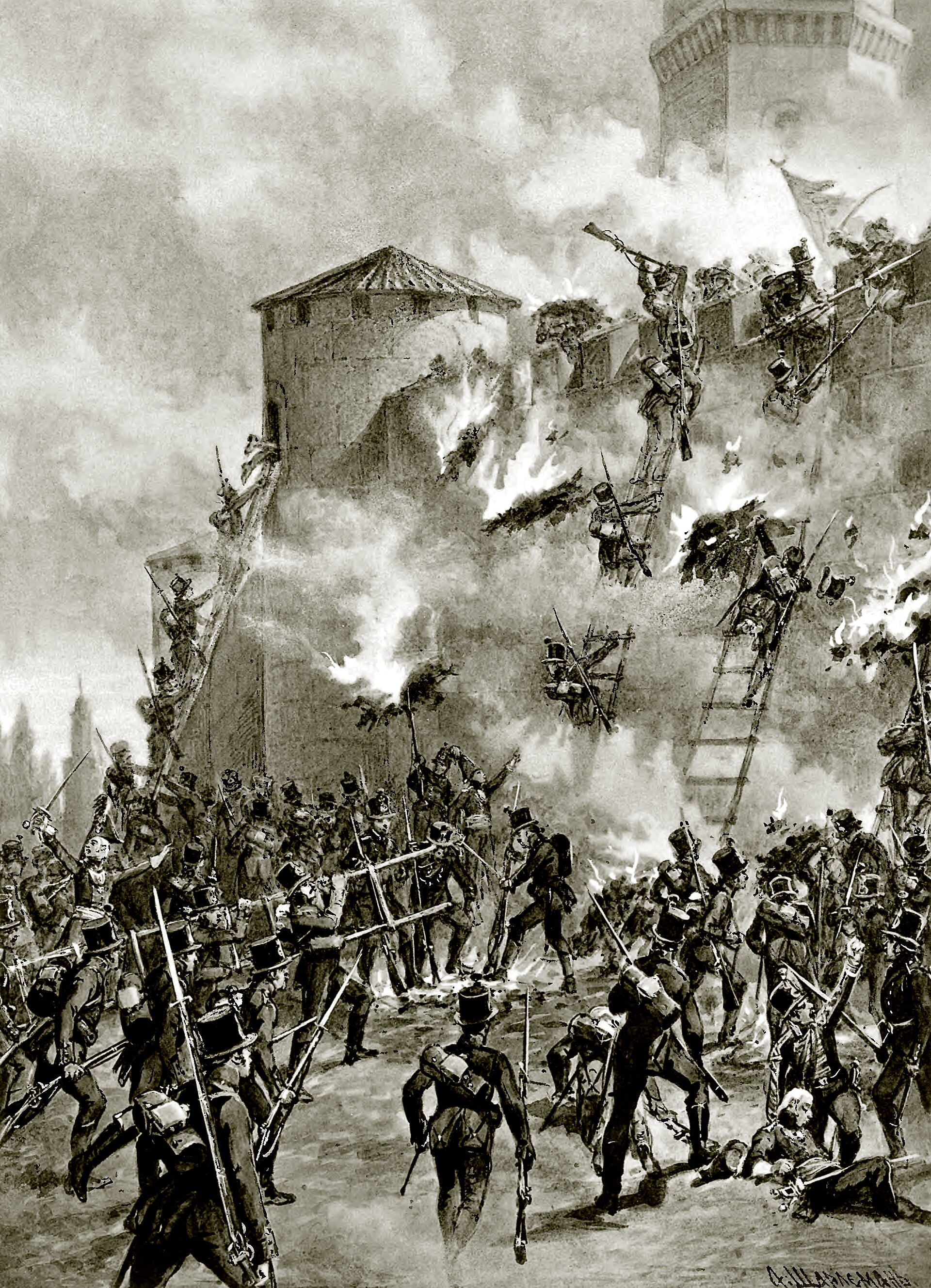
For long stretches the region lay within the Persian world, ruled by the Safavids and their successors, before the expanding Russian Empire wrested the lands north of the Aras river from Persia in the early nineteenth century. That division still shapes the region, with many more ethnic Azerbaijanis living across the border in Iran than in Azerbaijan itself.
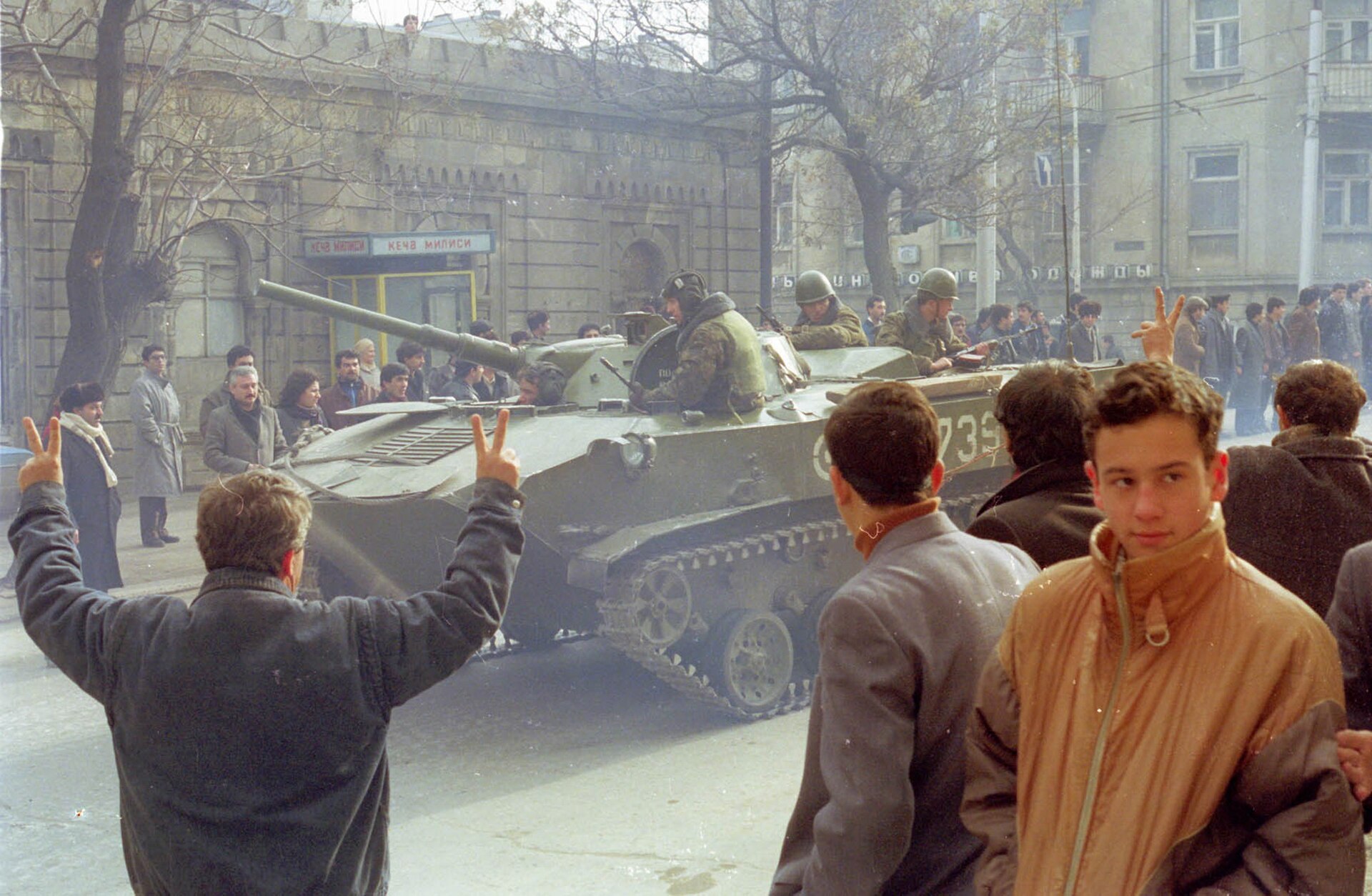
In 1918 the northern part of the region briefly became the Democratic Republic of Azerbaijan, remembered as the first secular democratic republic in the Muslim world, before it was absorbed into the Soviet Union. Soviet rule lasted seven decades, ending amid violence as Soviet troops cracked down on independence protesters in Baku in 1990, and full independence followed in 1991.
Azerbaijan's landscape ranges from the high peaks of the Greater Caucasus in the north to lowland plains around the central rivers and a long coastline on the landlocked Caspian Sea, the largest inland body of water in the world. The country has a great variety of climates within a small area, from cold mountains to a semi-arid centre and humid subtropical lowlands in the southeast. Its Caspian shore and the lands beneath it hold the oil and gas that have shaped its modern history.
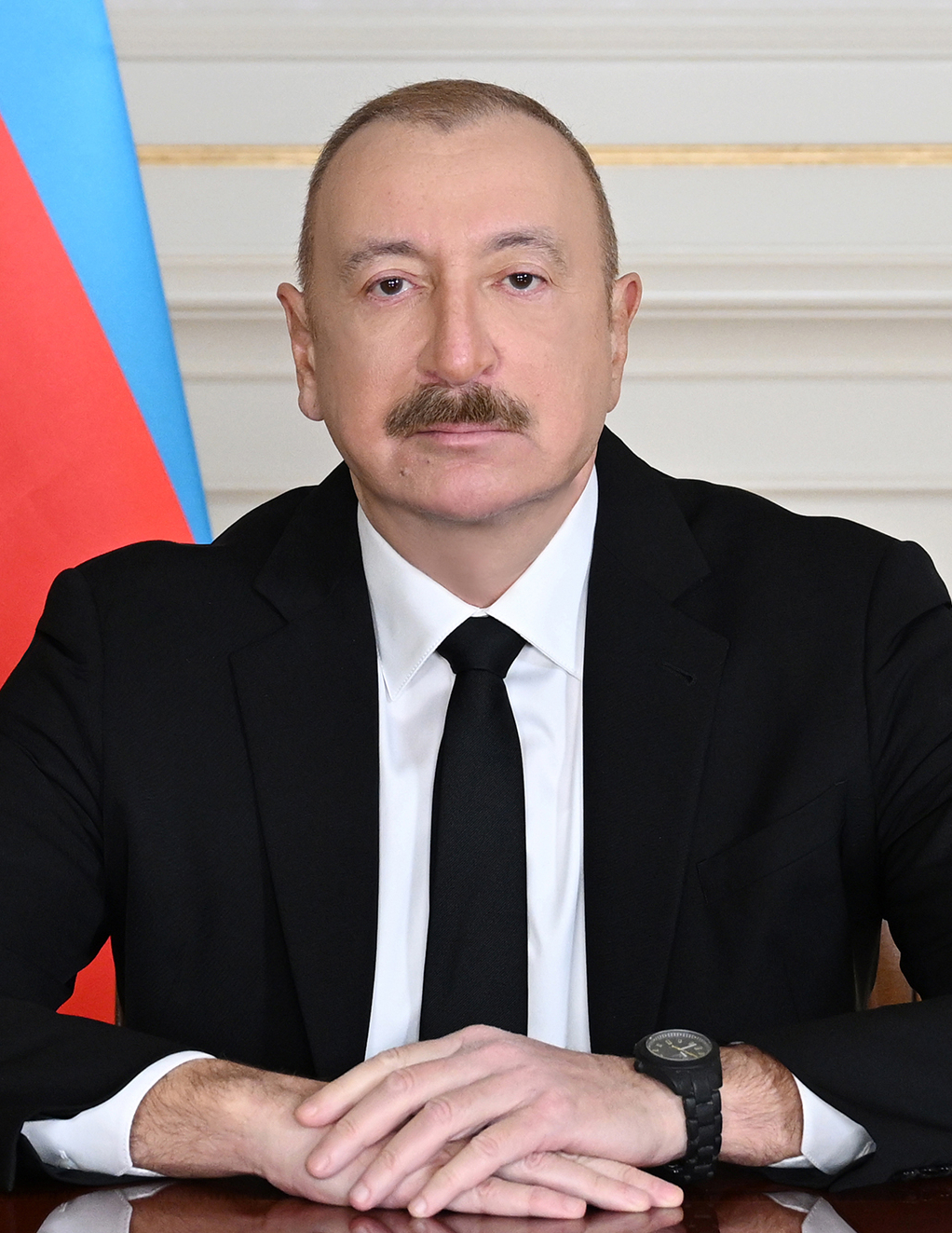
Azerbaijan is a presidential republic in which power is tightly held by the ruling family. Heydar Aliyev, a former Soviet-era leader, took power in 1993, and on his death in 2003 was succeeded by his son, Ilham Aliyev, who has ruled since, in the first hereditary transfer of power in a post-Soviet state. The system concentrates authority in the presidency, with limited space for opposition, and it draws both strength and criticism from the oil wealth that funds the state and its ambitions.
Azerbaijan's economy is built on oil and natural gas. Baku was a cradle of the world's petroleum industry, producing a large share of the globe's oil around the turn of the twentieth century, and energy still dominates, funding the state and the transformation of the capital. Pipelines carry Azerbaijani oil and gas westward to Europe, giving the country strategic importance. The great challenge is to diversify beyond hydrocarbons, and agriculture, on the country's varied and fertile lowlands, remains important to rural life.
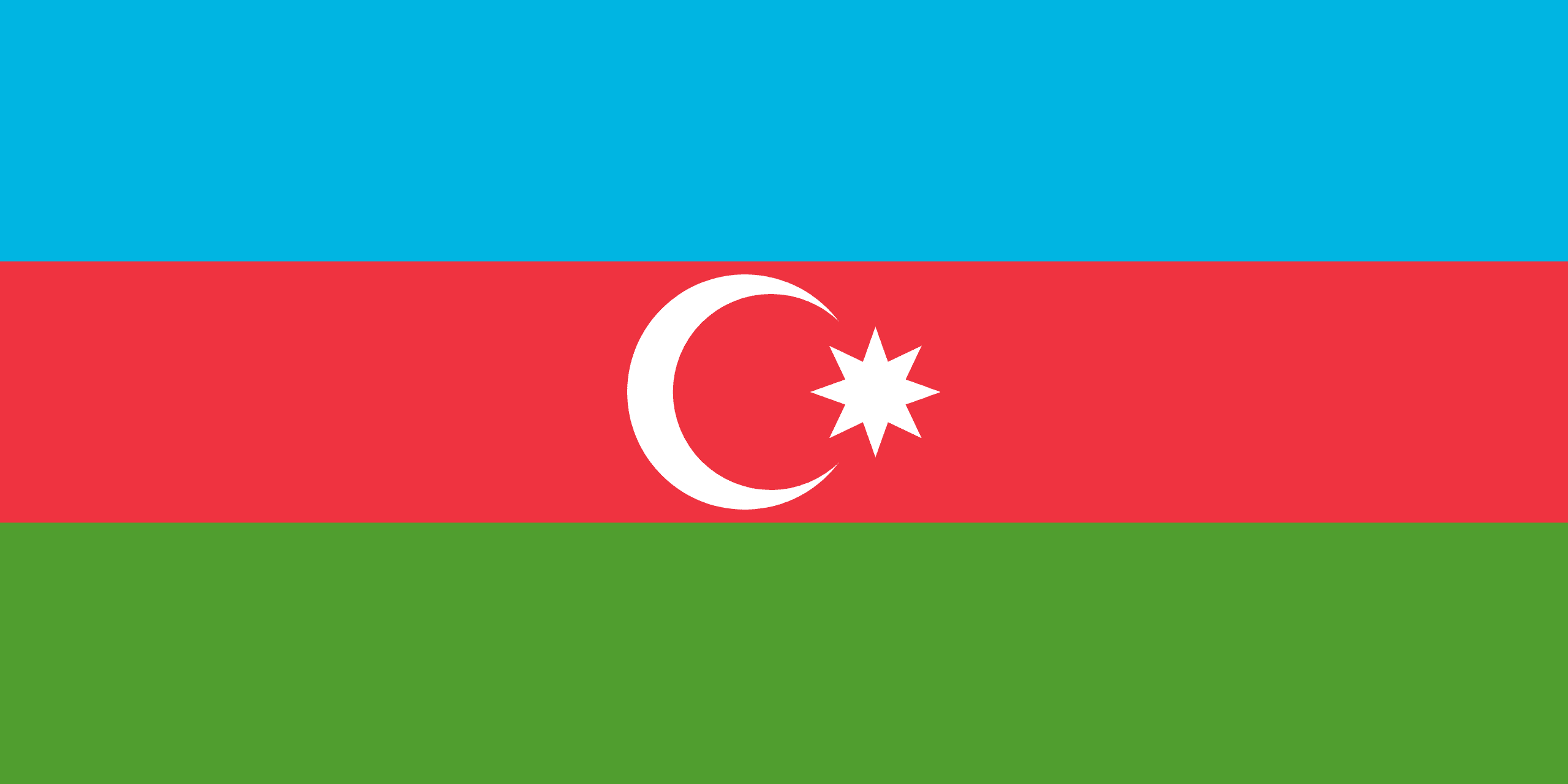
The flag of Azerbaijan has three horizontal bands of blue, red, and green, with a white crescent moon and an eight-pointed star in the centre of the red band. The blue is said to represent the country's Turkic heritage, the red its drive toward modernity and progress, and the green its ties to Islam. The crescent and star are traditional symbols of Islam, and the eight points of the star are sometimes linked to the branches of the Turkic peoples.
The majority of Azerbaijanis are Muslims, predominantly of the Shia branch, which connects them to neighbouring Iran, alongside a significant Sunni minority, yet Azerbaijan is a notably secular state with a tradition of religious tolerance. The land's deeper religious history includes Zoroastrianism, the ancient Persian faith that revered fire, fitting for a place where flames once rose from the ground, and small communities of Christians and Jews have long lived in the country.
Azerbaijani cuisine draws on Persian, Turkic, and Caucasian traditions, rich in herbs, fruit, and spices. Its signature dish is plov, a saffron-scented rice served with meat, fruit, or herbs in many varieties, considered the crown of the cuisine. Kebabs, dolma of stuffed vine leaves and vegetables, and rich stews are staples, and the country is famous for its tea culture, with strong black tea served from ornate pots, often accompanied by jam and sweets.
Although oil and gas dominate the economy, agriculture remains important to Azerbaijan, favoured by its varied climates. The fertile lowlands produce cotton, grains, and an abundance of fruits and vegetables, and the country has a long tradition of growing grapes for wine and tea on its humid southern coast. Caviar from the sturgeon of the Caspian Sea is a famous, if now scarce, delicacy. Farming sustains much of the rural population away from the energy industry.
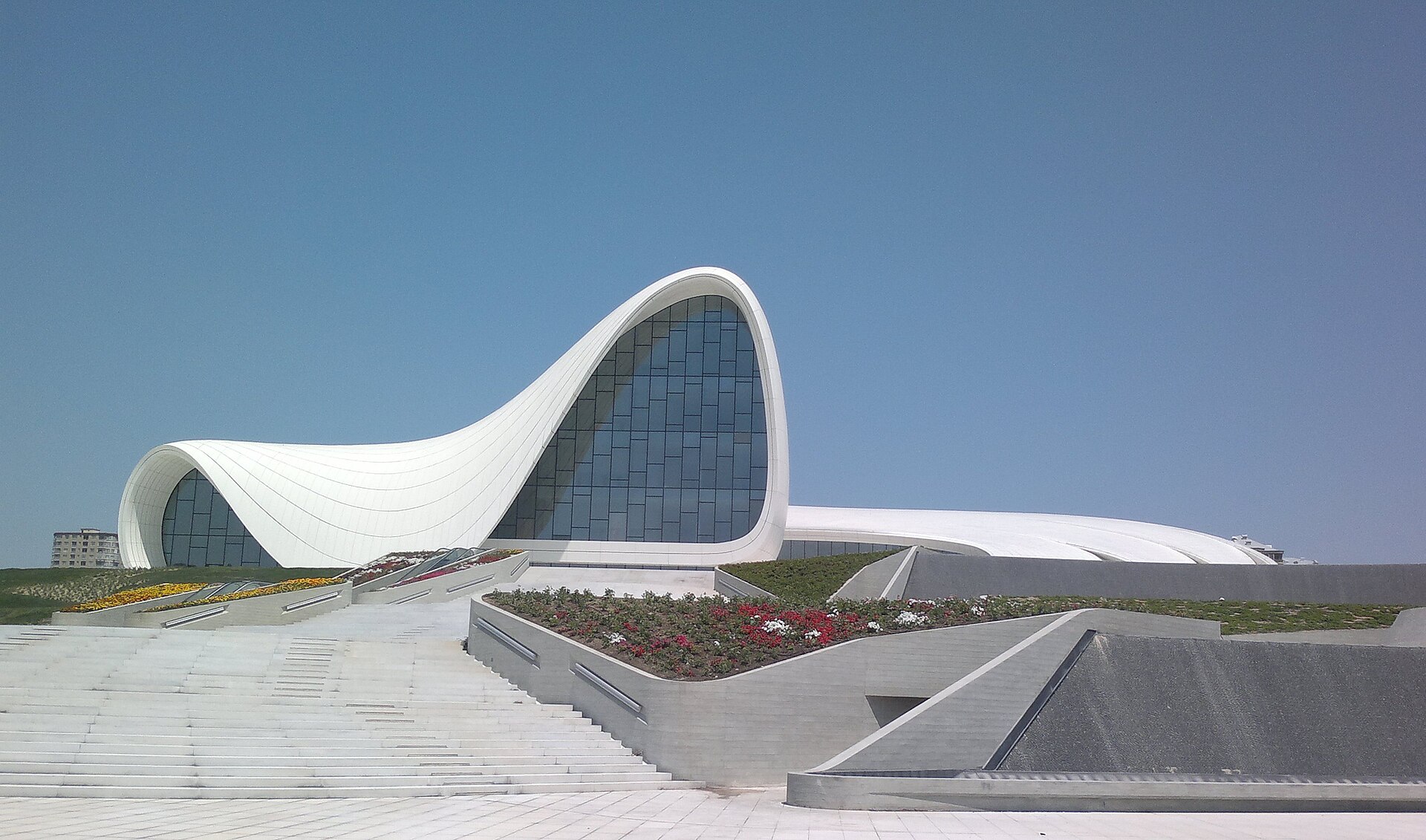
Azerbaijani culture blends Turkic, Persian, and Caucasian influences, expressed in a rich tradition of poetry, carpet weaving, and the haunting improvised music known as mugham. Society is largely secular and increasingly urban, and modern Baku has become a showcase of ambition, its medieval walled town set against bold new architecture built with oil money. A famous emblem of that new confidence is the sweeping cultural centre named for Heydar Aliyev, its flowing white curves among the most celebrated modern buildings in the region.
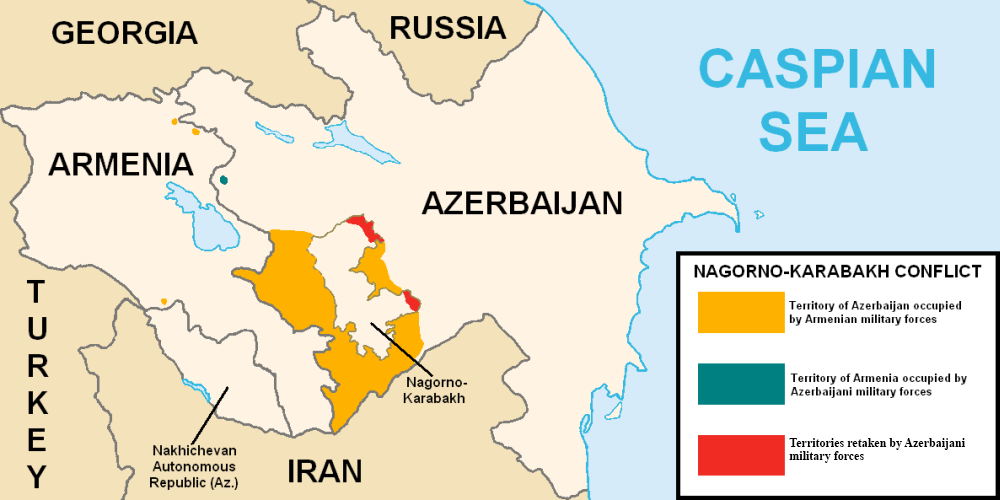
The defining conflict of modern Azerbaijan has been over Nagorno-Karabakh, a mountainous territory within its borders that was populated mainly by ethnic Armenians. As the Soviet Union collapsed, a war between Azerbaijan and Armenia left the region and surrounding lands under the control of its Armenian population, backed by Armenia, and displaced hundreds of thousands of Azerbaijanis. Azerbaijan retook much of the territory in a war in 2020, and in a swift offensive in September 2023 it recovered the rest, after which almost the entire Armenian population, more than one hundred thousand people, fled to Armenia and the breakaway authorities dissolved at the start of 2024. Azerbaijan describes this as the restoration of its territorial integrity, while for Armenians it was the loss of an ancient homeland and, in the view of many, an act of ethnic cleansing. The fate of the region and the prospects for a lasting peace between the two countries remain sensitive and closely watched.
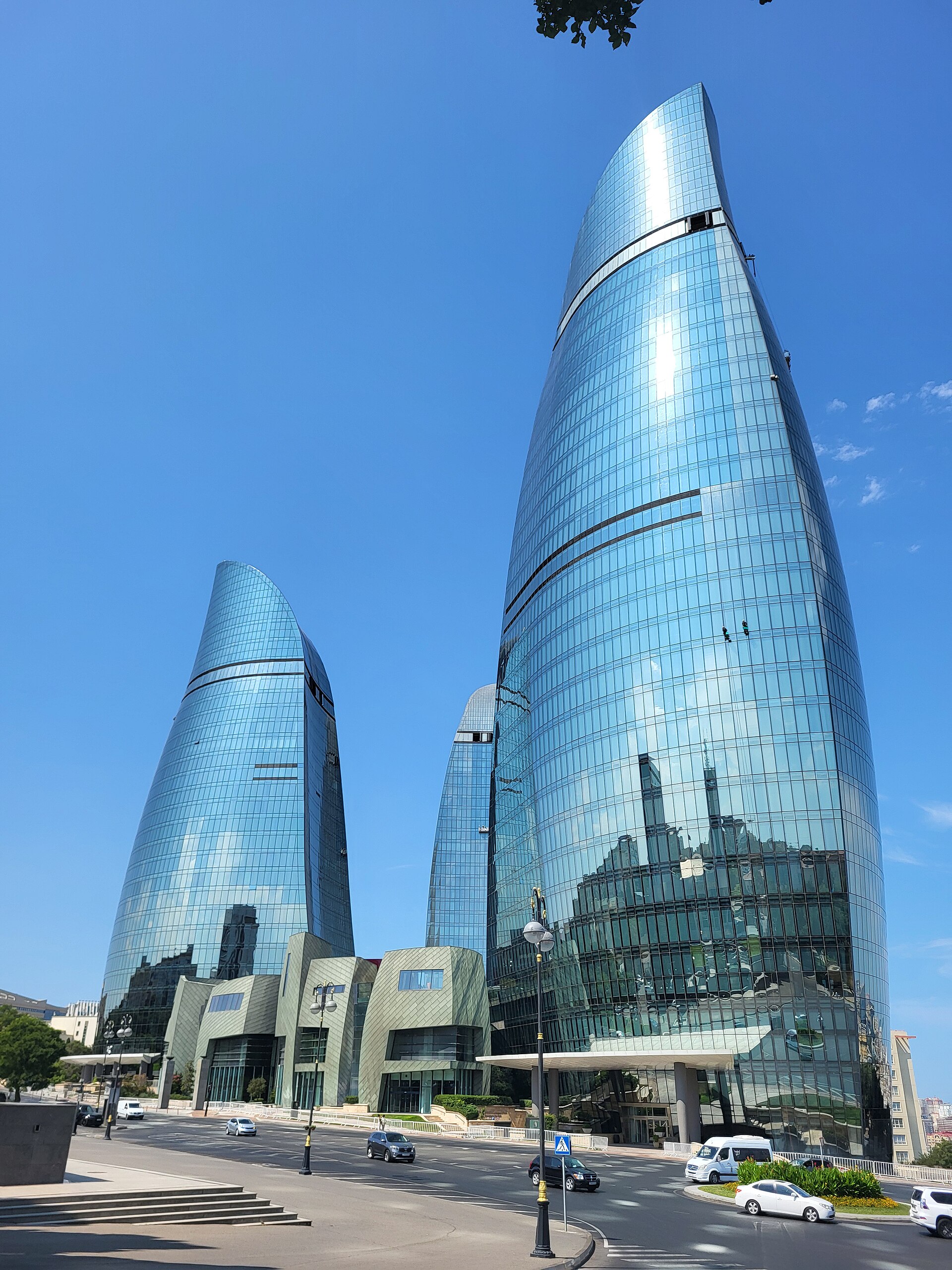
Azerbaijan has a population of around 10 million people, the great majority ethnic Azerbaijanis, a Turkic people, with various minorities. The population is concentrated on the plains and along the Caspian coast, above all in the capital, Baku, a fast-modernising city of oil wealth whose skyline of new towers rises beside a medieval walled old town. A large number of ethnic Azerbaijanis also live across the border in neighbouring Iran.