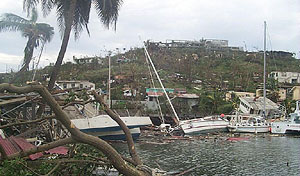
Grenada is an island nation in the southeastern Caribbean, among the Windward Islands near the coast of South America, made up of the main island of Grenada and several smaller islands. Known as the Spice Isle, it is one of the world's leading producers of nutmeg and other spices, whose fragrance is part of the island's identity. A former British colony with a French colonial past, it became independent in 1974, and a few years later was the scene of a dramatic Marxist revolution and a subsequent United States-led invasion that drew the world's attention to the small island.
The island was home to indigenous peoples who long resisted European settlement before the French colonised it in the seventeenth century, establishing plantations worked by enslaved Africans. Grenada passed to Britain in the eighteenth century and continued as a sugar and then spice colony. It gained independence from Britain in 1974. In 1979 a leftist movement seized power in a bloodless coup, establishing a revolutionary government with close ties to Cuba, but in 1983 the revolution collapsed in violence with the killing of its leader, prompting a United States-led military intervention.
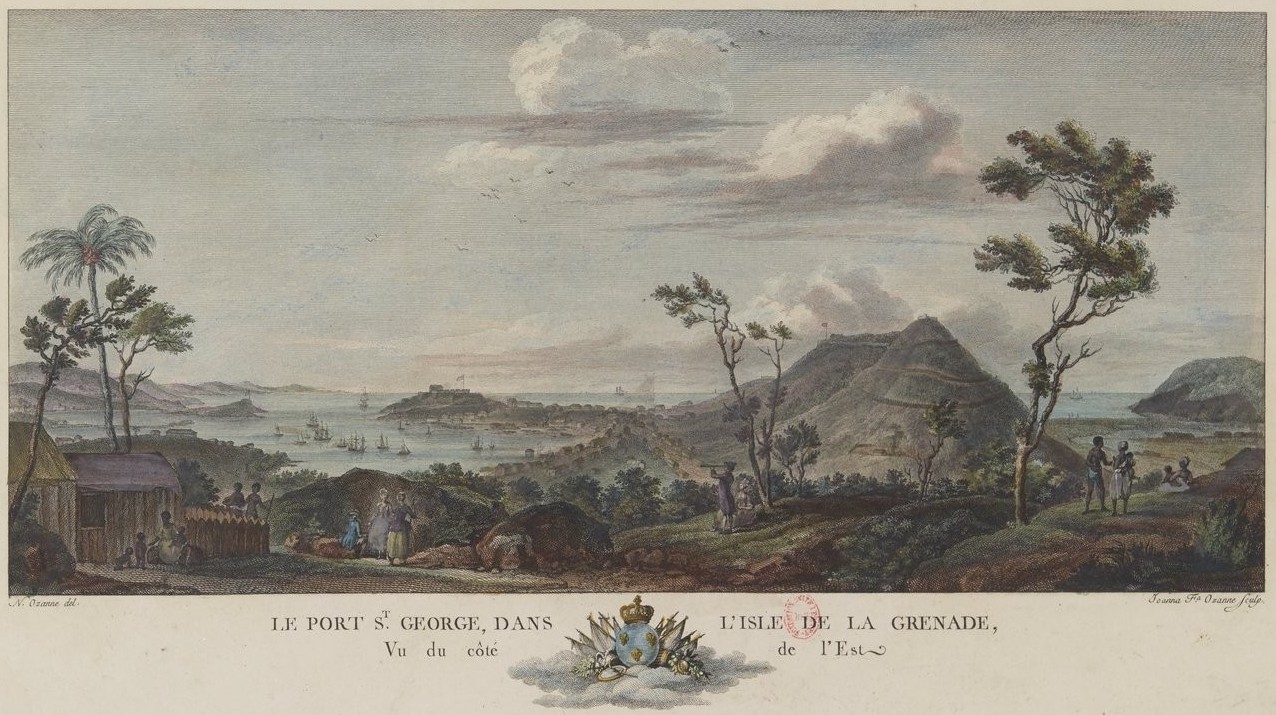
Grenada is a small, mountainous island of volcanic origin, with a central ridge of forested peaks, including crater lakes and hot springs, falling to a coastline of bays and beaches. The interior is green and lush, watered by ample rainfall and cloaked in rainforest and the spice plantations for which the island is famous, while the south coast holds the picturesque capital and its harbour. The nation also includes the islands of Carriacou and Petite Martinique to the north. Lying at the southern edge of the hurricane belt, Grenada is usually, though not always, spared the worst Caribbean storms.
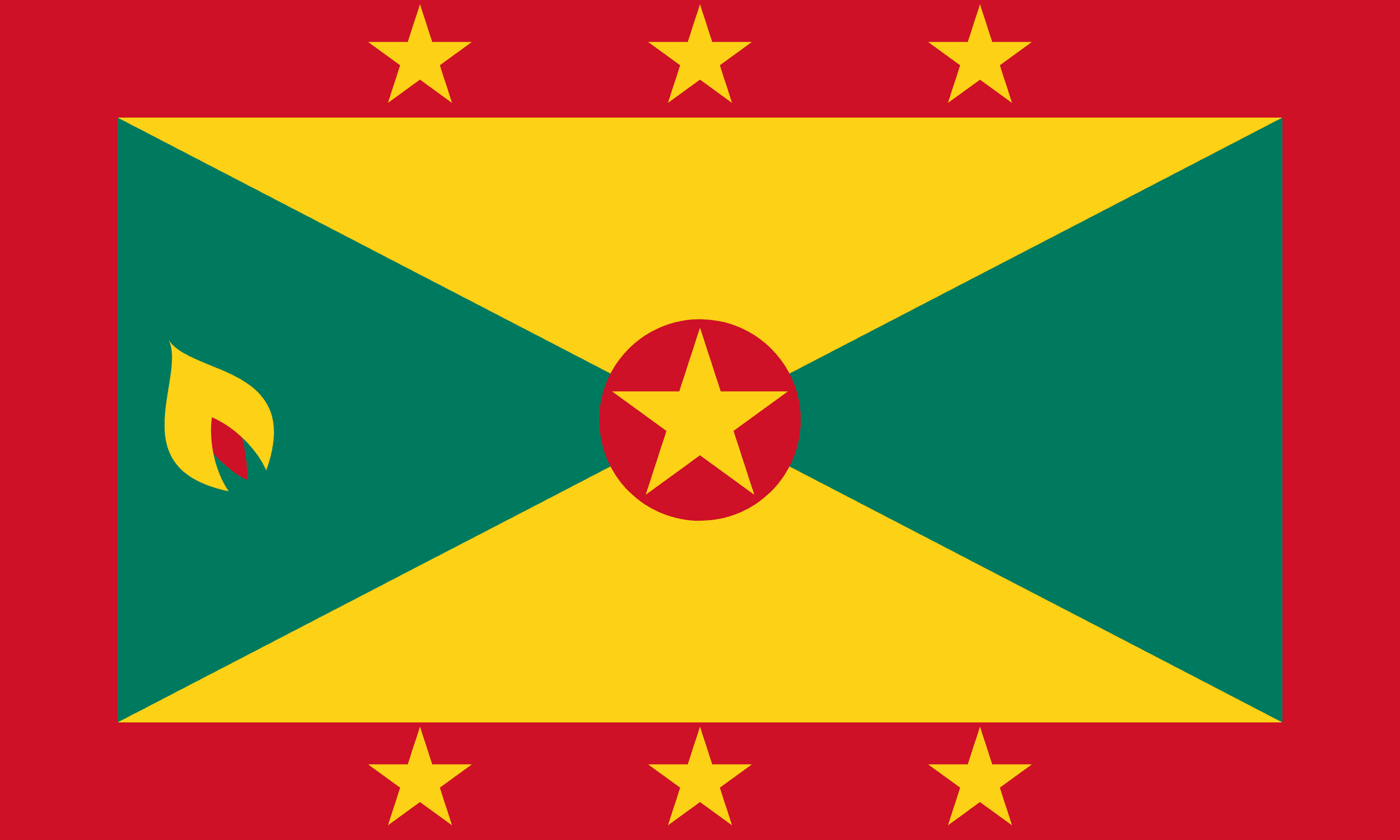
The flag of Grenada has a red border bearing seven yellow stars, with a central rectangle divided diagonally into yellow and green triangles and a red disc with a star in the middle, plus a small emblem of a nutmeg on the hoist side. The red stands for courage and vitality, the yellow for wisdom and the sun, and the green for the lush vegetation and agriculture. The seven stars represent the country's seven parishes, and the nutmeg recalls the spice that made Grenada famous, making it one of the few national flags to depict a crop.
Grenada is a strongly Christian country, reflecting both its French and British colonial heritage. Roman Catholicism, a legacy of French rule, is the largest single denomination, while a range of Protestant churches, including Anglican, Pentecostal, Seventh-day Adventist, and others brought under British influence, are also widely followed. Churches are central to community life across the island, and religious festivals and observances are an important part of the culture. As elsewhere in the Caribbean, the faith of the majority reflects the African heritage of the people interwoven with European Christianity.
Grenadian cuisine is Caribbean cooking infused, fittingly for the Spice Isle, with the nutmeg, cinnamon, and other spices grown on the island. The national dish is oil down, a hearty one-pot stew of breadfruit, salted meat, vegetables, and dumplings cooked in coconut milk until the liquid is absorbed. Fresh seafood, including the local catch, callaloo, ground provisions, and tropical fruit feature strongly, and nutmeg flavours everything from savoury dishes to drinks and desserts, as well as the local nutmeg jam and ice cream, in a food culture defined by the island's fragrant spices.
Agriculture is central to Grenada's identity and economy, and above all it means spices: the island is one of the world's leading producers of nutmeg and its associated spice mace, along with cinnamon, cloves, ginger, and others, which have earned it the name the Spice Isle and long formed the backbone of its exports. Cocoa, of fine quality and increasingly made into local chocolate, and tropical fruits are also important, alongside fishing. Spice production, however, has at times been devastated by hurricanes, which can destroy the slow-growing nutmeg trees for years.
The era of French and British rule and the plantation economy shaped Grenada, but its most dramatic modern chapter came after independence in 1974, when the revolution of 1979 brought a Marxist government to power. The collapse of that revolution in 1983, with the murder of its leader Maurice Bishop, triggered a United States-led invasion that ended the experiment and made the small island a focus of Cold War attention. In 2004 Hurricane Ivan struck Grenada with devastating force, damaging most of the island and its vital nutmeg crop.
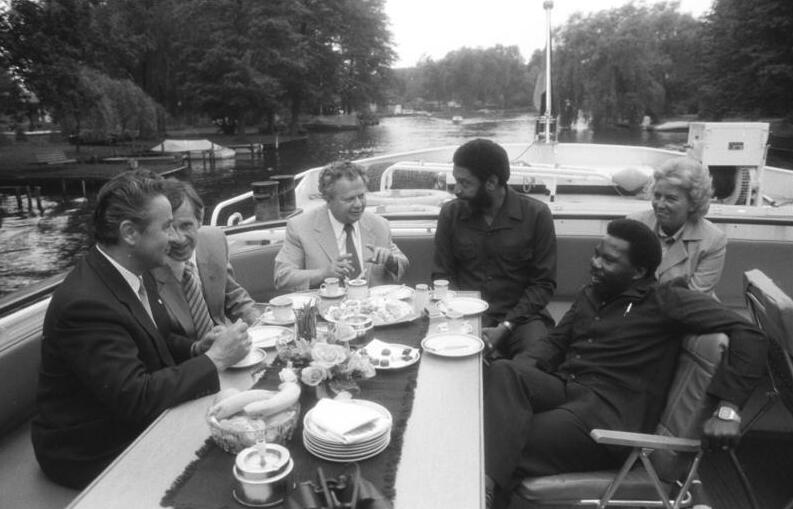
Grenada has a population of around 110,000 people, the great majority of African descent, descendants of those brought to the island in slavery, with minorities of mixed, Indian, and European heritage. English is the official language, spoken alongside a French-based creole that reflects the island's French colonial past. The population is concentrated on the main island, especially around the capital, St George's, with its scenic harbour, while smaller communities live on Carriacou and Petite Martinique. A significant Grenadian diaspora lives abroad, and the island has produced figures of note far beyond its size.