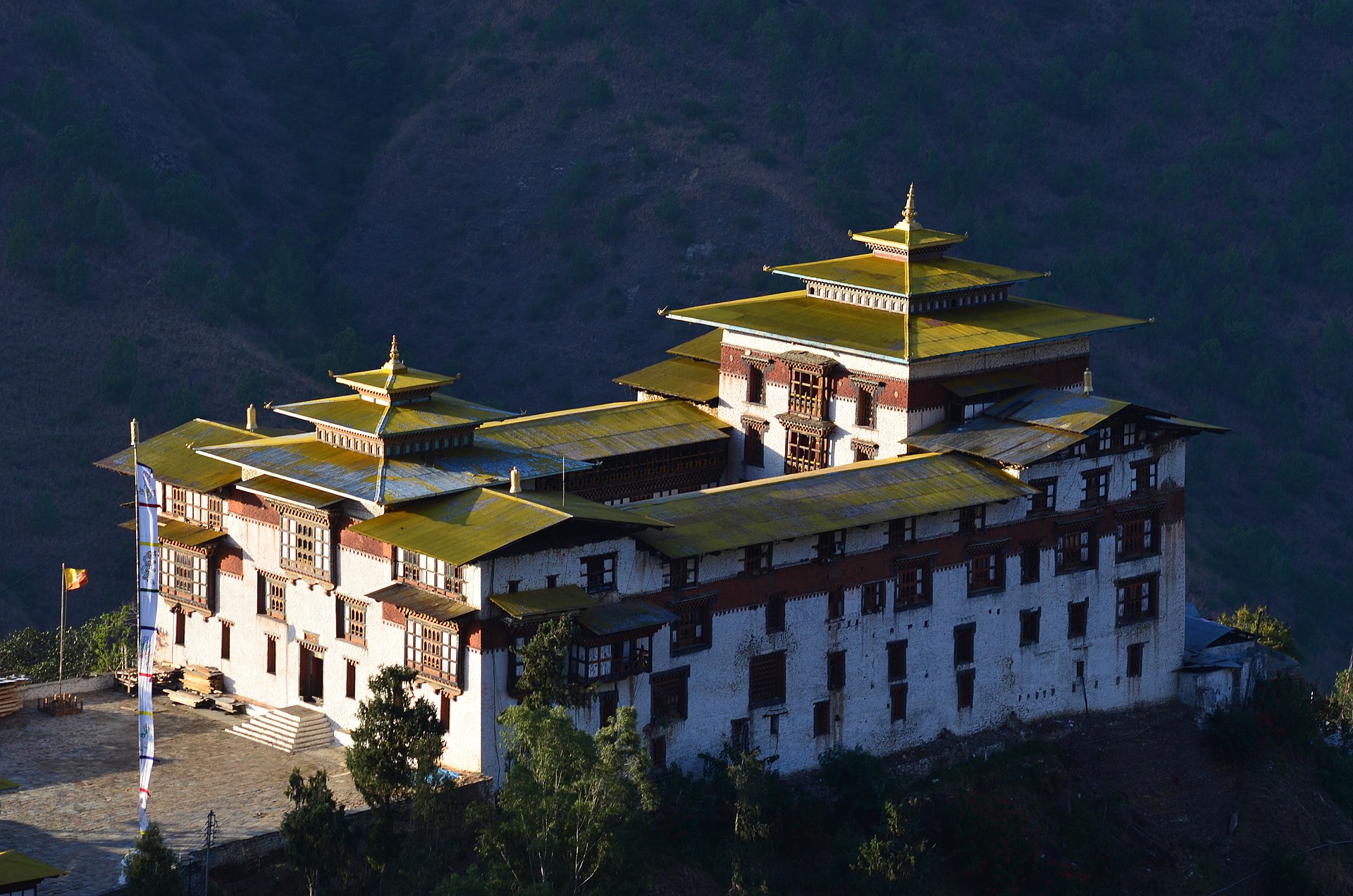
Bhutan is a small, landlocked kingdom in the eastern Himalayas, wedged between India and the Tibetan region of China. A Buddhist nation of soaring snow peaks, deep forested valleys, and fortress-monasteries called dzongs, it long kept itself in deliberate isolation, opening only slowly to the outside world. Famous for measuring its progress by Gross National Happiness rather than by wealth alone, and for being one of the few carbon-negative countries on Earth, Bhutan has sought to modernise while fiercely guarding its environment, culture, and traditions.
Bhutan's history is bound up with Tibetan Buddhism, which shaped its culture from early times. In the seventeenth century a Tibetan lama, the Zhabdrung, unified the warring valleys into a single state, building the great dzongs and creating a distinctive system of rule combining religious and political authority. After a period of internal strife, the Wangchuck family established a hereditary monarchy in 1907, which endures today. Bhutan was never colonised, though it came under British and later Indian influence in its external affairs, and it remained deliberately closed and isolated well into the twentieth century.
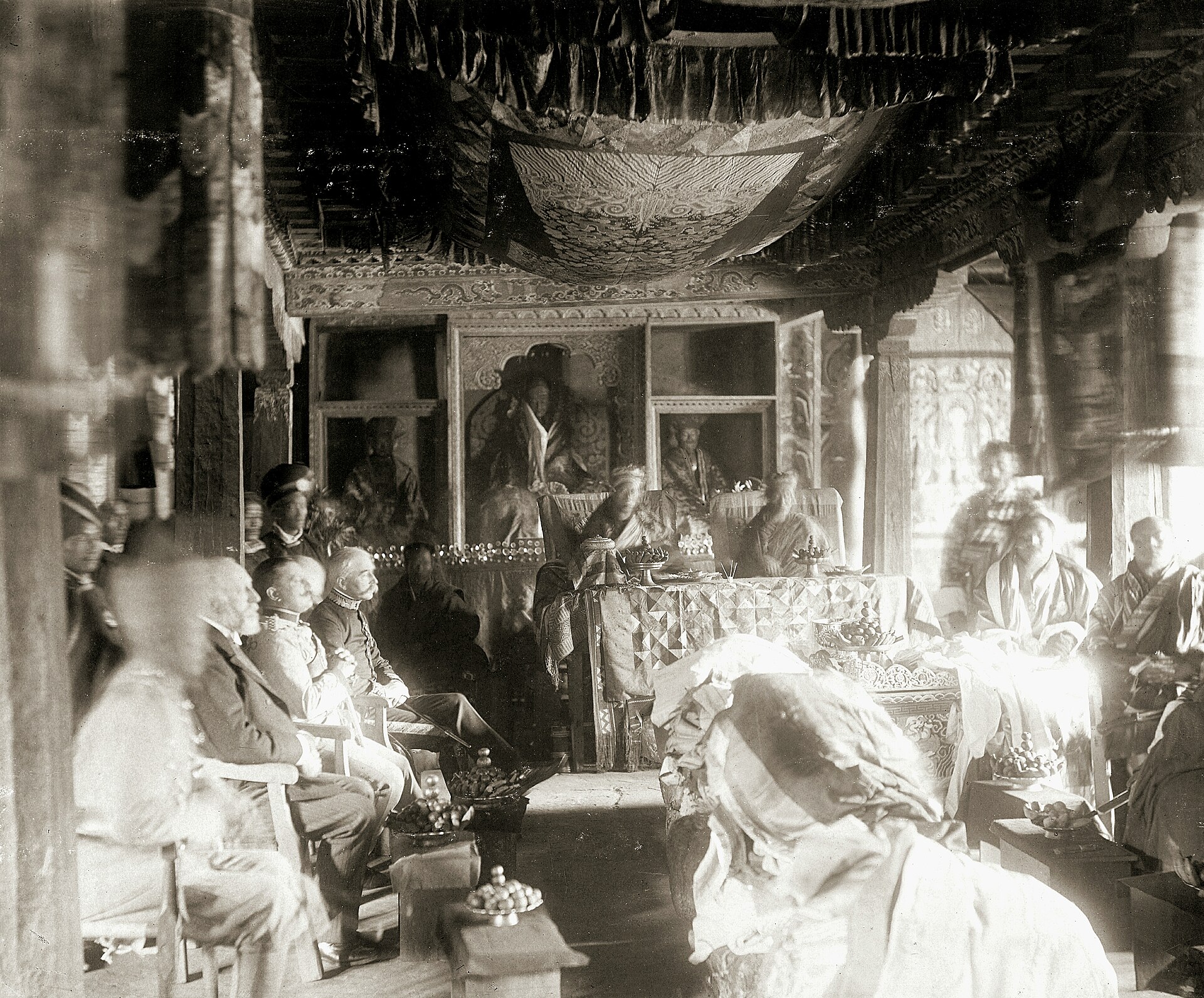
Bhutan's most sacred site, the Paro Taktsang monastery, clings to a cliff at a place known as the Tiger's Nest, and tradition holds that the Buddhist master Guru Rinpoche, also called Padmasambhava, flew there in the eighth century on the back of a tigress to subdue local demons and meditate in a cave. This story is central to Bhutanese Buddhist belief and identity. While Guru Rinpoche is a genuine historical and religious figure revered across the Himalayas, the miraculous flight is a matter of sacred legend rather than verifiable history.
Bhutan is an almost entirely mountainous country, rising from subtropical plains and foothills in the south to the towering snow-capped peaks of the high Himalayas in the north, some of them among the highest unclimbed mountains in the world, kept off-limits out of respect for their sacred status. Between the ranges lie fertile valleys where most people live, threaded by rushing rivers. The country is famous for its forests, which cover the great majority of its land, sheltering rich wildlife including tigers and the takin, the unusual national animal.
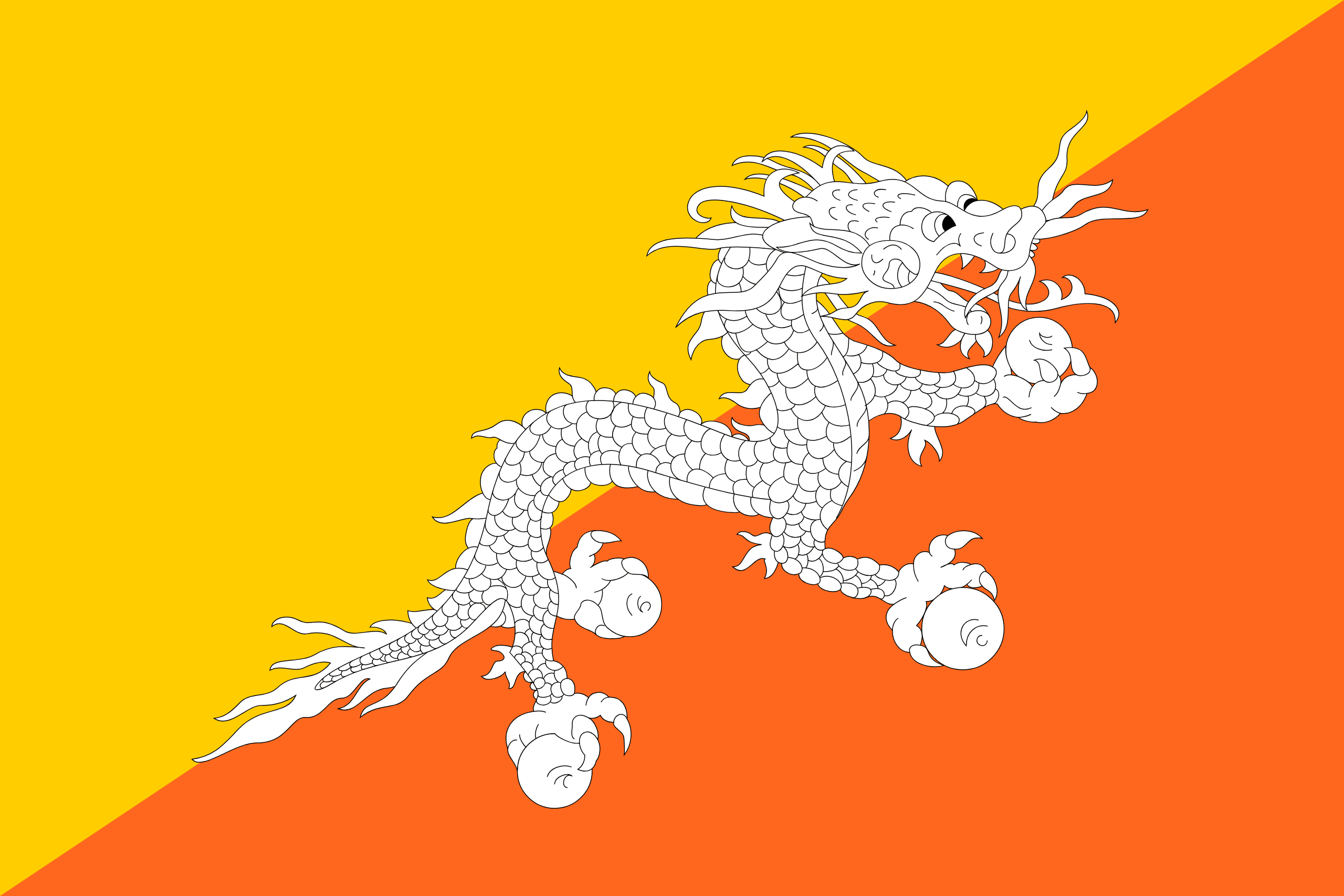
The flag of Bhutan is divided diagonally into yellow over orange, with a white dragon stretching along the divide. The dragon is the thunder dragon, Druk, from which Bhutan takes its own name in the local language, Druk Yul, the land of the thunder dragon, and the jewels in its claws represent the country's wealth and security. The yellow half symbolises the secular authority of the king, and the orange half the Buddhist faith, together expressing the union of monarchy and religion at the heart of the kingdom.
Bhutan is a Buddhist kingdom, and Vajrayana Buddhism of the Tibetan tradition is the state religion and the very soul of the country's culture, shaping its art, architecture, festivals, and daily life. Monasteries and dzongs dominate the valleys, monks are deeply respected, and colourful religious festivals called tshechus draw whole communities together. There is a sizeable Hindu minority, mainly among people of Nepali heritage in the south. Religion and a strong sense of national tradition are central to Bhutan's identity and to its careful approach to change.
Bhutanese cuisine is distinctive and famously fiery, built around chilies, which are treated not merely as a spice but as a vegetable in their own right. The national dish is ema datshi, chilies cooked in a sauce of local cheese, and many dishes pair vegetables or meat with this rich cheese. Red rice grown in the valleys is the staple, accompanied by pork, beef, yak, and buckwheat dishes in the highlands. The robust, warming food suits the cool mountain climate and reflects a largely self-sufficient farming society.
Agriculture is the livelihood of the majority of Bhutanese, most of whom farm small plots in the valleys and on terraced hillsides, growing rice, including the prized red rice, along with maize, wheat, buckwheat, potatoes, and vegetables, and raising livestock such as yaks in the high country. The country has promoted organic farming and aims to become fully organic. Beyond agriculture, Bhutan's economy rests heavily on hydropower, generated by its mountain rivers and exported to India, and on a deliberately limited, high-value tourism.
The unification of the country by the Zhabdrung in the seventeenth century and the founding of the Wangchuck monarchy in 1907 are the pillars of Bhutan's history. In modern times the kingdom has drawn the world's admiration for its distinctive path: it pioneered the idea of Gross National Happiness as a guide to development, it remains one of the only carbon-negative nations, absorbing more emissions than it produces, and in a remarkable move the king himself led the country's peaceful transition to a constitutional monarchy and democracy in 2008.
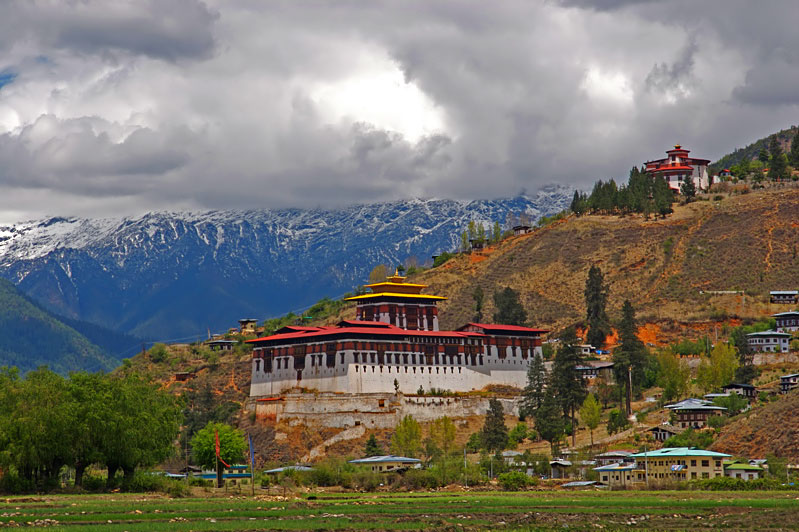
Bhutan has a population of around 800,000 people, one of the smallest in Asia, made up mainly of the Buddhist Ngalop and Sharchop peoples of the north and east and a Hindu population of Nepali heritage in the south, whose status was the source of a painful refugee crisis in the late twentieth century. The official language is Dzongkha. The population is largely rural, living in the valleys, with the largest town the capital, Thimphu, notable as one of the few national capitals in the world without traffic lights, in keeping with the country's unhurried character.