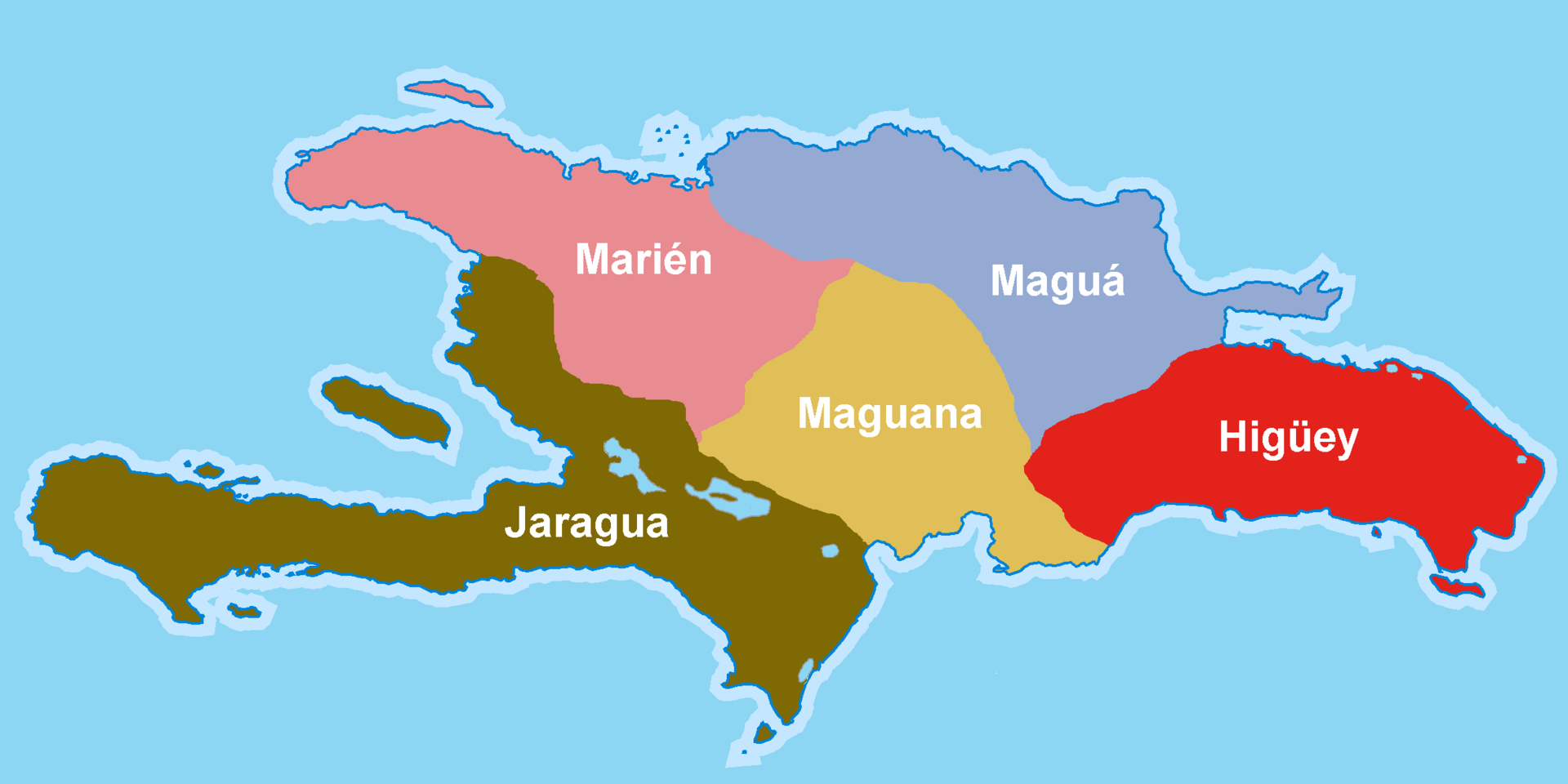
The Dominican Republic is a country in the Caribbean, occupying the eastern two-thirds of the island of Hispaniola, which it shares with Haiti. The site of the first permanent European settlement in the Americas, its capital, Santo Domingo, holds the oldest cathedral, fortress, and university of the New World. A land of mountains, beaches, and fertile valleys, it has become one of the most visited destinations in the Caribbean and a regional economic power, famous above all for its baseball players and its music.
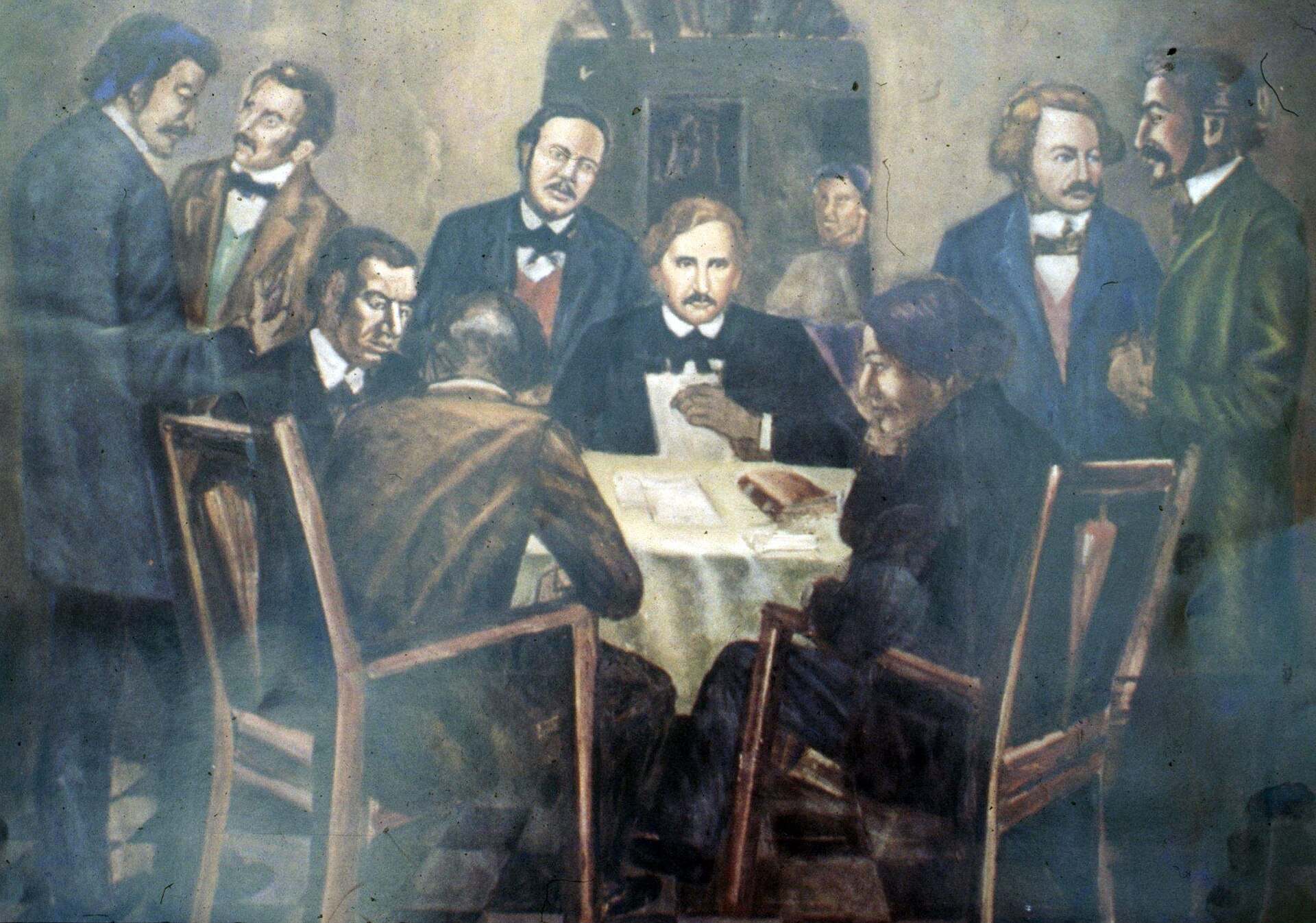
The island was home to the Taino people when Columbus arrived in 1492 and made it the base of Spain's first colonisation of the Americas, founding Santo Domingo, the oldest continuously inhabited European city in the hemisphere. After centuries as a Spanish colony, the eastern part of the island was briefly ruled by neighbouring Haiti, from which it won its independence in 1844, the event that founded the Dominican nation. Its later history included dictatorship, including the long and brutal rule of Rafael Trujillo, and recurring foreign intervention.
The Dominican Republic is the most geographically varied country in the Caribbean. It is crossed by several mountain ranges, including the highest peak in the West Indies, between which lie fertile valleys, while the coastline offers long beaches on both the Atlantic and the Caribbean. The country holds both lush, well-watered regions and a semi-desert in the west, as well as a lake well below sea level that is the lowest point in the Caribbean. This variety of landscapes supports both diverse agriculture and a thriving tourism industry.
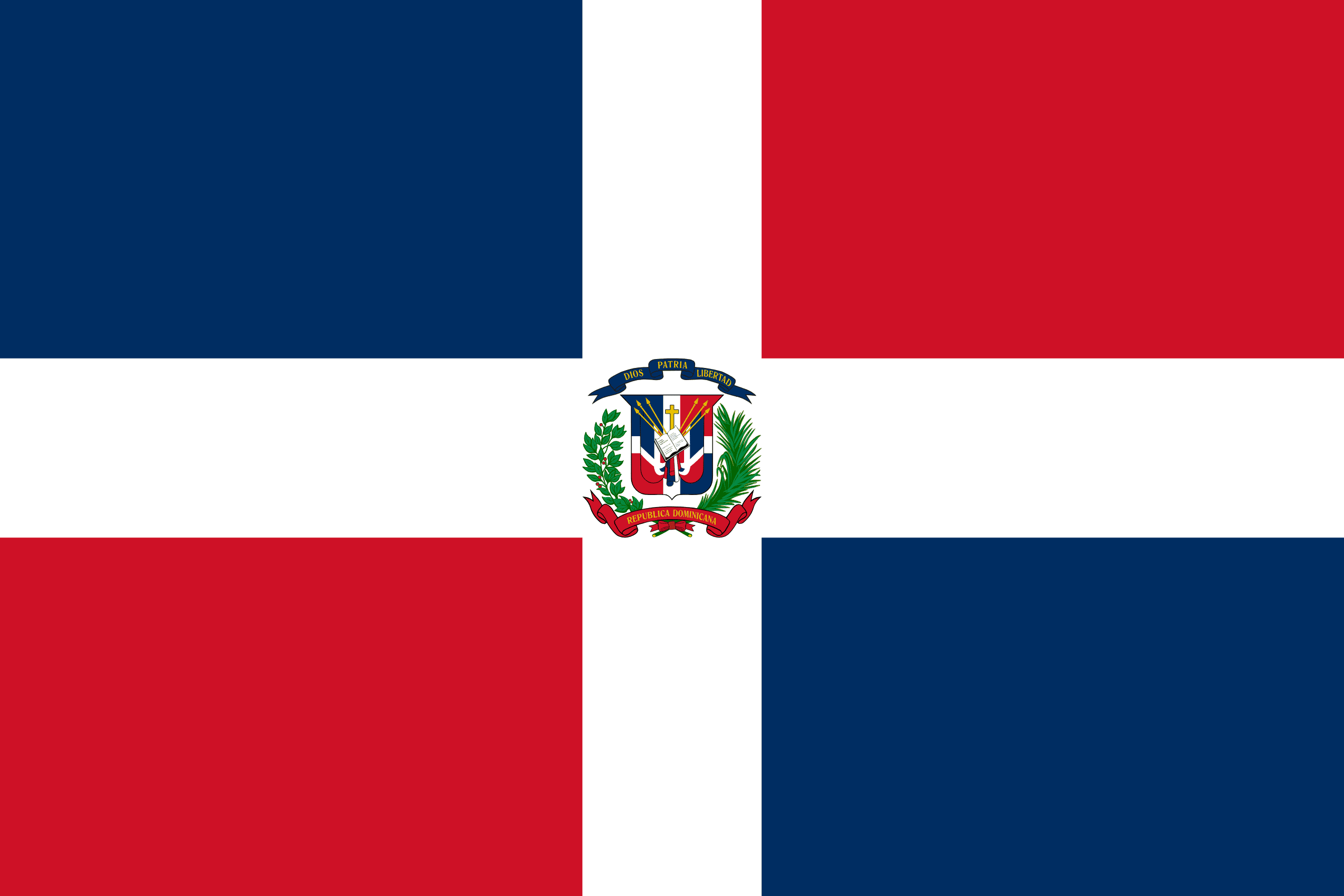
The flag of the Dominican Republic is divided by a white cross into four rectangles, blue and red, with the national coat of arms in the centre. It is the only national flag in the world to feature an image of the Bible in its coat of arms, which shows the holy book open, along with a cross and the national motto. The blue is said to represent liberty, the red the blood of heroes, and the white cross salvation and the faith, reflecting the country's Catholic identity.
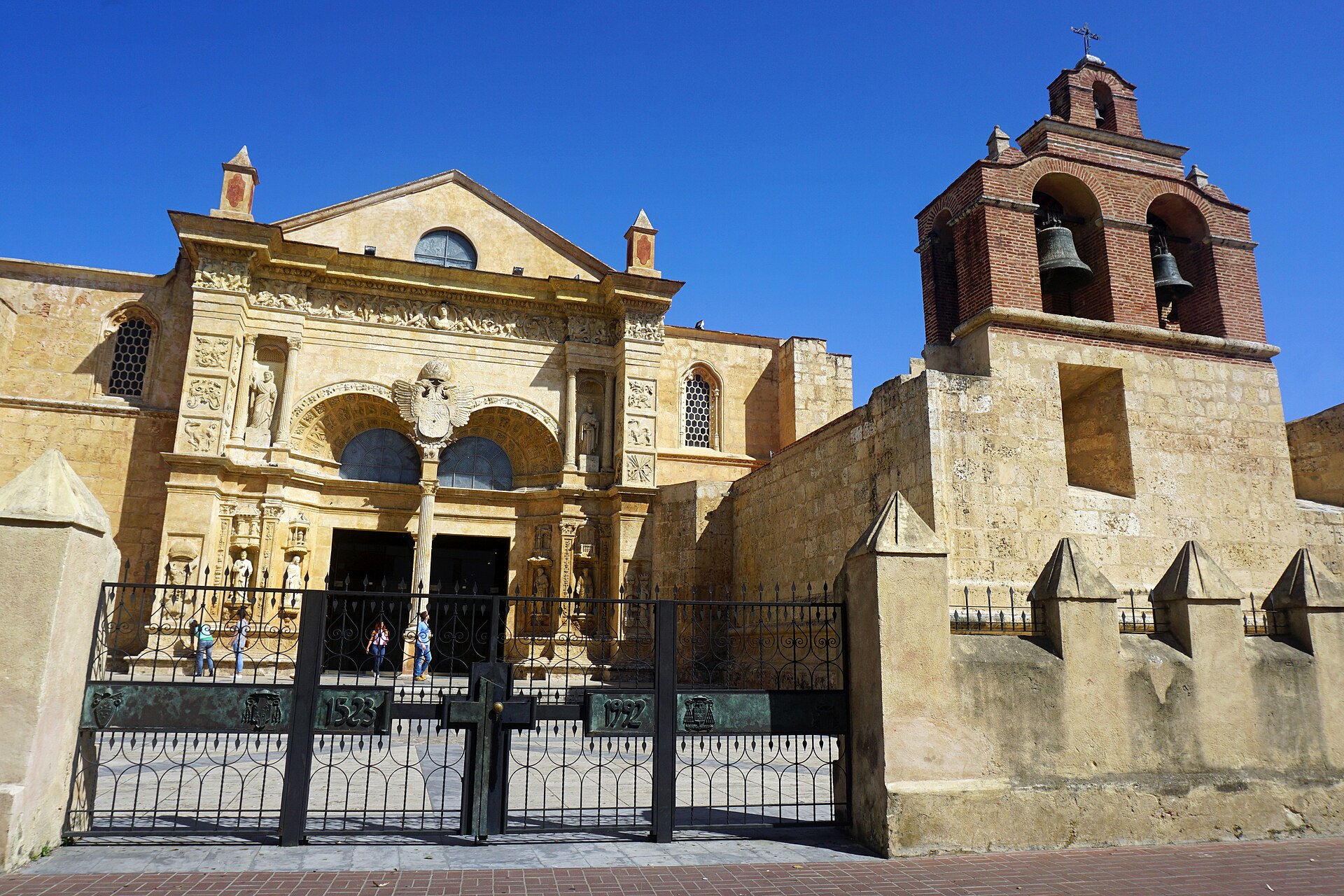
The Dominican Republic is a predominantly Roman Catholic country, the deep legacy of Spanish colonisation, with Catholicism woven into the culture, calendar, and national identity, symbolised by the Bible on the national flag. In recent decades evangelical Protestant churches have grown significantly. Folk beliefs and practices, some with African roots, also persist alongside Catholicism in places. Religion plays an important role in Dominican society, and the country's deep Catholic heritage is reflected in its historic churches and festivals.
Dominican cuisine is hearty and flavourful, blending Spanish, African, and Taino influences. The everyday national dish is la bandera, the flag, a plate of rice, red beans, and stewed meat, often with fried plantains and salad, the staple lunch of the country. Sancocho, a rich meat-and-vegetable stew, is a beloved festive dish, and mangu, mashed plantains, is a classic breakfast. Tropical fruit, seafood, and the country's famous coffee and rum complete a satisfying and distinctive Caribbean food culture.
Agriculture has long been important to the Dominican Republic, favoured by its fertile valleys and varied climate. The country is a major producer of sugarcane, historically the backbone of the economy, along with cocoa, of which it is a leading organic producer, coffee, and tobacco for its renowned cigars. Tropical fruits, including bananas and avocados, and vegetables are also grown. Agriculture, however, now shares the economy with tourism, mining, and manufacturing, which have made the country one of the largest and fastest-growing economies in the Caribbean.
As the site of the first European settlement in the Americas, the Dominican Republic occupies a unique place in the history of the New World, and Santo Domingo preserves the oldest European monuments in the hemisphere. Independence from Haiti in 1844 founded the nation, whose later history was marked by the long dictatorship of Rafael Trujillo and by foreign interventions. In modern times the country has become a stable democracy and a regional economic success, and a powerhouse of the sport of baseball, which it has given many of its greatest stars.
The Dominican Republic has a population of around 11 million people, the great majority of mixed European, African, and indigenous descent, reflecting the island's colonial history. Spanish is the official language, and Roman Catholicism the dominant faith. The population is concentrated in the fertile valleys and along the coasts, above all in the sprawling capital, Santo Domingo, the oldest city in the Americas. A very large Dominican diaspora lives abroad, especially in the United States, and the money they send home is important to the economy.