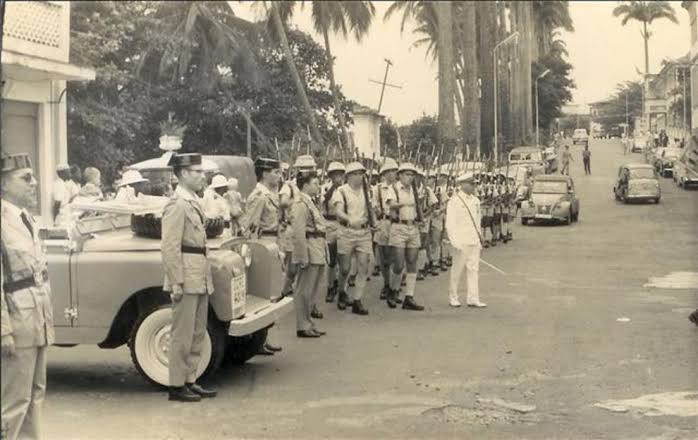
Equatorial Guinea is a small country in Central Africa, unusual in several ways: it is the only sovereign African nation whose official language is Spanish, a legacy of Spanish colonisation, and it is split between a mainland region and a set of islands, with its capital sitting offshore. The discovery of large oil reserves transformed this once-poor country into one with one of the highest average incomes in Africa, though that wealth is concentrated among a small elite under one of the world's longest-ruling governments.
The islands and coast were reached by Portuguese explorers in the fifteenth century and later passed to Spain, becoming the colony of Spanish Guinea, the only Spanish possession in sub-Saharan Africa. The mainland and the islands, with their different peoples, were brought together under colonial rule. Equatorial Guinea gained independence in 1968, after which it endured the brutal and erratic dictatorship of its first president, before he was overthrown by his nephew, who has ruled the country ever since.
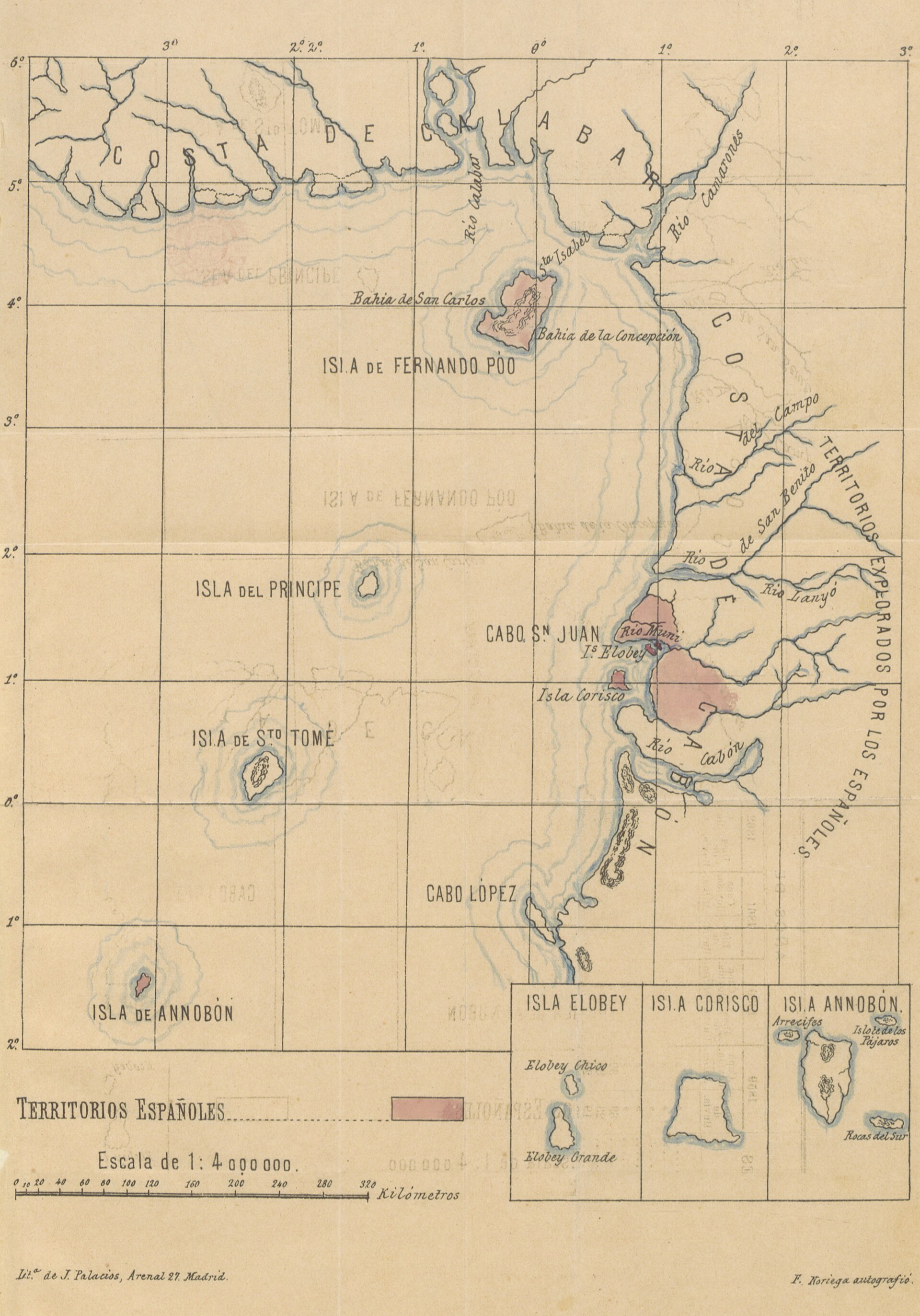
Equatorial Guinea is divided between two very different parts: a mainland region, Rio Muni, of coastal plain and interior hills covered in tropical rainforest on the African continent, and several islands in the Gulf of Guinea, the largest being the volcanic island of Bioko, which holds the capital, Malabo. The country straddles the equator, with a hot, humid climate and dense forest, rich in wildlife. Its scattered geography, with the capital on an island off the coast of another country, is among its most distinctive features.
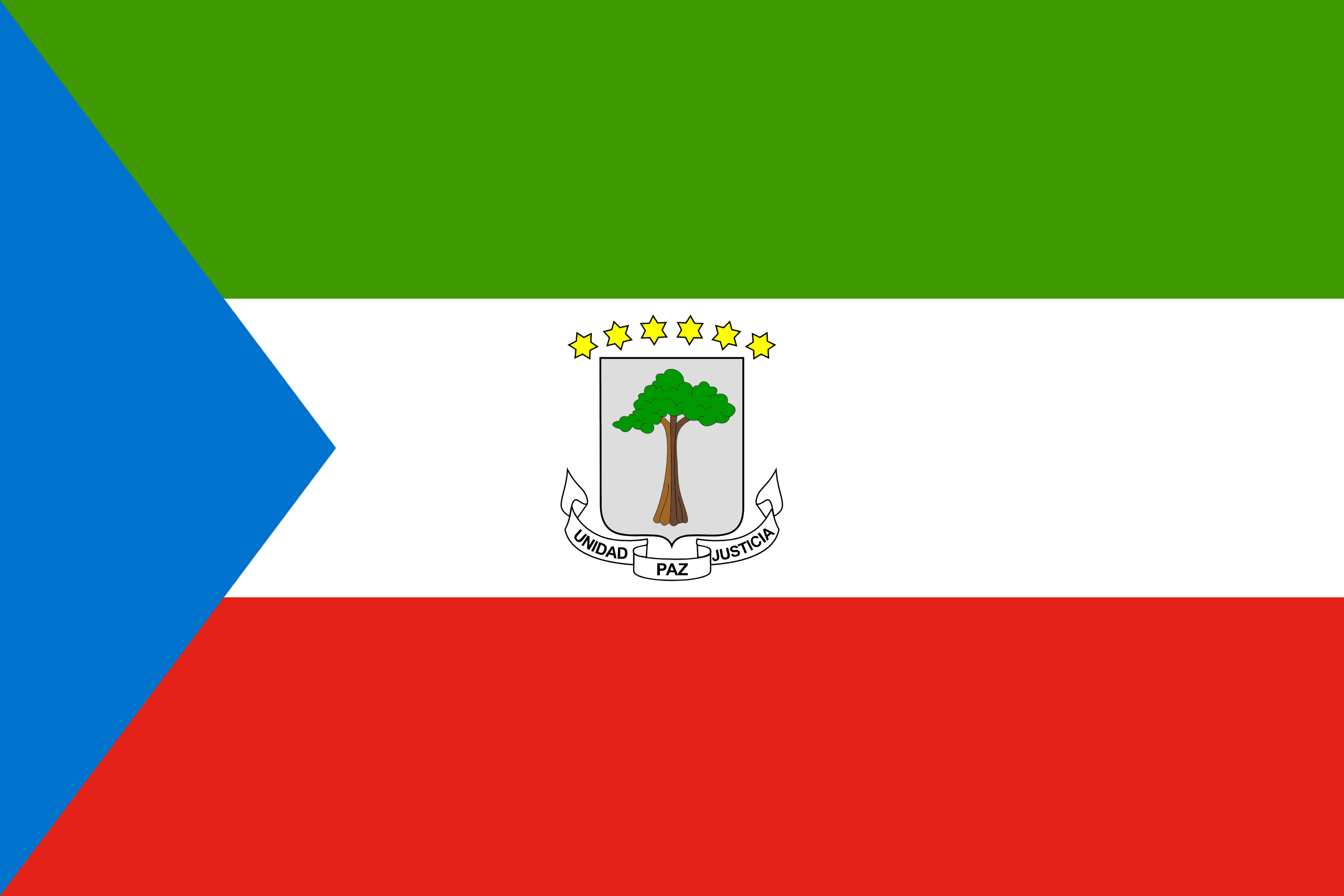
The flag of Equatorial Guinea has three horizontal bands of green, white, and red, with a blue triangle at the hoist and the national coat of arms in the centre. The green represents the country's vegetation and forests, the white peace, the red the blood of those who fought for independence, and the blue the sea that links the mainland to the islands. The coat of arms features a silk-cotton tree, of historic importance, and six stars representing the mainland and the islands.
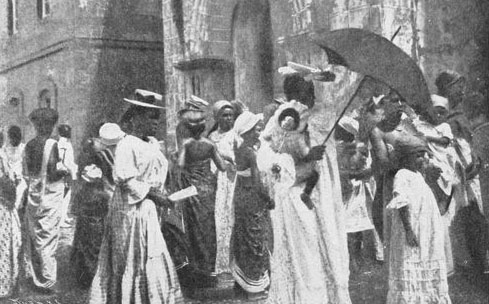
Equatorial Guinea is overwhelmingly Christian, the result of Spanish and missionary influence, with the great majority belonging to the Roman Catholic Church, reflecting the country's Spanish heritage, alongside smaller Protestant communities. Traditional African beliefs, with their reverence for ancestors and spirits, also persist and are sometimes blended with Christianity. Catholicism is woven into the culture and calendar of the country, a clear legacy of its unique position as a formerly Spanish colony in Africa.
The cuisine of Equatorial Guinea blends West and Central African traditions with Spanish influences. Staples include cassava, plantains, rice, and yams, often served with rich sauces, while fish and seafood from the surrounding waters, and bushmeat from the forests, provide protein. Peanut-based sauces, leafy greens, and tropical fruits are common, and Spanish dishes and ingredients appear as a legacy of colonisation. The food reflects both the country's equatorial abundance and its distinctive colonial past.
Agriculture, once the mainstay of the economy through cocoa and coffee grown especially on the rich volcanic soils of Bioko, has declined sharply since the discovery of oil. Today most farming is small-scale subsistence growing of cassava, plantains, and other food crops, and the country imports much of its food despite its fertile land. The economy is overwhelmingly dominated by petroleum, which made Equatorial Guinea, on paper, one of the wealthiest countries in Africa per person, though the benefits are very unevenly shared.
The era of Spanish colonisation, which made Equatorial Guinea uniquely Spanish-speaking in Africa, and independence in 1968 shaped the nation. The country then suffered the terrifying dictatorship of its first president, a period of mass killing and flight, before he was overthrown in 1979 by his nephew, who has held power ever since, making it one of the longest-ruling governments in the world. The discovery of major oil reserves in the 1990s transformed the country's finances while leaving most of its people poor.
Equatorial Guinea has a population of around 1.7 million people, made up mainly of the Fang of the mainland and the Bubi of Bioko island, along with other groups, with Spanish as the official language, joined by French and Portuguese, and indigenous languages widely spoken. The population is divided between the mainland and the islands, with the capital, Malabo, on Bioko, and the largest mainland city, Bata. Despite the country's oil wealth, a large share of the population lives in poverty.